Executive Overview
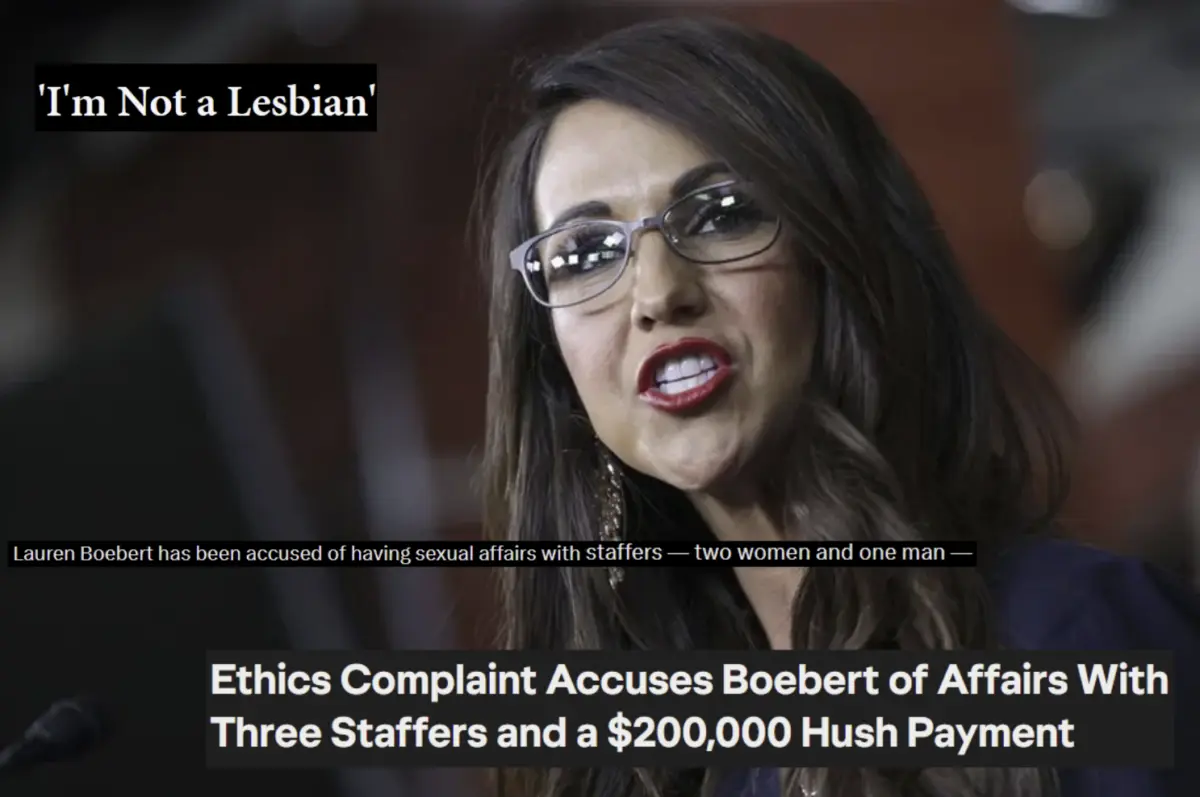
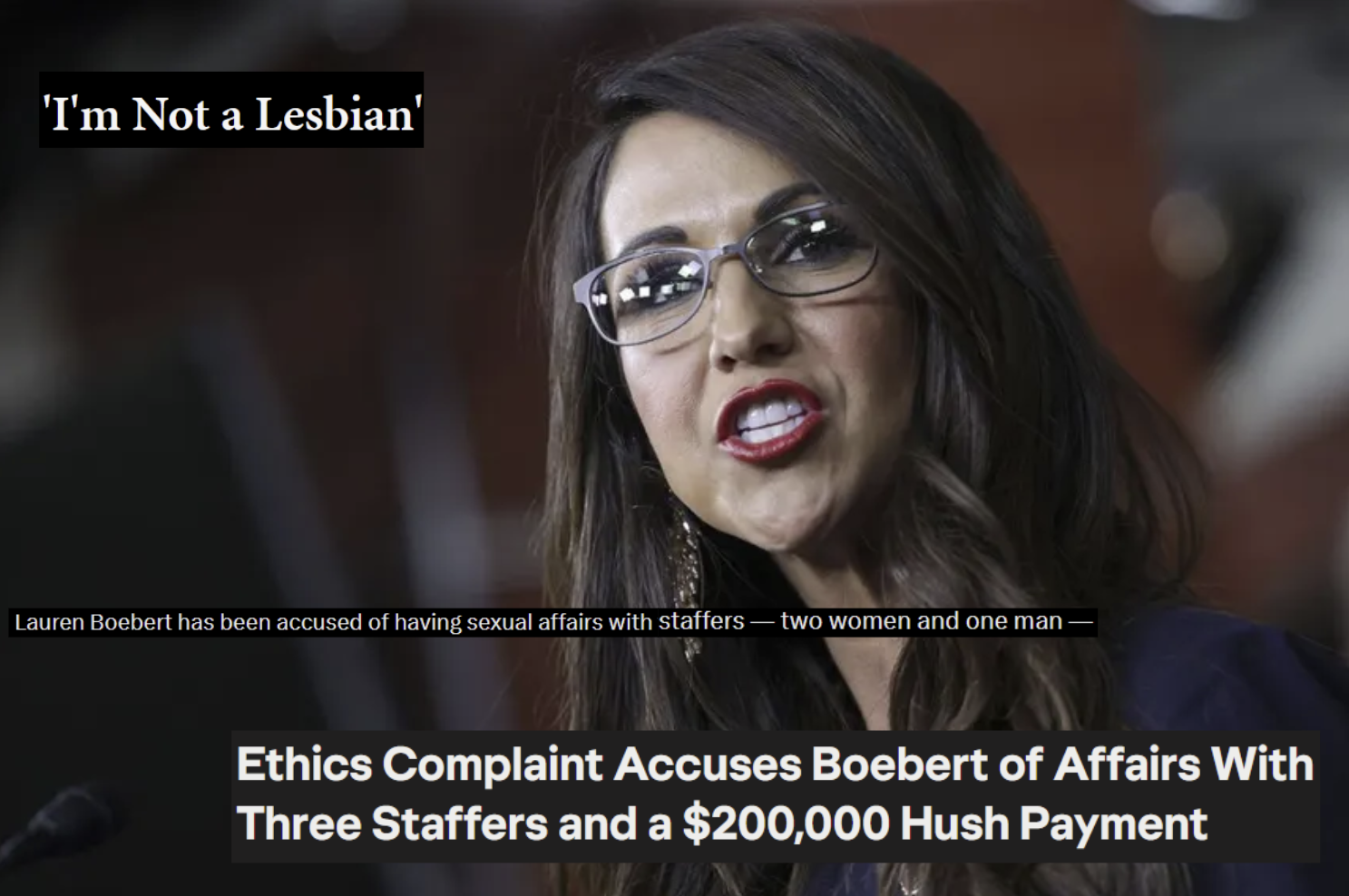
In mid-September 2026, American politics was shaken by a high-profile ethics scandal involving U.S. Representative Lauren Boebert (R-CO). A sworn ethics complaint filed with the U.S. House Committee on Ethics accused the congresswoman of engaging in sexual relationships with three subordinate congressional employees under her direct supervision. Submitted by David Wheeler of the accountability organization American Muckrakers, the complaint ignited a firestorm across mainstream news outlets and social media platforms alike.
The allegations center on an alleged multi-year affair between Boebert and Clarice Navarro, who served as her district director from January 2021 through January 2025. Additionally, the filing names former chief of staff Jeffrey Small and current district chief of staff Raven Finegan. Beyond the interpersonal relationships, the complaint raises severe legal and ethical questions, detailing allegations of taxpayer-funded bonuses, questionable campaign disbursements—including a $5,000 payment marked as "fundraising consulting"—and a substantial financial payout of roughly $200,000 made after Navarro allegedly threatened to file her own ethics disclosures.
As details leaked into the public sphere via investigative reporting by the Colorado Times Recorder and viral breakdowns by political commentators, the scandal transformed into a massive online cultural phenomenon. Across X (formerly Twitter), TikTok, YouTube, and independent meme communities, internet users dissected the hypocrisy of a socially conservative legislator facing accusations of illicit workplace affairs. Within days, millions of impressions, high-profile video essays, and relentless satirical commentary cemented the story as one of the most explosive congressional scandals of the mid-2020s.
Detailed Chronology of Events
The Filing: September 17, 2026
The formal catalyst for the scandal occurred on September 17, 2026, when David Wheeler, representing the political watchdog group American Muckrakers, officially submitted a sworn complaint to the U.S. House Committee on Ethics. The document was not merely a collection of hearsay; rather, it was built on a robust evidentiary foundation comprising House payroll records, Federal Election Commission (FEC) filings, local court records, private text message exchanges, bank statements, and recorded conversations.
The primary focus of the complaint was the extensive relationship between Representative Boebert and Clarice Navarro. According to the filing, this liaison began shortly after Boebert assumed office in early 2021 and persisted until Navarro’s departure in January 2025. The complaint detailed that intimate encounters frequently occurred both during and after office hours. Locations allegedly included the official congressional district office, a motor vehicle utilized by Navarro for which she received official House mileage reimbursements, and various hotel rooms paid for directly by Boebert’s political campaign funds.
Furthermore, the document broadened its scope by naming two additional aides—Raven Finegan and Jeffrey Small—as participants in improper relationships with the congresswoman. The complaint also highlighted troubling financial maneuvers. It alleged that Navarro received preferential treatment via year-end taxpayer-funded bonuses, a $5,000 campaign disbursement disguised as consulting fees, and a subsequent lump-sum payment of approximately $200,000 arranged after Navarro allegedly threatened to expose the relationship to ethics investigators.
Public Disclosure: September 18, 2026
The narrative broke into public view on September 18, when American Muckrakers published a comprehensive article authored by Wheeler detailing the contents of the sworn complaint. Simultaneously, the Colorado Times Recorder published an investigative piece corroborating the core allegations of the ethics filing.
The Colorado Times Recorder noted that while some elements of Navarro’s tenure—such as her presence on a high-profile 2022 trip to Mar-a-Lago and her standard duties in the district office—had been documented in previous reporting, the nature of her personal relationship with the congresswoman had not been previously exposed. At the time of the initial publication, representatives for Boebert’s congressional office declined to provide immediate comments or statements to inquiring journalists.
Viral Acceleration: September 19, 2026
By the following day, the story had transitioned from regional political reporting into a national internet phenomenon. On September 19, prominent political commentator and YouTuber Brian Tyler Cohen released a video dissecting the controversy. The video quickly captured the public imagination, surging past one million views within its first 24 hours online.
Simultaneously, social media platforms became saturated with posts breaking down the specifics of the ethics complaint. High-profile accounts on X shared summaries of the alleged affairs involving Navarro, Finegan, and Small, with some posts even speculating about broader political circles. These posts accumulated millions of views and tens of thousands of likes almost overnight, ensuring that the story reached audiences far beyond traditional news consumers.
Public Defense and Reaction: September 20, 2026
As public pressure mounted and online discourse reached a fever pitch, Representative Boebert broke her silence on September 20, 2026. Through a video response posted directly to her official social media channels, she addressed the "journalists" covering the ethics complaint, pushing back against the media storm. However, the release of her statement did little to stem the tide of online criticism and satire, which continued to dominate digital spaces throughout the weekend.
Supporting Context & Metrics
The velocity and scale of the Lauren Boebert staffer affair scandal can be clearly mapped through social media metrics and historical context. The story resonated so deeply online not merely because of the political implications of congressional misconduct, but due to the perceived irony surrounding Boebert’s public persona and legislative voting record.
Key Metrics and Viral Reach (Mid-September 2026)
- Brian Tyler Cohen YouTube Video: Surpassed 1,000,000 views within approximately 24 hours of its September 19 release.
- X Post by @daviddunn177: Detailing the three alleged affairs and auxiliary claims, this post garnered 28,701 likes and 15.8 million views in roughly two days.
- X Post by @NewsWire_US: Summarizing the accusations via the Colorado Times Recorder, the post pulled in 29,562 likes and 6.1 million views over a 48-hour window.
- X Post by @PopBase: Amplifying the House Ethics Committee filing to a pop-culture audience, this post achieved 64,832 likes and 12.9 million views within two days.
- X Post by @whomisbear: Satirizing the alleged $200,000 payout in contrast to Boebert’s anti-LGBT stance, the post gained 68,779 likes and 1.4 million views in a single day.
- Boebert’s Official Response Video: Posted on September 20, the congresswoman’s direct video response accumulated 27,081 likes and 3.4 million views within 24 hours.
Socio-Political Context and Irony
A recurring theme across digital commentary was the stark contradiction between Boebert’s public political stances and her alleged private behavior. Throughout her tenure in Congress, Boebert established herself as a staunch social conservative, frequently voting in favor of traditional marriage definitions and vocally opposing LGBTQ+ rights legislation.
Online users and political satirists heavily emphasized this dichotomy. Commentators on platforms like X and TikTok pointed out the profound hypocrisy of utilizing anti-LGBT rhetoric while simultaneously facing allegations of intricate, multi-year workplace relationships with multiple subordinates—including both female and male staffers. Furthermore, many internet users brought up Boebert’s infamous 2023 public theater incident at a performance of Beetlejuice: The Musical, weaving past controversies into a narrative about perceived patterns of poor boundary management and public indiscretion.
Official Statements and Institutional Responses
The formal mechanics of the scandal rest within the jurisdiction of the U.S. House Committee on Ethics. Filing a sworn complaint initiates a formal review process, though the committee typically operates with strict confidentiality during its initial evaluation phases.
- American Muckrakers (David Wheeler): In submitting the sworn complaint, Wheeler and his organization maintained that the documentation provided—ranging from financial statements to text logs—offered clear, actionable evidence of ethical breaches, misuse of campaign funds for personal/interpersonal expenses, and potential coercion through hush-money arrangements.
- The Accused Office: In the immediate wake of the September 17 filing, Boebert’s congressional office initially remained silent. By September 20, Representative Boebert released a video statement on social media addressing the press directly, framing the allegations as politically motivated attacks designed to damage her standing.
- The House Ethics Committee: As of the initial reporting window, the committee had not yet announced whether it would empanel an investigative subcommittee to formally probe the claims, a standard procedural step that often takes weeks or months following the receipt of a sworn complaint.
Future Outlook and Political Implications
The long-term fallout of the Lauren Boebert staffer affair scandal remains to be seen, but the immediate implications for her political career are profound.
- Ethics Committee Investigation: The primary institutional hurdle facing Boebert is the potential for a full-scale House Ethics Committee investigation. If the committee finds substantial evidence supporting the claims of supervisory sexual relationships, misuse of taxpayer-funded payroll bonuses, or the misreporting of campaign expenditures (such as the alleged $5,000 consulting fee and the $200,000 payout), she could face severe congressional sanctions, censures, or calls for resignation.
- Legal and Financial Scrutiny: Because the complaint incorporates FEC filings, bank records, and potential campaign finance violations, federal regulatory bodies or watchdogs could initiate parallel inquiries into how campaign funds were utilized during her congressional tenure.
- Electoral and Cultural Legacy: Politically, the scandal provides ample ammunition for primary and general election opponents. Beyond the institutional accountability measures, the narrative has firmly cemented itself in digital pop-culture history. The heavy reliance on memes, viral TikTok explainers, and relentless internet mockery ensures that the imagery and talking points surrounding the scandal will follow Representative Boebert for the remainder of her political career.