Executive Overview
In the sprawling, tactical landscape of modern role-playing games, completionism is often worn as a badge of honor. For decades, titles like Suikoden with its 108 Stars of Destiny, or Atlus’s meticulously paced Persona series, have conditioned players to view missing out on content as an absolute failure. When Nintendo and Intelligent Systems released Fire Emblem: Fortune’s Weave, fans anticipated a continuation of this intense social choreography.
However, Fortune’s Weave introduces a restructured geopolitical and interpersonal grid that fundamentally alters how players interact with its universe. Spanning four distinct campaign routes, dozens of recruitable allies, and an economy built heavily on gift-giving, renown accumulation, and tactical positioning, the game baits the classic RPG completionist into a trap of diminishing returns.
Recent gameplay analytics and player disclosures—most notably from deep-dive community retrospectives—reveal a counterintuitive truth about the attempting to recruit every single character on a single playthrough is not only mechanically inefficient, but it actively degrades the core strategic and narrative experience. This article provides a comprehensive evaluation of the completionist dilemma in Fire Emblem: Fortune’s Weave, breaking down its multi-tiered recruitment systems, economic pressures, deployment constraints, and the psychological shift required to truly enjoy the game.
Detailed Chronology of the Recruitment Obsession
Phase 1: The Black Friday Mindset on the World Map
The crisis invariably begins during the opening acts of the campaign. Operating under the structural umbrella of a twelve-chapter arc per protagonist (Leda, Cai, Deitrich, and Theodora), players are introduced to a bustling world map teeming with eccentric personalities. Whether exploring the coastal markets of Dagsion or the inner-sanctum outposts of the central continent, vendors sell specialized wares explicitly categorized as gifts.

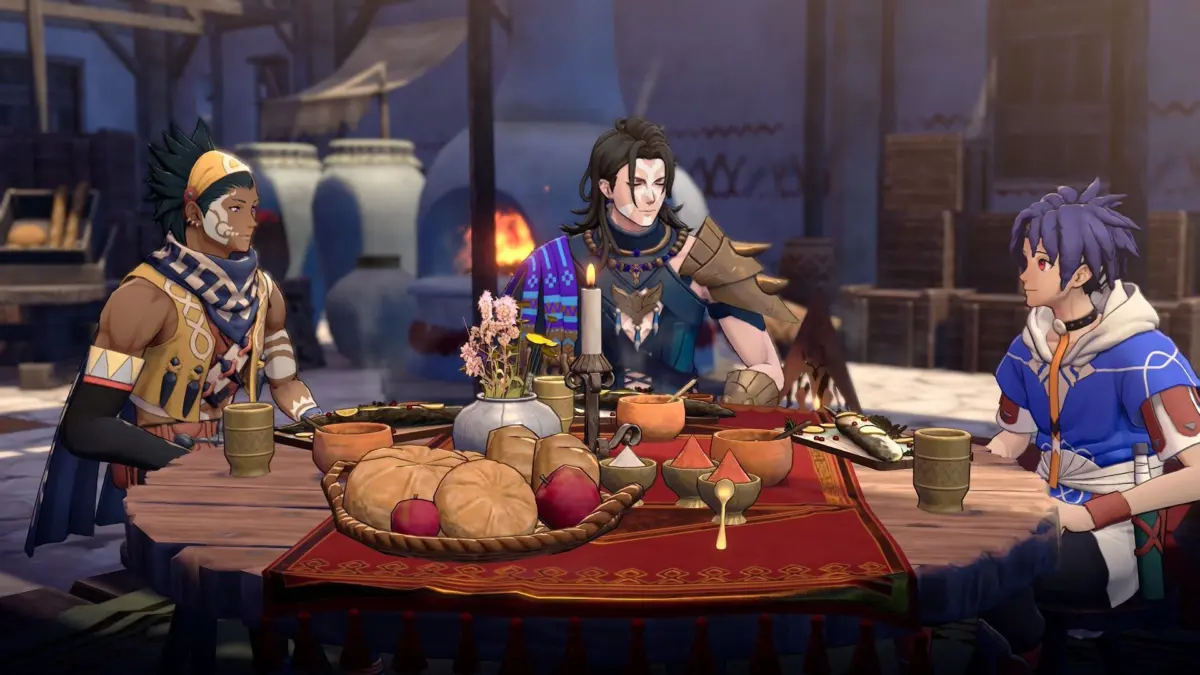
For many players, the moment the world map opens up transforms the tactical strategy game into an aggressive retail simulation. Hours are burned scouring global inventories for rare pastries, imported fish sauce, and polished trinkets. The objective? To grease the social wheels of every wandering mercenary, pirate, and pegasus rider long before their mechanical utility has even been evaluated.
Phase 2: The Renown Trap and Resource Deprivation
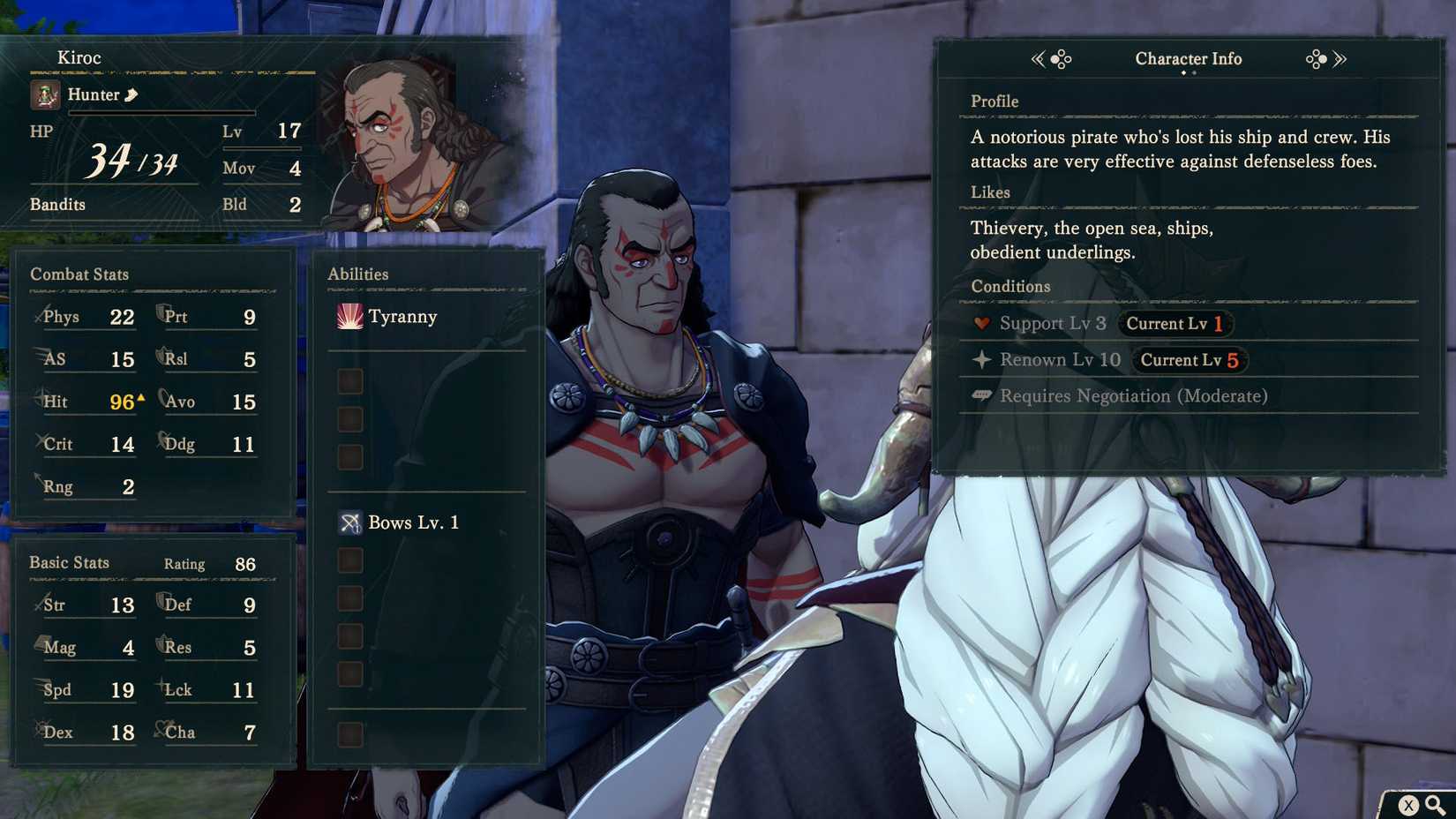
As players push past the introductory chapters, the game’s internal metric—the Renown Rank—begins to scale. This rank serves as one of the primary gating mechanisms for convincing neutral or aloof NPCs to join your camp.
Driven by escalating renown thresholds, players often funnel their hard-earned in-game currency into exorbitant dinners at the local inns and bulk-buying high-tier gifts. The immediate consequence of this fiscal strategy is severe under-leveling. Because capital and time are diverted toward wooing potential recruits rather than upgrading gear, forging weapons, or investing in combat experience, the active deployment roster suffers. Mid-game skirmishes, particularly within Leda’s route during the Heroic Games arc, become grueling endurance tests against mathematically superior enemies—not because the combat design is unfair, but because the player has bankrupted their tactical infrastructure to buy the affection of characters they may never deploy.
Phase 3: The Realization of Redundancy
The breaking point typically arrives midway through Act One. After meticulously tracking down every elusive wanderer, checking off recruitment prerequisites, and managing inventory like a paranoid quartermaster, a stark realization sets in: deployment caps are unforgiving.

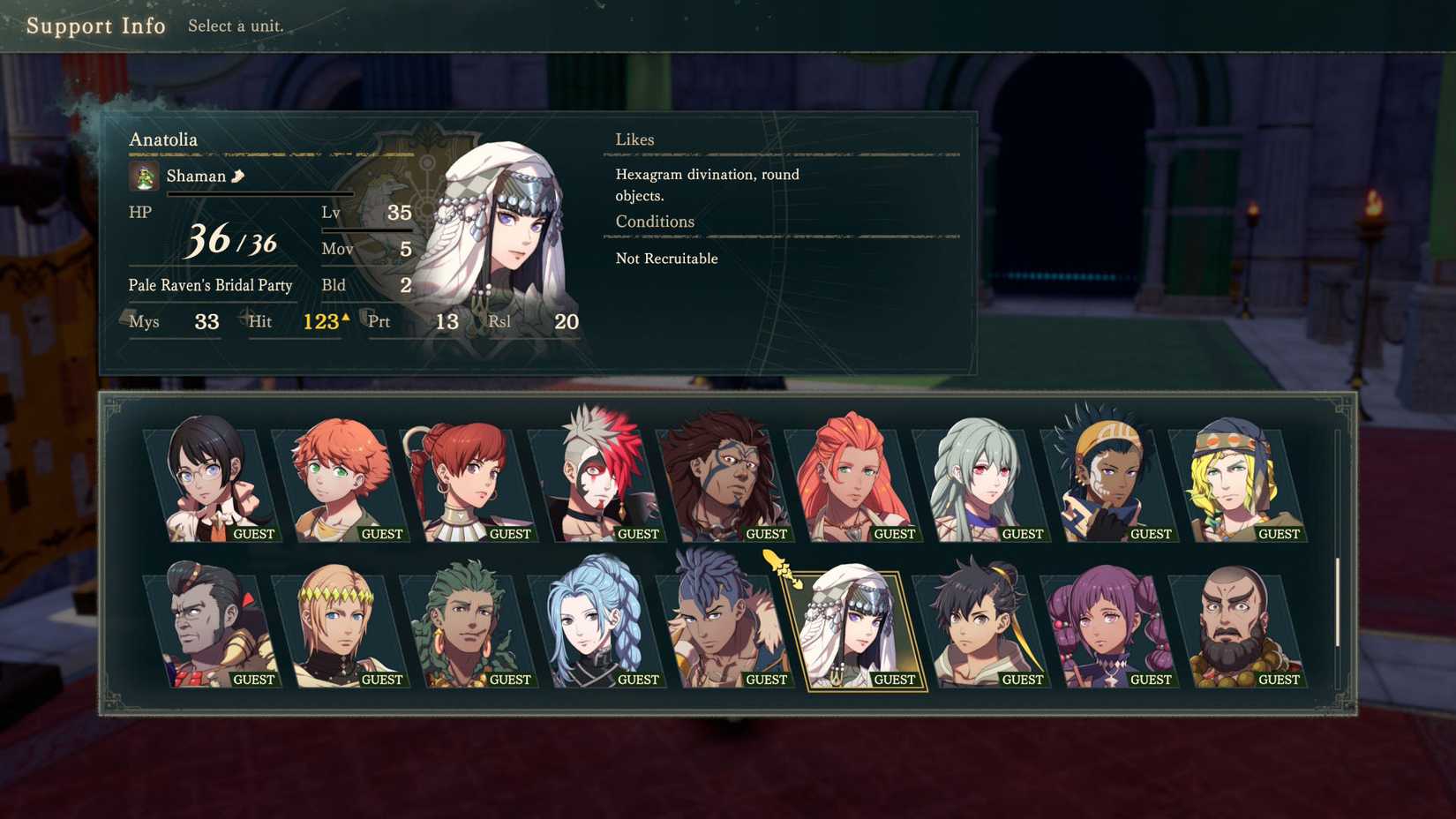
Most standard story battles and Heroic Games encounters strictly limit party sizes to between five and seven units. A player might boast a roster of thirty recruited characters, yet 80% of them sit indefinitely on the bench. Compounding the issue is unit synergy. Maintaining a strike team composed entirely of specialized mages or redundant mid-tier squires quickly proves unviable. The active lineup inevitably collapses back to a reliable core: the mandatory route protagonist, a couple of early-game staples, and perhaps three heavily invested recruits. The massive surplus of befriended NPCs transitions from a tactical asset to an inert collection of digital trophies.
Supporting Context & Metrics: The Structural Design of Fortune’s Weave
To understand why the completionist mindset backfires in Fortune’s Weave, one must examine the underlying architecture designed by Nintendo EPD and Intelligent Systems.
Branching Narrative Routes vs. Universal Roster
Unlike linear entries in the franchise, Fortune’s Weave is architected around four distinct ideological paths led by Leda, Cai, Deitrich, and Theodora.
- Route Exclusivity: Certain characters are hard-locked to specific paths, making a 100% single-run recruitment run mathematically impossible.
- Redundancy Across Files: The developers intentionally designed the game to be experienced across multiple playthroughs. Characters missed or skipped on Leda’s journey are readily available via Cai’s or Theodora’s campaigns.
- Chapter Replayability: For those unwilling to start a completely fresh save, individual chapters retain historical persistence, allowing players to hop backward, tweak variables, and scoop up missed units with minimal friction.
Economic and Opportunity Cost Breakdown
| Playstyle Approach | Primary Focus | Combat Readiness | Time Investment | Psychological Toll |
|---|---|---|---|---|
| The Completionist Trap | Maxing out all support ranks & buying all gifts | Critically Under-leveled (Mid-game bottleneck) | Extremely High (Dozens of hours on map wandering) | High (Burnout, decision fatigue) |
| The Pragmatic Approach | Focused core team + opportunistic recruitment | High (Optimized weapons, steady XP curve) | Moderate (Streamlined exploration) | Low (High engagement, rewarding tactical loops) |
The metrics clearly indicate that the game rewards a targeted, specialized approach. By spreading resources thin across a massive battalion, players forfeit the ability to forge high-tier support bonds and master advanced class progressions for their primary combatants.
Official Statements and Developer Intent
While Nintendo and Intelligent Systems maintain a measured silence regarding specific community playstyles, promotional materials and developer deep-dives surrounding Fire Emblem: Fortune’s Weave emphasize player choice and narrative consequence over forced uniformity.
In pre-launch developer briefings, the creative leads noted that the introduction of four distinct protagonists was specifically engineered to alleviate the "pressure of choice" seen in past entries like Fire Emblem Fates or Three Houses.
"We wanted players to feel that missing an interaction or choosing one path over another did not diminish their story, but rather shaped a unique chronicle," noted a senior developer representative during an interview with gaming historians. "The world of Fortune’s Weave is intentionally vast and occasionally indifferent to the player’s ambitions. Not every character is meant to gel with every commander."
Furthermore, the implementation of localized gift preferences—where distinct factions respond uniquely to regional items like Dagsion fish sauce versus northern pastries—was designed as environmental world-building rather than a rigid checklist puzzle. Treating these systems as a mandatory optimization test fundamentally misinterprets the artistic intent of the developers, who sought to evoke the organic friction of leading a disparate, fractured coalition through war.
Future Outlook: Re-evaluating Modern RPG Design
The community discourse surrounding Fire Emblem: Fortune’s Weave serves as a fascinating case study in modern gamer psychology. As game worlds grow exponentially larger and side-content multiplies, players increasingly suffer from FOMO (Fear Of Missing Out). Titles are frequently judged by the sheer volume of their content rather than the density or resonance of those experiences.
As the meta for Fortune’s Weave stabilizes, community guides are shifting away from rigid, all-inclusive recruitment matrices toward curated playthrough philosophies. Content creators and veteran tacticians are actively advocating for "imperfect runs"—playthroughs where units are allowed to slip away, where certain gifts are never purchased, and where relationships form organically based on combat chemistry rather than exhaustive item distribution.
Looking forward, this cultural pivot may influence how developers design interpersonal systems in future tactical RPGs. If players continue to push back against the exhausting tedium of artificial completionism, future titles may lean further into dynamic, consequence-driven relationship models where rejection and incompatibility are treated as compelling narrative beats rather than failures of optimization.
Key Takeaways for New Commanders:
- Embrace the Inevitable Miss: You cannot catch them all on your first try, and the game is explicitly balanced around this limitation.
- Prioritize Depth Over Breadth: A tight-knit squad of five to seven highly trained units will consistently outperform a sprawling roster of thirty under-leveled benchwarmers.
- Let Relationships Breathe: Focus gift-giving and support building on characters whose combat classes and narrative arcs genuinely interest you.
- Remember the Goth Girls Exist: As seasoned players have noted, there is always time later in the campaign to circle back for that elusive, eccentric recruit with the cool hat. Do not sacrifice your mid-game momentum for immediate, exhaustive collection.