Date: September 22, 2026
Author: Catie Owen | Regional Content & Insights Lead
Executive Overview
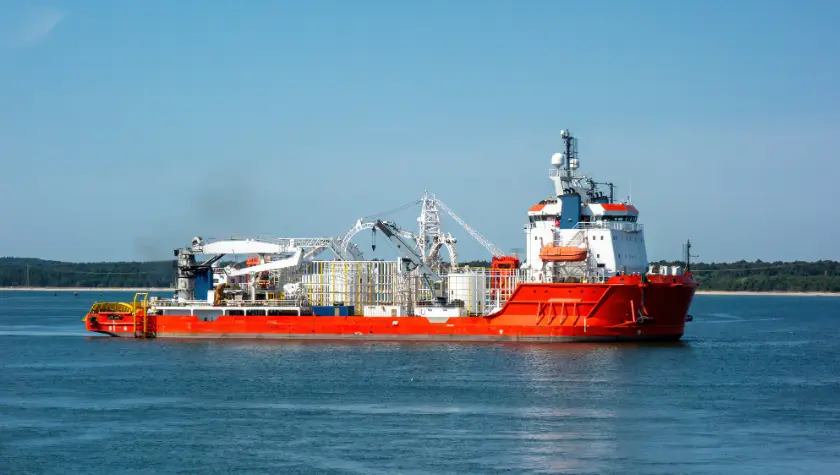
In an aggressive move to safeguard its economic security and bridge a widening maritime capabilities gap, the Japanese government has unveiled a landmark funding initiative to overhaul and expand the nation’s subsea cable-laying and repair fleet. Spearheaded by the Internal Affairs and Communications Ministry, the proposed fiscal budget introduces a sweeping ¥100 billion ($630 million) subsidy program designed to cover up to 50% of the construction and modernization costs for specialized vessels.
This decisive policy intervention arrives at a critical juncture. As global data consumption explodes on the back of generative artificial intelligence (AI), hyper-scale cloud computing, and heavy international data traffic, subsea telecommunications cables have transformed from commercial conduits into vital national security assets. Yet, despite housing NEC Corporation—a titan that commands roughly 20% of the global subsea cable manufacturing market—Japan has lagged behind international peers in maritime deployment assets.
With domestic operators constrained by an aging, limited fleet and forced to rely on foreign-chartered vessels, Tokyo’s newly enabled financial backing aims to restore Japan’s competitive edge, eliminate repair bottlenecks, and fortify its digital infrastructure against both natural disasters and escalating geopolitical threats.
Detailed Chronology and Policy Evolution
The journey toward Japan’s multi-billion-yen maritime overhaul is rooted in a systemic reassessment of national vulnerability, accelerated by legislative milestones and mounting international incidents.
The Legislative Catalyst: The Economic Security Promotion Law
For years, Japanese telecommunications and manufacturing firms found themselves at a structural disadvantage compared to Western competitors. Strict local regulations surrounding order-acceptance procedures, coupled with rigid construction timelines, historically hamstrung domestic companies competing for lucrative international contracts.
The turning point arrived in June 2026, when Japan enacted a heavily revised version of its Economic Security Promotion Law. This landmark legislation provided the legal framework necessary for direct government intervention and financial subsidization in sectors deemed critical to national resilience. Seizing upon these newly granted legislative powers, the Internal Affairs and Communications Ministry rapidly moved from conceptual policy to fiscal execution, embedding the ¥100 billion ($630 million) subsidy initiative directly into its upcoming fiscal year budget proposal.
Under the parameters of this scheme, qualifying telecommunications and maritime infrastructure companies—chiefly telecommunications giants NTT and KDDI, alongside manufacturing powerhouse NEC—can apply for state backing that absorbs half of the capital expenditure required to build or retrofit state-of-the-art cable ships.
Supporting Context & Metrics: The State of Japan’s Fleet
To understand the urgency driving Tokyo’s financial injection, one must examine the stark quantitative disparities between Japan’s maritime capabilities and those of its global counterparts.
A Stark Numerical Disparity
According to international maritime data, major Western powers maintain robust, self-sufficient fleets dedicated to submarine infrastructure management:
- United States: ~10 specialized cable-laying and repair vessels.
- United Kingdom: ~10 specialized vessels.
- France: ~10 specialized vessels.
- Japan: 5 specialized cable-laying vessels (weighing 5,000 tons or more).
Japan’s current fleet is entirely decentralized, divided between two corporate groups: an NTT Group subsidiary operates three vessels, while a KDDI group affiliate commands two. Compounding this small inventory is the advanced age of the fleet. While heavy-duty cable ships possess an operational lifespan of roughly 40 years, several of Japan’s five active vessels have already surpassed the 30-year mark, pushing them dangerously close to mandatory retirement or requiring extensive, costly retrofitting.

+-------------------------------------------------------------+
|          Comparison of National Cable-Laying Fleets         |
+-------------------+-----------------------------------------+
| Country / Region  | Approximate Number of Vessels (>5,000t) |
+-------------------+-----------------------------------------+
| United States     | ~10                                     |
| United Kingdom    | ~10                                     |
| France            | ~10                                     |
| Japan             | 5 (Split between NTT & KDDI)            |
+-------------------+-----------------------------------------+
The NEC Paradox: Manufacturing Powerhouse, Fleet Homeless
The vulnerability of Japan’s positioning is perhaps best illustrated by the operational model of NEC Corporation. As a premier global player, NEC captures approximately 20% of the worldwide subsea cable manufacturing market. However, despite its immense manufacturing footprint, NEC does not maintain its own proprietary fleet of installation and repair ships.
Instead, the corporation relies on chartering vessels from international providers. This reliance exposes Japanese projects to severe systemic risks:
- Logistics and Latency: When faults occur, Japanese firms must wait for foreign-owned vessels to travel from distant regional hubs to the site of the damage.
- Availability Constraints: Because global fleets are universally constrained in size, securing an available charter during peak demand windows can lead to protracted outages, directly impacting regional internet stability and commercial data flows.
Geopolitical Realities and Environmental Pressures
The push to modernize Japan’s subsea assets is driven by a dual-threat matrix encompassing both the volatile forces of nature and the shifting landscape of international geopolitics.
Natural Vulnerabilities: Typhoons and Seismic Activity
Geographically, Japan is uniquely exposed to environmental hazards. Situated along the Pacific Ring of Fire and prone to intense seasonal typhoons, the country’s maritime infrastructure faces persistent physical stress. Subsea cables traversing the seabed around the Japanese archipelago are frequently subjected to subterranean shifts, volcanic activity, and violent wave action capable of destabilizing or snapping armored cables. Having a rapid-response fleet equipped with modern dynamic-positioning technology is non-negotiable for an island nation dependent on uninterrupted international connectivity.
The Global Threat Matrix: Sabotage and Accidents
Beyond natural hazards, international events have fundamentally reshaped how governments view subsea cable vulnerability. The fragility of global fiber-optic networks was thrust into the spotlight following a series of mysterious cable severances in the Baltic Sea starting in 2024.
Subsequent international investigations revealed a dual reality of modern maritime risk:
- Accidental Damage: A significant percentage of subsea disruptions stem from commercial negligence, specifically vessels illegally dragging heavy anchors across the seabed in restricted zones.
- Geopolitical Sabotage: Intelligence agencies and defense analysts have increasingly raised alarms regarding intentional state-sponsored sabotage. Accusations have occasionally pointed toward actors such as Russia in European waters and rising tensions involving China in regions surrounding Taiwan.
These cumulative threats have triggered a defensive mobilization across democratic nations. Most notably, NATO launched a dedicated fleet of specialized ships and drones in 2025 specifically designed to monitor, deter, and prevent attacks on critical subsea infrastructure and pipelines in the Baltic region. Japan’s new subsidy program reflects a parallel realization in Tokyo: protecting data highways requires treating them with the same strategic defensive posture traditionally reserved for physical territorial borders.
Future Outlook: The Intersection of Competitiveness and National Security
As the world accelerates deeper into the AI boom, the demand for high-bandwidth, low-latency cross-border data transmission will scale exponentially. Data centers from Tokyo to Osaka are expanding at unprecedented rates, tying the economic future of the nation inextricably to the health of its subsea network.
By injecting ¥100 billion into the modernization of NTT, KDDI, and NEC’s maritime assets, the Japanese government is signaling a profound shift in industrial policy. The era of treating subsea infrastructure as purely commercial telecommunications plumbing has officially ended.
Moving forward, the success of Japan’s new fleet initiative will be measured not only by how quickly domestic companies can lay new trans-Pacific cables to support hyperscale AI workloads, but by how rapidly they can respond to maritime emergencies. In a hyper-connected world where a single severed cable can disrupt billions of dollars in economic activity overnight, Tokyo’s investment ensures that Japan’s digital lifelines remain resilient, sovereign, and firmly under national protection.