Executive Overview
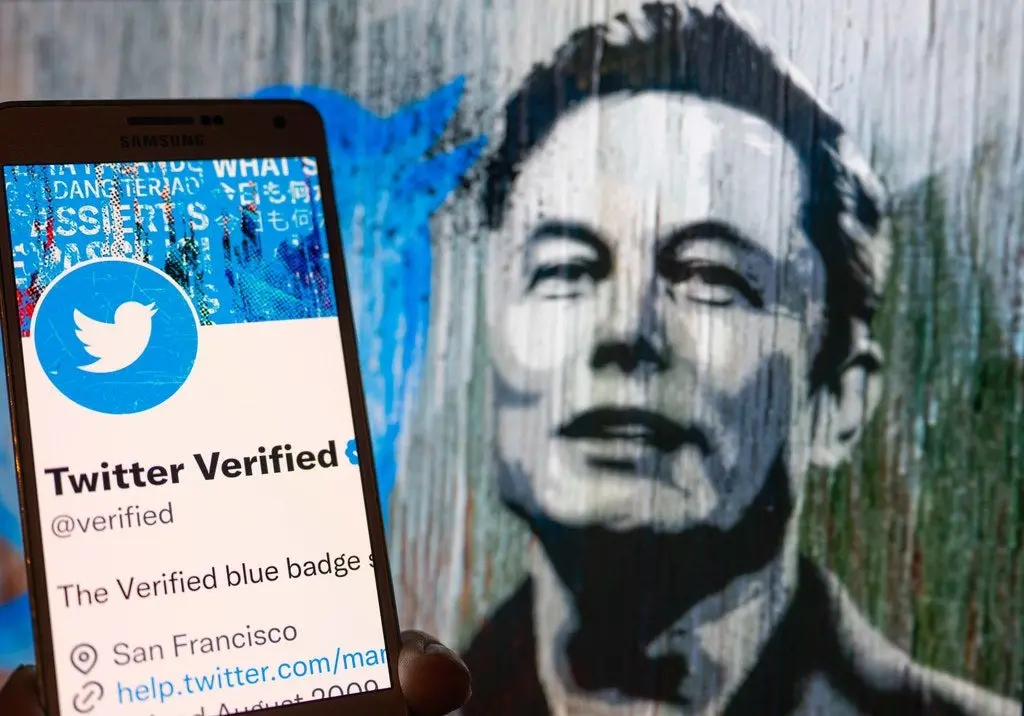
The social media landscape is undergoing a seismic, unprecedented transformation, driven largely by the aggressive commercialization strategies currently unfolding at Twitter (now rebranded as X under Elon Musk). At the core of this ideological and structural shift is the controversial dismantling of the legacy verification system—a status symbol that once denoted identity, authority, and public interest authenticity—and its replacement with a subscription-based model known as Twitter Blue.
As of April 1, legacy verified accounts face the definitive stripping of their blue checkmarks unless they enroll in the paid tier. This policy update is not merely an aesthetic or administrative adjustment; it represents a fundamental rewiring of digital sociology, platform economics, and online visibility. Paradoxically, while the platform works feverishly to monetize the verification badge, it is simultaneously developing features that allow these very same paying subscribers to hide their blue checkmarks. This internal contradiction points to a profound identity crisis: paying for status has simultaneously become a badge of honor for some and an acute source of digital embarrassment for others.
Simultaneously, Twitter has rolled out profound algorithmic adjustments, most notably prioritizing paid subscribers within the platform’s default "For You" discovery feed, while relegating unpaid, regular accounts strictly to the chronological "Following" feed. Industry analysts, digital sociologists, and regular users alike are sounding the alarm. By tying algorithmic amplification to a financial subscription, the platform risks transforming its primary discovery engine into an echo chamber dominated by self-promoters, opportunistic hucksters, and agile corporate brands circumventing traditional advertising budgets.
This in-depth investigative report examines the mechanics of Twitter’s paid verification rollout, analyzes the profound implications for digital discourse and brand marketing, maps the historical chronology of these platform shifts, and projects what the future holds for the once-venerable town square of the internet.
Detailed Chronology of the Twitter Blue Rollout
To fully understand the gravity of the current landscape, it is essential to trace the rapid, often chaotic timeline that brought Twitter to this pivotal juncture. The transformation of verification from a security measure to a commercial product is one of the most volatile product pivots in corporate history.
Phase 1: The Pre-Musk Era of Verification
Before the acquisition of the platform by Elon Musk in late 2022, Twitter’s verification system was established in 2009 as a direct response to a lawsuit filed by baseball legend Tony La Russa over a fake account. The iconic blue checkmark was explicitly designed as a protective, deterministic tool. It signaled to the public that an account belonging to a public figure, politician, journalist, celebrity, or organization was authentic. It was free, highly selective, and notoriously difficult to acquire, operating as an institutional trust metric rather than a revenue stream.
Phase 2: The Chaos of the Initial Takeover (Late 2022)
Following the completion of the $44 billion acquisition in October 2022, leadership pivoted almost immediately toward monetization strategies to offset the heavy debt load assumed in the buyout. In November 2022, Twitter launched the first iteration of Twitter Blue at $8 per month, granting the checkmark to anyone willing to pay.
The rollout was plagued by immediate vulnerabilities. The lack of rigorous upfront identity verification led to an immediate wave of high-profile impersonation attacks. Trolls and bad actors purchased checkmarks and successfully posed for pharmaceutical giants, politicians, and corporate brands—most famously resulting in a fake Eli Lilly tweet announcing free insulin, which instantly wiped billions of dollars off the company’s market capitalization. The feature was abruptly pulled, reworked, and re-launched in December 2022 with tiered check colors (gold for businesses, grey for government, and blue for individuals), alongside a mandatory waiting period for new subscribers.
Phase 3: The Sunset of Legacy Verified Accounts (March – April 2023)
As winter turned to spring, leadership set its sights on the remaining vestiges of the old system: the legacy verified accounts. On March 23, 2023, official communications announced that the curtain would finally fall on the pre-Musk verified user base. Starting April 1, 2023, all legacy checkmarks would be systematically removed.
In tandem with this announcement, platform engineers began developing counter-features, including options allowing paid subscribers to hide their verification badges. This simultaneous push-and-pull mechanism highlighted a growing internal realization: while the company desperately needed subscription revenue, the social stigma attached to paying for what was once an earned status symbol was creating significant churn and user resistance.
Phase 4: Algorithmic Gating and the "For You" Monopolization
As the deadline approached, platform updates made it clear that possessing a checkmark was no longer just about prestige; it was becoming a baseline requirement for structural visibility. Algorithm adjustments ensured that only paid accounts would receive priority amplification in the default "For You" algorithmic feed. Unpaid accounts were structurally segmented, ensuring that organic, non-monetized content would struggle to break out of the closed-loop chronological feeds of existing followers.
Supporting Context & Metrics: The Economics of the Checkmark
The transition from a trust-based ecosystem to a pay-to-play architecture fundamentally alters the economics of content creation, digital marketing, and user engagement. To grasp the scale of this shift, one must examine the underlying metrics and strategic motivations driving the platform’s behavior.
+-------------------------------------------------------------------------+
|                       THE TWITTER FEED DUALISM                          |
+------------------------------------+------------------------------------+
|            "FOR YOU" FEED          |          "FOLLOWING" FEED          |
+------------------------------------+------------------------------------+
| • Algorithmically driven           | • Strictly chronological           |
| • Heavily prioritizes Paid Subs    | • Contains unpaid accounts         |
| • Open to external discovery       | • Limited to established follows   |
| • Prime real estate for brands     | • Retains classic Twitter feel     |
+------------------------------------+------------------------------------+
The Financial Imperative and Subscription Yield
Twitter’s leadership faces immense financial pressure to diversify revenue away from traditional brand advertising, which experienced steep declines following the platform’s policy and leadership shifts. Twitter Blue was envisioned as a reliable, recurring subscription engine. However, early adoption metrics fell significantly short of initial projections. Estimates indicated that by early 2023, only a tiny fraction of the platform’s active monthly user base—fewer than 1%—had converted to paid subscribers.
By forcing the hand of legacy verified accounts—comprising journalists, academics, activists, and cultural figures who rely on the platform for professional distribution—leadership attempted to artificially inflate conversion rates. Yet, this strategy risks alienating the very content creators who generate the cultural discourse that keeps the platform engaging in the first place.
The Brand Exploitation Loophole
One of the most consequential side effects of tying algorithmic amplification to a subscription fee is its impact on corporate advertising strategy. Traditionally, brands spent significant portions of their marketing budgets on promoted tweets, targeted ad campaigns, and sponsored trends to achieve high-visibility traction.
However, under the new algorithmic reality, brands can effectively bypass expensive ad structures. By simply paying the nominal monthly fee for a verified organizational or professional account, corporate entities can secure algorithmic tailwinds that push their organic, unpaid posts directly into the "For You" feeds of millions of users. This democratization of amplification—or rather, its commodification—creates an uneven playing field where visibility is dictated not by the resonance or quality of the content, but by the user’s willingness to subscribe.
The Rise of the "Attention Economy" Huckster
By limiting broad distribution primarily to paying users, the platform inadvertently constructs a magnet for opportunistic actors. The "For You" feed risks devolving into an arena dominated by self-promoters, crypto-hype merchants, outrage farmers, and engagement-bait creators. Because these actors are financially motivated to monetize their online presence, they are naturally inclined to absorb the cost of a subscription as a standard business expense of digital marketing.
Conversely, regular users, casual observers, and nuanced commentators who use the platform for interpersonal connection or casual news consumption find themselves priced out of mass algorithmic reach. The resulting environment threatens to polarize the user base completely: hyper-monetized noise in the discovery feed, and isolated, quiet community hubs in the chronological timeline.
Official Statements and Industry Reactions
The restructuring of Twitter’s verification and discovery systems has elicited fierce commentary, official statements, and regulatory scrutiny from around the globe.
Platform Leadership Rationale
Proponents of the paid verification model, echoing statements from Elon Musk and platform executives, argue that the old system was fundamentally corrupt and elitist. Leadership frequently characterized the legacy checkmark system as a "lords and peasants" structure that favored traditional media elites and privileged insiders over everyday creators.
From this perspective, charging a flat monthly fee democratizes the platform, giving every user an equal opportunity to access tools like longer posts, edit capabilities, and algorithmic priority. Executives have argued that charging for verification is also the single most effective countermeasure against bot networks, reasoning that operating millions of automated bot accounts becomes economically unfeasible if each one requires a paid subscription.
Pushback from Civil Society, Journalism, and Organizations
The reaction from civil society, news organizations, and public figures has been overwhelmingly critical. Major news outlets, public health institutions, and governmental agencies announced they would refuse to pay for verification, arguing that paying a private corporation for authenticity compromises their institutional independence and journalistic integrity.
Journalism advocacy groups pointed out that stripping verification from reporters leaves the public dangerously vulnerable to sophisticated misinformation campaigns, particularly during breaking news events, natural disasters, and geopolitical crises where timely, authenticated information is a matter of public safety. The ability of bad actors to purchase a blue checkmark and momentarily masquerade as verified authorities undermines the foundational trust required for a functional public square.
Furthermore, the paradox of introducing a feature that allows paying users to hide their blue checkmarks drew sharp ridicule from tech analysts. Observers noted that introducing a "hide my check" toggle is a tacit admission that the blue checkmark has transformed from an authoritative badge of trust into a social stigma—a digital scarlet letter signaling that the user has financially subsidized the platform.
Future Outlook: What Lies Ahead for the Platform and the Digital Ecosystem
As the dust settles on the removal of legacy checkmarks and the full implementation of algorithmic feed segregation, the long-term viability of this model remains one of the most hotly contested debates in the technology sector.
1. Fragmentation of the Social Graph
The division between the algorithmic "For You" feed (dominated by paying promoters and brands) and the chronological "Following" feed (retaining unpaid, organic human connections) may lead to a permanent psychological split among users. Dedicated users may retreat entirely into their curated chronological feeds, effectively ignoring the platform’s broader discovery mechanisms. This insular behavior reduces overall ad inventory value and diminishes the serendipitous discovery that historically made Twitter a powerful cultural engine.
2. The Rise of Decentralized Alternatives
The turbulence at Twitter has provided an unprecedented catalyst for decentralized, open-source social media platforms. Networks built on protocols like ActivityPub—such as Mastodon—alongside emerging invite-only platforms and independent microblogging alternatives, have experienced significant surges in migration whenever policy shocks hit Twitter. While none of these alternatives have yet matched Twitter’s sheer scale or cultural ubiquity, the continuous alienation of legacy creators and institutional users steadily weakens the platform’s monopoly on real-time public discourse.
3. Regulatory and Legal Headwinds
The weaponization of verification and algorithmic amplification also invites heightened regulatory scrutiny. Governments and legislative bodies, particularly within the European Union under the Digital Services Act (DSA), are closely monitoring how platforms handle content moderation, algorithmic transparency, and the potential amplification of misinformation. If paid verification facilitates the spread of deceptive financial scams, political interference, or health misinformation by artificially boosting unverified bad actors who simply paid a fee, platform operators could face severe legal penalties and compliance mandates.
Conclusion
Twitter’s aggressive pivot toward a subscription-driven verification and discovery model marks the end of an era for social media governance. By treating identity authentication as a commodity rather than a public utility, and by gating algorithmic reach behind a paywall, the platform is actively reshaping who gets heard on the internet. Whether this high-stakes gamble will successfully forge a sustainable, profitable business model or alienate its core user base into extinction remains the defining question of the modern digital age. One thing is certain: the digital town square will never be the same again.