Executive Overview
For well over a decade, the consumer data broker empire known as Radaris operated with virtual impunity, ignoring requests to remove personal dossiers from its expansive network of people-search engines. That era of unaccountability has officially come to a crashing halt. In a historic legal showdown, a New Jersey judge ordered the transfer of radaris.com and more than a dozen associated domains directly to the plaintiffs.
The enforcement action stems from fierce violations of Daniel’s Law, a stringent New Jersey privacy statute designed to protect judges, law enforcement personnel, government workers, and their families from targeted harassment and safety threats. By weaponizing a complex web of offshore corporate shells, fictitious executives, and procedural delays, Radaris managed to evade accountability for ten years.
However, a relentless legal campaign led by Atlas Data Privacy Corp—bolstered by exhaustive investigative reporting from KrebsOnSecurity—has pierced the corporate veil. This landmark case exposes the inner workings of a massive, Massachusetts-operated data-scraping network that quietly monetized the private lives of millions. As the battle shifts to federal appellate courts over constitutional challenges to Daniel’s Law, the fall of Radaris serves as a watershed moment in the modern debate over digital privacy, data brokers, and regulatory oversight in the United States.
Detailed Chronology: From Russian Roots to the Ultimate Domain Seizure
The Genesis of Daniel’s Law and the Atlas Lawsuit
In February 2024, Atlas Data Privacy Corp initiated legal proceedings against Radaris, targeting the company’s blatant disregard for Daniel’s Law. Enacted in the wake of a horrific family tragedy involving a federal judge, the statute empowers designated public officials to demand the total removal of their personal information from commercial people-search sites. More importantly, it carries statutory penalties of $1,000 per violation for companies that ignore these takedown requests.
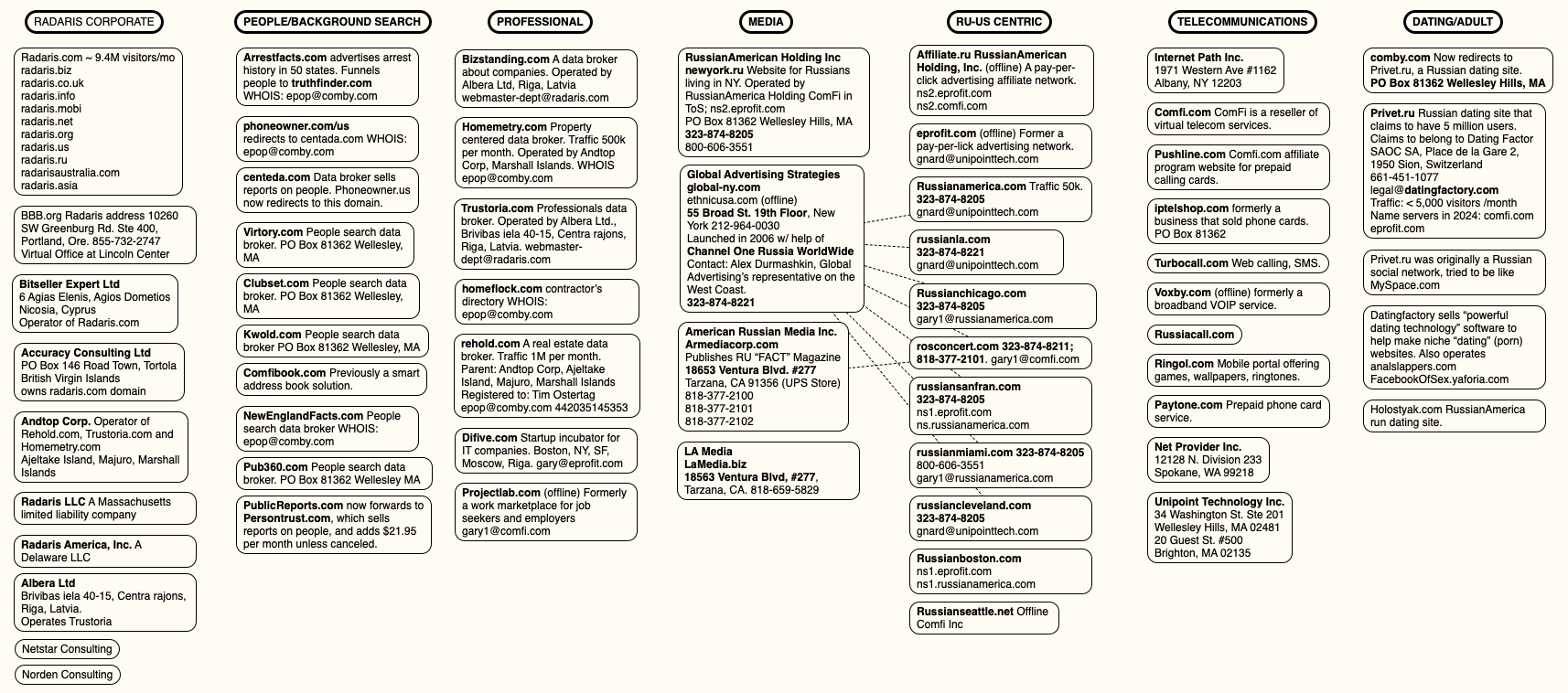
Less than a month after the lawsuit was filed, investigative journalist Brian Krebs published an extensive deep-dive into the masterminds behind Radaris: Igor and Dmitry Lubarsky (also known as Lybarsky), Russian-born brothers residing in Massachusetts. The report revealed that the duo operated a dizzying array of people-search companies, alongside Russian-language dating platforms and digital affiliate programs.
The Defamation Threats and the Fictitious CEO
Rather than answering the substantive allegations in court, attorneys for the Lubarsky brothers initially threatened a defamation lawsuit unless the damaging reports were scrubbed and an apology issued. Their legal representation claimed the reporting was entirely inaccurate and insisted that the true owners of Radaris were Ukrainian citizens living in Ukraine.
Undeterred, KrebsOnSecurity doubled down, unmasking how the brothers operated their data broker network using a fictitious CEO named “Gary Norden.” Val Gurvits, an attorney with the Boston Law Group representing Radaris, eventually admitted that his clients had fabricated the executive’s identity. Furthermore, Radaris had distributed multiple press releases over the years quoting this phantom CEO to court prospective investors.
The Shell Game: Island-Hopping and Corporate Evasions
As legal pressure mounted, Radaris deployed a playbook of obstruction. In June 2025, Atlas re-filed its lawsuit, dramatically expanding the scope to include a wider family of sister data brokers accused of violating Daniel’s Law.
Matt Adkisson, president and CEO of Atlas, described the defense strategy as an international shell game.
"We refer to this period as their island-hopping phase," Adkisson noted. "Privacy policies changed constantly, and new entities kept appearing from places like the Marshall Islands, the British Virgin Islands, and Seychelles. Behind the scenes, it felt like a shell game."
Adkisson detailed how the defendants repeatedly updated their terms of service to claim that management had shifted to newly minted entities in jurisdictions like the Marshall Islands. When Atlas hired local investigators, they discovered that the designated managing corporations did not even legally exist.
This strategy of corporate attrition was not new. In a 2017 class-action lawsuit (Huebner v. Radaris, LLC), Radaris similarly refused to contest claims, resulting in a $7.5 million default judgment. When plaintiffs found it impossible to collect, the court ordered Verisign to transfer the domain name to them. Gurvits successfully appealed that verdict on due process grounds, arguing the suit failed to name the true domain owner—a Cyprus-based firm called Bitseller Expert Limited. Soon after, the operational mantle shifted to Andtop Company, established in the Marshall Islands in October 2020.
The Final Reckoning
By late August, the patience of the New Jersey court wore thin. The presiding judge found that the defendants had been granted ample opportunities to mount a defense but repeatedly failed to do so.
While Gurvits declined to comment on the final judgment—noting the case had been reassigned to attorney Victor Worms—Worms maintained a procedural defense. Worms asserted that the default judgment was legally void because "Radaris.com" is not a formal legal entity capable of being sued, and vowed to appeal the domain transfer as an unconstitutional forfeiture.
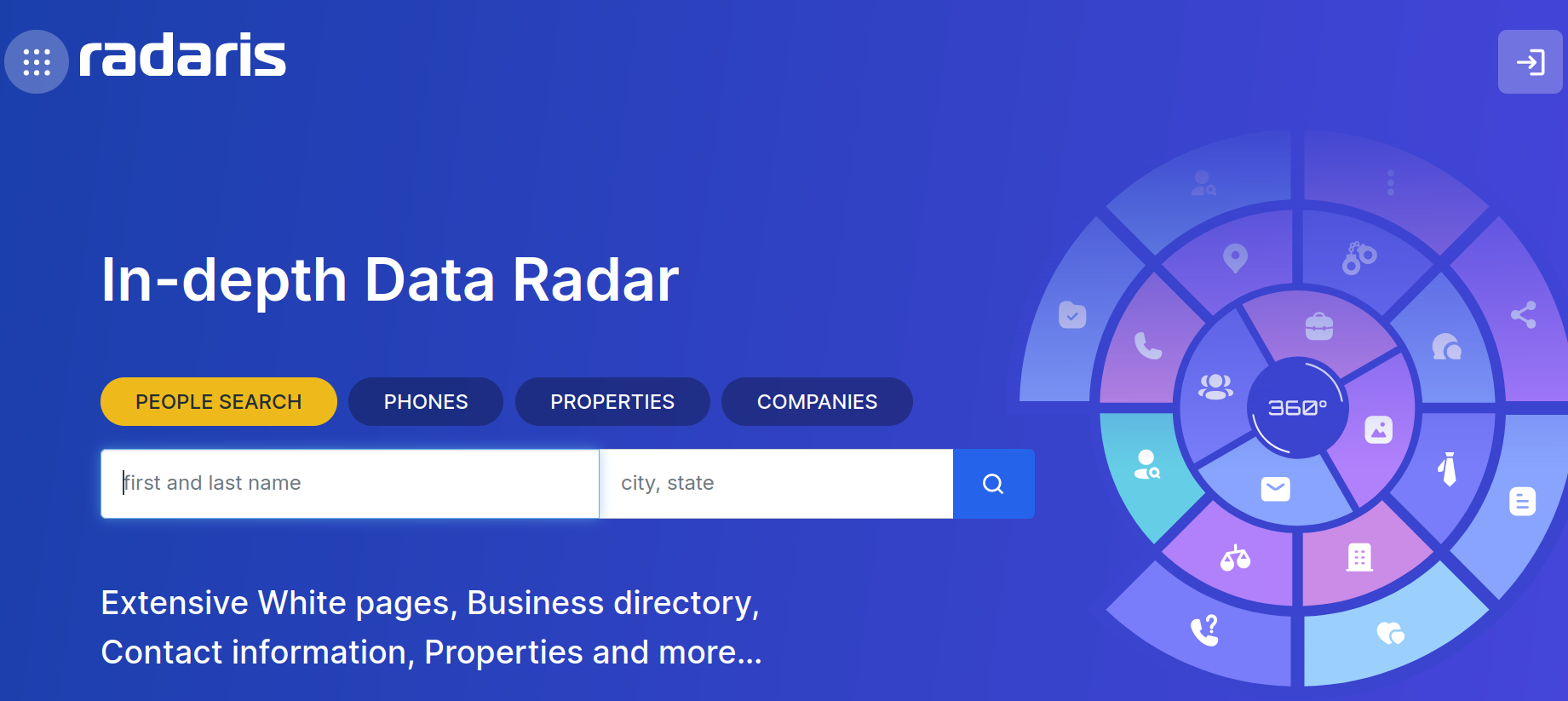
Today, visiting radaris.com yields no commercial people-search dossiers. Instead, the homepage features a formal notice from Atlas detailing the court-ordered domain transfer.
Supporting Context & Metrics: Unmasking the Data Broker Apparatus
Internal communications and financial documents unearthed during discovery provide an unprecedented look into the mechanics of the Radaris empire. Atlas reported acquiring more than 10,000 internal emails and corporate documents that validate years of investigative reporting.

The Corporate Mirage
The documentary cache proves that nominal legal entities—including Radaris America, Inc., Bitseller Expert Limited, Digital Orbit Corp, Core Solutions Group Inc, Lucky Solutions Inc, Virtura Corp, Veripages Inc., Nuform Solutions Inc., Growth Data Advisors Inc., and Property Experts, Inc.—were nothing more than hollow facades.
In reality, these entities were:
- Administered by the exact same group of three to four individuals.
- Operated out of identical administrative mailboxes and a shared virtual office address.
- Tied to a centralized banking and payment card apparatus.
- Anchored technologically to the
difive.commail domain and its successor domains (centerex.com,scienteco.com,eprofit.com,realmo.com,pub360.com).
Lucrative Partnerships and Revenue Streams
The unsealed emails exposed the substantial financial footprint of the operation:
- Radaris.com generated an estimated $42,000 per month in revenue.
- Veripages.com raked in approximately $45,000 monthly, heavily fueled by commercial partnerships with the Lifetime Value Company—a marketing entity behind brands like PeopleLooker, PeopleSmart, NumberGuru, and the automotive history platform Bumper.
- The Radaris network pulled in up to $25,000 monthly through partnerships with Onerep, a privacy service marketed as a removal tool for consumer data. This partnership highlighted an insidious industry loop: earlier investigative findings revealed that Onerep’s founder had simultaneously launched and operated competing people-search sites like Nuwber, effectively selling the disease while offering the cure.
To date, the New Jersey court has authorized the transfer of 14 domain names from the Radaris ecosystem to Atlas, systematically dismantling the infrastructure of one of the web’s most persistent data harvesters.
Official Statements and Legal Perspectives
The litigation surrounding Daniel’s Law has illuminated the deep fractures between state privacy mandates and the commercial data broker industry.
- Raj Parikh (PEM Law): Representing Atlas in the New Jersey litigation, Parikh highlighted the psychological and procedural hurdles plaintiffs historically faced. "In the past, they won by attrition. Plaintiffs’ attorneys tired of the procedural games and just gave up. That strategy worked for a decade… But we were acutely aware of the threat this website posed to law enforcement officers… and decided early on to commit whatever time and resources were necessary to remove that threat."
- Matt Adkisson (Atlas Data Privacy Corp): Pointing to the systemic evasion tactics of foreign-domiciled entities, Adkisson emphasized the lengths to which modern data brokers go to keep their true identities concealed behind corporate shells in the Marshall Islands, British Virgin Islands, and Seychelles.
- Victor Worms (Defense Counsel): Maintaining that the legal process violated foundational principles of corporate liability, Worms stated that the defense will aggressively pursue appellate remedies to challenge what they characterize as an unlawful forfeiture of non-entity assets.
Future Outlook: The Battle for Federal Privacy Standards
While the fall of Radaris marks a monumental tactical victory for privacy advocates, the broader war over Daniel’s Law and consumer privacy is far from settled.
The Constitutional Challenge
The broader data broker industry is pushing back aggressively. Approximately 70 lawsuits filed by Atlas have been removed to federal court, where the industry is challenging Daniel’s Law as an overbroad violation of the First Amendment rights of commercial entities. While the U.S. Court of Appeals for the Third Circuit has yet to rule, the ultimate destination for the statute is widely anticipated to be the U.S. Supreme Court.
State-level battles are similarly fraught. While at least 14 states have introduced legislation modeled after New Jersey’s framework, federal district courts have demonstrated skepticism; notably, West Virginia’s version of Daniel’s Law was struck down as facially unconstitutional in August 2025.
The Structural Flaws of 21st-Century Privacy
Privacy experts argue that targeted statutes like Daniel’s Law, while vital for public officials, highlight a glaring vacuum in federal oversight. Justin Sherman, a privacy expert and author of the forthcoming book The Middlemen, emphasizes that people-search businesses will continue to flourish until Congress enacts comprehensive, federal data protection legislation.
Sherman points out that virtually all state-level privacy statutes exempt documents deemed "public" or "government records"—a vast category encompassing voting registries, property deeds, marriage certificates, motor vehicle logs, criminal histories, and professional licenses.
Furthermore, the lack of federal rules governing how private entities handle biometric data and scanned identification documents leaves the public constantly vulnerable. Sherman noted the stark contrast between narrow state privacy bills and systemic national failures, such as the massive breach at IDScan.net, which exposed the driver’s licenses of over 153 million Americans to dark web identity thieves.
"The average person can look at Daniel’s Law and have a perfectly normal reaction, which is that everyone should be covered, not just police and judges," Sherman observed. "But we don’t need more wake-up calls. We’ve had eight million wake-up calls already on the need for better privacy laws. The lack of comprehensive federal privacy law is not for a lack of knowledge, and anyone claiming otherwise is either not reading the news or kidding themselves."
As the legal dust settles on the Radaris domain seizure, the case stands as both a warning to rogue data brokers and a stark reminder of the fragile state of digital privacy in modern America.