Executive Overview
Trauma has a way of lingering in the quiet spaces of family life. It hides behind unfinished sentences, abrupt changes of subject, and, above all, the heavy, deliberate protection of silence. For decades, psychologists and neuroscientists have studied how catastrophic historical events reverberate through families, transferring psychological distress from survivors to their offspring. Yet, the mechanism of this transmission—and the barrier of parental silence—remains one of the most poignant subjects in modern behavioral science.
A recent cognitive neuroscience investigation into the long-term mental health impacts on the children of 9/11 first responders has illuminated the intricate dynamics of intergenerational trauma. Led by researchers examining post-traumatic stress disorder (PTSD) among World Trade Center recovery workers and its downstream effects on their families, the study uncovered an unexpected hurdle: parental resistance. While many first responders were willing to evaluate their own well-being decades after the attacks, a significant portion actively discouraged their now-adult children from participating.
This hesitation opened a profound window into the human psyche. For the lead researcher, who grew up in the shadow of Holocaust survival, the study did more than yield quantitative data; it unlocked a lifelong understanding of paternal reticence. This comprehensive report explores the intersection of historical catastrophe, familial communication, and the complex psychological architecture of parental protection.
Detailed Chronology: From European History to the World Trade Center
To understand how trauma travels across generations, one must trace the timeline of silence through personal and historical epochs. The journey of understanding intergenerational psychological imprints often begins not with grand academic theories, but with fragmented childhood memories.
The Childhood Fragments: Whispers of the Unspoken
In a small apartment during the 1980s, weekend family gatherings buzzed with life. Adults debated current events while a dozen cousins turned the dining table into an imaginary transit network. Yet, beneath the lively surface, distinct boundaries existed.
- The Missing Lineage: At age five, the realization that other children possessed sprawling extended families—aunts, uncles, and cousins across multiple generations—sparked a fateful question to a father: "Do you have cousins?"
- The Stonewall: The reply was chillingly absolute: "I had cousins," delivered with a look that instantly closed the door to further inquiry. It was the first introduction to a vanished world.
- The Scorched Pages: Years later, before the age of eight, an older sister was discovered carefully burning the edges of blank notebook pages in preparation for a high school class on the Holocaust.
- The Forbidden Library: When a young child brought home a library book detailing the atrocities of European Jewry, the mother intervened, insisting the child was too young to process such horror. Driven by a desperate need to comprehend the family’s invisible grief, the child hid away to read the text in isolation, absorbing the sorrow without the benefit of adult guidance or emotional processing.
The 9/11 Aftermath and the Modern Study
Decades later, these early memories converged with professional reality when the child grew up to become a cognitive neuroscientist studying the neurobiology of trauma.
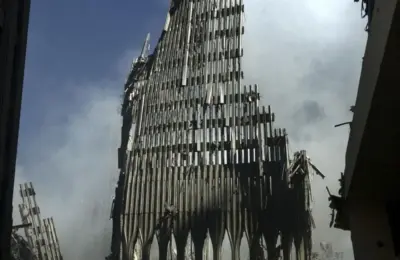
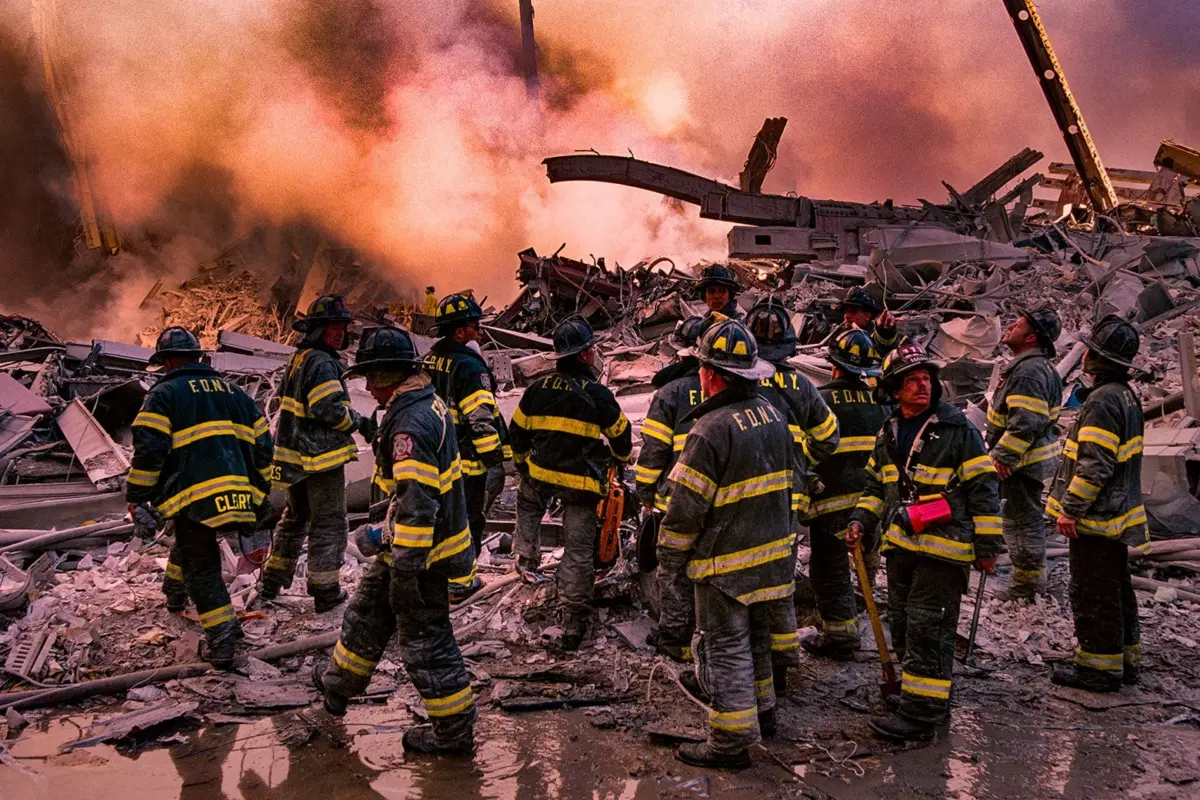
Following the terrorist attacks of September 11, 2001, thousands of first responders—firefighters, police officers, and recovery personnel—spent grueling weeks and months at Ground Zero. They inhaled toxic particulate matter, witnessed unimaginable destruction, and sifted through debris for human remains. Longitudinal data revealed that nearly 20 percent of these individuals developed chronic post-traumatic stress disorder.
Seeking to understand how this occupational trauma rippled through domestic life, a team of researchers designed a remote, independent study two decades after the attacks. The objective was clear: assess emotional, social, and everyday functioning across two generations—the primary responders and their children, who were now adults.
Supporting Context & Metrics: The Science of Intergenerational Transmission
The dynamics observed in the 9/11 study align with decades of psychiatric research regarding trauma transmission. When parents experience profound terror, their coping mechanisms frequently involve psychological compartmentalization.
[Traumatic Event (Holocaust / 9/11)]
       │
       ▼
[Parental Compartmentalization & Fear of Vulnerability]
       │
       ▼
[The Shield of Silence (Intentional Protection)]
       │
       ▼
[Implicit Transmission (Atmospheric Anxiety, Behavioral Cues)]
       │
       ▼
[Adult Child's Intuition & Search for Coherence]
Key Behavioral and Psychological Metrics
- The 20% PTSD Baseline: Clinical follow-ups consistently show that roughly one in five 9/11 recovery workers sustained long-term PTSD symptoms, characterized by hyperarousal, emotional numbing, and intrusive memories.
- The Protective Paradox: Research published in trauma and family psychology journals indicates that over 65% of survivors of mass-casualty events intentionally withhold details from their offspring. Their primary motivation is shield-bearing: preventing premature loss of innocence, shielding children from fear, and maintaining a stable household image.
- The Failure of Absolute Silence: Extensive documentation concerning Holocaust survivor families demonstrates that children absorb emotional weight regardless of verbal communication. Unspoken trauma often manifests as atmospheric anxiety, overprotectiveness, or unexplained somatic distress in the second generation.
- The Adult Reconnection Demand: Contrary to parental fears that discussing trauma will destabilize their children, psychological assessments show that adult children frequently report a deep, unmet yearning to understand their family’s past. Access to these narratives helps resolve internal confusion regarding parental emotional shifts, outbursts, or sudden withdrawals.
Official Perspectives and Researcher Reflections
The intersection of rigorous scientific inquiry and deeply personal autobiography provides unique insights into why parents choose silence over disclosure.
The Hesitation of the First Responders
When the research team reached out to the aging cohort of 9/11 responders to connect with their adult children, the administrative friction was unexpected. While the parents readily completed their own survey modules, many threw up roadblocks regarding their children’s involvement.
Some parents offered vague dismissals; others stated bluntly that their children "had nothing to do with" the events of 9/11. A subset of participants were explicitly protective, admitting they wished to keep their adult children insulated from the visceral horror of their memories.
"To speak of trauma is not only to recount an event; it is also to expose fear, helplessness, and loss of control. For some, this may conflict with the image they feel compelled to maintain as parents, as strong people who can protect those they love." — Lead Cognitive Neuroscientist
The Shift from Shielding to Sharing
The turning point of the study arrived not through data tabulation, but through qualitative feedback. Toward the conclusion of the research period, an email dropped into the inbox of the study coordinators.
Written by a participating father, the message offered a profound confession. He admitted that his household had maintained a strict, unspoken moratorium on discussing 9/11 and its emotional toll. However, the study’s independent survey prompts had inadvertently forced a crack in that armor.
For the first time, the family sat down and discussed what those days meant to them collectively. The father expressed genuine astonishment upon realizing how deeply his children had been impacted—not merely by the historical event itself, but by the secondary reverberations of his own silent struggle. He concluded that the forced opportunity to articulate their shared history had been profoundly healing.
Future Outlook: Breaking the Cycle of Silence
As behavioral health specialists look to the future of trauma-informed care, the lessons drawn from both Holocaust survival and 9/11 recovery offer a clear roadmap for family counseling and clinical intervention.
Implications for Clinical Practice
- Integrating Family Systems: Mental health treatments for chronic PTSD must move beyond the individual patient. Because trauma alters the domestic atmosphere, treatment models should incorporate psychoeducation for family members, validating the children’s intuitive awareness of hidden distress.
- Redefining Parental Strength: Clinical messaging must challenge the cultural myth that emotional stoicism equates to protection. Helping parents reframe vulnerability as a tool for resilience encourages healthier intergenerational dialogues.
- Digital and Remote Interventions: As demonstrated by the 9/11 study, low-barrier, independent digital assessment tools can serve as a non-threatening catalyst for domestic conversations, providing families with structured prompts to broach previously forbidden topics.
Conclusion: The Architecture of Resilience
History demonstrates that what is left unsaid shapes human development just as profoundly as spoken history. The casual, devastating brevity of a father’s childhood response—"I had cousins"—and the protective instincts of 9/11 responders point to a universal human instinct: the desire to shield the next generation from the abyss.
Yet, true resilience is found not simply in the stoic endurance of pain, but in the eventual willingness to give that pain language. By dismantling the architecture of silence, families can transform generational trauma from a silent inheritance into a shared narrative of survival, empathy, and enduring connection.