Executive Overview
As artificial intelligence tools become deeply integrated into professional workflows, LinkedIn is undergoing a quiet yet aggressive structural shift. The platform is actively cracking down on generic, automated, and low-effort artificial intelligence content—colloquially known as "AI slop." Over recent months, automated monitoring systems have blocked billions of posting attempts and hundreds of thousands of daily comment tries. Concurrently, LinkedIn has introduced peer-reporting mechanisms that allow users to flag content suspected of being machine-generated.
Rather than banning AI entirely, LinkedIn is attempting to reframe its utility. The platform has begun phasing out its generic "enhance your post" generative text feature in favor of strict, proofreading-only tools designed to elevate content while preserving the author’s authentic voice. For digital marketers, B2B executives, and content creators, the rules of engagement have fundamentally changed. Utilizing artificial intelligence blindly is no longer just a credibility risk; it is a fast track to algorithmic obscurity.
To navigate this evolving ecosystem, professionals must adopt strategic hybrid workflows—such as the Ideation-Expertise-Polish model—while mastering platform shifts in comments, live streams, and paid advertising. This report provides a comprehensive blueprint for leveraging artificial intelligence on LinkedIn effectively, ensuring that your brand maintains human authenticity and authority.
Detailed Chronology of LinkedIn’s Algorithmic and UI Shifts
Understanding how LinkedIn arrived at its current posture toward artificial intelligence requires examining the timeline of recent feature rollouts, algorithm tweaks, and user-facing reporting mechanisms.
The Rise of Automated Detection and User Policing
Over the past year, LinkedIn’s trust and safety infrastructure has evolved from passive spam filtering to active, behavioral evaluation. The platform introduced a user-facing reporting mechanism allowing members to flag posts and comments they suspect of being heavily generated by artificial intelligence. While these initial reports currently function primarily as a training dataset to refine LinkedIn’s internal detection models rather than immediate punitive strikes, they carry severe indirect consequences.
AI-generated comments flagged by the community routinely suffer from diminished visibility, receiving minimal likes and replies. Because the platform’s organic ranking heavily rewards meaningful back-and-forth interactions, these uninspired comments naturally sink to the bottom of threads, rendering automated commenting bots virtually useless for networking.
The Pivot in Native Tooling
In a clear signal to creators, LinkedIn has systematically dismantled its broad generative writing assistants. The old "enhance your post" feature—which frequently injected unmistakable machine-like phrasing and structural clichés—is being replaced by hyper-focused proofreading utilities. These new native tools focus strictly on grammar, syntax, and readability, ensuring the structural integrity of the author’s unique voice remains untouched.
Evolving Feed Mechanics and Comment Visibility
LinkedIn has also restructured how comments drive platform engagement. Comment impressions are now transparently visible to individual commenters, providing a valuable metric for personal branding. For micro-influencers and accounts struggling to build a native audience, leaving insightful comments on high-traffic profiles has become a viable stand-alone growth strategy.
Furthermore, LinkedIn altered how discussions appear in the primary feed. Rather than forcing users to click through hidden menus to read replies, the platform now surfaces dynamic, top-level comments directly in the main feed. Personalized algorithmic labels ("top comment for you") have replaced static labels, contributing to an 18% year-over-year increase in overall platform comment consumption.
The Ideation-Expertise-Polish Model: A Blueprint for Human-Centric AI Content
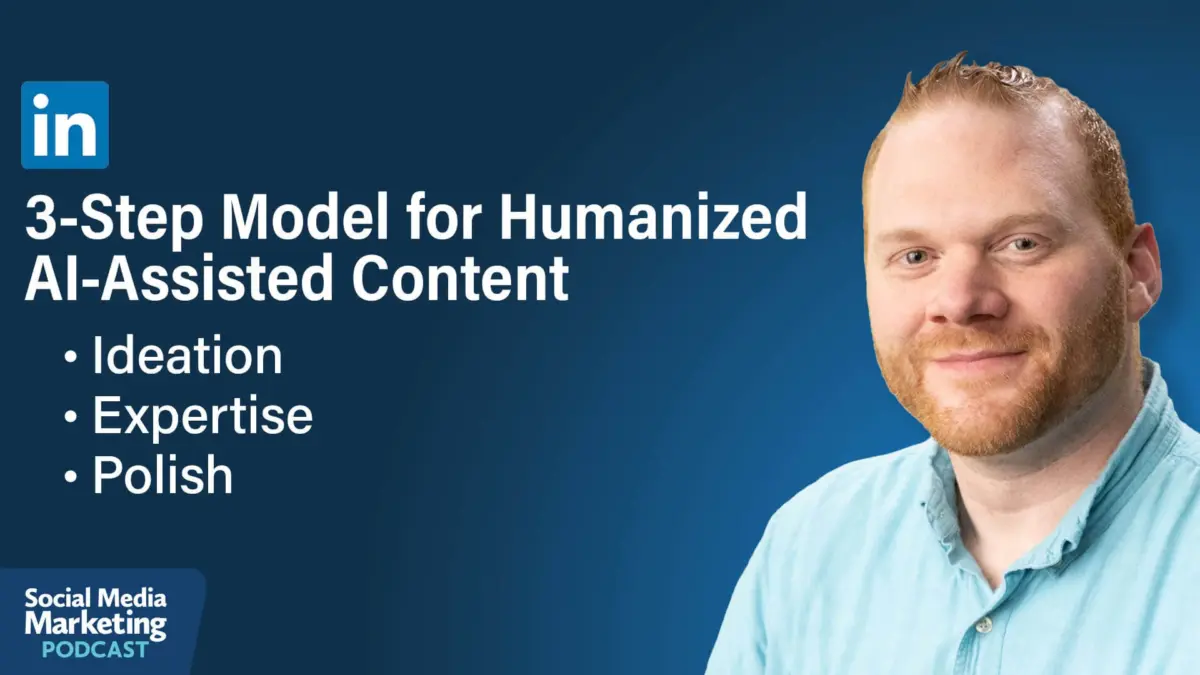
To survive LinkedIn’s crackdown without sacrificing efficiency, creators must move away from using artificial intelligence as a ghostwriter and instead treat it as a collaborator. B2B marketing expert AJ Wilcox advocates for a structured framework known as the Ideation-Expertise-Polish (IEP) model, likening the content creation lifecycle to a sandwich where artificial intelligence forms the crust and human experience forms the core.
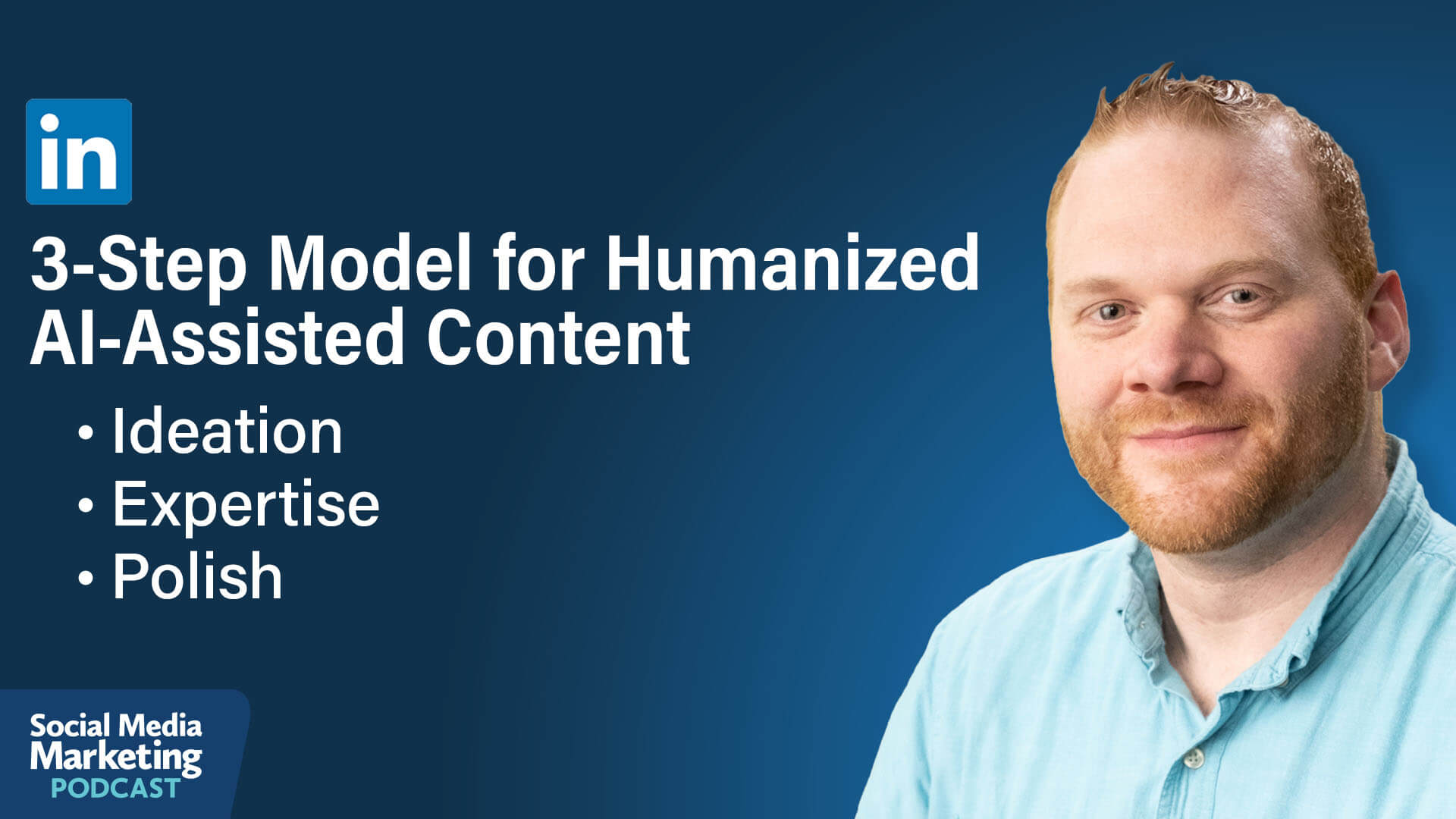
[ AI: Ideation / Brainstorming Angles ]
                  ↓
[ HUMAN: Core Expertise, Nuance, & Original Data ]
                  ↓
[ AI: Polish, Formatting, & Readability Edits ]
Stage 1: AI-Driven Ideation
Artificial intelligence excels at volume, breadth, and cognitive heavy-lifting during the brainstorming phase. Before drafting a post, creators can leverage large language models to generate expansive lists of angles, counter-intuitive perspectives, structural frameworks, and supporting arguments around a chosen subject. This stage is strictly about mapping possibilities, not generating final prose.
Stage 2: The Inreplaceable Human Middle
This is the critical differentiator. The middle tier of the IEP model belongs entirely to the creator’s firsthand professional experiences, proprietary data, industry-specific insights, and specialized nuance. This layer cannot be synthetically generated because it stems directly from real-world execution. Skipping this stage and letting an algorithm write the entire post is what results in homogenized, lifeless content that audiences instantly reject.
Stage 3: Artificial Intelligence Polishing
Once the human-authored draft is complete, artificial intelligence can be safely reintroduced to optimize the text for readability. This includes tightening verbose sentences, correcting structural pacing, and improving visual scanning. At this stage, the AI is editing the author’s exact words—it is not introducing new core concepts.
Recognizing and Eliminating AI "Tells"
Audiences have grown exceptionally adept at spotting machine-generated copy. Certain linguistic patterns immediately trigger skepticism:
- Overused Punctuation: Em dashes ($text—$) are heavily favored by language models at a frequency far exceeding typical human writing styles, making them a primary red flag.
- Cliché Terminology: Phrases such as "guard your mental faculties" or "this is silently killing your strategy" reveal the dramatic tendencies models default to when generating hooks.
- Inauthentic Emojis: Randomly inserted emojis that clash with a user’s established writing voice often signal automation.
Pro Tip: While some creators experiment with intentionally injecting typos to appear more "human," this is an unreliable tactic. Advanced models can easily replicate imperfections upon command. Ultimately, audiences do not penalize polish; they penalize emptiness. A well-formatted, highly readable post will consistently perform well as long as it delivers substantive value.
Strategic Timing and Cadence for Maximum Reach
Publishing frequency and scheduling play a profound role in how LinkedIn’s algorithm distributes content. Data-driven posting cadences help maximize an update’s half-life in the feed.
Recommended Posting Schedules
- Two Posts Per Week: Publish on Tuesday and Thursday.
- One Post Per Week: Publish on Wednesday as the single strongest day of the week.
- Days to Avoid: Monday experiences hyper-competitive noise as professionals catch up on emails, while Friday suffers from sharp audience disengagement as workers mentally transition to the weekend.
The Cannibalization Rule
Never publish more than once per day on LinkedIn. A second daily post actively steals engagement and impressions from the first, cannibalizing your total organic reach. Furthermore, creators must allow breathing room between consecutive publication days. If a previous post is still actively accumulating comments and algorithmic momentum, publishing a new update too early will cause the platform to abruptly shift attention to the newer asset, truncating the first post’s lifespan.
Harnessing New LinkedIn Features for Growth
1. Comment-Led Growth Strategies
Because LinkedIn surfaces comment threads more prominently than ever, commenting has evolved from a simple networking courtesy into a powerful primary growth tactic. For professionals lacking massive follower counts, leaving thoughtful, high-density contributions on viral or industry-leading posts yields substantial impression metrics without requiring the heavy lift of daily original publishing.
To execute this effectively:
- Curate your feed deliberately by searching for and following niche hashtags (e.g.,
#B2BMarketingor#LinkedInAds). - Broaden your search to adjacent, complementary industries to capture prospective clients rather than direct competitors.
- Engage authentically via direct messages and profile connections to train the algorithm to surface similar content continuously.
2. Crafting High-Density Comments
LinkedIn’s internal metrics place immense value on comment density—the depth, substance, and multi-party richness of a discussion thread—rather than superficial surface engagement (e.g., "Great post!" or "Thanks for sharing").
To stimulate high-value algorithmic responses:
- Challenge perspectives respectfully using open-ended questions like "Am I wrong?" or "What am I missing here?"
- Target the critical 1-to-2-hour window immediately following a target post’s go-live timestamp to maximize initial algorithmic velocity.
- Practice the Ted Lasso Principle when disagreeing: “Be curious, not judgmental.” Open with a genuine compliment, offer a divergent take gently, and close by inviting the author’s counter-perspective.
3. AI-Powered Live Stream Tools and Executive Content
LinkedIn’s integration of artificial intelligence into its live-streaming tools has solved one of the format’s historically weakest attributes: post-event discoverability. The platform’s automated systems now evaluate live video replays, instantly generating short-form clips and clickable chapter markers. This allows users to jump directly to specific topics rather than scrubbing through long-form recordings.
This capability lowers the barrier to entry for executive thought leadership. Many CEOs and enterprise leaders avoid video creation due to high production overhead and scripting costs. By utilizing a simple interview format recorded via high-definition remote platforms (such as Riverside, Squadcast, or StreamYard) and leveraging LinkedIn’s automated clipping tools, executives can effortlessly produce months of micro-content from a single conversation.
Navigating LinkedIn Ads: Avoiding the Variation Trap
On the paid media side, LinkedIn now integrates generative artificial intelligence tools directly into its advertising campaign manager to assist with headline and introductory copy generation. While these tools save time, advertisers must exercise caution regarding structural best practices—particularly concerning ad set variations.
The Danger of Over-Variation
LinkedIn recommends running five or more ad variations per campaign, citing potential 20% increases in click-through rates. However, seasoned B2B media buyers warn against blindly following this guidance due to structural mechanics within the platform’s auction system.
Running five or more unique creatives per campaign breaks LinkedIn’s built-in frequency cap, which normally restricts the platform from showing the exact same ad to an individual user more than twice a day. When an advertiser uploads five or more variations, the system treats each asset as a distinct bidding entity, repeatedly pulling the same users into separate ad auctions. This artificially inflates frequency, burns out target audiences quickly, and drives cost-per-click (CPC) metrics unnecessarily high.
Recommended Paid Media Playbook
- Optimal Creative Volume: Stick to 2 to 4 creative variations per ad set (e.g., one core visual paired with two distinct text variations, or vice versa). This stays safely within frequency control limits while providing adequate multivariate testing data.
- Cross-Platform Caution: Do not import Meta’s high-volume creative testing strategies directly onto LinkedIn. Meta’s algorithm relies heavily on broad placements and massive creative libraries; LinkedIn’s professional auction network operates on entirely different behavioral dynamics.
Future Outlook
As artificial intelligence detection models grow more sophisticated, the line between authentic human insight and machine-generated filler will continue to sharpen. LinkedIn’s ongoing refinement of its reporting and analytics infrastructure indicates that future algorithm updates will penalize low-effort content more severely, while rewarding depth, community interaction, and original thought leadership.
For marketers, the mandate is clear: artificial intelligence must be utilized to augment productivity, streamline ideation, and polish execution—never to replace the human voice. By anchoring content strategies in real-world expertise, mastering comment-driven networking, and deploying targeted, disciplined paid media frameworks, professionals can future-proof their presence and build sustainable, high-authority influence on LinkedIn.