Executive Overview
The artificial intelligence landscape is undergoing a structural transformation, shifting from isolated conversational chatbots to interconnected, agentic ecosystems capable of autonomous reasoning, cross-platform execution, and real-time multimodal interaction. In what industry insiders are calling one of the most prolific development windows in recent technology history, major AI laboratories and tech giants have simultaneously rolled out foundational updates that redefine how human-computer interaction operates in professional workflows.
Over the past week, the industry has witnessed a barrage of high-impact releases: Anthropic launched Claude Sonnet 5.5, emphasizing token efficiency and speed for professional codebases; Google introduced Gemini 3.8 Live with Live Avatar, expanding real-time conversational video personas into enterprise domains; and OpenAI unveiled a massive slate of developer and consumer features at DevDay 2026, alongside the introduction of the cost-effective GPT-6 Sol and Luna models.
Concurrently, everyday professionals are discovering that mastery of AI is no longer limited to high-level prompting or software engineering. Practical frameworks for bridging generative text tools like ChatGPT with layout engines like Canva, alongside advanced video workflows using Google’s Gemini Omni, are democratizing enterprise-grade media production. This report provides an exhaustive, authoritative breakdown of these technological leaps, the strategic implications for modern enterprises, and the tactical methodologies marketers and developers are employing to future-proof their operational workflows.
Detailed Chronology of Recent Releases and Updates
The rapid-fire cadence of announcements over the past seven days reflects an industry aggressively competing for enterprise dominance and developer mindshare. Below is the detailed chronology of these transformative releases.
1. Anthropic Unveils Claude Sonnet 5.5
Anthropic officially released Claude Sonnet 5.5, engineered specifically to optimize performance across coding environments, professional writing workflows, and complex data analysis tasks.
- Performance Enhancements: Sonnet 5.5 significantly outperforms its predecessor (Sonnet 5) across standardized industry evaluations. It generates responses more than 30% faster while simultaneously reducing the token count required per completed task.
- Strategic Positioning: Anthropic has positioned Sonnet 5.5 in the "sweet spot" of its product hierarchy—sitting directly between the high-volume, rapid-response Haiku 5.5 and the hyper-capable reasoning engine Opus 5.5. The model is now available across major cloud provider networks and directly via the Claude Platform.
2. Google Launches Gemini 3.8 Live with Live Avatar
Google expanded its multimodal real-time capabilities with the introduction of Gemini 3.8 Live, featuring Live Avatar.
- Multimodal Integration: The new architecture fuses real-time speech and video generation with advanced multimodal understanding, background tool execution, and native support for 97 languages.
- Enterprise Customization: Organizations can now deploy animated visual personas that can maintain expressive, low-latency conversations while simultaneously handling backend operational tasks. Enterprises can customize these avatars to reflect specific brand identities or virtual customer service representatives. The service is rolling out immediately through Gemini Enterprise.
3. Expansion of Gemini Connected Apps Ecosystem
To minimize friction and context switching, Google integrated a new wave of third-party productivity and creative apps directly into the Gemini interface.
- New Integrations: Users can now interact natively with platforms including Airtable, Linear, monday.com, Adobe, Squarespace, and Webflow.
- Workflow Impact: This expansion allows Gemini to act as a central hub for complex operations, executing tasks ranging from agile project tracking and structured note organization to dynamic website creation and visual graphic management.
4. Google Introduces Gemini 3.8 Text-to-Speech Models
Google also enhanced its audio infrastructure with the release of Gemini 3.8 Flash TTS and Flash-Lite TTS.
- Vocal Capabilities: These models empower creators and developers to generate original vocal identities, stage complex multi-speaker dialogues, and control vocal delivery through natural-language directorial prompts.
- Safety Protocols: Alongside production-ready multilingual audio, Google integrated strict consent verification mechanisms and invisible AI-content credentials directly into the voice replication pipeline to mitigate deepfake risks.
5. OpenAI’s DevDay 2026: The Agentic Revolution
In what was arguably the week’s most disruptive event, OpenAI delivered over 20 major product announcements at DevDay 2026, fundamentally expanding ChatGPT from a conversational assistant into an expansive ecosystem for persistent agents, custom software, and team collaboration.

- Always-On Dots Agents: OpenAI introduced autonomous "Dots" agents capable of executing background tasks over extended periods without constant human prompting.
- Ecosystem Expansion: Key updates include cloud-based Codex workflows, enhanced developer APIs, customizable plugin experiences, and ChatGPT Space for collaborative enterprise teams.
- Open Developer Marketplace: OpenAI launched external developer extensions, "Sign in with ChatGPT," and a dedicated marketplace, aiming to connect software developers directly with its reported 1.2 billion weekly active users.
6. OpenAI Rolls Out GPT-6 Sol and Luna Models
Capitalizing on the foundational advances of the GPT-6 Astra architecture, OpenAI introduced GPT-6 Sol and GPT-6 Luna.
- Cost and Efficiency: These models improve upon GPT-5.6 across factual reliability, multi-step computer use, and professional communication while cutting API pricing by 50%.
- Infrastructure Updates: OpenAI simultaneously upgraded its prompt caching infrastructure to drastically reduce both latency and cost for autonomous agents and long-running conversations.
Supporting Context & Metrics: The Democratization of Design and Video
While foundational model updates capture headlines, tactical workflows are shifting the day-to-day reality for modern marketers, creative directors, and independent business operators. Two distinct production methodologies—AI-assisted print design and automated video generation—illustrate how technical complexity is being abstracted away.
Bridging ChatGPT and Canva for Print Production
Small business owners and marketing professionals are historically forced to act as multi-hyphenates, balancing strategy, analytics, content creation, and graphic design. Recent workflow innovations demonstrate how to bypass traditional design bottlenecks:
- The Client Brief Method: By briefing ChatGPT with the strategic parameters of a print project—including explicit content, exact physical print specifications, and brand guidelines—users can generate highly accurate conceptual layouts.
- Iterative Art Direction: Creators use native editing tools to mark up drafts, remove backgrounds, or sketch visual corrections directly onto generated images.
- Canva Magic Layers Integration: Once a solid draft is finalized, importing the asset into Canva via Magic Layers allows creators to break the composition into individually editable elements, correcting font shifts and spacing to produce a print-ready asset in minutes.
Mastering Professional AI Video with Gemini Omni
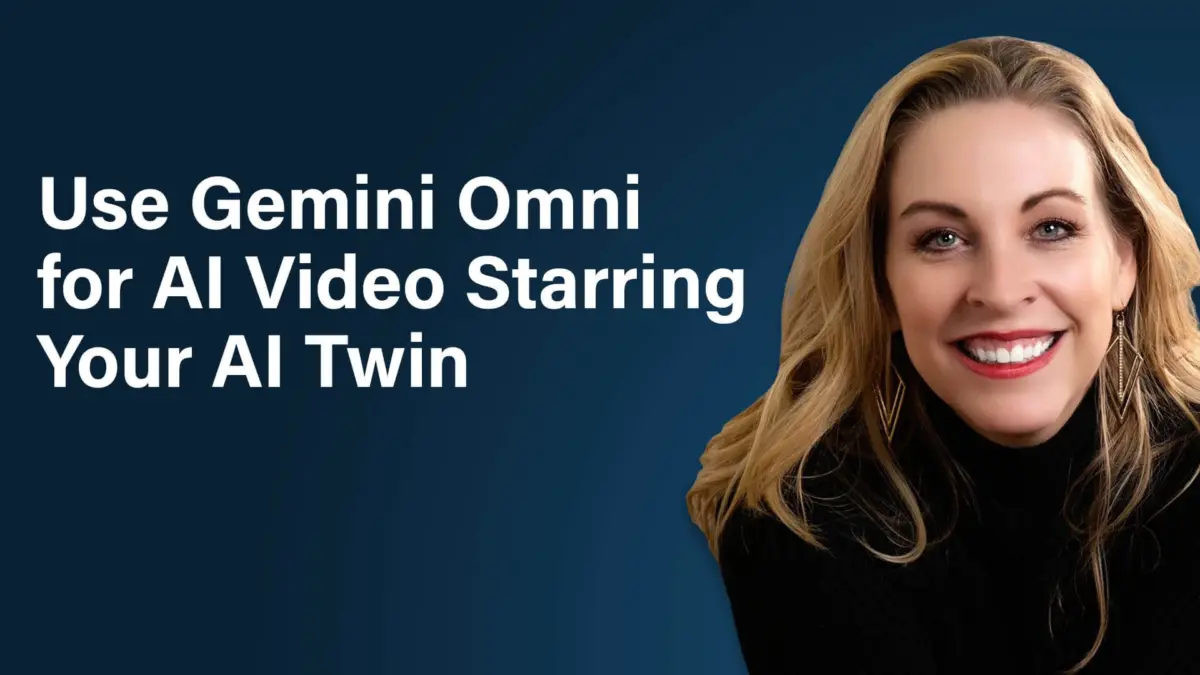
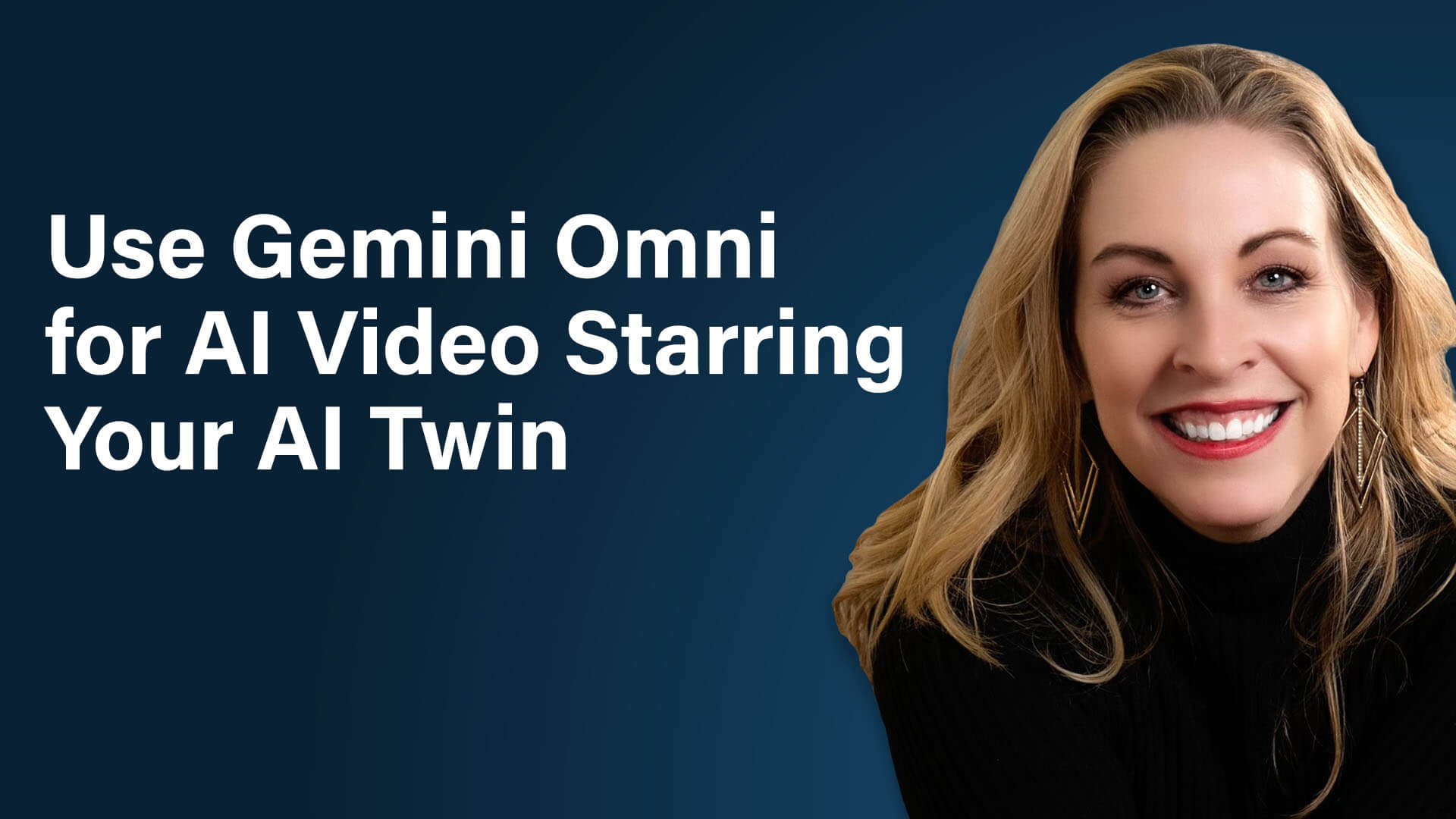
The technical barriers to producing scroll-stopping video content have dissolved. AI video strategists like Eve Whitaker have outlined systematic frameworks for leveraging models like Google’s Gemini Omni to execute professional-grade video campaigns without a traditional film crew:
- AI Twins and Avatars: Marketers can generate realistic digital avatars of themselves in minutes. Success relies heavily on avoiding common recording pitfalls—such as poor lighting or obscured audio—that force AI systems to hallucinate missing anatomical or environmental details.
- Cinematic Prompting: By employing director-level terminology regarding camera angles, framing, and emotional pacing, creators can bypass generic outputs and generate targeted emotional responses from viewers.
- Editing Legacy Footage: Modern multimodal video tools allow creators to non-destructively alter existing footage—changing environmental seasons, adjusting wardrobe, swapping backgrounds, or embedding dynamic motion graphics—without initiating reshoots.
Official Statements and Industry Insights
The convergence of agentic workflows and cross-platform portability has prompted industry leaders to rethink how digital infrastructure is constructed.
During a recent live demonstration, AI workflow expert Nicole Leffer experienced an unexpected technical outage when Claude temporarily went down mid-presentation. Rather than stalling her workflow, Leffer seamlessly exported her context files into ChatGPT, which picked up the exact operational thread without data loss or instruction degradation.

Experts note that this resilience is not accidental. It is the result of portable system architecture—a design philosophy that decouples prompt workflows and business logic from any single proprietary platform. As platform volatility continues to be an industry reality, building transferable system checklists and agnostic AI frameworks has become an urgent priority for enterprise teams.
Furthermore, industry analyst circles point to OpenAI’s DevDay 2026 disclosures as a watershed moment for software distribution. By opening authentication via "Sign in with ChatGPT" and launching a dedicated developer marketplace for a baseline audience exceeding one billion weekly users, OpenAI is successfully positioning its consumer interface as the primary operating system of the modern digital economy.
Future Outlook: Navigating the Agentic Horizon
As the artificial intelligence industry matures through the latter half of the decade, several clear trajectories are emerging for enterprises, developers, and creative professionals:
- The Rise of Autonomous, Persistent Agents: The transition from reactive chat interfaces to proactive, always-on agents (such as OpenAI’s Dots and Google’s Live Avatars) means software will increasingly execute complex, multi-day operations in the background. Organizations must prepare for an operational shift where human workers act primarily as strategic directors rather than tactical executors.
- Ecosystem Interoperability vs. Platform Lock-In: While tech giants are rapidly building comprehensive walled gardens—spanning text, audio, video, and third-party app integration—the smartest organizations will maintain modular, platform-agnostic frameworks. The ability to migrate workflows fluidly between Claude, Gemini, and OpenAI infrastructures will separate fragile setups from resilient enterprise systems.
- Commoditization of Media Production: As demonstrated by rapid advancements in text-to-speech (Gemini 3.8 Flash TTS) and multimodal video editing, the marginal cost of producing professional-grade marketing assets is approaching zero. Consequently, competitive advantage will no longer rely on production capability, but on strategic brand positioning, emotional resonance, and data integrity.
Summary Checklist for Forward-Thinking Organizations
- Audit Your Stack: Ensure your prompt workflows and operational frameworks are portable and not bound to a single AI vendor.
- Embrace Multimodal Tools: Integrate real-time visual avatars and advanced audio generation into your customer engagement pipelines.
- Invest in Training: Equip your teams with practical, hands-on implementation strategies (such as those explored at industry-leading forums like AI Business World and the AI Business Society) to ensure your workforce stays ahead of compounding technological leaps.