Date: October 2, 2026
Author: Catie Owen, Regional Content & Insights Lead
Estimated Read Time: 6 minutes
Executive Overview
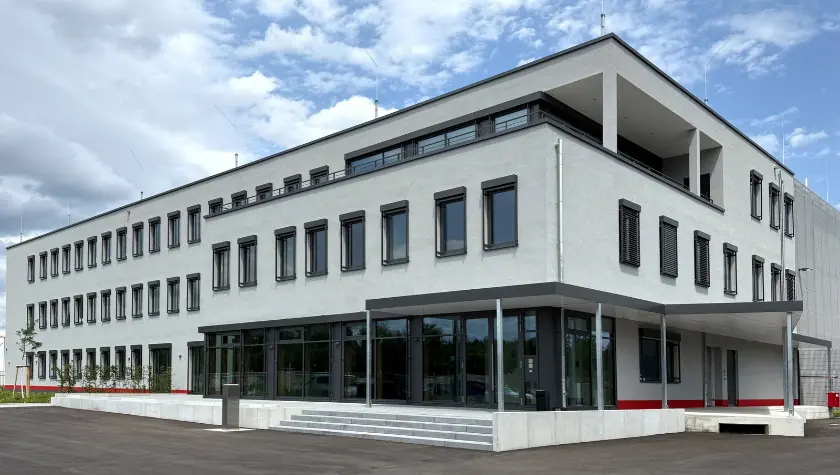
When digital infrastructure operator AtlasEdge inaugurated the first phase of its STR001 data centre in Böblingen—situated in the heart of Germany’s industrial engine near Stuttgart—it did more than simply turn on a new facility. The launch represents a calculated bet on a radically different geographic model for European digital infrastructure.
For decades, the narrative of the European data centre market has been dominated by the FLAP hubs: Frankfurt, London, Amsterdam, and Paris. These primary markets have long actedas the gravitational pull for cloud providers, hyperscalers, and large enterprises. However, mounting grid constraints, land scarcity, stringent regulatory pushback, and the exponential rise of low-latency artificial intelligence (AI) workloads have begun to strain the traditional model.
Instead of fighting for scarce land and constrained power in Frankfurt, Europe’s largest data centre market, AtlasEdge anchored STR001 directly within one of Germany’s most vital manufacturing and engineering corridors. Delivering an initial footprint of 6,160 square metres of white space and 11.2MW of IT capacity—with an ultimate campus vision scaling to 20MW—STR001 is a physical manifestation of a broader industry shift. The facility brings enterprise-grade, highly secure, and sustainable digital infrastructure directly to the doorsteps of the manufacturers, automotive giants, and tech innovators who generate the data in the first place.
To uncover the strategic mechanics behind this launch, Capacity sat down with Georg Raiser, Managing Director of AtlasEdge’s DACH region, to discuss modular deployment timelines, sustainability imperatives, and the rising tide of edge and regional demand across Europe.
Detailed Chronology: From Grass Roots to Ready-for-Service in Under a Year
One of the most remarkable aspects of the STR001 project is the velocity with which it was brought to life. In an era where large-scale data centre developments routinely face multi-year planning and construction delays, AtlasEdge deployed a highly disciplined, modular construction methodology to outpace traditional timelines.
The transformation of the Böblingen site unfolded across a remarkably compressed schedule:
- July 2024: The designated location was essentially an empty canvas—consisting of little more than a concrete slab and open grass.
- Late Summer 2024: The arrival of approximately 40 prefabricated modular units marked the vertical acceleration of the project. Within a span of just two weeks, the modular structural elements were fully assembled on-site.
- Early 2025: The facility officially achieved ready-for-service status, opening its doors to welcome its first wave of enterprise and cloud customers.
According to Georg Raiser, this rapid deployment model is designed to give AtlasEdge a definitive competitive edge in a fast-moving market. "We can provide a from-nothing-to-ready service for the customer in nine to 12 months," Raiser explained. This agility has become critical as demand patterns shift, particularly with the explosive growth of hyperscale operators and specialized AI infrastructure providers over the past five to ten years—a surge that AtlasEdge observes daily in its expanding client pipeline.
Supporting Context & Metrics: Engineering for Efficiency and Sovereignty
Tapping into Industrial Demand
Stuttgart is globally synonymous with heavy-hitting automotive manufacturing, precision engineering, and industrial innovation. As the home base for global titans such as Porsche, Mercedes-Benz, and Bosch—alongside a rich ecosystem of specialized suppliers, financial institutions, and telecommunications providers—the region commands massive volumes of real-time data.
Traditionally, companies in this region had to rely on backbone connections stretching hundreds of kilometres north to Frankfurt to process heavy computational tasks. STR001 shatters this paradigm by offering a carrier-neutral, highly secure environment that supports a hybrid mix of traditional enterprise applications, cloud environments, and dense AI processing units locally.

Sustainability and Environmental Metrics
In contemporary data centre design, ecological performance is inextricably linked to commercial viability. STR001 has been engineered from the ground up to meet Germany’s increasingly stringent legislative framework, fully complying with the nation’s Energy Efficiency Act while holding top-tier certifications including EN 50600 Level 3 and ISO 27001.
Key operational metrics and green infrastructure features include:
- 100% Renewable Power: The facility operates exclusively on certified green electricity.
- Optimized Cooling: The implementation of indirect free adiabatic cooling, paired with meticulous hot and cold aisle containment architectures, dramatically curtails auxiliary power usage.
- Strict PUE Thresholds: AtlasEdge maintains a fleet-wide operational Power Usage Effectiveness (PUE) target of 1.3 or lower. As Raiser noted, efficiency is an economic necessity: "The lower the PUE is, the better it is, both for ecological and economic reasons. Otherwise, you are paying twice for the power you use."
- Circular Energy Integration: Beyond internal efficiency, AtlasEdge is actively engaged in dialogue with municipal authorities across its operating footprint to design future waste-heat reuse programmes, turning data centre thermal output into district heating assets.
Official Statements & Industry Perspectives: The Rise of the Regional Market
The Latency and Regulatory Imperative
While hyperscale cloud deployments often afford geographical flexibility, other vital customer segments are strictly bound by physics and regulatory mandates. For sectors like banking and finance, disaster recovery protocols dictate strict latency and redundancy limits.
"For many enterprise customers, especially banks, there are limits on how far away a secondary data centre can be," Raiser pointed out. "It’s important they stay online, so the limit is usually 30 to 40 kilometres from the first data centre to the second. Most of the companies are in big cities, so that’s where the data centres often meet them."
Furthermore, geopolitical and legislative pressures regarding data sovereignty are reshaping site selection. Governments and public sector entities are increasingly unwilling to centralize critical data outside their immediate jurisdictions.
"Governments are most keen to keep their data local," Raiser emphasized. "For example, a German government entity won’t want to be reliant on a data centre in France—even if it is the closest one. Germany itself has 16 areas; the Stuttgart government wouldn’t want to have their data centre in Berlin… That’s why it’s best to spread smaller facilities over the country, rather than have half of Europe rely on one or two large-scale facilities."
Carving Out a Distinct Market Position
Rather than engaging in a high-stakes, capital-intensive battle with massive hyperscale developers in saturated FLAP markets like Frankfurt, London, or Amsterdam, AtlasEdge has deliberately charted a different course. The operator focuses on solidifying its stronghold in secondary and tertiary metropolitan markets across Germany, Austria, Spain, and Portugal.
"We won’t be the big fish in Frankfurt or the FLAP markets," Raiser stated clearly. "Our strategy is to strengthen our market-leading position in the areas we’re already in, and continue growing where we already have strong relationships with customers."
Future Outlook: A Decentralized Horizon
As the European digital economy accelerates into the late 2020s, the inauguration of STR001 in Böblingen signals a fundamental maturation of the continent’s data centre landscape. The first chapter of Europe’s digital expansion was defined by massive, centralized hubs in primary financial capitals. However, the next phase is decentralizing—driven by the immense power densities required by AI, the tightening grip of environmental regulations, and a corporate imperative for localized resilience.
For infrastructure operators willing to look past the traditional horizon and build directly within thriving regional and industrial clusters, the opportunities are vast. As Georg Raiser concluded, capturing this momentum: "The market is growing. You can feel it. It is really happening now."