Executive Overview
In an era dominated by relentless hustle culture and the grueling demands of high-performance athletics, the modern endurance athlete is constantly searching for a sustainable equilibrium. The prevailing narrative often dictates that running a marathon requires ascetic sacrifice, dawn-to-dusk suffering, and an unyielding, rigid schedule. However, a compelling counter-narrative is emerging from the bustling streets of Berlin, challenging the traditional paradigms of distance running.
Meet Hong—a Berlin-based multi-hyphenate working professionally as both a graphic designer and a commercial flight attendant. Once a self-proclaimed non-runner who struggled to function before her morning coffee, Hong is currently deep into an intensive training block preparing for her seventh career marathon. Her journey is not one of militant self-deprivation; rather, it is a masterclass in modern athletic lifestyle integration. By prioritizing comfort, mental well-being, community connection, and holistic physical conditioning, Hong proves that consistency and ease do not have to be mutually exclusive.
This comprehensive report examines Hong’s week-long training macrocycle, dissecting the psychological, physiological, and social mechanisms that allow a busy professional to not only survive, but genuinely thrive in the high-stakes world of urban distance running. Through an analysis of her weekly routine, expert commentary on modern sports science, and a look at the future of lifestyle-integrated athletics, we explore how redefining the boundaries of training can unlock unprecedented levels of personal fitness and mental resilience.
Detailed Chronology: A Week in the Life of a Marathon-Training Commuter
Understanding how an athlete balances a demanding international career with the rigorous metabolic demands of marathon preparation requires a granular examination of their weekly schedule. Hong’s training week is a carefully calibrated orchestration of high-intensity efforts, active recovery, social integration, and professional responsibilities.
Monday: Combating Fatigue and Finding Rhythm
The week begins amidst the logistical complexities of Hong’s professional life. Juggling the unpredictable time zones of a flight attendant with the precise aesthetic deadlines of a graphic designer leaves little room for friction. Mondays often present a psychological hurdle—a familiar lethargy that threatens to derail the week’s training goals before they even begin.
To combat this, Hong relies on a carefully curated psychological trigger: her running playlist. "I don’t always listen to music when I run," Hong explains, "but when I feel unmotivated, it is simply my lifesaver." Ranging from hypnotic house beats to driving techno and disco rhythms, auditory stimulation serves as a neurological bypass for fatigue.
Furthermore, Hong employs clever self-regulation techniques when pacing falters. "If I run out of breath during a run, I drop down a gear and start singing. This forces me to slow down to get my breathing back under control. The run becomes much more fun, and I notice people around me smiling as I run past them singing."
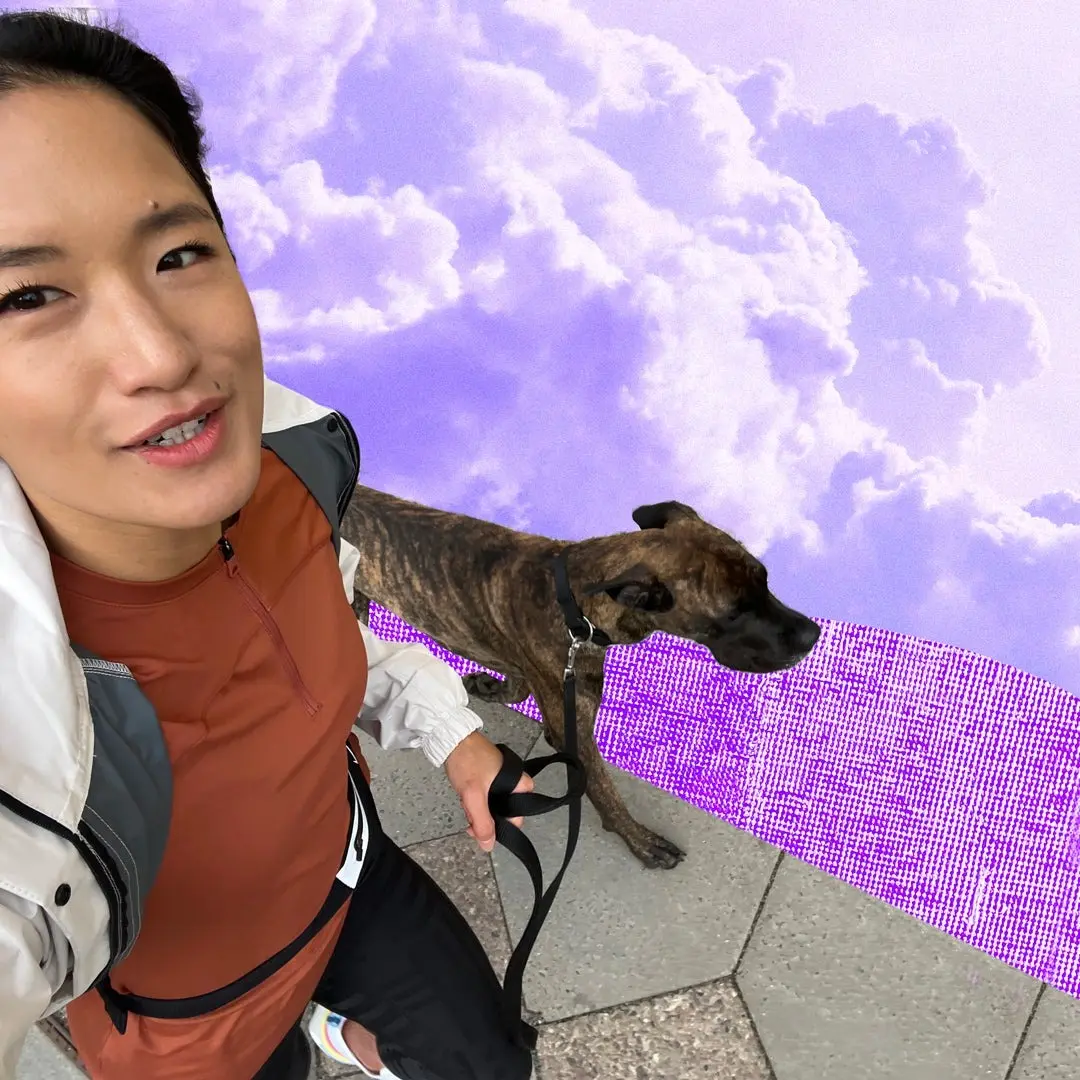
To inject an element of spontaneity and social engagement into her Monday miles, Hong frequently enlists canine companionship. Borrowing a friend’s energetic dog, Mia, transforms a solitary training session into an interactive dynamic. "At first she pulls me, at the end I pull her. I may not be as fast as her, but when it comes to endurance, I win."
Tuesday: The Architecture of Longevity—Cross-Training and Injury Prevention
Marathon training is frequently misunderstood as a pursuit exclusive to running volume. However, seasoned endurance coaches emphasize that durability is built away from the pavement. Tuesday represents a deliberate pivot away from running in favor of a comprehensive cross-training protocol.
Hong’s Tuesday regimen encompasses dedicated yoga sessions, targeted strength training, and periodic physiotherapy. This multifaceted approach is not merely supplementary; it is foundational. By strengthening stabilizing muscles, enhancing joint mobility, and addressing muscular imbalances proactively, Hong fortifies her musculoskeletal system against the repetitive impact forces of high-mileage running.
This holistic base allows her to step outside her comfort zone during intense running sessions without courting injury. Crucially, it ensures that even after grueling workouts, her body possesses the resilience to recover efficiently, paving the way for subsequent training blocks.
Wednesday: Professional Realities and Active Recovery
With her global travel schedule as a flight attendant, Hong views Wednesday as a vital nexus for her social and professional life. Recovery is not passive; it requires intentional downtime to nourish mental health.
When grounded in Berlin, Hong makes it a priority to reconnect with her social circle. Eschewing a physical workout on this particular day, she opts instead to visit local art exhibitions. This psychological decompression is just as critical to her marathon preparation as physical tapering. Overtraining syndrome often manifests mentally long before it appears physically; by engaging her cognitive faculties in creative, low-stress environments, Hong safeguards her mental well-being.
Thursday: Pushing Limits and Equipment Innovation
By Thursday, the training cycle ramps up significantly. Dispelling the myth that elite-level endurance athletes wake up effortlessly at 5:00 AM to crush twenty kilometers without hesitation, Hong acknowledges that she, too, requires deliberate motivation strategies, particularly when facing high-intensity track workouts.
Thursday is reserved for speed work—an uncompromising test of lactate threshold and pacing discipline. "I love competitions," Hong notes. "It gives me an incredible amount of joy to challenge myself. During today’s track workout, I’m testing how fast I can run and how long I can hold my pace."
To support these high-stress biomechanical demands, equipment selection is paramount. Hong relies on the Nike Invincible 3 for her intensive running sessions. The shoe’s high-energy-return foam and engineered rocker geometry provide a secure, cushioned platform across varying urban surfaces, minimizing impact shock while maximizing the "bouncy" sensation that makes fast running enjoyable.
Friday: Post-Workout Decompression
The residual fatigue from Thursday’s track session demands respect. Friday is treated as an active recovery day, featuring light mobility work, such as a gentle yoga flow, coupled with social outings. As an international commuter, Hong’s time in Berlin is finite; thus, her recovery days are often filled with cultural excursions and community engagement, reinforcing the symbiotic relationship between her social life and athletic mindset.
Saturday: Urban Exploration and Mindful Mileage
Saturday morning marks the execution of Hong’s signature long-run route along Berlin’s historic Landwehrkanal. Navigating a changing tapestry of asphalt, grass, and mud, this run serves as a moving meditation.
Depending on her mental state, Hong alternates between immersive podcasts and complete auditory silence, allowing herself to absorb the ambient soundscape of the city. "I enjoy watching the people around me while running," she reflects.
True to her philosophy that running must be paired with comfort and reward, Hong concludes her Saturday mileage with a deliberate culinary ritual: a freshly brewed coffee and a savory treat from a local market stall in Kreuzberg.
Sunday: Community Synergy and the Long Run
The culmination of the weekly training macrocycle occurs on Sunday, executed in tandem with her running community, the Joy Run Collective. Today’s objective is a sustained long run through the sprawling expanse of the Tiergarten.
Endurance running in urban winter or transitional weather requires careful logistics. Understanding the physiological toll of prolonged cold-weather exposure, Hong prioritizes thermal regulation, layering appropriately before stepping out the door.
The physical completion of the long run is immediately followed by a deeply ingrained social tradition: a collective brunch. "This time, the host made dumplings," Hong shares with palpable enthusiasm. "I’ve been looking forward to these dumplings all week long." This ritual underscores the powerful social glue that sustains urban run crews globally.
Supporting Context & Metrics: The Science of Sustainable Endurance
Hong’s methodology highlights a paradigm shift in contemporary sports science: the democratization of endurance sports through sustainable lifestyle integration. Historically, elite and sub-elite marathon training was viewed through a lens of Spartan austerity—a framework that frequently led to high burnout rates, eating disorders, and chronic overuse injuries.
The Psychology of Comfort in Endurance Sport
According to contemporary behavioral kinesiologists, perceived comfort is a powerful catalyst for long-term athletic adherence. When athletes associate training with punishment, psychological resistance increases, leading to missed workouts and eventual abandonment of the sport. Conversely, integrating positive reinforcement loops—such as Hong’s post-run coffee, cultural exhibitions, and community brunches—creates a psychological safety net. This makes the friction of early-morning alarms and grueling workouts far easier to navigate.
Cross-Training and Injury Mitigation Metrics
Data from sports medicine literature consistently demonstrates that runners who incorporate structured strength training and mobility work experience up to a 50% reduction in running-related injuries compared to those who run exclusively. Hong’s inclusion of Tuesday yoga, strength training, and physiotherapy addresses the primary biomechanical stressors of distance running:
- Quadriceps and Hamstring Balance: Mitigates patellofemoral pain syndrome.
- Core Stability: Prevents pelvic drop and excessive lateral motion during high-mileage runs, improving running economy.
- Ankle Mobility: Reduces Achilles tendinopathy risks on uneven urban surfaces like the Landwehrkanal paths.
Official Perspectives & Expert Commentary
To contextualize Hong’s journey, industry experts and sports psychologists weigh in on the evolution of modern running culture and the importance of sustainable training philosophies.
"The traditional narrative of ‘no pain, no gain’ is rapidly becoming obsolete in modern endurance coaching," explains Dr. Elena Rostova, a sports psychologist specializing in elite endurance performance. "Athletes like Hong demonstrate that sustainable high performance requires a holistic framework. When you remove the guilt from resting and anchor your training in community and personal comfort, you unlock a sustainable psychological reserve that is essential for race-day success."
Furthermore, footwear and biomechanics specialists note the critical role of modern shoe technology in enabling high-frequency training blocks. "The evolution of high-cushion, responsive daily trainers has fundamentally changed how runners recover between hard sessions," states master boot-fitter and running shoe analyst Marcus Vance. "When an athlete like Hong relies on shoes with maximum energy return for high-intensity work, they are actively reducing cumulative micro-trauma, allowing them to wake up the next day and maintain their training consistency."
Future Outlook: The Evolution of the Everyday Athlete
As the global running boom continues to swell—fueled by urban run collectives, technological innovations in footwear, and a cultural shift toward holistic wellness—the profile of the marathon runner is undergoing a profound transformation. No longer the exclusive domain of professional athletes or hyper-focused purists, the marathon start line is increasingly populated by multi-hyphenate professionals who refuse to sacrifice their careers, social lives, or personal comforts for the sake of a medal.
Hong’s trajectory offers a compelling preview of this future. Having transitioned from a self-doubt-filled novice to a seasoned athlete preparing for her seventh marathon at age 30, she embodies the modern ethos of endurance sports: one can push the absolute limits of physical capability while simultaneously cultivating a rich, balanced, and deeply pleasurable lifestyle.
Reflecting on her four-year evolution in the sport, Hong offers a closing perspective that resonates with athletes at every level: "I’ve learned that consistency and comfort don’t have to be mutually exclusive. I can set new limits for myself and feel comfortable doing it. Next stop: my 7th marathon."
Hong’s 3 Essential Rules for Maximizing Joy on Your Run
For runners looking to escape the trap of rigid, joyless training blocks, Hong distills her philosophy into three actionable guidelines:
- Prioritize Biomechanical Comfort: Invest in supportive, high-performance footwear that transforms every stride into a cushioned, secure experience across diverse urban terrains.
- Curate Your Auditory Environment: Build a dynamic, mood-boosting playlist—infused with disco, house, and techno—to serve as a psychological safety net during moments of physical and mental fatigue.
- Design Intentional Rituals: Pair scenic, engaging routes with meaningful social connections and delicious post-run rewards, turning every workout into a holistic lifestyle experience rather than a mechanical chore.