In late 2022, filmmaker Oscar Boyson and journalist Ricky Camilleri sat down to pen a screenplay born out of a chilling modern tragedy. Their inspiration was not the visceral violence of the act itself, but a haunting, lesser-known detail from the May 2022 mass shooting at Robb Elementary School in Uvalde, Texas. On the morning he killed 21 people, 18-year-old gunman Salvador Ramos messaged a 15-year-old girl in another country, hinting at his murderous intentions. In the aftermath, that teenager—who had never met Ramos—faced vicious online vitriol. She was eventually prosecuted in Germany for failing to alert authorities.
That digital complicity, coupled with the suffocating isolation of the modern internet age, birthed Our Hero, Balthazar. Described as an uncompromising dark comedy, Boyson’s directorial debut tackles toxic masculinity, gun violence, and incel culture head-on. Featuring an ensemble cast of former young adult heartthrobs—including Asa Butterfield, Jaeden Martell, Noah Centineo, and Avan Jogia—the film’s path to the screen was as thorny as its subject matter. Despite critical acclaim, the button-pushing feature struggled to secure a UK cinema distribution deal, a casualty of an industry increasingly terrified of challenging content.
This deep dive explores the making of Our Hero, Balthazar, the philosophy of its creators, the real-world horrors that inspired its characters, and the broader societal crisis of digital isolation that the film brilliantly exposes.
Detailed Chronology: From Uvalde Revelation to Screen
The timeline of Our Hero, Balthazar reflects the arduous journey of independent cinema tackling taboo subjects in the post-pandemic landscape.
- May 2022: The Uvalde school shooting occurs. Revelations emerge regarding the digital breadcrumbs left by the shooter, including international messages sent to a stranger minutes before the attack.
- Late 2022: Oscar Boyson and Ricky Camilleri begin writing the screenplay, driven by questions surrounding digital empathy, bystander responsibility, and the performative nature of modern violence.
- Production & Casting: Boyson assembles a starry cast eager to subvert their wholesome industry images. Jaeden Martell signs on to play Balthazar, while Asa Butterfield commits to transforming into Solomon, a struggling Texas loner.
- The Festival Rejection Circuit (2024–2025): Major international film festivals—including Sundance, SXSW, and Cannes—pass on the film. According to Boyson, risk-averse programming creates a bottleneck where non-horror indies struggle to find platforms.
- Theatrical Screenings and UK Release (2026): Backed by Signature Entertainment, the film finally secures a release, hitting UK digital HD and select theaters, where it sparks intense emotional reactions from audiences willing to engage with its provocation.
The Plot and Psychological Anatomy of Our Hero, Balthazar
To understand the film’s controversy, one must look past its initial premise. Many viewers and critics approach Our Hero, Balthazar with preconceived notions, largely due to a marketing landscape that struggles to contextualize nuance.
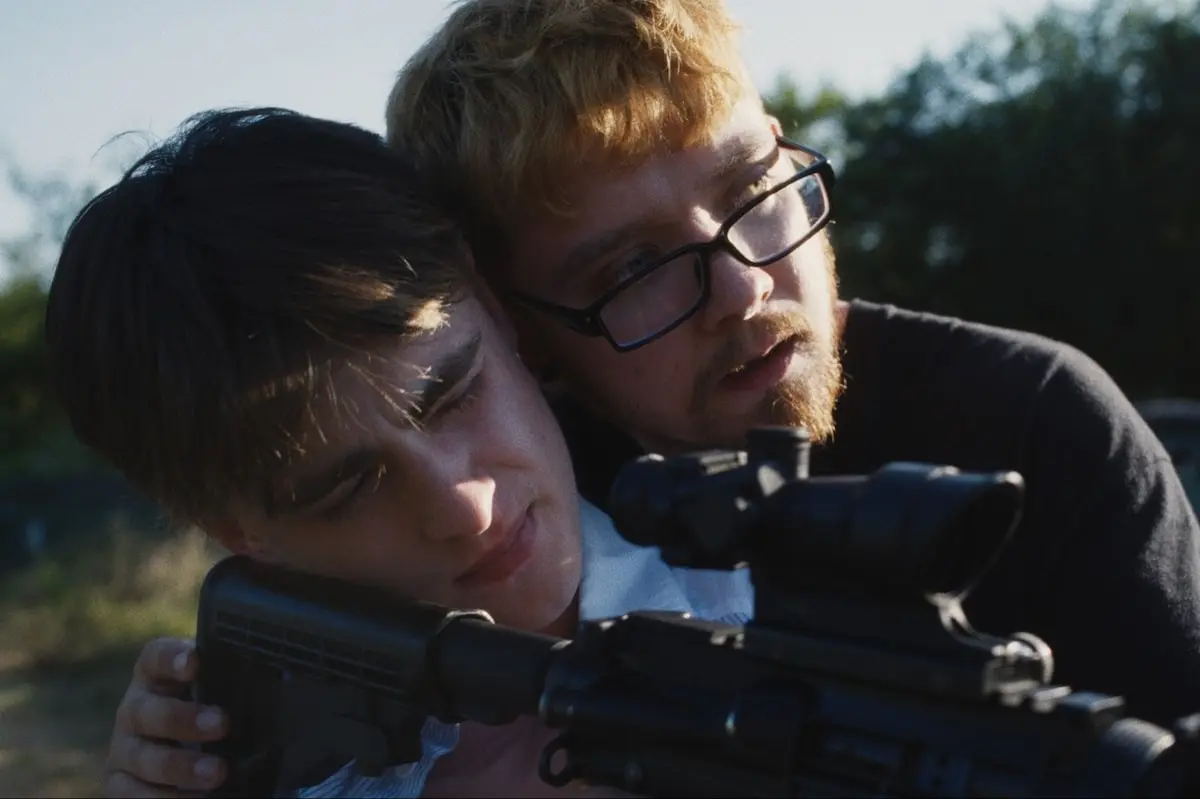
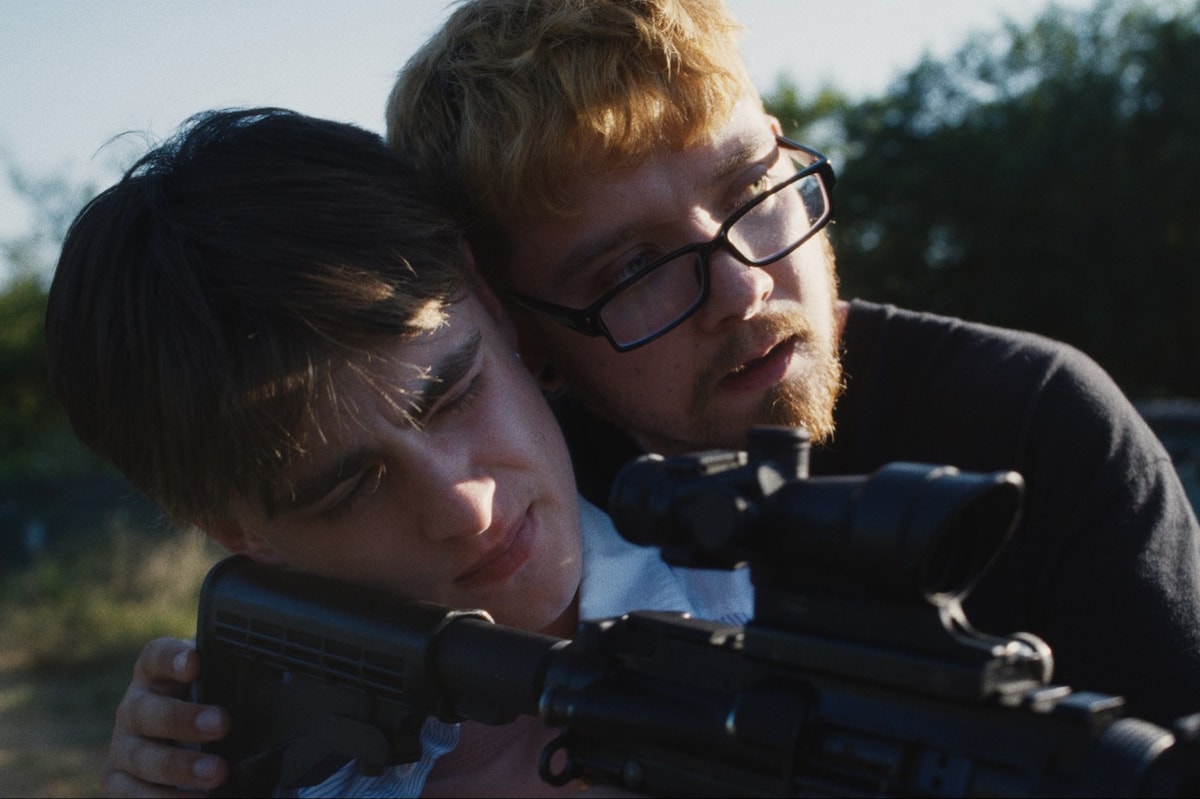
The film opens with Balthazar (Jaeden Martell), a privileged, emotionally stunted teenager who treats crying on command as a performance art. Void of genuine human connection, he uploads tearful YouTube videos regarding gun violence in a desperate bid to win the affection of a classmate named Eleanor (Pippa Knowles). When Eleanor expresses skepticism about his performative empathy, Balthazar devises a dangerous scheme: he tracks down a stranger in Texas named Solomon (Asa Butterfield), whom Balthazar believes is on the brink of carrying out a school shooting. Balthazar’s plan is simple—talk Solomon out of mass murder and secure Eleanor’s heart as the heroic savior.
Utilizing AI-generated images, explicit promises, and aggressive catfishing, Balthazar poses as a sexually frustrated woman living in New York. Yet, the narrative subverts expectations when Balthazar and Solomon finally meet face-to-face in Texas. Instead of lashing out upon discovering his online girlfriend is a fabrication, Solomon is simply ecstatic that someone traveled across the country just to see him.
[Balthazar: Privileged, Vlogging Teen]
       │
       ▼ (Catfishes via AI & False Promises)
[Solomon: Isolated, Trailer-Park Lonerm, Prepares for Mass Violence]
       │
       ▼ (In-Person Encounter in Texas)
[Subversion: Solomon seeks connection, not violence; Balthazar's sociopathy is exposed]
According to Boyson, viewers who cling to the initial twenty minutes often grow uncomfortable when the narrative shifts. "That’s the point," Boyson explains. "This film isn’t about a school shooting. It’s about loneliness and isolation. School shootings are like a performance today. Political assassinations get meme-ified. If you’re on the internet, you think about what you play in that performance."
Supporting Context, Metrics, and Societal Realities
Our Hero, Balthazar does not exist in a vacuum; it mirrors a grim statistical reality regarding youth mental health, gun violence, and online radicalization in the 21st century.
The Anatomy of the Modern Incel and Loneliness Epidemic
The term "incel" (involuntary celibate) is frequently tossed around in cultural discourse, often used as a blunt instrument to dismiss complex psychological trauma. Boyson admits he debated even using the word in the script, finding it reductive.
While Balthazar weaponizes his isolation publicly for social clout, Solomon occupies a different tier of despair—living in rural poverty, watching explicit content in public spaces, and alienating coworkers due to deeply ingrained maladaptive behaviors. Both characters reflect a digital generation that is hyper-connected yet profoundly detached.
According to mental health metrics cited by industry sociologists, the proliferation of social media algorithms has exponentially widened the chasm between human expectation and reality. As Asa Butterfield notes: "The internet has made people lonelier because you’re aware of how big the world is, and how tiny you are within it. This movie shows how dangerous that can be."
The Suicide Crisis and Institutional Apathy
Beyond high-profile acts of public violence, Boyson points out a more pervasive tragedy: "The number-one gun violence in America is people killing themselves. For every kid who goes online and tries to make a friend, there’s probably a lot more who don’t even try, and just waste away in isolation."
This theme touches upon institutional accountability. During development, Boyson and Camilleri looked closely at real-world precursors to youth violence, explicitly citing figures like Anderson Aldrich and Randy Stair, whose digital footprints were meticulously documented online yet ignored by structural safety nets. Boyson also highlights chilling modern precedents, such as the 18-year-old Tumbler Ridge shooter who explicitly detailed his plans to an AI chatbot. When corporate employees flagged the behavior to management, warnings were reportedly sidelined out of fear of legal liability—a terrifying glimpse into a corporate culture that prioritizes profit and deniability over human intervention.
Official Statements and Industry Insights
The creative team behind Our Hero, Balthazar remains fiercely defensive of the film’s provocative framework, arguing that modern cinema has grown too sanitized to address the root causes of youth violence.
Oscar Boyson on Festival Gatekeeping
Reflecting on the film’s rejection by major gatekeepers like Sundance, SXSW, and Cannes, Boyson laments the state of independent cinema financing and distribution:
"It’s very hard right now, unless it’s a horror movie, for an independent film to cut through. We didn’t get that festival anointment that indie films need, but I knew the movie worked. It sucks when festivals function from a place of ‘I don’t want to offend anyone’. Every time we’ve put it in a theatre, people have a memorable, emotional experience."
Boyson argues that contemporary media prefers a clean narrative binary of heroes and villains, routinely ignoring the complex behavioral degradation that precedes a tragedy. "The media has no interest in everything leading up to the tragedy. It’s always: ‘These are the good guys, these are the bad guys.’ This movie was a response to that. It’s about the decisions, nuances, behaviours, and failings that lead to violence, instead of the movies we usually get where people survive this terrible thing, break through the trauma and keep on. That, to me, is not interesting, and kind of offensive."
Asa Butterfield on Subverting Expectations
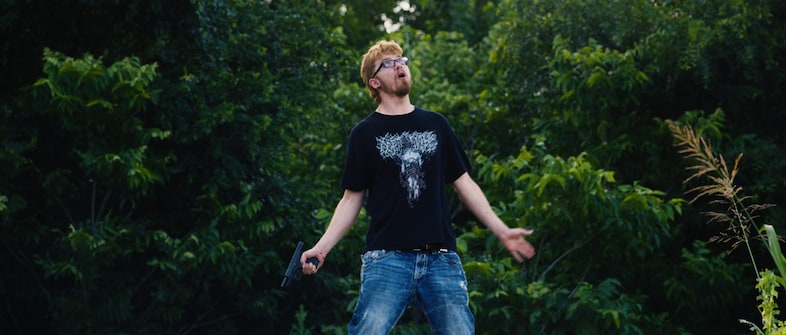
Best known for his sweet, endearing performances in Hugo, The Boy in the Striped Pyjamas, and Netflix’s Sex Education, Asa Butterfield deliberately sought out a character who would test the limits of audience empathy. Sporting dyed blonde hair, a Texas drawl, and an abrasive, misogynistic demeanor, Butterfield’s Solomon is a masterclass in anti-hero construction.
+-----------------------------------+-----------------------------------+
|       Asa Butterfield's Past      |      Asa Butterfield as Solomon    |
+-----------------------------------+-----------------------------------+
| • Hugo Cabret (*Hugo*)            | • Dyed hair & Texan accent        |
| • Bruno (*The Boy in Pyjamas*)    | • Publicly streams adult content  |
| • Otis Milburn (*Sex Education*)  | • Misogynistic, abrasive loner    |
| • Embodying sweet, sensitive youth| • Channeling Travis Bickle energy |
+-----------------------------------+-----------------------------------+
"A big challenge was getting audiences to empathise with Solomon despite his abrasiveness, misogyny and loud, uncomfortable behaviour," Butterfield explains. "How do we show audiences why he’s like this, and for them to think they failed him?"
To build the character, Butterfield and Boyson reviewed archival footage of real-world disaffected young men and mass shooters, drawing heavily on specific visual cues. "We sent each other pictures of real people and school shooters, and were drawing on real things to build Solomon," Butterfield notes. "There’s one in particular of this guy with blonde hair and glasses. Oscar asked me to dye my hair. At first, I wasn’t sure, but I’m so glad we did."
Future Outlook: The Legacy of Risk-Taking Cinema
As Our Hero, Balthazar finds its footing through digital releases and specialized theatrical runs, its legacy extends far beyond box office metrics. It serves as a litmus test for the film industry’s willingness to touch political and social third rails without relying on comforting Hollywood resolutions.
In an era where algorithms dictate content, and major studios retreat into safe intellectual property or formulaic horror, projects like Boyson’s debut prove that independent cinema still holds the power to provoke discomfort. By shifting the lens away from the sensationalized act of violence and focusing on the crushing, invisible weight of internet loneliness, Our Hero, Balthazar forces audiences to look inward at a society that consistently fails its most isolated youth.
Whether the industry is ready to follow Boyson and Butterfield down that uncomfortable path remains to be seen, but the conversation has officially begun.