Executive Overview
In an era dominated by relentless hustle culture and the grueling demands of extreme athletic preparation, the narrative surrounding endurance sports is undergoing a paradigm shift. For decades, the cultural perception of a marathon runner has been inextricably linked to uncompromising suffering, ascetic discipline, and the infamous pre-dawn wake-up call. We have been conditioned to believe that chasing personal records requires sacrificing comfort, social engagement, and mental peace.
However, a quiet revolution is taking place on the pavements of global metropolises—led not by elite, hyper-optimized professional athletes, but by everyday individuals who refuse to choose between their well-being and their athletic ambitions. Enter Hong, a Berlin-based designer, international flight attendant, and soon-to-be seven-time marathon finisher. Hong’s journey offers a refreshing, counter-cultural blueprint for modern endurance training. Once firmly identifying as a "non-runner," she has systematically dismantled the myth that rigorous physical preparation must be synonymous with misery.
By marrying high-intensity training blocks with a steadfast commitment to comfort, holistic injury prevention, rich social connectivity, and the strategic deployment of upbeat playlists and post-run dumplings, Hong embodies a new archetype of endurance athlete. Her approach challenges the deeply ingrained puritanical ethos of running culture. It proves that consistency—the holy grail of athletic improvement—is far easier to achieve when the journey itself is pleasurable, balanced, and deeply human.
This in-depth feature explores Hong’s weekly training methodology, dissects the psychological and physiological components of her success, and examines the broader implications of her philosophy for the future of urban running communities.
Detailed Chronology: Anatomy of a Balanced Training Week
To understand how Hong balances the demands of preparing for her seventh marathon alongside a high-travel career and a vibrant social life, one must examine her weekly schedule. Far from a chaotic scramble, her routine is a masterclass in periodization, integrating high-stress workouts with deliberate rest, cross-training, and community engagement.
Monday: Combating Fatigue with Rhythm and Companionship
The modern work week begins with a unique set of challenges for Hong, who splits her professional life between the design studio and the aisles of commercial aircraft. Jet lag, irregular hours, and cumulative fatigue are constant adversaries. To combat lethargy, Hong relies on a curated sonic landscape—her personalized running playlist, heavily laced with driving disco, house, and techno beats.
"I don’t always listen to music when I run," Hong explains, "but when I feel unmotivated, it is an absolute lifesaver."
When physical exhaustion threatens to derail her pace, Hong employs a clever self-regulation technique: she sings. By forcing herself to harmonize with her favorite tracks, she naturally regulates her breath, lowers her heart rate, and converts a grueling struggle into a joyful, lighthearted experience. Passersby frequently offer amused smiles as a singing marathoner glides past.
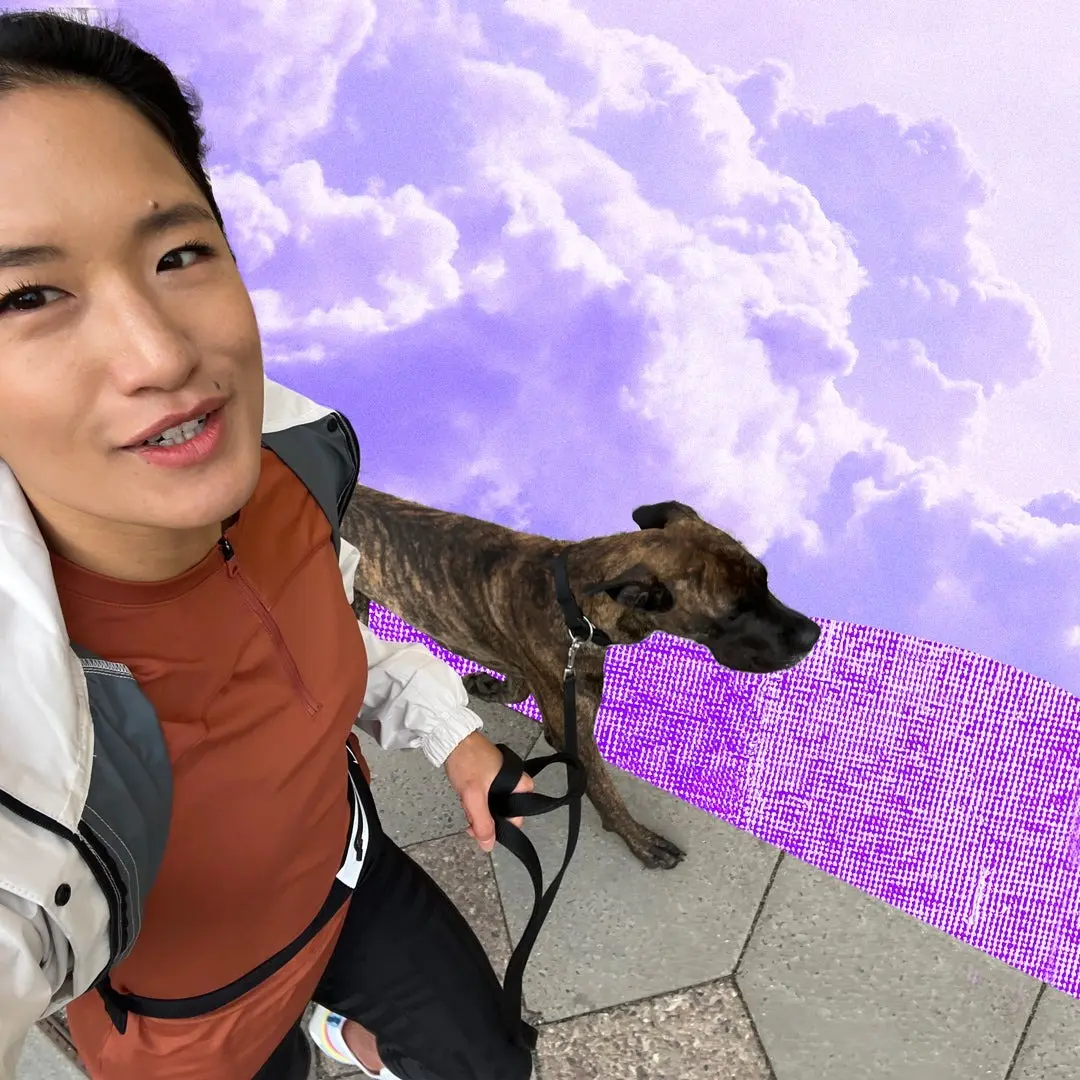
Mondays also frequently incorporate canine companionship. By borrowing a friend’s energetic dog, Mia, Hong transforms a solitary recovery jog into an interactive game. "At the beginning, she pulls me; at the end, I pull her," Hong notes. While the canine partner may dominate the raw speed metrics, Hong’s superior cardiovascular endurance ensures she wins the long game.
Tuesday: The Holistic Foundation – Yoga, Strength, and Injury Prevention
True to her philosophy that comfort and performance go hand in hand, Tuesday is strictly a non-running day dedicated to structural integrity. Hong understands that pushing the body toward a marathon finish line requires a robust musculoskeletal scaffolding.
Her Tuesday regimen bypasses asphalt entirely, replacing it with a specialized fusion of yoga, targeted strength training, and professional physiotherapy sessions. This cross-disciplinary approach serves a dual purpose: it builds the foundational stability required to push beyond her comfort zone during intense runs, and it acts as an insurance policy against the overuse injuries that plague recreational endurance athletes. By addressing muscle imbalances and joint mobility proactively, Hong ensures that her body never crosses the threshold from productive stress into debilitating trauma.
Wednesday: Professional Travel and Cultural Respite
As a flight attendant, Hong’s schedule is inherently volatile. Wednesdays often coincide with her return to the ground in Berlin. Recognizing that mental rejuvenation is just as vital as physical recovery, she consciously resists the temptation to cram missed workouts into her schedule.
Instead, she prioritizes her social ecosystem and cultural nourishment. Whether visiting a contemporary art exhibition or simply catching up with friends over coffee, Hong treats these moments of leisure as non-negotiable components of her athletic training. A rested mind fosters a resilient body.
Thursday: Pushing Boundaries with Track Workouts and Specialized Gear
If the early part of the week is dedicated to recovery and rhythm, Thursday is where the crucible of marathon preparation takes center stage. Countering the cultural trope that marathoners leap out of bed at 5:00 AM brimming with spontaneous energy, Hong admits that she, too, frequently requires an extra press of the snooze button.
To bridge the gap between hesitation and execution, she relies on psychological framing and gear optimization. Thursday’s session is a high-intensity track workout designed to test lactate thresholds, speed endurance, and pacing discipline.
For these high-impact sessions, gear choice is paramount. Hong laces up in the Nike Invincible 3, drawn to its responsive, "bouncy" foam architecture and reliable traction across varied surfaces. The footwear provides a psychological safety net, ensuring that even as her heart rate spikes and her legs burn, her foundation remains secure and cushioned.
Friday: Active Recovery and Berlin Exploration
The physiological toll of Thursday’s track session demands respect. Friday is designated as a mandatory active recovery day. Aside from a gentle restorative yoga flow, Hong avoids high-impact running entirely.
True to her identity as a deeply social urbanite, she uses Friday to immerse herself further in Berlin’s cultural fabric. Navigating art galleries and socializing with her peers allows her to metabolize the physical stress of the week while satisfying her wanderlust in her home city.
Saturday: The Meditative Standard – Landwehrkanal and Culinary Rewards
Saturday morning marks a ritualistic journey along Hong’s standard training route: the scenic, varied paths winding beside the Landwehrkanal. This route offers a dynamic sensory tapestry, alternating between smooth asphalt, damp grass, and earthen tracks.
Here, running transcends physical exercise to become a moving meditation. With an engaging podcast in her ears—or occasionally, complete silence to absorb the ambient symphony of the city—Hong disconnects from the digital world.
The conclusion of the Saturday long run is sacred, defined not by stretching charts, but by culinary gratification. Her post-run reward is a ritualistic trip to a local market stand in Kreuzberg, where she indulges in artisan coffee and a carefully chosen snack.
Sunday: Collective Endurance with the Joy Run Collective
The culmination of Hong’s training week takes place on Sunday, executed in community. As a proud member of the Joy Run Collective, Hong tackles her weekly long run through the sprawling expanse of the Tiergarten alongside a tight-knit cohort of peers.
Because winter temperatures and extended mileage introduce genuine environmental and physical stressors, preparation is meticulous. Sunday’s runs are characterized by strategic layering and mutual pacing.
The grand finale of the weekend is the post-run brunch. Following the completion of a grueling distance session, the collective gathers for a communal feast—this time featuring meticulously crafted homemade dumplings that Hong has anticipated throughout her grueling week of work, travel, and training.
Supporting Context & Metrics: The Science of Sustainable Running
Hong’s trajectory from a self-proclaimed non-runner to a seasoned marathoner operating at a high level provides a fascinating case study for sports scientists and kinesiologists alike. Her experience highlights several core physiological and psychological principles that are increasingly validated by modern athletic research.
The Myth of the "No Pain, No Gain" Paradigm
For decades, endurance sports coaching was dominated by the philosophy that suffering was the primary metric of progress. Overtraining syndromes, chronic tendonitis, and psychological burnout were viewed as unfortunate collateral damage in the pursuit of personal bests.
However, contemporary sports psychology emphasizes the role of perceived comfort and affective valence—the subjective feeling of pleasure or displeasure associated with an activity. Research demonstrates that runners who experience positive affect during training sessions are significantly more likely to adhere to long-term programming than those who consistently operate in a state of high perceived discomfort.
Hong’s deliberate incorporation of music, singing, dog-walking, and culinary rewards acts as a psychological buffer, mitigating the perceived exertion of high-mileage blocks and lowering the barrier to entry for daily workouts.
| Training Component | Traditional Approach | Hong’s Balanced Methodology | Physiological/Psychological Benefit |
|---|---|---|---|
| Wake-up Routine | Rigid, pre-dawn alarm without exception | Strategic snooze management, gradual awakening | Reduces baseline cortisol, preserves neurological recovery |
| Pacing Strategy | Uncompromising, metronomic splits | Adaptive pacing, singing to regulate breath | Prevents premature lactate accumulation, enhances aerobic efficiency |
| Recovery Protocols | Complete passivity or forced inactivity | Active recovery, yoga, cultural engagement, social connection | Promotes parasympathetic nervous system dominance, reduces mental burnout |
| Nutrition & Reward | Strict, ascetic caloric restriction | Anticipatory rewards (dumplings, artisanal coffee) | Reinforces positive behavioral loops through dopamine regulation |
The Biomechanics of Injury Mitigation
Hong’s inclusion of dedicated strength training, physiotherapy, and yoga on non-running days addresses the primary mechanical vulnerabilities of endurance runners. Running is a unidirectional, high-impact sport that places repetitive stress—often ranging from 2.5 to 3 times an individual’s body weight per stride—on the lower extremities.
Without cross-training, runners frequently develop muscular imbalances, particularly tightness in the hip flexors and weakness in the gluteus medius and core stabilizers. By dedicating Tuesdays exclusively to structural conditioning, Hong ensures that her kinetic chain remains balanced, drastically lowering her incidence of stress fractures, iliotibial (IT) band syndrome, and plantar fasciitis.
Official Statements and Personal Philosophy
Reflecting on her evolution over the past four years, Hong points out a profound transformation that extends far beyond physical metrics. At age 30, she reports feeling healthier, more vital, and physically more capable than she was during her twenties. Yet, the most profound dividends of her running journey have been psychological.
"I started running four years ago," Hong reflects. "With 30, I am healthier and fitter than I ever was in my twenties. But running is so much more than physical training. I have gained an immense amount of self-confidence as a runner, because I now know just how hard I can push myself, even when I feel a bit low."
This newly forged self-efficacy has reshaped her professional and personal life. The discipline required to manage a complex international travel schedule alongside a rigorous marathon training block has translated into unshakeable mental fortitude.
Crucially, Hong’s philosophy dismantles the false dichotomy between ambition and self-care:
"I have learned one fundamental truth: consistency and comfort do not have to be mutually exclusive. I can set new boundaries, test my limits, and still feel completely at home in my own skin. Next stop: my seventh marathon."
Future Outlook: The Evolution of Urban Endurance Culture
Hong’s journey serves as a harbinger for the future of running culture. As running continues to surge in popularity across global urban centers, the demographics of the sport are shifting rapidly. The monolithic image of the ultra-lean, obsessive elite athlete is being replaced by a diverse, multifaceted mosaic of lifestyle runners who view the sport not as a punishing obligation, but as an integrated component of a well-rounded, vibrant life.
Communities like Berlin’s Joy Run Collective are at the vanguard of this movement. These collectives prioritize social connection, inclusivity, and shared cultural experiences—transforming what was once an isolating, solitary pursuit into a communal celebration of movement, art, and food.
Key Takeaways for Aspiring Runners: Hong’s Three Golden Rules
For those inspired by Hong’s trajectory who may still view themselves as "non-runners," her methodology distills down to three actionable, accessible pillars:
- Prioritize Uncompromising Comfort: Invest in footwear that makes you feel secure and supported across varied terrain (such as the Nike Invincible 3). Do not suffer through gear that blisters or fails to absorb impact.
- Curate Your Auditory Environment: Build a dynamic playlist spanning high-energy genres like disco, house, and techno to rescue your motivation when fatigue threatens to derail your session.
- Connect Movement with Pleasure: Pair your miles with beautiful urban routes, meaningful social communities, and a delightful post-run ritual—whether that means an artisanal coffee in Kreuzberg or a warm plate of homemade dumplings with friends.
As Hong turns her sights toward the starting line of her seventh marathon, her story stands as an empowering reminder: endurance greatness does not require misery. With the right community, a balanced schedule, and a playlist that makes you want to sing out loud, the journey to 42.195 kilometers can be as joyful as the finish line itself.