Executive Overview
The Marvel Cinematic Universe (MCU) is forever in a state of perpetual expansion, pivoting from multi-versal collapses to localized espionage as it maps out its post-Avengers: Secret Wars landscape. During a high-profile panel at New York Comic Con, Marvel Studios dropped a cryptic yet enticing announcement: a brand-new "spy thriller" television series officially titled Zodiac is slated to debut on Disney+ in 2028.
Aside from the initial confirmation window and a stark, stylized title logo, Marvel Television has kept narrative details tightly under wraps. Yet, even this minimal disclosure has ignited a wildfire of speculation across online fan communities and pop-culture outlets. What is Zodiac actually about? Is it a single character, an institutional adversary, or an adaptation of an obscure comic book property?
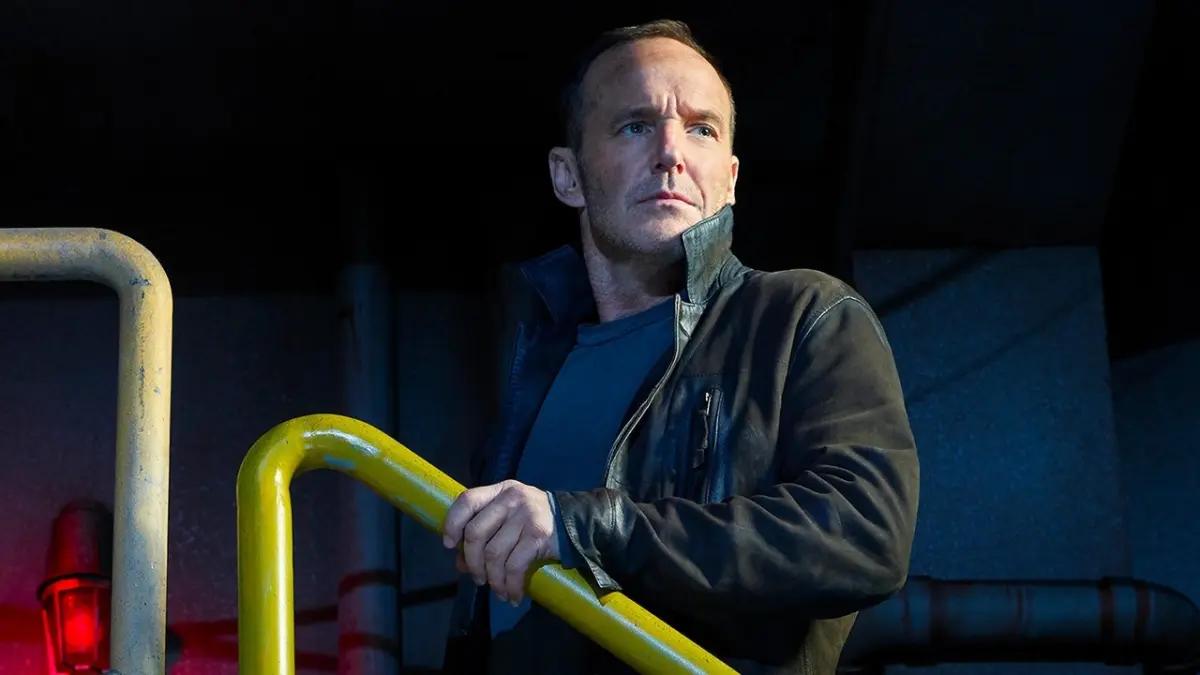
Adding gasoline to the speculative fire, Clark Gregg—beloved by fans for his portrayal of Agent Phil Coulson across the MCU and Agents of S.H.I.E.L.D.—promptly shared the Zodiac news on social media. This single digital footprint has forced a long-simmering question back into the mainstream spotlight: Could Zodiac serve as the backdoor revival or official MCU reintegration vehicle for ABC’s cult-classic series Agents of S.H.I.E.L.D.?
As we analyze Marvel Comics continuity, historical MCU deep cuts, and the broader strokes of Phase 6 and beyond, we can begin to piece together what Marvel Studios might be plotting behind closed doors.
Detailed Chronology: From NYCC Reveal to the 2028 Horizon
To understand where Zodiac fits within the grand tapestry of Marvel’s production pipeline, it is necessary to chart the trajectory of Marvel Television’s recent announcements and historical formatting.
- The Pre-Disney+ Era (2013–2020): Agents of S.H.I.E.L.D. airs for seven foundational seasons on ABC. Despite executive insistence that "it’s all connected," the characters operate largely in the periphery of the broader cinematic narrative, eventually drifting into divergent timelines and cosmic isolation.
- The One-Shot Precedent (2013): Marvel releases the Agent Carter Marvel One-Shot short film starring Hayley Atwell. In this narrative, Peggy Carter recovers a mysterious blue vial containing a dangerous chemical agent codenamed "Zodiac."
- The Post-Infinity Saga Reintegration (2021–2024): Characters from legacy Netflix shows (such as Daredevil, The Punisher, and Jessica Jones) are systematically folded into the mainline MCU canon via projects like Spider-Man: No Way Home, She-Hulk: Attorney at Law, and Daredevil: Born Again. Meanwhile, Agents of S.H.I.E.L.D. characters remain noticeably absent from official cross-over events.
- New York Comic Con (October 2026): Marvel Studios officially pulls back the curtain on its post-Secret Wars slate, announcing Zodiac as a marquee spy thriller series targeting a 2028 release window on Disney+.
- The Social Media Ripple (October 2026): Within hours of the announcement, actor Clark Gregg shares the promotional imagery for Zodiac on his personal social media feeds, prompting widespread industry chatter and fan theories regarding a potential S.H.I.E.L.D. reunion.
- The Horizon (2028): Zodiac is scheduled to premiere, positioning itself as a cornerstone project for Marvel’s post-Multiverse Saga television slate.
Supporting Context & Comics Lore: Decoding the Zodiac Cartel
To evaluate the narrative possibilities of the upcoming series, one must first examine the source material. Within Marvel Comics continuity, the name "Zodiac" has been tied to several criminal organizations, most notably the Zodiac Cartel.
The Zodiac Cartel
Introduced as recurring adversaries to Earth’s Mightiest Heroes, the Zodiac Cartel is a syndicate composed of 12 supervillains who model their identities, codenames, and methodologies after the signs of Western astrology (Aries, Taurus, Gemini, Cancer, and so on). Founded and financed by Cornelius van Lunt (aka Taurus), the Cartel aimed at nothing less than total global domination.

While they provided consistent friction for the Avengers in classic runs, the Cartel was never elevated to the elite tier of Marvel villainy inhabited by titans like Loki, Ultron, or Doctor Doom. Their operations frequently centered around the acquisition and exploitation of the Zodiac Key—a powerful cosmic artifact capable of generating devastating psionic energy and powering advanced technological machinery.
The Jake Fury and S.H.I.E.L.D. Connection
Crucially for a purported spy thriller, the comic book lore features a deep-seated connection to S.H.I.E.L.D. In the original runs, the villain operating under the alias Scorpio was revealed to be Jake Fury, the estranged brother of long-time S.H.I.E.L.D. Director Nick Fury.
Later seminal storylines, such as Jonathan Hickman’s Secret Warriors, expanded upon this dynamic. It was revealed that the villainous Jake Fury operating within the Cartel was actually a Life Model Decoy (LMD)—an advanced android copy—while the real Jake Fury had been working covertly alongside his brother. Furthermore, Secret Warriors introduced the Great Wheel, a shadowy predecessor organization to modern espionage networks originally founded by historical figures including Leonardo da Vinci. Astute observers have noted that design elements within the typography of the Zodiac logo may subtly nod to these high-level espionage lineages.
Official Statements and Industry Speculation
While Marvel Studios executives have remained characteristically tight-lipped regarding specific plot details or casting confirmations, the framing of the project provides vital clues. By categorizing Zodiac explicitly as a "spy thriller," Marvel is signaling a deliberate return to the grounded, boots-on-the-ground tone that characterized projects like Captain America: The Winter Soldier and Marvel’s Agents of S.H.I.E.L.D.
The Clark Gregg Factor
The most compelling catalyst for fan speculation remains the immediate public reaction from Clark Gregg. As the emotional anchor of early Marvel Television—and a character who famously died and was resurrected via Project T.A.H.I.T.I.—Gregg’s acknowledgment of the Zodiac announcement has sent shockwaves through the fandom.
While a social media share does not constitute a formal casting contract, it serves as a powerful indicator. If Marvel Studios intends to revitalize the espionage corner of the MCU, bridging the gap between legacy television and the current cinematic universe through a S.H.I.E.L.D.-adjacent property like Zodiac would be a masterclass in fan service and continuity harmonization.
Industry analysts also point to Samuel L. Jackson’s confirmed involvement in Avengers: Secret Wars. Should Nick Fury survive the multitudinal reset of the upcoming Avengers films, a systemic espionage cleanup operation could naturally lead directly into the events of Zodiac, potentially introducing or redeeming the Jake Fury dynamic on screen.

Deep-Cut Continuity: The Agent Carter Bioweapon
For die-hard continuity historians, the name "Zodiac" carries an even older, hyper-specific weight within the established canon of the Marvel Cinematic Universe.
During the nascent phase of Marvel’s media expansion, the studio produced a series of direct-to-video short films known as Marvel One-Shots. Among these was 2013’s Agent Carter, which followed Hayley Atwell’s Peggy Carter in the immediate post-World War II era as she navigated institutional sexism within the Strategic Scientific Reserve (SSR).
In the short film’s primary action sequence, Carter intercepts a criminal syndicate to retrieve a mysterious, glowing blue vial. That biological substance is explicitly identified on-screen as Zodiac—a devastating bioweapon of unknown origin and immense destructive potential.
Although Peggy Carter successfully secures the vial and delivers it safely into the custody of the emerging intelligence apparatus, the long-term fate of the Zodiac bioweapon was never explored in subsequent feature films or television series. Could Marvel Studios be planning a decades-spanning narrative payoff? Reintroducing the Zodiac bioweapon as the central MacGuffin for a modern spy thriller would reward viewers who have tracked the MCU since its Phase 1 roots, providing a brilliant structural link between the birth of modern espionage and its modern-day threats.
Future Outlook: What to Expect Before 2028
As Marvel Studios navigates the turbulent waters of the Multiverse Saga’s conclusion and prepares for the clean slate that follows Avengers: Secret Wars, Zodiac represents an intriguing tonal shift. Moving away from cosmic stakes and infinite realities down to terrestrial double agents, secret cartels, and high-stakes espionage could revitalize audience interest in the MCU’s grounded storytelling.
Whether Zodiac ultimately manifests as a literal adaptation of the Zodiac Cartel, a stealth revival of Agents of S.H.I.E.L.D. featuring Coulson and company, or a completely reimagined spy apparatus tied to old MCU loose ends like the Agent Carter bioweapon, one thing is certain: Marvel is betting big on the shadows.
As production ramps up in the coming years leading to its 2028 premiere, fans will undoubtedly pore over every frame of promotional material, looking for hidden symbols, casting leaks, and narrative crumbs. Until then, the files on Zodiac remain classified.