Executive Overview
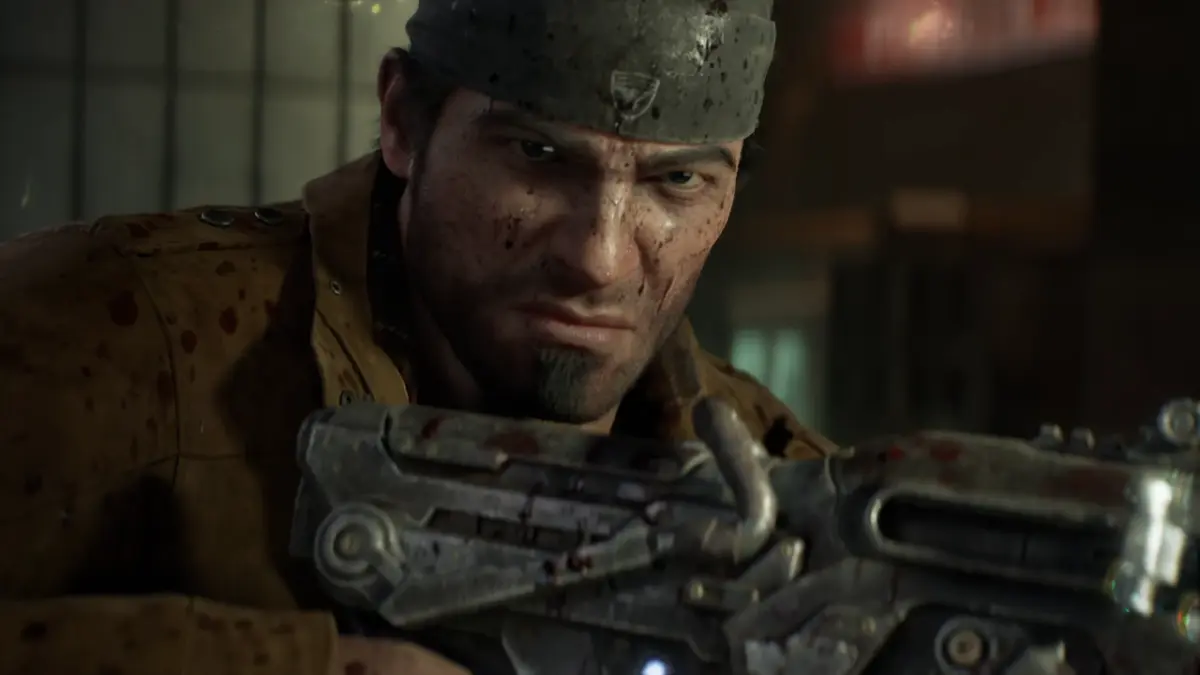
The launch of Gears of War: E-Day was supposed to represent a triumphant homecoming for one of Microsoft’s most celebrated franchises. Serving as a prequel that plunges players back into the harrowing, chaotic origins of the Locust War alongside iconic protagonists Marcus Fenix and Dom Santiago, the title has been universally lauded by critics and fans alike. IGN’s campaign review awarded the game an impressive 9/10, praising its gripping narrative, brutal combat loops, and reverence for the series’ gritty roots.
Yet, behind the critical acclaim lies an increasingly complicated financial and structural reality for Xbox. Early analytics data suggests that Gears of War: E-Day has moved a meager 230,000 traditional standalone copies across PC and console during its first week on the market.
While these numbers paint a bleak picture of traditional software sales for a AAA blockbuster, they do not tell the whole story. Instead of pointing to a lack of consumer interest, market researchers argue that this soft performance highlights a profound paradox at the heart of Microsoft’s ecosystem: Xbox Game Pass is effectively cannibalizing premium retail revenue. With an estimated 1.7 million players accessing the game through their subscriptions on day one, Gears of War: E-Day has ignited a fresh industry-wide debate regarding the viability of the $70 standalone price point in a subscription-first landscape.
Detailed Chronology: From Early Access to a Soft Retail Launch
The rollout of Gears of War: E-Day followed a staggered release schedule designed to maximize engagement and incentivize high-tier subscription spending.
- The Early Access Window: Last week, players who purchased the $30 Premium Edition upgrade gained early access to the campaign, sparking a wave of initial social media buzz, streamer viewership, and community discourse.
- The Full Launch: The official, wide-release date arrived on Tuesday, unlocking the title for standard Game Pass subscribers and traditional buyers alike.
- The Data Reveal: Shortly after launch, Rhys Elliott, head of marketing analysis at Alinea Analytics, published early tracking data regarding the prequel’s performance on X (formerly Twitter). The figures revealed a stark polarization in how consumers chose to interact with the software.
- Studio Address: Amidst the swirling conversations regarding sales metrics and platform strategy, The Coalition studio head Mike Crump publicly reaffirmed the game’s status as a "natural choice" to spearhead Xbox’s exclusive lineup, while simultaneously working to calm internal anxieties surrounding potential post-launch studio layoffs.
Despite the high-profile rollout, the split between raw copy sales and subscription engagement has left industry analysts questioning whether Microsoft’s current distribution model is sustainable for high-budget, narrative-driven blockbusters.
Supporting Context & Metrics: Breaking Down the Numbers
To understand the friction between traditional sales and subscription metrics, one must examine the granular data provided by market analysts. While Microsoft has refrained from releasing official, audited sales figures for Gears of War: E-Day, independent estimates paint a telling picture of modern gaming consumption habits.
The Sales Breakdown
Out of the estimated 230,000 total standalone copies sold globally during its debut week:
- Steam Sales: 168,000 copies were sold on Valve’s PC platform, where Game Pass integration is less pervasive and traditional ownership remains the standard.
- Xbox Ecosystem Sales: Combined console and Windows PC sales via the Microsoft Store totaled a mere 62,000 units.
The Game Pass Phenomenon and Premium Upgrades
Contrast those modest standalone figures with the staggering adoption rate of Xbox Game Pass:
- Subscription Reach: An estimated 1.7 million players booted up Gears of War: E-Day via Game Pass within its launch window.
- The Upgrade Economy: Out of those millions of subscribers, roughly 722,000 users shelled out an extra $30 for the Premium Edition upgrade to secure early access and digital bonuses.
- Revenue Generation: Total ecosystem earnings are estimated to sit around $37 million, with $27 million of that total directly stemming from the Xbox ecosystem—largely driven by the aforementioned $30 upgrades rather than $70 base game purchases.
The Death of the $70 SKU on Xbox?
This dynamic led Rhys Elliott to issue a stark warning regarding the state of software pricing on Microsoft’s consoles:

"E-Day sold 62K copies on Xbox against 722K Premium upgrades, so for every one copy sold on Xbox, nearly 12 Game Pass upgrades were sold. The $70 premium SKU is — functionally — dead on Xbox. In a world without day-one Game Pass, many of these folks would have bought E-Day at $70. They paid $30 for five days early access to something they don’t own. Xbox is, in effect, charging its most valuable customers the least, based on a hangover from a tried-and-exhausted strategy from a previous administration."
This data suggests that Xbox’s most dedicated, hardcore fans—those who historically lined up at midnight to buy collector’s editions or full-price discs—have adapted to the Game Pass ecosystem. Instead of purchasing a $70 disc or digital license, they maintain a subscription and treat the $30 upgrade as the new standard toll for early access.
Official Statements and Internal Realities
Microsoft is no stranger to the financial friction introduced by day-one subscription models. Internal documents leaked during the 2023 regulatory scrutiny surrounding the Activision Blizzard merger explicitly acknowledged that adding titles to Game Pass often leads to a measurable decline in base game sales during the product’s first year on the market.
At the time, Microsoft defended the model to regulatory bodies and media outlets, maintaining that Game Pass "offers gamers and game creators more choice and opportunity in how they discover, experience, and deliver games." From a player-acquisition standpoint, the strategy is undeniably effective: getting 1.7 million players into the world of Gears of War: E-Day on day one dwarfs the audience size a traditional single-player release might secure on Xbox hardware alone.
However, studio leadership must balance player metrics against soaring development costs. The Coalition studio head Mike Crump recently defended the game’s exclusivity, calling it essential for carrying the banner of the Xbox brand. At the same time, Crump has had to navigate turbulent internal waters, addressing employee concerns over crunch and potential post-launch layoffs—a harsh reality plaguing the broader AAA games industry. Notably, Crump has promised that the next iteration in the franchise will not require the protracted development cycle seen with E-Day, a necessary step if studios are to maintain financial health under a subscription-dominated revenue model.
Future Outlook: What E-Day Means for the Future of Xbox
The performance of Gears of War: E-Day acts as a stress test for Xbox’s overarching business strategy. As Microsoft increasingly explores multi-platform releases and leans into cloud-based streaming and subscriptions, the traditional metrics of success—such as physical software charts and opening-week retail milestones—are rapidly losing their relevance.
Yet, this shift introduces a complex financial balancing act. If the $70 standalone purchase is indeed "dead" within the Xbox ecosystem, Microsoft must rely entirely on subscription growth, microtransactions, and high-tier add-on upgrades to recoup the massive budgets required to produce tier-one cinematic blockbusters.
For players, the current model is a consumer-friendly paradise: access to a polished, critically acclaimed 9/10 masterpiece for the monthly cost of a subscription, supplemented by an optional upgrade for the impatient. But for Xbox executives and studio developers, Gears of War: E-Day serves as an urgent wake-up call. As the industry looks to the horizon, Microsoft will need to prove that its subscription-first philosophy can generate sufficient revenue to sustain its premiere studios without sacrificing the long-term health of its flagship franchises.