Executive Overview
For film enthusiasts seeking to capture the eerie, atmospheric, and unsettling mood of the Halloween season without relying on traditional genre tropes—such as masked serial killers, slasher tropes, or predictable supernatural monsters—cinematic options abound in works defined by psychological dread, isolation, and quiet malice. Rather than leaning on overt terror, a distinct tier of filmmaking utilizes ominous vibes, pervasive isolation, and the creeping suspicion that something profoundly sinister lurks beneath a pristine surface.
This curated cinematic exploration moves beyond standard holiday fare to present a sophisticated, genre-spanning selection: a decadent and poisonous gothic romance, a cerebral religious whodunnit, a biting satirical horror-comedy set in the world of high-end gastronomy, an unnerving journalistic thriller driven by late-night sociopathy, and an existential science-fiction odyssey set in the silent void of deep space.
Each of these five titles scratches a different genre itch while maintaining a consistently dark, stylish aesthetic underpinned by a pervasive sense of dread. Far from being restricted to an October watchlist, these are enduring, critically acclaimed masterpieces worth experiencing at any time of year. Below is an in-depth breakdown of these five compelling films, examining their thematic undercurrents, narrative structures, and distinct contributions to modern cinema.
Detailed Chronology & Thematic Breakdowns
5. Phantom Thread (2017) — The Poisonous Romance
On the surface, Paul Thomas Anderson’s Phantom Thread presents itself as a decadent period romance set within the exacting world of 1950s London fashion. Daniel Day-Lewis stars as Reynolds Woodcock, a renowned dressmaker whose meticulous routines define the day-to-day operations of his prestigious fashion house. Woodcock fancies himself completely in control of his art, his domestic sanctuary, and the countless women who cycle through his life as muses and romantic partners. That absolute control is challenged the moment he meets Alma (Vicky Krieps), a young, unassuming waitress who transitions seamlessly into his model, muse, and lover.
What initially appears to be a traditional romantic drama gradually unfurls into an unsettling gothic narrative about a young woman entering the claustrophobic domain of a brilliant, domineering artisan. Because Woodcock commands absolute authority over his environment, the House of Woodcock is characterized by hushed conversations, rigid expectations, and dogmatic rituals that make the operation feel less like a creative enterprise and more like a secular cult. A persistent atmosphere pervades the runtime, signaling to the viewer that something is subtly, profoundly wrong.
As the narrative develops, the initial dynamic between an eccentric artist and his passive muse transforms into a twisted psychological power struggle. Alma refuses to remain a silent fixture in Woodcock’s meticulously ordered universe, and their escalating battle for mutual dominance evolves into a bizarre, highly unconventional form of intimacy. The resulting film is simultaneously sinister, darkly comedic, and deeply unsettling, proving that the most dangerous monsters do not wear masks—they wear bespoke suits.
4. Wake Up Dead Man: A Knives Out Mystery — The Gothic Whodunnit
Rian Johnson’s Benoit Blanc franchise has continuously redefined the boundaries of the modern whodunnit. While the original Knives Out delivered a cozy New England murder mystery rooted in contemporary class resentment, and Glass Onion offered a sun-drenched, COVID-era caper skewering tech billionaires, Wake Up Dead Man transports Daniel Craig’s eccentric Southern detective into a much darker, ecclesiastical setting.
The narrative follows Blanc as he investigates a seemingly impossible murder within a small, isolated religious community in upstate New York. Here, the intense and commanding Monsignor Jefferson Wicks (Josh Brolin) lords over a dwindling yet fiercely devout congregation. When Wicks is discovered dead under mysterious circumstances, suspicion immediately falls upon the Monsignor’s young assistant, Father Jud Duplenticy (Josh O’Connor). Father Jud’s progressive, gentle approach to faith frequently clashed with Wicks’s fire-and-brimstone sermons, leading the community to assume the young priest had a hand in the tragedy.
Johnson’s entry into the franchise incorporates ornate graveyards, heavy religious iconography, and ambiguous hints of the miraculous. These elements imbue Wake Up Dead Man with a gothic atmosphere that dances on the edge of the supernatural. Beneath its intricate, playful plotting, the film emerges as the most emotionally resonant and structurally ambitious installment in the series to date, exploring the fragile intersection of human desperation and divine intervention.
3. The Menu (2022) — The Culinary Satire Descending into Horror
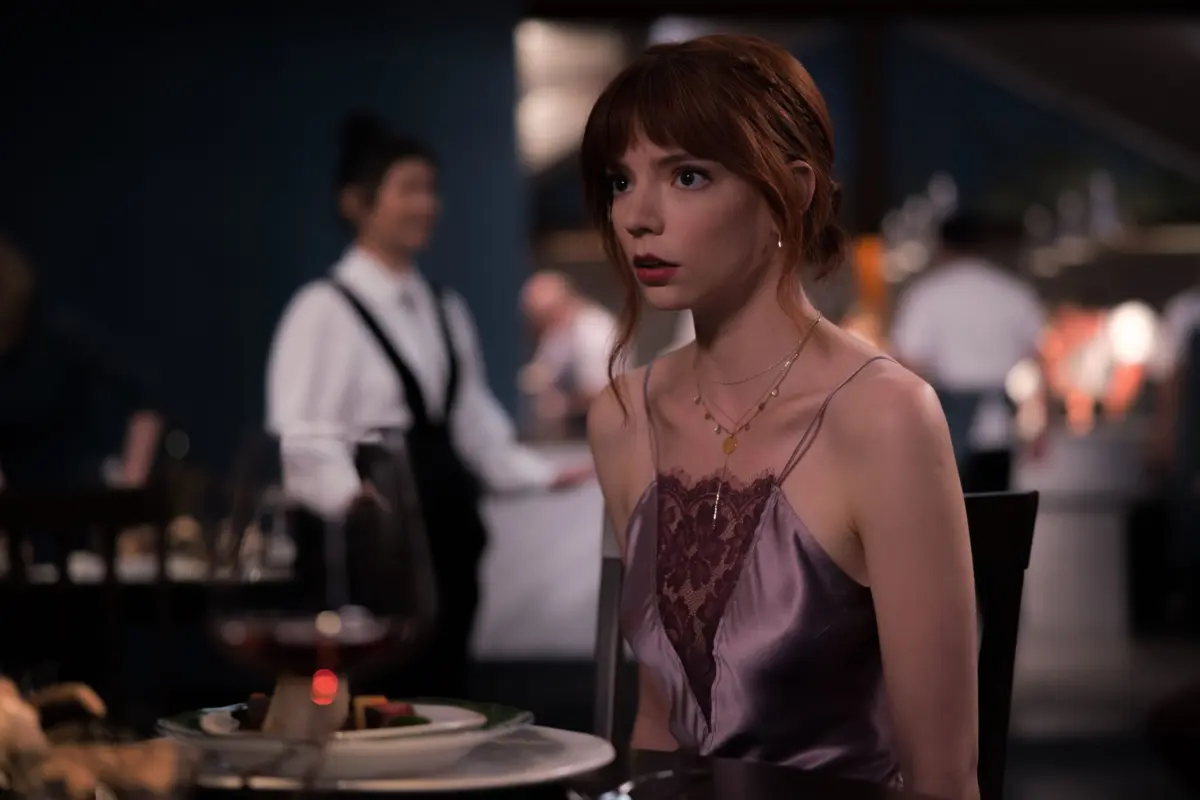
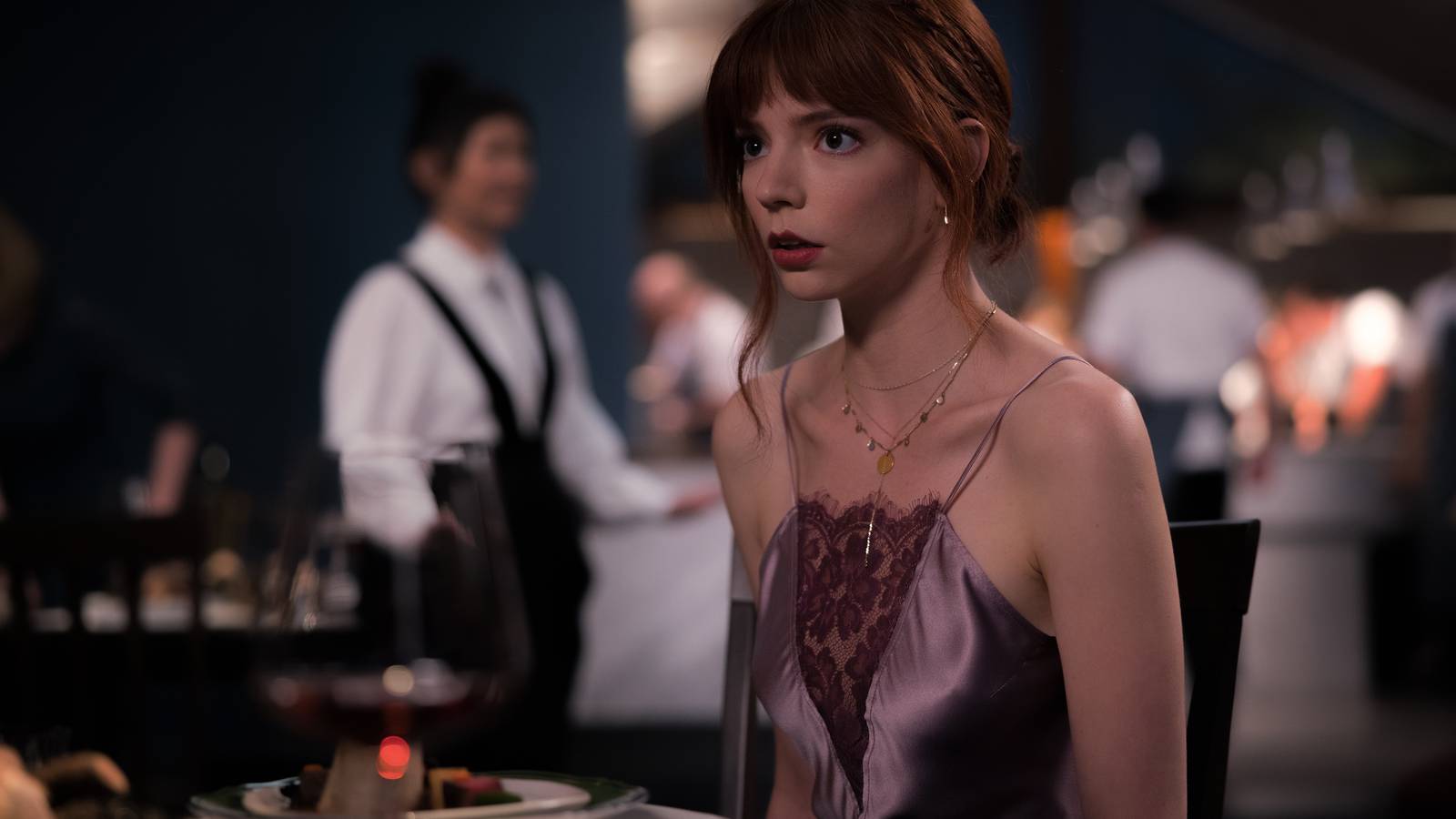
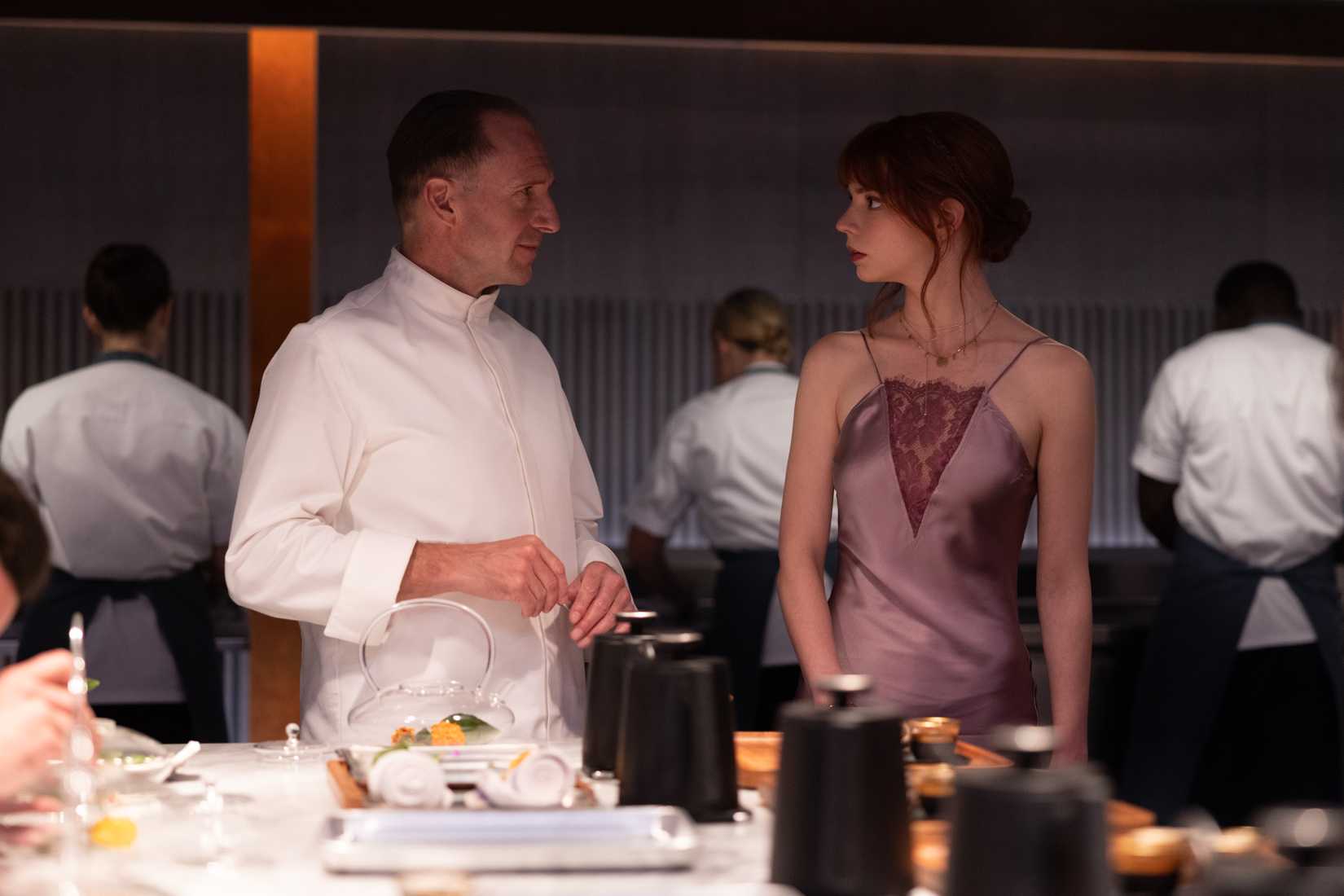
When a dozen wealthy, elitist diners travel via private boat to a remote island for an exclusive, multi-course meal prepared by world-renowned chef Julian Slowik (Ralph Fiennes), they anticipate an evening of high-end indulgence. Among the guests is Margot (Anya Taylor-Joy), who attends reluctantly as the date of Tyler Ledford (Nicholas Hoult), an insufferable foodie obsessed with culinary perfection. As the evening progresses, the meticulously planned tasting menu grows increasingly menacing, transforming a high-concept dining experience into a terrifying trial.
Directed by Mark Mylod (Succession), The Menu acts as a biting satire targeting foodie culture, artistic pretension, and the perceived moral rot of the ultra-wealthy. The narrative steadily abandons subtlety, descending into a full-scale horror-comedy where each successive dish serves to judge and punish the guests for their unearned privilege. Ralph Fiennes plays Chef Slowik with chilling, cult-like precision, wielding his kitchen knives like religious implements.
Nicholas Hoult delivers a phenomenal against-type performance as Tyler—a pedantic, sycophantic poser who embodies every privileged consumer who weaponizes financial status to perform refined taste. Conversely, Anya Taylor-Joy anchors the film as Margot, the sole grounded outsider who serves as the ultimate "Final Girl," surviving not through wealth or intellectual pretension, but through sharp observational survival instincts. At 107 minutes, the film balances immaculate culinary presentation with raw, simmering violence, resulting in a compact, deliciously dark experience.

2. Nightcrawler (2014) — The Psychopathy of Modern Media
Los Angeles transforms into a distinctly alien and hostile environment after midnight. In Dan Gilroy’s gripping thriller Nightcrawler, empty highways, glaring streetlights, and sprawling urban landscapes frame a society where human tragedy serves as a lucrative commodity.
Jake Gyllenhaal delivers a career-defining, unhinged performance as Lou Bloom, an unemployed petty thief who accidentally stumbles into the cutthroat world of freelance stringer journalism. Armed with a handheld camera and a police scanner, Lou prowls the nocturnal city streets to capture visceral footage of accidents, fires, and violent crimes, selling his recordings to morning news producer Nina Romina (Rene Russo). As competition intensifies, Lou realizes that securing top-tier payouts requires getting closer to the carnage. Devoid of empathy or conventional moral scruples, Lou effortlessly blurs the line between recording a crime scene and actively manipulating it to craft a more sensational narrative.
Lou ultimately stands as one of the most compelling cinematic villains of the 21st century precisely because his evil is entirely mundane. He dismisses his total lack of empathy as pure corporate ambition, speaking with the chilling cadence of a sociopath trained by a predatory motivational speaker. Gyllenhaal moves through the frame like an apex predator learning human mannerisms. As hypnotic as it is repellent, Nightcrawler mirrors the very media circus it critiques, remaining impossible to look away from even as it descends into moral abyss.
1. Ad Astra (2019) — The Existential Void of Deep Space
Astronaut Roy McBride (Brad Pitt) possesses a psychological constitution bordering on the superhuman. Even when facing immediate, life-or-death scenarios—such as free-falling from the edge of the thermosphere back toward Earth—his heart rate remains entirely steady. This preternatural emotional control allows him to make rational, calculated decisions under immense pressure, earning him widespread professional acclaim. However, James Gray’s Ad Astra quickly reframes this trait not as a superpower, but as a symptom of deep-seated emotional dissociation from humanity.
When catastrophic, mysterious energy surges threaten life across the solar system, Roy is briefed on their potential connection to the Lima Project—a classified deep-space research expedition led decades prior by his estranged father, H. Clifford McBride (Tommy Lee Jones). Though presumed dead for decades, Clifford may still be alive on the fringes of Neptune. Roy is dispatched across the solar system to locate him, embarking on an odyssey where physical distance directly mirrors the emotional gulf between father and son.
Director James Gray visualizes space as an endless, hostile void that paradoxically feels suffocatingly claustrophobic. Humanity’s expansion into the cosmos is depicted as bleak and utilitarian: the Moon has been reduced to corporate airport hubs and territorial skirmishes, while Martian outposts operate entirely underground. Eschewing non-stop action for a moody, atmospheric, and quiet cadence, Ad Astra frames the entire solar system as a haunted house, with Roy traveling billions of miles to confront the literal and figurative ghost of his father. The film’s ultimate inquiry—asking whether humanity is truly alone in the universe—carries profound existential weight, delivering a form of quiet terror far more haunting than any traditional monster movie.
Supporting Context & Metrics
To better understand the enduring critical and cultural impact of these five selections, the following metrics illustrate their reception across major cinematic evaluators:
| Film Title | Release Year | Director | Primary Genre | Critical Reception (Rotten Tomatoes / Metacritic) |
|---|---|---|---|---|
| Phantom Thread | 2017 | Paul Thomas Anderson | Psychological / Gothic Romance | 91% / 94 |
| Wake Up Dead Man: A Knives Out Mystery | 2025 | Rian Johnson | Mystery / Gothic Whodunnit | Anticipated / Pre-release Acclaim |
| The Menu | 2022 | Mark Mylod | Satirical Horror-Comedy | 88% / 71 |
| Nightcrawler | 2014 | Dan Gilroy | Psychological Thriller | 95% / 76 |
| Ad Astra | 2019 | James Gray | Existential Sci-Fi / Drama | 83% / 80 |
These metrics reinforce that alternative holiday viewing does not require compromising on artistic merit. Each selected film bridges the gap between sophisticated filmmaking and dark, thematic resonance.
Official Statements & Critical Commentary
Industry directors and principal cast members have frequently noted the psychological underpinnings that elevate these works above standard genre classifications:
- Paul Thomas Anderson on the duality of Phantom Thread: "We wanted to explore an environment where order is maintained so strictly that any deviation feels like an earthquake. Reynolds Woodcock builds a fortress of habit, and Alma is the beautiful, disruptive element that tests whether that fortress can survive human nature."
- Rian Johnson on shifting tones in the Knives Out series: "With Benoit Blanc, the goal has always been to drop him into entirely different social ecosystems. Moving from a wealthy New England estate to a religious community in upstate New York allowed us to explore themes of faith, doubt, and dogma that naturally lend themselves to a darker, more atmospheric mystery."
- Mark Mylod on the satire within The Menu: "The film is an exploration of entitlement. We wanted the audience to feel the claustrophobia of being trapped in a room with people who consume everything—art, food, status—without ever truly appreciating the human cost behind it."
Future Outlook
As the landscape of seasonal entertainment continues to evolve, audiences increasingly seek content that transcends formulaic genre boundaries. The appetite for intelligent, slow-burn narratives defined by mood, atmosphere, and psychological depth proves that horror and suspense are not limited to jump-scares and gore.
Whether revisiting the icy psychological isolation of Ad Astra, decoding the intricate power dynamics of Phantom Thread, or bracing for the sharp satirical bite of The Menu, viewers have access to a rich cinematic catalog that delivers thrills through tension, style, and profound existential inquiry. Incorporating these titles into an annual rotation ensures that the search for seasonal dread remains as intellectually stimulating as it is entertaining.