In a dramatic escalation of one of the most high-profile federal investigations in recent memory, Federal Bureau of Investigation (FBI) agents arrested a prominent Canadian cybersecurity executive in Pennsylvania on cyber extortion and conspiracy charges. The suspect, identified as Edward Dubrovsky—a veteran figure in the cyber extortion and ransomware advisory sector—stands accused of aiding the notorious ShinyHunters hacking collective.
This high-stakes arrest comes on the heels of a humiliating breach for the Bureau itself. The ShinyHunters syndicate recently compromised the FBI’s online recruitment portal, pillaging sensitive, classified data belonging to thousands of federal agents. The stolen trove reportedly includes operational units, specializations, and highly confidential medical and psychiatric records.
While top federal officials, including FBI Director Kash Patel, have kept official statements measured, multiple insider sources confirm that Dubrovsky’s apprehension is deeply tied to the ongoing, decentralized dragnet targeting ShinyHunters. Dubrovsky—who has authored authoritative literature on ransomware negotiation strategies and served in leadership roles at prominent incident response firms—was taken into custody while visiting Philadelphia for a major cyber insurance conference.
The case highlights a murky and dangerous intersection within the multi-billion-dollar incident response industry: the fine line between advising corporate victims on extortion negotiations and actively crossing ethical or legal boundaries to aid cybercriminal enterprises. As the prosecution shifts to the Eastern District of Texas, the fallout from this arrest threatens to send shockwaves through the global cyber insurance and ransomware mitigation sectors.
Detailed Chronology: From the Philadelphia Summit to Federal Custody
The NetDiligence Cyber Risk Summit
The sequence of events leading to Dubrovsky’s arrest began in early October 2026. Between October 5 and October 7, the annual Cyber Risk Summit—organized by NetDiligence—was held at the Loews Philadelphia Hotel. The conference brought together a who’s who of cyber insurance underwriters, legal experts, security researchers, and incident response providers.
Among the premier sponsors of the summit was Cypfer, a prominent Canadian cybersecurity firm specializing in ransomware negotiations. Also in attendance was CyberSteward, another Canadian security venture with which Dubrovsky was closely associated. Dubrovsky had heavily publicized his attendance on LinkedIn weeks prior, noting his intent to engage in high-level discussions surrounding global, platform-agnostic, compliance-driven extortion advisory services.
However, the conference proved to be a trap. On October 8, federal law enforcement closed in.
The Arrest and Initial Court Appearances
Federal court documents filed in Pennsylvania—under a slight misspelling of the suspect’s name as Edward Dobrovsky—revealed charges of conspiracy to threaten to impair the confidentiality of information with the intent to extort money, alongside interference with commerce by threats.

While the core complaint and key supporting documents were swiftly sealed by a federal judge, a handful of records indexed on CourtListener.com provided a window into the charges. At 54 years old, Dubrovsky was initially booked into a federal detention facility in Philadelphia.
Recognizing the broader geographic scope of the investigation, legal maneuvering quickly ensued. On October 9, a formal notice was filed to transfer the case to the U.S. District Court for the Eastern District of Texas, which sources confirm has become the central command hub for the overarching federal investigation into ShinyHunters. As of his initial hearings, court documents indicate that Dubrovsky has not yet retained private counsel, nor has a public defender been formally appointed.
Supporting Context & Metrics: The Anatomy of the ShinyHunters Threat
To understand the gravity of Dubrovsky’s arrest, one must examine the operational blueprint and recent trajectory of the ShinyHunters hacking group, as well as the shadowy ecosystem of ransomware mediation.
Who is ShinyHunters?
ShinyHunters is a prolific, loosely affiliated cybercrime syndicate that has terrorized the Software-as-a-Service (SaaS) and corporate sectors for years. The group typically gains unauthorized access by deploying sophisticated phishing campaigns and purchasing stolen corporate credentials on underground markets. Once inside a network, they siphon massive volumes of proprietary data, threatening to leak it publicly via leak sites or dark web forums unless an exorbitant ransom is paid.
According to federal estimates, the syndicate has successfully extorted over $70 million from corporate and institutional victims globally in this year alone. However, their decision to target the FBI marked a catastrophic miscalculation, drawing the full, unmitigated wrath of American intelligence and law enforcement agencies.
A Domino Effect of International Arrests
Dubrovsky’s detention is part of a sweeping, multi-jurisdictional crackdown orchestrated by international law enforcement agencies:
- The Dutch Raid: Last month, the Dutch National Police arrested Pepijn van der Stap, a reformed cybercriminal suspected of playing a foundational role in the ShinyHunters infrastructure. The FBI has spent weeks sifting through electronic devices seized during this raid.
- The Rise and Fall of "Rey": Immediately following Van der Stap’s arrest, a senior ShinyHunters operative operating under the handle "Rey" assumed operational control of the group. Rey began brazenly taunting FBI leadership on social media regarding the recruitment portal breach.
- The Identification of a Teenager: Investigative journalism and federal tracking culminated in Reuters reporting that "Rey" was actually a teenager named Saif Al-din Khader. Khader was subsequently detained and is reportedly cooperating fully with federal investigators. His apprehension occurred as the group attempted to extort a digital aviation and navigation unit recently divested by Boeing in late 2025.
The Irony of the Author-Turned-Defendant
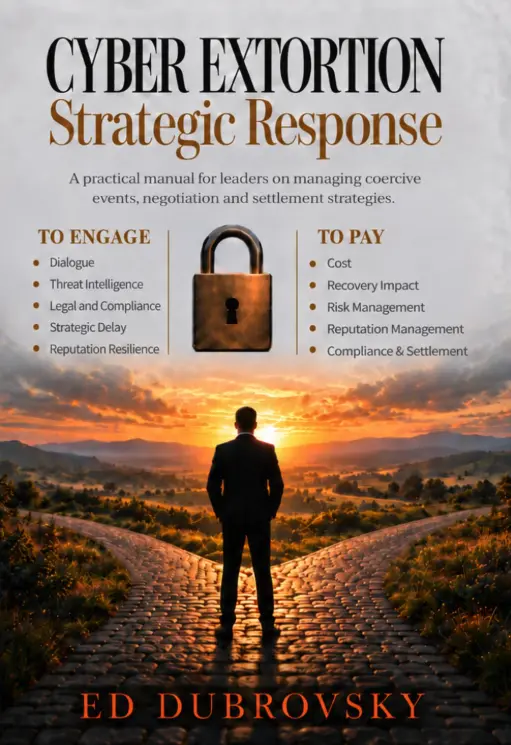
Adding a surreal layer to the proceedings, Dubrovsky is the author of Cyber Extortion Strategic Response, a 252-page textbook detailing the complexities of ransomware negotiations.
An excerpt from the book’s promotional material underscores a fine philosophical and legal distinction:

"At the heart of the book is a critical distinction: communicating with a criminal is not the same as negotiating a payment, and negotiating is not a commitment to pay. Engagement can serve other objectives, including testing claims, gathering information, creating time, and preserving options while the organization evaluates its next move."
Federal prosecutors will now have to prove whether Dubrovsky crossed the line from legally advising corporate victims on these tactical nuances into directly collaborating with, aiding, or abetting the extortionists themselves.
Official Statements and Industry Reactions
The federal government has maintained a tight-lipped posture regarding the specifics of the ongoing conspiracy case.
- FBI Director Kash Patel issued a brief statement via X (formerly Twitter) acknowledging arrests in the ongoing extortion probes, but deliberately omitted specific names and operational details to protect the integrity of the pending prosecution.
- The FBI Field Office in Texas, now serving as the nerve center for the multi-state probe, has officially declined to comment on the record.
Meanwhile, the corporate landscape is scrambling to distance itself from the fallout.
- Cypfer, one of the industry’s most visible ransomware response firms, moved quickly to correct public records regarding Dubrovsky’s corporate history. While LinkedIn profiles and media reports initially listed Dubrovsky as a founder or co-founder of Cypfer, a company spokesperson issued a definitive clarification on October 10: Dubrovsky was never a founder, but rather served as a managing director before his resignation in November 2025.
- Representatives for CyberSteward, the firm Dubrovsky was representing at the Philadelphia summit, have not yet issued a public statement, though inquiries remain ongoing.
Future Outlook: Industry Fallout and Legal Precedents
The arrest of a high-profile incident response executive on federal conspiracy charges marks a watershed moment for the cybersecurity industry. For years, the multi-billion-dollar ecosystem of ransomware negotiation firms has operated in a regulatory grey zone, mediating tens of millions of dollars between corporate ransomware victims and dangerous cybercrime syndicates.
As the case unfolds in the Eastern District of Texas, several critical questions loom large:
- Broader Indictments: Industry insiders whisper that Dubrovsky may not be the last executive to face scrutiny. Sources suggest that additional charges against principals at other specialized negotiation and incident response firms could be forthcoming as federal prosecutors comb through seized communications.
- The Compliance Tightrope: Corporate boards and cybersecurity insurers will likely re-evaluate how they handle ransom negotiations, fearing that aggressive or unregulated advisory practices could be misconstrued by federal prosecutors as material support or conspiracy with designated threat actors.
- The FBI’s Internal Security Review: Beyond the courtroom, the fallout from the ShinyHunters breach of the FBI recruitment portal will force a generational audit of federal cybersecurity protocols, credential management, and insider threat monitoring.
This remains a rapidly evolving, high-stakes national security story. Further updates, unsealed court filings, and official statements will be reported as they materialize.