Executive Overview
Sixty-six years after its landmark theatrical release in 1960, Alfred Hitchcock’s Psycho stands as a monumental achievement in cinematic history—not merely as a historical artifact to be admired in film archives, but as a living, breathing masterclass in suspense that continues to captivate modern audiences. In an era where many classic films suffer from the erosion of time, slowed pacing, and outdated cinematic grammar, Psycho remains shockingly fresh, visceral, and terrifying.
As the film returns to streaming platforms like Netflix, it offers a timely reminder of why it is considered the definitive psychological thriller. Despite being a victim of its own success—with its iconic twists, silhouette imagery, and Bernard Herrmann’s screeching string arrangements having saturated popular culture for decades—the picture still commands attention. It subverts expectations, shifts narrative perspectives, and plays upon universal human anxieties with a precision that modern horror and thriller directors still strive to emulate. This article examines the enduring brilliance of Psycho, dissecting its narrative structure, its revolutionary subversion of the protagonist arc, its iconic score, and its everlasting footprint on the horror genre.
Detailed Chronology: The Anatomy of a Masterpiece
To understand why Psycho continues to resonate with first-time viewers and seasoned cinephiles alike, one must trace its meticulous narrative progression. The film is a masterclass in misdirection, operating on structural rules that shattered Hollywood conventions of the 1960s.
Phase One: The Heist and the Flight
The film opens not in a shadowy, haunted motel, but in the sun-drenched, high-stakes environment of Phoenix, Arizona. We are introduced to Marion Crane (Janet Leigh), a woman trapped in a cycle of quiet desperation. Deeply in love with Sam Loomis (John Gavin), a man burdened by insurmountable debt and alimony payments, Marion sees no legal path toward a shared future. Their romance is restricted to stolen mid-day interludes during Sam’s business trips.
The inciting incident arrives when Marion’s employer casually tasks her with depositing $40,000 in cash—a staggering sum at the time, though its purchasing power has inflated wildly over the decades. Seizing an impromptu window of opportunity, Marion pockets the cash, packs her bags, and hits the road, desperate to buy her way into marital bliss.
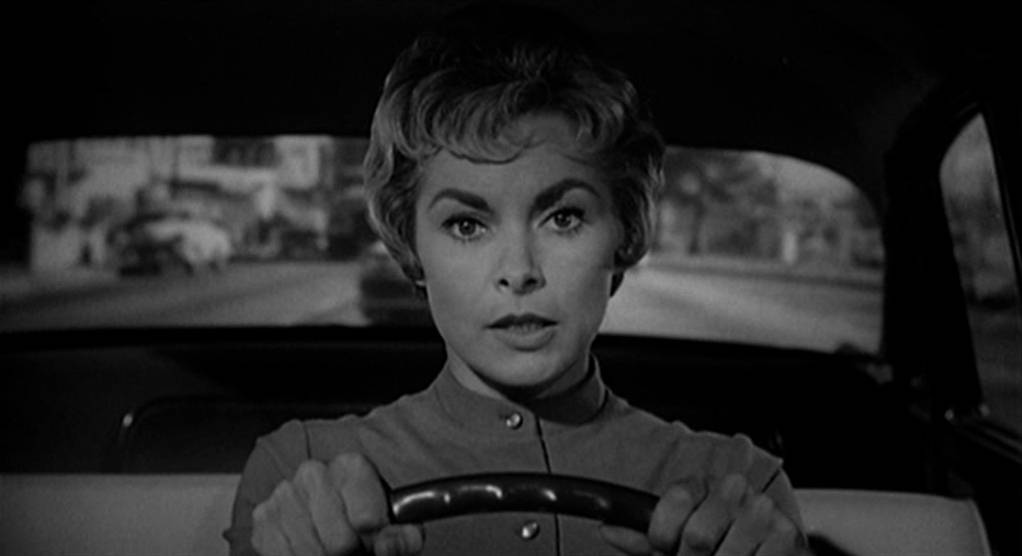
What follows is an excruciatingly tense cat-and-mouse sequence. Hitchcock focuses heavily on Marion’s internal panic: the nervous sweat, the suspicious glances, and the fateful encounter with a highway patrol officer whose questioning intensifies her paranoia. Driven by survival instinct, Marion trades in her vehicle for a new one, a desperate maneuver that ultimately fails to outpace her mounting guilt.
Phase Two: The Bates Motel
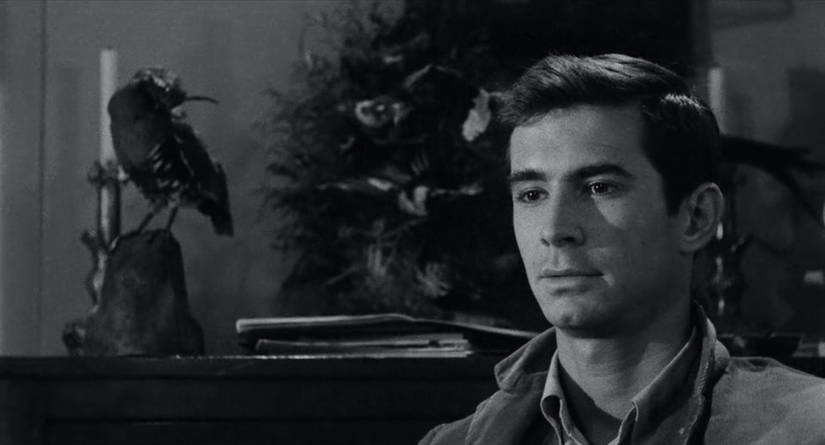
Exhausted, drenched by a torrential downpour, and hoping to evade detection, Marion pulls off the main highway and checks into the desolate Bates Motel. Here, she encounters Norman Bates (Anthony Perkins), a shy, twitchy, bird-like young man who manages the establishment while living in the foreboding Gothic house on the hill above.
In a quiet, character-building sequence, Norman prepares a sandwich for Marion in the motel parlor. Surrounded by taxidermied birds of prey—a subtle visual motif foreshadowing the film’s themes of entrapment and predation—Norman speaks defensively of his mentally frail, overbearing mother, whose sharp, offscreen voice frequently berates him from the house.
The conversation feels organic, intimate, and eerie. After finishing her meal, Marion returns to Cabin 1, completely unaware that Norman has drilled a peephole in the wall to spy on her as she undresses. It is at this exact juncture that Psycho delivers its first tectonic narrative earthquake.
Phase Three: The Subversion of the Protagonist
For the first third of Psycho, the audience has been firmly anchored to Marion Crane. We have experienced her crime, shared her paranoia, and rooted for her escape. Hollywood storytelling dictated that Marion was the undeniable protagonist—the narrative anchor through which the mystery would be solved or resolved.

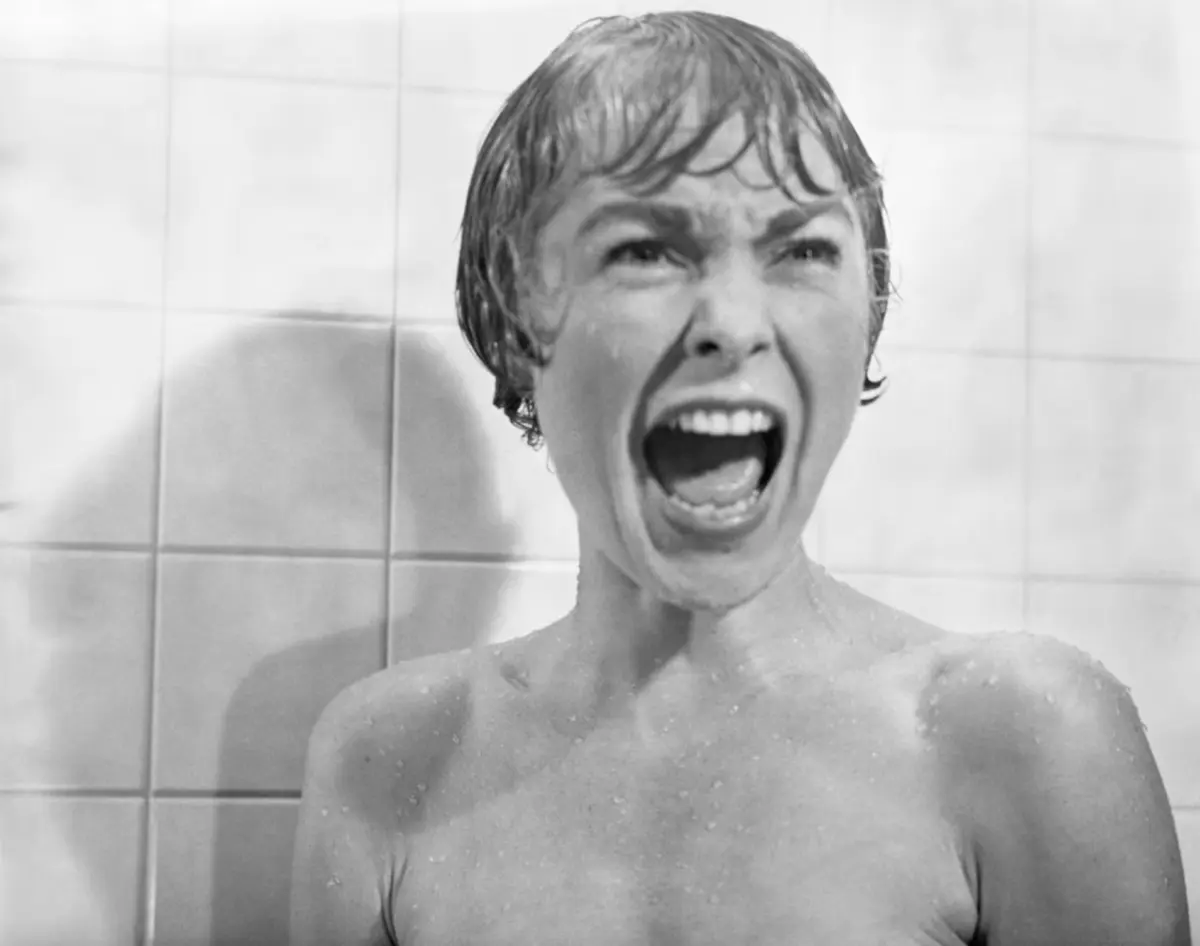
Then comes the shower scene.
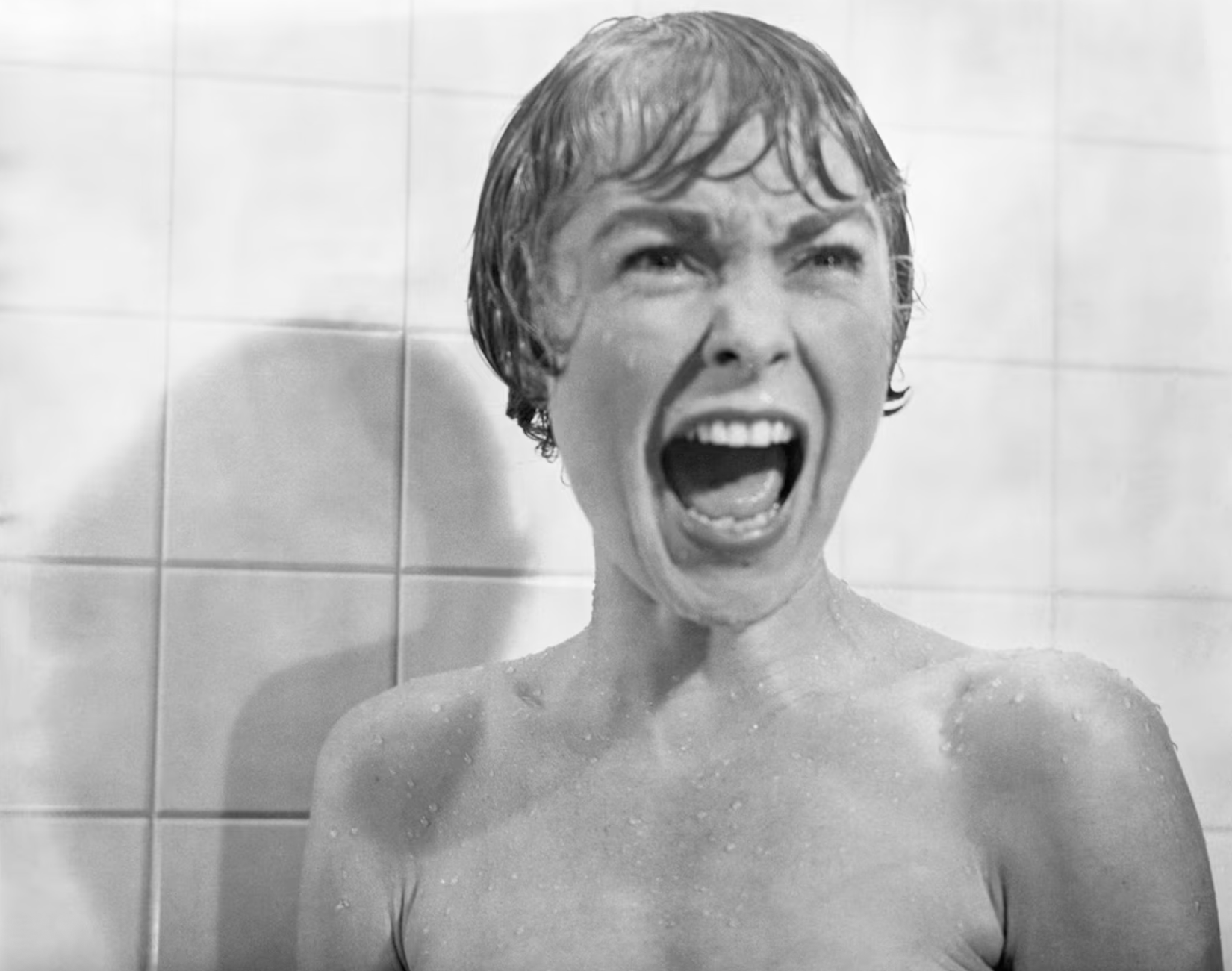
In a sequence lasting less than three minutes, comprising dozens of rapid-fire cuts and underscored by Bernard Herrmann’s shrieking violin stabs, Marion is brutally murdered. With her death, Hitchcock commits an unpardonable sin by 1960s standards: he kills off his primary star less than halfway through the runtime. The viewer is left unmoored, abruptly stripped of their narrative surrogate and forced to recalibrate their sympathies toward a new central figure—the deeply unsettling Norman Bates.
Supporting Context & Metrics: Breaking the Mold
Psycho was not merely a creative gamble; it was a radical departure from the studio system norms of its era, engineered entirely by Alfred Hitchcock’s stubborn independence and psychological acuity.
Production Constraints and the Hays Code
Produced on a relatively modest budget of roughly $800,000 using the crew from his television series Alfred Hitchcock Presents, the film was initially rejected by Paramount Pictures executives who found it distasteful, sordid, and unfilmable. Hitchcock financed a significant portion of the production out of his own pocket in exchange for a massive percentage of the back-end profits—a financial gamble that paid off exponentially.
The film also pushed the boundaries of the strict Motion Picture Production Code (the Hays Code). Notably, Psycho features one of the earliest depictions of a flushing toilet in American cinema—a seemingly mundane detail that caused immense censorship battles. Furthermore, the explicit nature of the shower sequence, combining female nudity, violence, and sexualized terror, challenged studio censors who were forced to concede to Hitchcock’s meticulous framing, which heavily relied on editing illusions rather than explicit gore.
Box Office and Cultural Impact
Upon its release in the summer of 1960, Psycho became a massive commercial phenomenon. Audiences lined up around the block, and Hitchcock implemented a strict "no late arrivals" policy, refusing to allow patrons into the theater once the film had begun—a marketing tactic that heightened the communal sense of suspense and anticipation.
- Initial Box Office: Grossed over $32 million domestically on its initial run, making it one of the most profitable films of the decade.
- Critical Reassessment: While initially met with mixed reviews from traditional critics who found the subject matter unseemly, modern consensus ranks it among the greatest films ever made. It holds a near-flawless critical rating across major film aggregators.
- Academy Award Nominations: Received four Oscar nominations, including Best Director for Hitchcock, Best Supporting Actress for Janet Leigh, Best Art Direction, and Best Cinematography.
Official Statements and Critical Perspectives
Film historians and directors alike have continuously weighed in on the profound legacy of Psycho.
In retrospective analyses, critics frequently highlight how the film birthed the modern "slasher" subgenre, paving the way for franchises like Halloween, Friday the 13th, and A Nightmare on Elm Street. However, scholars emphasize that Psycho relies far more on psychological dread than bodily mutilation.
"The audience is like a giant organ that you and I are playing," Alfred Hitchcock famously explained regarding his manipulation of viewer emotions. “At different times we play this note or that chord, and they react.”
In interviews discussing the enduring appeal of the film, modern directors often point to the seamless pacing. Despite predating modern editing speeds and computer-generated effects, Psycho moves with the momentum of a runaway freight train.
Film critic and historian Leonard Maltin noted: "Hitchcock didn’t just direct a movie; he engineered a collective psychological event. The brilliance of Psycho lies in its refusal to let the viewer rest. Just when you think you understand the rules of the game, Hitchcock changes the board."
Future Outlook: Why Psycho Will Never Die
As we look toward the future of cinema in an age of hyper-fast digital consumption and endless reboots, the legacy of Psycho remains unassailable. While countless horror films are consumed and forgotten within a single weekend on streaming services, Hitchcock’s masterwork continues to serve as an initiation rite for successive generations of film enthusiasts.
The film’s influence can be observed in contemporary prestige thrillers that rely on unreliable narrators, perspective shifts, and environmental dread. Yet, none have matched the surgical precision of the Bates Motel.
For viewers discovering the film for the first time via its current streaming availability, Psycho proves that true cinematic brilliance is immune to aging. Its exploration of repression, voyeurism, maternal dominance, and hidden guilt taps into the darkest corners of the human psyche—themes that are just as relevant today as they were in 1960.
Ultimately, Psycho is not merely a classic to be checked off a cinematic bucket list; it is an active, pulse-pounding experience that demands to watched in a dark room with the volume turned up. Even sixty-six years later, when those opening strings of Bernard Herrmann’s score explode across the speakers, there is simply no escape from the house on the hill.