Executive Overview
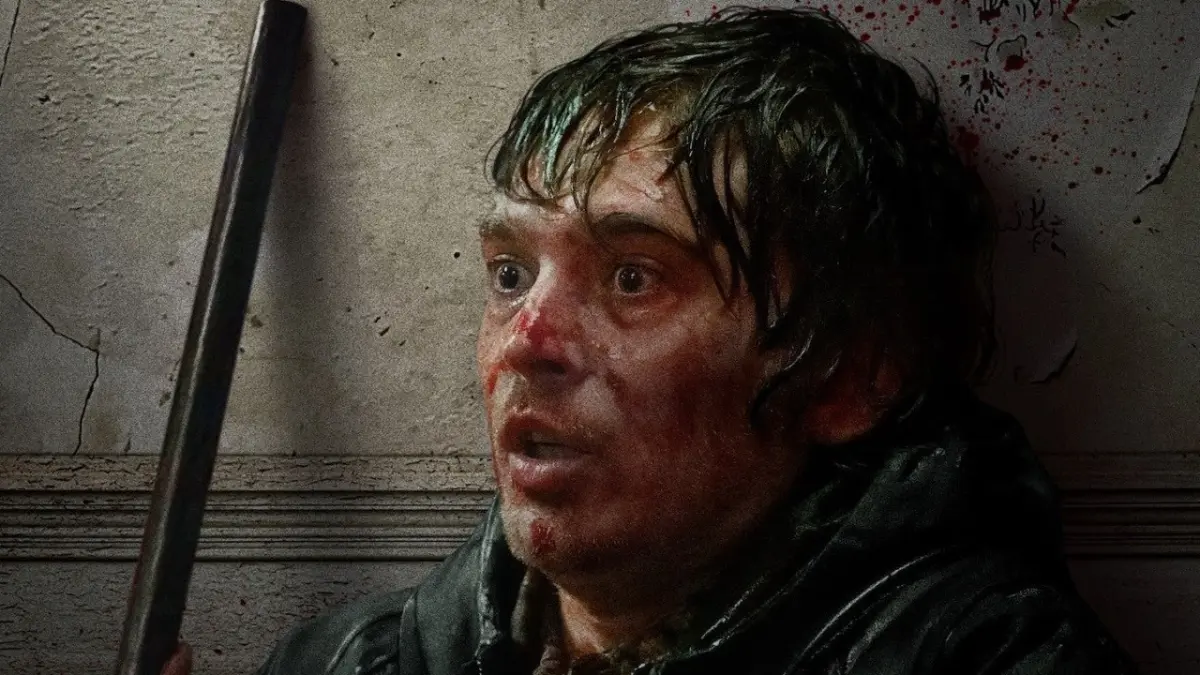
The mid-October 2026 box office has delivered a seismic shift in the theatrical landscape, defined by monumental triumphs, unexpected staying power, and catastrophic misfires. At the center of this cinematic storm is writer-director Zach Cregger, whose live-action adaptation of Capcom’s legendary survival-horror franchise, Resident Evil, has officially established itself as a juggernaut. Surpassing the lifetime gross of Cregger’s previous breakout hit, Weapons, Resident Evil has stormed past the $320 million worldwide mark in just four weeks, defying pre-release skepticism and internet backlash to become the highest-grossing film of the filmmaker’s career.
While horror continues to dominate the multiplexes ahead of Halloween—bolstered by the surprising, critic-proof resilience of Jessica Chastain’s Other Mommy—other high-profile releases are facing turbulent waters. Tom Cruise’s Digger is experiencing a steep second-week decline, and Aaron Sorkin’s much-anticipated sequel to The Social Network, titled The Social Reckoning, has cratered in its opening frame. As studios look toward the latter half of October, the box office is currently a study in contrasting fortunes, proving once again that modern audiences are unpredictable, highly driven by genre loyalty, and quick to punish perceived creative missteps.
Detailed Chronology: How Resident Evil Claimed the Global Crown
When Zach Cregger brought his gritty, re-imagined Raccoon City to the big screen on September 18, 2026, industry analysts expected a respectable opening, but few could have predicted the unprecedented trajectory the film would take.
The Opening Salvo
The film’s theatrical campaign kicked off with a thunderous $108.3 million domestic and global opening weekend, instantly cementing Cregger as a formidable commercial force following the success of Weapons. This early dominance immediately bled over into adjacent media, triggering a reported 50% spike in physical and digital sales for Capcom’s Resident Evil 2 remake on PlayStation 5 and other platforms. Furthermore, critical consensus began to coalesce around the film, with outlets like IGN awarding it an 8/10 ("Great"), ultimately crowning it the highest-rated video game adaptation in cinematic history.
The Fan Backlash and Creative Risk
This triumph is all the more remarkable given the digital headwinds the production faced for months leading up to its premiere. Die-hard gaming purists vocalized intense frustration over Cregger’s narrative choices, specifically pointing to the omission of iconic, recognizable series protagonists and radical tweaks to established lore.
Cregger remained steadfast in interviews, acknowledging a degree of naivety regarding the intensity of fan ownership over the franchise. He defended his creative liberties—such as altering temporal markers and atmospheric details—by asserting that these changes were non-negotiable sacrifices required to craft a cohesive, high-functioning cinematic narrative rather than a literal, frame-for-frame translation of code to celluloid. By all measurable metrics, that gamble paid massive dividends.
The International Surge and Fourth-Weekend Resurgence
Entering its fourth weekend in theaters, Resident Evil pulled off a staggering global rebound, reclaiming the number-one spot worldwide. The catalyst for this second wind was its long-awaited theatrical premiere in the People’s Republic of China. Out of a massive $62.65 million accumulated globally during its fourth frame, a staggering $40.6 million was generated entirely within the Chinese market.
With its worldwide box office tally now sitting comfortably at an estimated $320.2 million—comprising $138.5 million domestically and $181.7 million internationally—Resident Evil has effortlessly cleared Weapons‘ previous benchmark of $270 million. More importantly, it has left its reported $75 million production budget deep in the dust, transforming a high-stakes studio bet into one of the most profitable horror-action releases of the decade.
Supporting Context & Metrics: Hits, Misses, and the Mid-October Ledger
While Resident Evil basks in historical success, the rest of the mid-October box office presents a stark picture of polarization. Studios attempting to capture early Halloween momentum have found mixed results, with audiences fiercely rejecting projects that fail to resonate emotionally or narratively.
The Paradox of Other Mommy
Capitalizing on the autumn appetite for scares, Jessica Chastain’s psychological horror vehicle Other Mommy landed in second place globally, pulling in an impressive $45.19 million ($27.5 million domestically and $17.69 million internationally).
Curiously, this financial success occurred entirely in defiance of critical reception. Other Mommy sits with an abysmal 18% approval rating on Rotten Tomatoes from professional critics, accompanied by a lukewarm 47% audience score. IGN’s review categorized the film as "Bad" with a 4/10 rating, highlighting that while marketing materials and tone-setting trailers successfully lured horror fans into theater seats for a weekend thrill, the picture lacked the long-term structural integrity to sustain positive word-of-mouth.

Tom Cruise’s Digger Loses Traction
In its second weekend in release, Tom Cruise’s latest cinematic venture, Digger, experienced a sharp 48% drop-off, bringing in $9.6 million. This brings the film’s cumulative global total to $35.3 million. While a Tom Cruise vehicle dropping nearly 50% is rarely cause for immediate panic, the trajectory indicates that Digger is failing to develop the legendary multi-week legs associated with the star’s previous blockbusters, netting a middling 6/10 review from critics who noted both narrative highs and lows.
The Epic Collapse of The Social Reckoning
The undisputed tragedy of the box office weekend, however, belongs to Aaron Sorkin’s The Social Reckoning. Designed as a spiritual sequel to David Fincher’s critically acclaimed 2010 masterpiece The Social Network—which finished its theatrical run with $224.9 million—the follow-up was positioned as an essential prestige drama.
Starring Jeremy Allen White and Mikey Madison, and featuring Jeremy Strong in a high-profile turn as tech billionaire Mark Zuckerberg, The Social Reckoning cratered upon arrival. The film debuted in a dismal seventh place globally, grossing a meager $9 million ($5.5 million domestic, $3.7 million international) against a reported production budget of $30 million.
Critics and audiences alike have struggled to embrace Sorkin’s modern technological commentary, reflected in a mediocre 55% critic score and a 74% audience metric on Rotten Tomatoes. Despite earning a respectable 7/10 review from IGN for its sharp dialogue and committed performances, the ticket-buying public has effectively branded The Social Reckoning a certified box office bomb.
Official Statements and Industry Analysis
Industry analysts are currently reassessing consumer behavior metrics in the wake of Resident Evil‘s anomalous run. Studios are learning that brand familiarity, when paired with distinct auteur signatures, can override toxic pre-release discourse—provided the final product delivers on a visceral, cinematic level.
In recent press statements addressing the film’s financial milestones, representatives for the studio noted that international markets—particularly Asian territories like China—remain vital lifeboats for intellectual property adaptations that suffer from polarizing domestic social media campaigns. Furthermore, the correlation between the film’s success and the concurrent spike in Capcom’s gaming catalog has prompted studio executives across Hollywood to re-evaluate transmedia marketing strategies, proving that cross-platform synergy is more potent than ever when executed correctly.
Conversely, post-mortem analyses regarding The Social Reckoning point toward franchise fatigue in the prestige drama sector. Without the novel novelty of the original film’s era-defining cultural moment, audiences have demonstrated an unwillingness to turn out for dialogue-heavy tech expositors in a theatrical environment dominated by high-concept genre fare.
Future Outlook: What Lies Ahead for the Autumn Box Office
As October marches toward its climax, the theatrical slate remains packed with high-profile releases poised to capitalize on the current horror and genre-friendly climate.
Next weekend (October 16, 2026) brings two drastically different offerings: Capcom’s second major live-action adaptation push of the year, Street Fighter, and Nathan Fielder’s deeply anticipated A24 documentary project, You Can See Everything. Following closely behind on October 23 is Warner Bros. and DC’s dark body-horror experiment, Clayface, which aims to siphon off the remaining adult-horror audience currently supporting Resident Evil and Other Mommy.
Whether Resident Evil can maintain its momentum against this incoming wave of competition remains to be seen, but Zach Cregger has definitively proven his viability as a premier blockbuster filmmaker. As the dust settles on the mid-October figures, one truth is indisputable: in the battle for the modern box office, bold creative visions and atmospheric genre executions continue to rule the multiplex.