Executive Overview
Nearly three decades after premiering on the television landscape, Joss Whedon’s Buffy the Vampire Slayer continues to cast a long, definitive shadow over modern television. Running for seven transformative seasons from 1997 to 2003, the supernatural drama did far more than introduce a culturally iconic, well-rounded female lead in Sarah Michelle Gellar’s Buffy Summers.
The series successfully weaponized the "monster-of-the-week" format of late-90s television, using literal demons and vampires as allegories for the compounding, everyday terrors of adolescence and adulthood. In doing so, Buffy broke endless stereotypes, proving that femininity and world-altering strength are never mutually exclusive.
Across its 144-episode run, the series achieved rare heights, balancing heart-stopping action with profound psychological horror, biting wit, and experimental storytelling. To celebrate the enduring legacy of the Scooby Gang, this retrospective explores the 10 greatest episodes of Buffy the Vampire Slayer of all time, ranked definitively by their IMDb viewer ratings.
Detailed Chronology: The Top 10 Episodes Ranked
10. “Graduation Day: Part 2” (Season 3, Episode 22)
- IMDb Rating: 9.1/10
While the two-part Season 3 finale works best as a singular cinematic experience, "Graduation Day: Part 2" delivers a deeply satisfying conclusion to Sunnydale High’s most volatile era. The episode pushes the series’ foundational "high school is hell" metaphor to its absolute limit.

Buffy and the Scooby Gang are no longer isolated in their war against the supernatural; the entire senior class bands together to combat Mayor Richard Wilkins (Harry Groener) as he transforms into an apocalyptic snake demon.
Beyond the bombastic action, the episode serves as a heartbreaking turning point for Angel (David Boreanaz). Recognizing that his vampire nature can never offer Buffy the normal, human life she deserves, he walks away from Sunnydale. It is a milestone of emotional maturity, validating years of silent sacrifices made by the Slayer.
9. “Fool for Love” (Season 5, Episode 7)
- IMDb Rating: 9.1/10
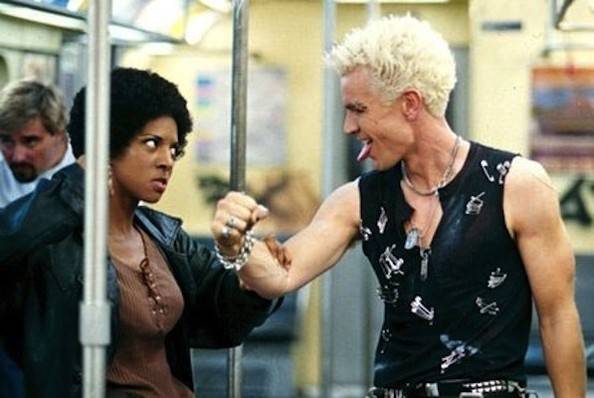
“Fool for Love” stands as a masterclass in character deconstruction, brilliantly humanizing James Marsters’ Spike by laying bare his tragic pre-vampire backstory as the timid, rejected poet William. The episode challenges viewers’ assumptions about what it means to be a vampire, illustrating that vampirism does not completely reinvent an individual—it merely amplifies their pre-existing flaws in monstrous ways.
Furthermore, the episode interrogates the mythology of the Slayer line itself. Spike posits a provocative, unsettling theory: every Slayer harbors an unconscious death wish, driven to embrace destruction by the crushing weight and agonizing isolation of their calling. By turning this lens inward on Buffy, the episode exposes the profound vulnerability hiding beneath the leather duster and bleach-blonde hair.
8. “Doppelgängland” (Season 3, Episode 16)
- IMDb Rating: 9.2/10
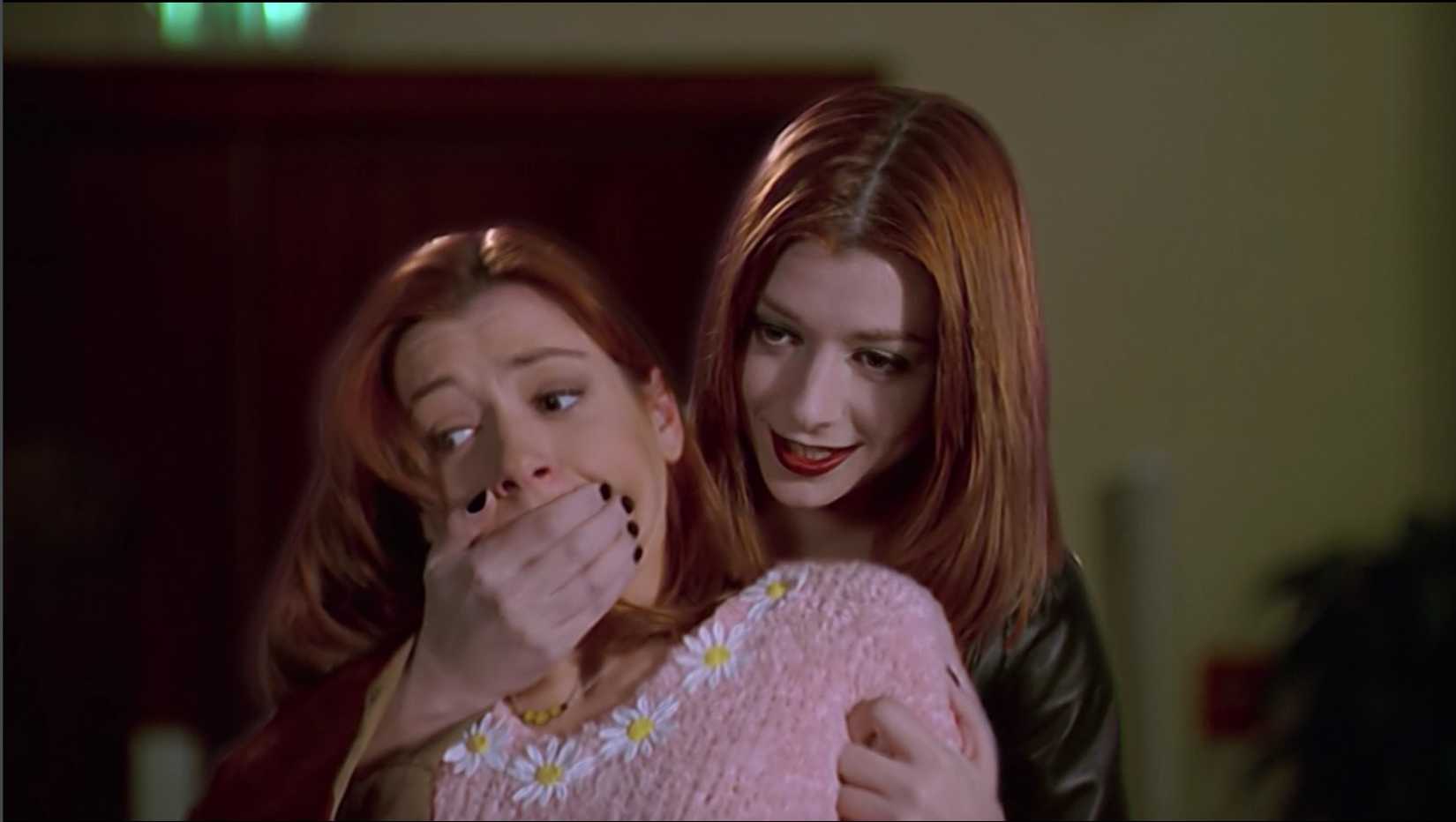
What would Sunnydale look like if Buffy Summers had never arrived to protect it? Season 3’s “The Wish” answered that dark question with a twisted alternate reality where Xander and Willow were ruthless, leather-clad vampire lovers.
In “Doppelgängland,” that evil iteration of vampire Willow is accidentally conjured into the show’s prime timeline. Alyson Hannigan delivers an electrifying, tour-de-force dual performance, effortlessly pivoting between shy, bookish Willow and her sadistic, leather-corseted counterpart. Beneath the campy comedy and brilliant body-swap mechanics, the episode forces the real Willow to confront the dark, latent impulses within her own psyche, learning to accept them without losing her moral compass.
7. “Passion” (Season 2, Episode 17)
- IMDb Rating: 9.3/10
Up until Season 2, Angel’s vampiric identity felt largely like a theoretical, tragic condition rather than an active threat. That illusion shattered when a moment of intimacy with Buffy inadvertently broke the gypsy curse that bound his soul, unleashing his sadistic alter ego, Angelus.
In “Passion,” Angelus transitions from a brooding foil to a chilling psychological terrorist. Tormenting Buffy and her loved ones through calculated mental anguish and targeted murder, the episode introduces a devastating new level of cruelty to the series. Crowned by a shocking, unpreventable major death that plunges even the unflappable Giles into an abyss of despair, “Passion” demonstrates Buffy‘s willingness to explore the bleakest contours of moral complexity.
6. “Chosen” (Season 7, Episode 22)
- IMDb Rating: 9.3/10
Though Season 7 remains a divisive chapter among the fandom, the series finale, "Chosen," successfully sticks the landing, providing fitting (and in Anya’s case, devastating) sendoffs for its sprawling cast.
The episode’s masterstroke is a plot twist that rewrites the core premise of the entire series. For seven seasons, being a Slayer meant enduring a solitary, fatalistic existence. By utilizing Willow’s mystical scythe-spell to instantly activate every Potential Slayer across the globe, Buffy democratizes power. The burden is finally shared. Buffy steps into her final frame not as a traumatized teenager, but as a wise, strategic general looking toward a hopeful horizon where no girl has to fight alone.
5. “The Gift” (Season 5, Episode 22)
- IMDb Rating: 9.5/10
Serving as the milestone 100th episode and the original network finale for the series on the WB, "The Gift" is an operatic, heart-wrenching tragedy. The narrative centers on the apocalyptic threat posed by Glory and the protection of Dawn—a mystical energy key rewritten into human form as Buffy’s younger sister.
Refusing to accept Dawn as an expendable cosmic sacrifice, Buffy makes the ultimate choice. In a breathtaking echo of her earlier journey, she dives headfirst into a glowing dimensional portal, sacrificing her own life to save the world. It is a bleak, profoundly mature end to a relentlessly courageous journey, marking the definitive moment Buffy transitions from a reluctant protector into a fully realized savior.
4. “Becoming: Part 2” (Season 2, Episode 22)
- IMDb Rating: 9.5/10
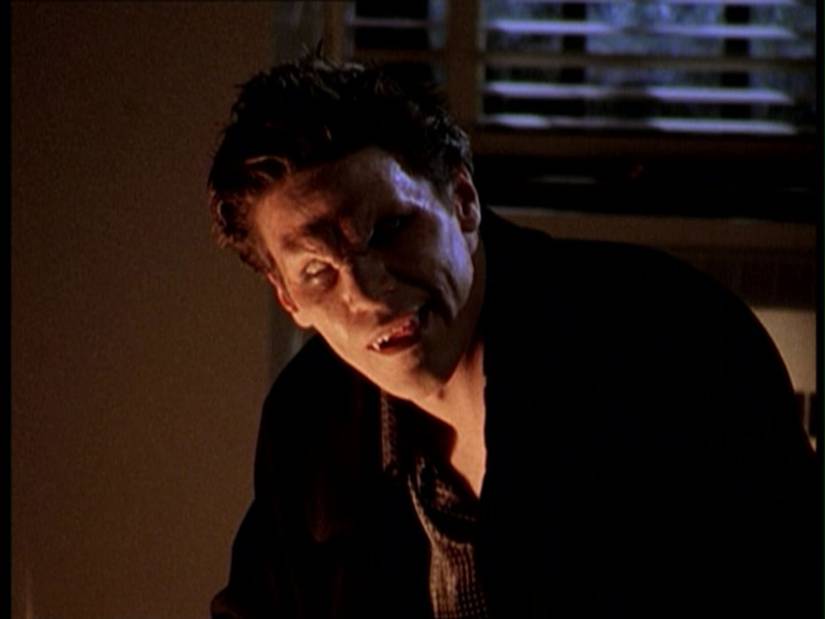
The conclusion to Season 2’s narrative arc remains one of the most emotionally resonant chapters in television history. Forced into the role of a hunted fugitive with a warrant for her arrest and an uneasy alliance with Spike, Buffy faces her ultimate reckoning against Angelus.
The episode features one of the most iconic exchanges in pop-culture history. As Angelus mocks her—"No weapons, no friends, no hope. Take all that away, and what is left?"—Buffy looks him in the eye and replies, "Me." The ensuing sword fight is visceral and punishing, ending in a gut-wrenching emotional tragedy where Buffy is forced to send the man she loves straight to hell the very second his soul is restored.
3. “The Body” (Season 5, Episode 16)
- IMDb Rating: 9.7/10
Perhaps the most daring creative choice in Buffy history is an episode that features zero vampires, zero demons, and zero supernatural threats. When Buffy returns home to discover her mother, Joyce, dead on the living room couch from a sudden brain aneurysm, the series drops all pretense of metaphor and confronts raw, unvarnished mortality.
Director and writer Joss Whedon famously elected to omit a musical score entirely, leaving the episode draped in an oppressive, ringing silence. The performances are universally harrowing: Buffy lapses into a state of numb, clinical shock; Xander and Willow lash out with frustrated, frantic outbursts. "The Body" remains the definitive television depiction of grief, capturing the exact disorientation of losing a parent.
2. “Once More, with Feeling” (Season 6, Episode 7)
- IMDb Rating: 9.7/10
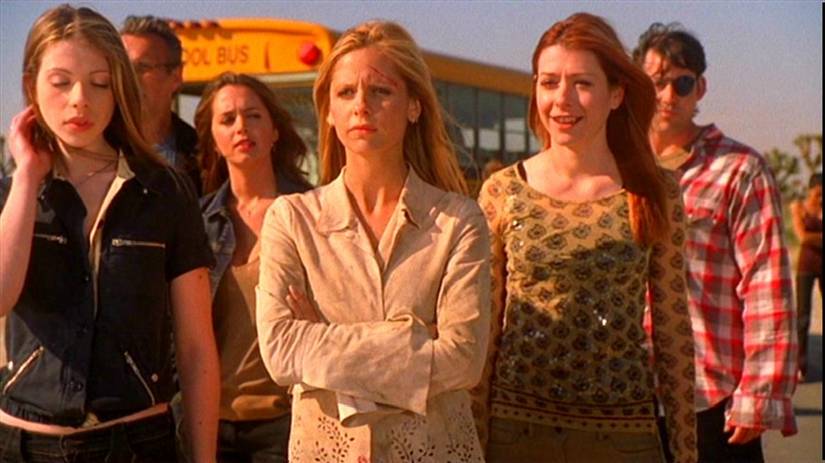
Musical episodes on prestige television are frequently dismissed as gimmicky, throwaway bottle episodes. Buffy shattered that expectation with “Once More, with Feeling,” utilizing a singing-and-dancing demon compulsion curse to drag every buried secret and lingering resentment out into the open air.
Under the influence of the curse, characters are literally compelled to belt out their deepest truths: Xander and Anya confront their marital doubts in a breezy 1950s-style number; Spike laments his unrequited obsession with a blistering rock anthem; and, most devastatingly, Buffy confesses to her friends that they inadvertently pulled her out of heaven when they resurrected her at the start of Season 6. It is a technical marvel that seamlessly merges high-concept absurdity with devastating emotional honesty.
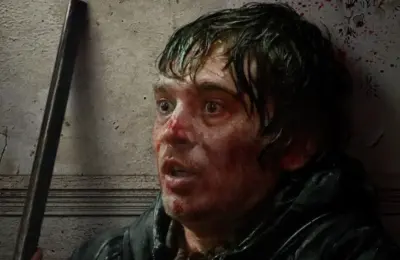
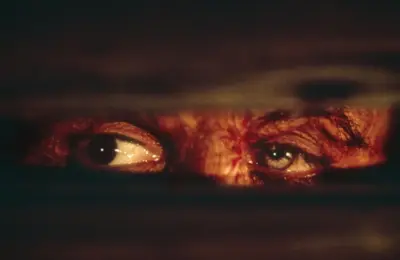
1. “Hush” (Season 4, Episode 10)
- IMDb Rating: 9.7/10
Taking the top spot on IMDb is Season 4’s breathtaking masterclass, “Hush.” In a medium defined by dialogue and rapid-fire witty banter, writer-director Joss Whedon stripped his characters of their voices entirely.
When the eerie, fairy-tale-esque antagonists known as The Gentlemen arrive in Sunnydale and steal the voices of every living citizen to harvest their hearts, the residents are forced to communicate through silent gestures, panicked facial expressions, and rudimentary whiteboards.
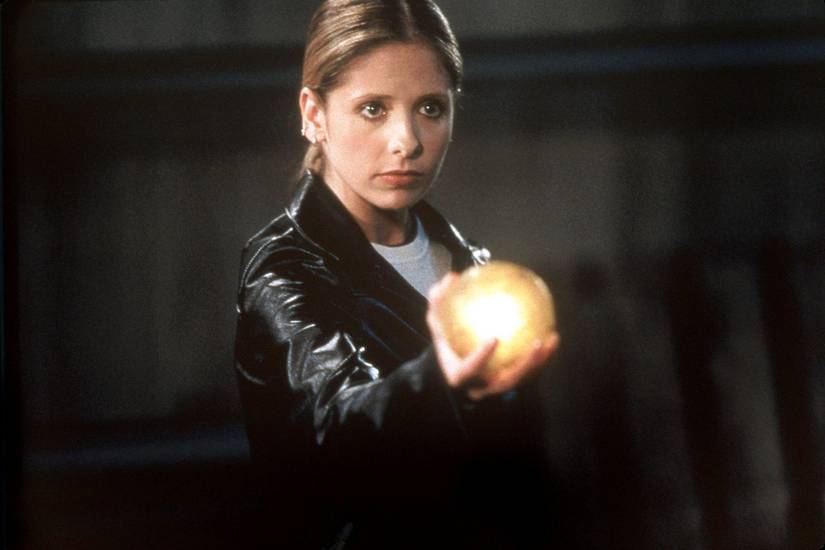
The silence elevates the horror to cinematic levels, introducing villains whose silent grins and floating gait remain the stuff of absolute nightmares. Earning two Emmy nominations—including Outstanding Writing in a Drama Series and Outstanding Cinematography—“Hush” stands as the ultimate proof that Buffy the Vampire Slayer did not need a safety net of words to transcend the boundaries of television.
Supporting Context & Metrics
The enduring critical acclaim of Buffy the Vampire Slayer is not merely a product of nostalgic sentimentality; it is empirically backed by historical ratings, aggregate data, and industry impact. Across its seven-season lifecycle, the show consistently punched above its weight class on networks like The WB and UPN, frequently averaging between 4 million and 5 million viewers per episode during its peak years in Seasons 3 and 5.
Furthermore, its influence on the modern streaming era is profound. Long before "prestige television" became an industry buzzword, Buffy pioneered serialized storytelling, multi-season character arcs, and complex moral ambiguity in genre television. Shows ranging from Veronica Mars and True Blood to Supernatural and Jessica Jones owe an undeniable creative debt to the groundwork laid in Sunnydale.
Official Statements & Retrospective Commentary
Reflecting on the cultural longevity of the series, creator Joss Whedon and lead actress Sarah Michelle Gellar have frequently addressed the show’s unique resonance.

In past retrospective interviews, Gellar noted the profound weight of carrying the character:
"Buffy wasn’t just about fighting monsters in a cemetery; she was about the everyday trials of growing up. The monsters were just a physical manifestation of high school trauma. That’s why people connected with her—because beneath the stake, she was just trying to figure out who she was."
Scholars of television history often cite the series as a turning point for gender representation in action-adventure narratives. By refusing to compromise Buffy’s femininity while allowing her to possess raw physical and tactical supremacy, the show created a blueprint for modern feminist action heroes.
Future Outlook
As television continues to evolve in the era of streaming fragmentation, the cultural footprint of Buffy the Vampire Slayer shows zero signs of fading. Rumors of reboots, revivals, and cinematic reimaginings perpetually circulate through Hollywood trades, speaking to the insatiable appetite audiences still have for tales set within this universe.
Yet, as critics and fans alike return to the original 144 episodes—guided by IMDb scores that place masterworks like "Hush" and "The Body" alongside cinematic heavyweights—it becomes abundantly clear: the Hellmouth may be fictional, but the cultural legacy of Buffy Summers is immortal.