Executive Overview
In a sweeping update designed to solidify its position as the preeminent ecosystem for digital content creators, Apple has rolled out a massive, feature-rich overhaul to its Apple Creator Studio software suite. Arriving hot on the heels of hardware launches featuring the powerhouse M6 chip—specifically the newly announced M6 iMac and the redesigned 14-inch MacBook Pro—this software update represents a pivotal milestone in Apple’s ongoing campaign to capture market share from traditional industry standards like Adobe Creative Cloud.
At the heart of this release is the formal integration of MotionVFX, the high-end visual effects and template powerhouse that Apple acquired earlier this year. For video editors relying on Final Cut Pro, this means native, frictionless access to professional-grade graphics, titles, transitions, rotoscoping, and color grading tools directly inside the app. Furthermore, Apple has directly addressed long-standing community grievances by introducing highly requested workflow improvements, most notably the long-awaited ability to detach and freely place clips completely outside the rigid constraints of the primary timeline.
Beyond traditional video and audio editing enhancements, artificial intelligence serves as the connective tissue binding the entire Creator Studio ecosystem together. Leveraging deep integration with Apple Intelligence and an innovative partnership with OpenAI, the update injects next-generation generative AI tools into every corner of the suite. From advanced text-to-image manipulation in Pixelmator Pro to an intelligent music production assistant in Logic Pro—and context-aware AI chatbots embedded within productivity mainstays like Keynote, Pages, and Numbers—Apple is fundamentally reimagining how creators, artists, and professionals conceptualize and execute their workflows.
Available this November as a complimentary update for existing subscribers, the refreshed suite reinforces Apple’s commitment to hardware-software co-design. However, these advanced capabilities demand modern silicon and up-to-date operating systems, signaling a clear transition into an AI-first computing era.
Detailed Chronology & Feature Breakdown
To fully appreciate the scope of the Apple Creator Studio update, it is necessary to trace the sequence of technological developments leading up to this release, as well as the specific mechanics of the newly introduced features across the suite.
The Hardware-Software Nexus
The timing of the Apple Creator Studio update is no accident. It arrives in exact synchronization with Apple’s hardware rollout for the new generation of M6-powered Macs. These machines, boasting vastly superior neural processing units (NPUs) and unified memory architectures, provide the raw computational horsepower required to render complex visual effects, execute real-time audio stem splitting, and run on-device large language models concurrently.
Final Cut Pro: Breaking Free from the Primary Timeline
For years, professional video editors transitioning to Final Cut Pro have wrestled with its magnetic timeline paradigm. While praised for preventing accidental gaps and keeping sync locked tight, the inability to freely float clips outside the primary timeline was a frequent point of friction. With this update, Apple has finally acquiesced to user demand:
- Unlocked Clips: Editors can now cleanly extract and disconnect clips from the primary timeline, positioning them anywhere within the project space without triggering ripple edits or unintended timeline shifts.
- MotionVFX Integration: Following the acquisition earlier this year, MotionVFX’s expansive library of professional visual effects, dynamic themes, broadcast-quality titles, and smooth transitions has been seamlessly embedded into the Final Cut Pro interface.
- Advanced Content Hub: Editors gain instant access to a curated repository of stock footage, high-resolution photography, and textured backgrounds directly inside the application, minimizing the need to source external assets.
- Specialized Toolkit: Rotoscoping and color grading tools have been upgraded, paired with granular keyframe easing options that grant motion designers precise control over animation curves.
Ecosystem Synergy: Pixelmator Pro and Final Cut Pro Bridge
One of the most friction-heavy aspects of multi-app media production has historically been asset round-tripping—exporting an image, opening it in a secondary editor, making adjustments, re-exporting, and re-importing. Apple Creator Studio bridges this gap entirely.
- Creators can now select any image directly on their Final Cut Pro timeline and launch it instantly within Pixelmator Pro.
- Any modifications, crops, or graphic overlays applied in Pixelmator Pro update dynamically and directly on the original Final Cut project timeline, eliminating manual file management and intermediate rendering steps.
AI Everywhere: From Pixelmator to Logic Pro
Artificial intelligence is no longer an auxiliary feature; it is woven into the foundational architecture of every application within the suite.
- Pixelmator Pro Generative Editing: Users can leverage advanced text-to-image generation and localized editing. By simply drawing a circle around a specific region of an image and typing a natural language prompt, creators can seamlessly add, remove, or modify elements within the composition.
- Logic Pro & OpenAI Collaboration: Apple has partnered with OpenAI to introduce an interactive, context-aware AI assistant built specifically for music production. This assistant can analyze existing projects to suggest mix improvements, draft entirely new musical arrangements from scratch, and synthesize realistic vocal tracks directly from text prompts.
- Stem Splitter Enhancements: Logic Pro’s popular Stem Splitter tool has received performance upgrades, allowing producers to cleanly isolate, extract, or swap out individual drum components from a mixed audio track with unprecedented accuracy.
- Productivity AI Integration: The same underlying chatbot technology is now summonable across Keynote, Pages, and Numbers. Users can automate slide animations, format complex datasets, and generate contextual copy using simple conversational commands.
Supporting Context & Metrics
The release of this updated suite is part of a broader, deliberate strategic shift by Apple to capture the professional subscription market—a territory long dominated by Adobe Creative Cloud and specialized third-party plugins.
Pricing, Packaging, and Accessibility
Apple continues to balance high-end professional capability with flexible consumer accessibility. The subscription model and standalone purchase options remain structured as follows:
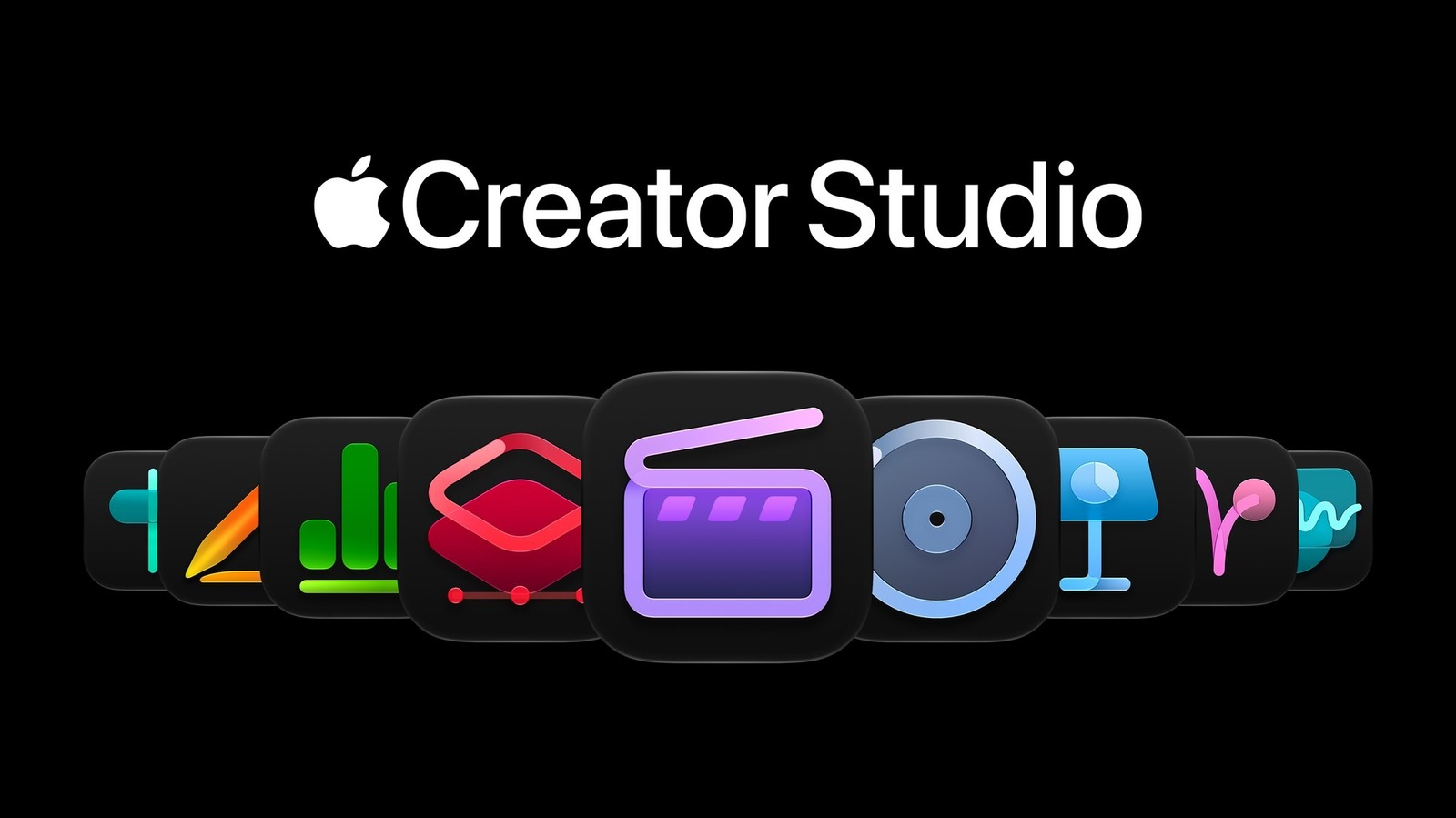
- Apple Creator Studio Subscription: Priced at $13 per month or $129 annually. New users receive a one-month free trial.
- Hardware Bundling: Apple is sweetening the deal for hardware purchasers, offering a complimentary three-month subscription with the purchase of a new Max-tier computer or qualifying iPad models.
- Standalone Perpetual Licenses: For professionals who prefer traditional ownership models, individual applications remain available for purchase:
- Final Cut Pro: $300
- Logic Pro: $200
- Pixelmator Pro: $50
System Requirements & Hardware Constraints
The democratization of high-end AI and real-time VFX rendering comes with strict hardware prerequisites. Apple’s aggressive push into generative AI and cross-app synergy means legacy systems will face compatibility walls:
- Operating System Mandate: Macs running Apple Creator Studio applications must be updated to macOS 26.6 or later.
- AI Feature Gate: Utilizing the beta AI assistant in Logic Pro and the chatbot features across Keynote, Pages, and Numbers requires an Apple Intelligence-supported Mac running macOS 27 Golden Gate or subsequent developer builds.
- Silicon Dependency: Advanced features within Final Cut Pro—particularly those driven by machine learning, automated rotoscoping, and real-time MotionVFX rendering—strictly require Apple Silicon (M-series processors), officially drawing a line under Intel-based Mac support for future-proof workflows.
Official Statements
While Apple’s press releases emphasize creative freedom and workflow acceleration, industry analysts and company executives have framed the update as a watershed moment for digital content creation.
In its official launch documentation, Apple highlighted the qualitative leap in editing efficiency:
"The integration of MotionVFX provides editors with rapid access to extensive professional video effects and content, transforming Final Cut Pro into an all-encompassing powerhouse for cinematic storytelling. By connecting our pro apps with deep, device-level AI and fluid cross-application workflows, we are empowering creators to focus entirely on their vision rather than the technical hurdles of media management."
Industry observers have noted that the inclusion of OpenAI technology within Logic Pro marks a significant evolution in Apple’s third-party software strategy. Rather than developing every AI model in-house, Apple is strategically partnering with industry leaders to deliver specialized capabilities where consumer demand is highest, while maintaining strict on-device privacy standards for core Apple Intelligence features.
Future Outlook
The launch of the updated Apple Creator Studio suite, paired with M6-tier hardware, portends several significant trends for the digital media and content creation landscape over the coming years:
1. The Death of Siloed Software Workflows
Apple’s success in bridging Final Cut Pro and Pixelmator Pro without intermediate file exporting sets a new benchmark for software integration. Users will increasingly expect seamless interoperability across video, vector, raster, and audio applications. Competitors like Adobe will face mounting pressure to eliminate remaining friction points within their respective cloud ecosystems.
2. The Mainstreaming of Generative AI in Professional Audio and Video
While early generative AI tools were viewed with skepticism by traditional editors and sound engineers, features like Logic Pro’s OpenAI-driven assistant and Pixelmator Pro’s prompt-based localized editing are shifting perceptions. AI is rapidly transitioning from a novelty gimmick to an indispensable productivity multiplier that handles tedious, repetitive tasks—such as rotoscoping, stem separation, and rough-cut generation—allowing human creators to focus on high-level artistic direction.
3. Accelerated Hardware Upgrades
By tying advanced Creator Studio features directly to Apple Silicon and the NPU capabilities of M6-class processors, Apple is creating a powerful economic incentive for professional studios and independent creators to retire older hardware. As software demands increasingly outpace legacy architectures, the upgrade cycle for creative professionals will become ever more closely tethered to generational leaps in AI processing power.
As these tools roll out to subscribers in November, the creative community will be watching closely to see how these features perform under deadline-driven, real-world production conditions. One thing is certain: the boundary between imagination and execution has never been thinner.