Executive Overview
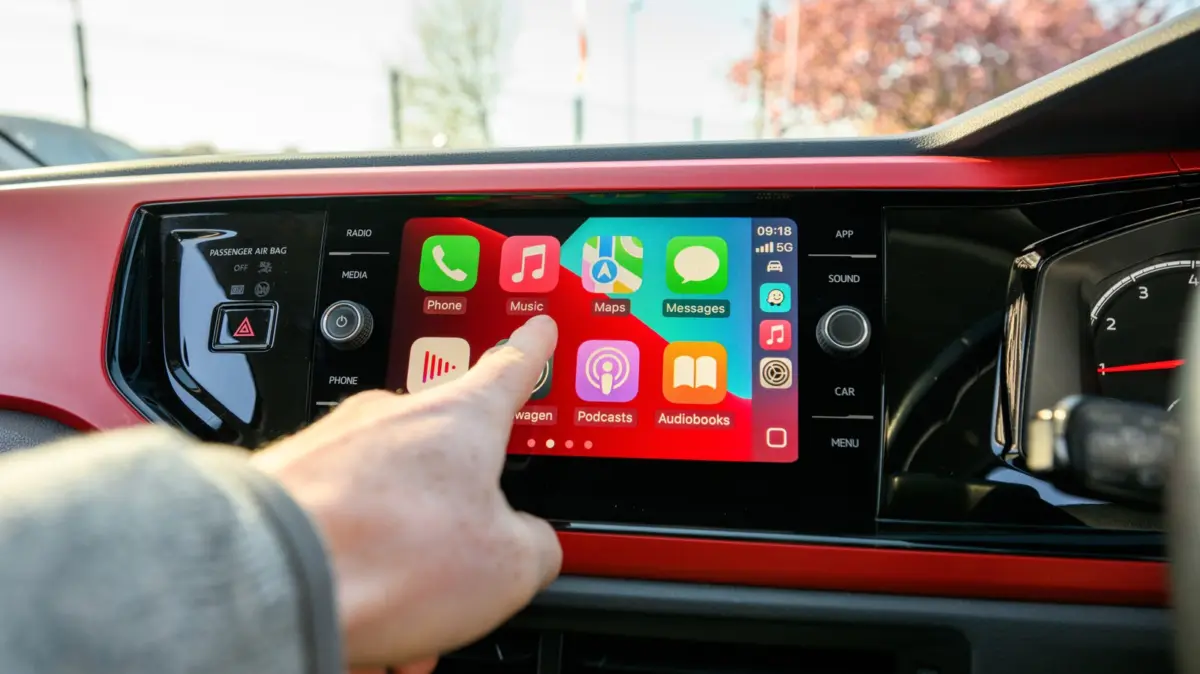
For millions of drivers worldwide, Apple CarPlay has fundamentally revolutionized the in-car experience. Long gone are the days of precariously mounting a smartphone to a dashboard vent, fumbling with auxiliary cables, or relying solely on terrestrial radio and faulty factory navigation systems. By projecting a simplified, driver-centric iOS interface directly onto the vehicle’s infotainment screen, CarPlay promises a seamless bridge between digital life and the open road.
Yet, any driver who has plugged their iPhone into a modern vehicle’s dashboard has inevitably encountered a frustrating realization: the vast majority of installed iPhone applications are entirely absent. While navigation giants like Google Maps, communication tools like WhatsApp, and audio powerhouses like Spotify sit prominently on the car’s display, other seemingly benign apps—ranging from productivity tools like Apple Fitness and Gmail to casual pastimes like crossword puzzles or calculators—are nowhere to be found.
This isn’t an oversight, nor is it merely a technical glitch. Apple enforces an intensely strict, highly curated walled garden when it comes to CarPlay compatibility. Governed by rigid safety policies, categorical bans, and distinct developer requirements, CarPlay is intentionally designed to minimize cognitive load and mitigate driver distraction. However, as automotive technology advances, consumer expectations shift, and competing ecosystems like Tesla and Rivian push the boundaries of in-cabin entertainment, Apple’s tightly controlled paradigm is slowly beginning to bend. This report investigates the underlying logic, developer barriers, recent software expansions, and competitive pressures shaping the future of Apple CarPlay.
Detailed Chronology: The Evolution of CarPlay and App Limitations
To understand why certain apps are locked out of CarPlay today, it is essential to trace how Apple’s automotive interface has evolved from a simple media-projection tool into a deeply integrated vehicle companion.
Phase 1: The Walled Garden Genesis (2014–2018)
When Apple initially unveiled CarPlay at the Geneva Motor Show in 2014 (then known as "iOS in the Car"), the platform’s ambitions were modest. Apple recognized early on that distracted driving was a public safety crisis. Consequently, the earliest iterations of CarPlay strictly limited third-party access. Only a handful of vetted partners—primarily focused on audio streaming (Spotify, iHeartRadio) and messaging (via Siri integrations)—were granted entry. The underlying philosophy was absolute: if an application did not directly serve the immediate act of driving, navigating, or communicating hands-free, it was locked out.
Phase 2: Opening the Navigation Floodgates (2018)
For the first four years of CarPlay’s existence, Apple forced users to rely exclusively on Apple Maps for turn-by-turn directions. This monopoly became a major point of contention among consumers and regulatory bodies alike. In 2018, with the release of iOS 12, Apple made a monumental policy shift by opening CarPlay to third-party navigation apps. For the first time, drivers could seamlessly run Waze and Google Maps directly on their dashboard displays. This marked the first major crack in Apple’s restrictive software architecture, proving that consumer demand could alter corporate strategy.
Phase 3: Expanding Categories and Developer Guidelines (2020–2023)
As electric vehicles (EVs) began entering the mainstream market and smart-city infrastructure evolved, Apple slowly broadened its accepted developer categories. Support was added for specialized utilities, including EV charging station finders, parking reservation apps, and quick-ordering food applications. However, Apple concurrently fortified its developer guidelines, explicitly banning high-distraction categories such as standalone games, web browsers, and social media platforms.
Phase 4: The Modern Era and iOS 27 Integration (Present)
In the most recent software cycles, including iOS 27, Apple has introduced some of the most significant changes to CarPlay since its inception. Most notably, the ecosystem has opened its doors to third-party artificial intelligence assistants—such as ChatGPT and Perplexity integrations—alongside constrained video playback capabilities. Yet, despite these modern updates, the core architectural hurdles remain firmly in place for standard productivity and utility apps.
Supporting Context & Metrics: The Mechanics of CarPlay Compatibility
For an application to transition from an iPhone screen to a vehicle’s dashboard display, it must successfully navigate a multi-layered gauntlet of technical, structural, and regulatory requirements. Many users mistakenly believe that any app installed on an iPhone should theoretically be capable of running on CarPlay with a simple toggle switch. In reality, the barriers are formidable.
1. The Developer Burden
Apple does not automatically convert or upscale standard iOS interfaces for automotive use. Because an interface designed for a handheld vertical screen is fundamentally unsuited for a wide, horizontal, or portrait-oriented dashboard display, developers must explicitly code dedicated CarPlay support into their applications.
- Resource Constraints: For smaller independent developers or massive enterprise companies alike, dedicating engineering hours, financial capital, and UX testing resources solely to CarPlay optimization is often deprioritized.
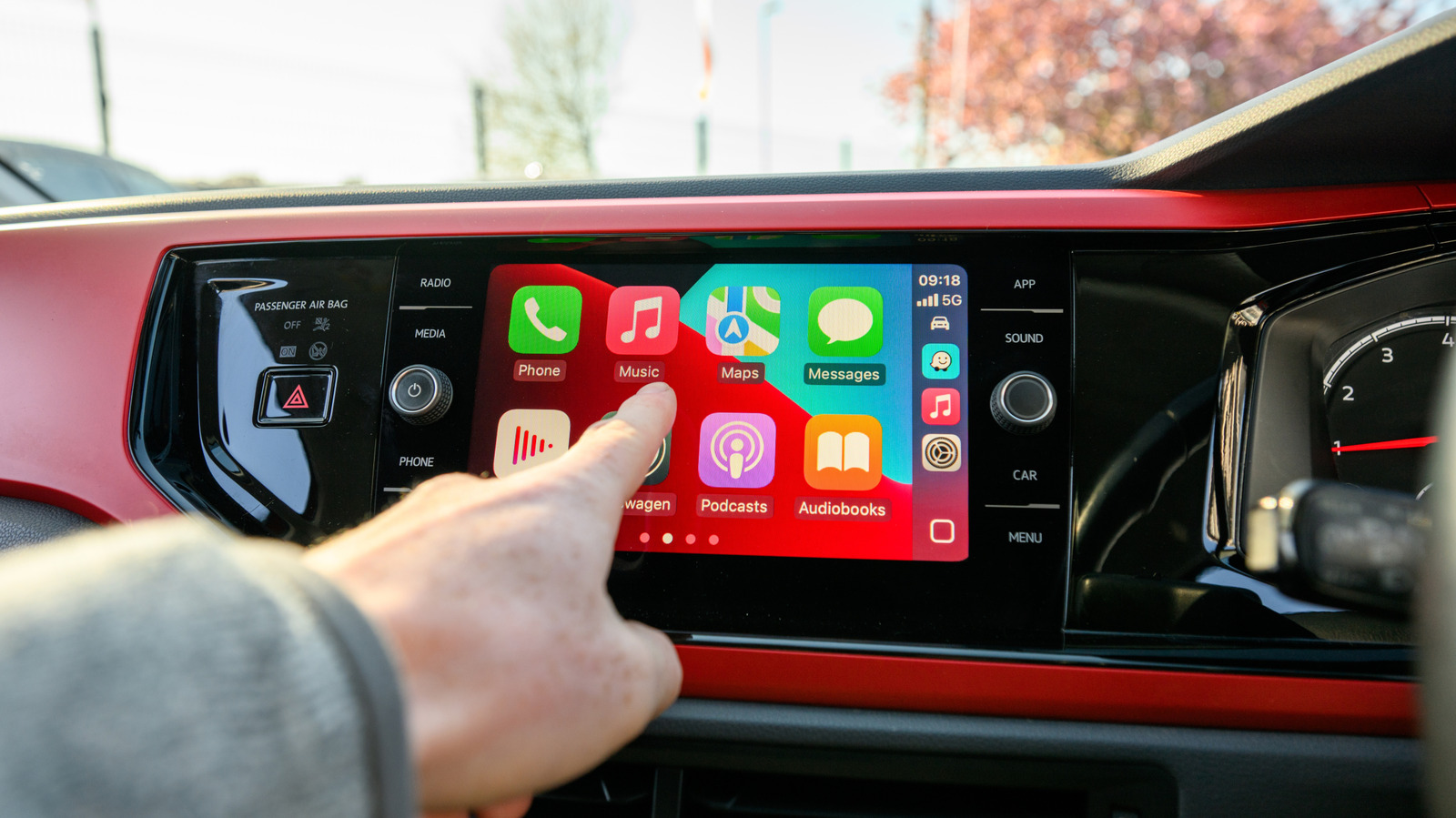
- The Toggle Illusion: While users can manage visible apps by navigating on their iPhone to Settings > General > CarPlay > [Car Name] > Apps and utilizing the Plus (+) button or reordering handles, this menu only reveals apps that have already implemented official CarPlay frameworks. If the underlying code does not exist, the app remains permanently hidden.
2. Apple’s Categorical Governance
Apple maintains an ironclad grip on which app categories are deemed "meaningful to use while driving." According to Apple’s official CarPlay Developer Guide, accepted software is strictly filtered into the following domains:
- Driving-Adjacent Services: Navigation, traffic monitoring, EV charging locators, and parking management.
- Audio & Entertainment: Music streaming, podcasts, audiobooks, and specialized news broadcasting (with strict prohibitions against displaying text-heavy content such as song lyrics natively without workarounds).
- Communications: Phone calling, messaging apps, and VoIP services (strictly governed by voice-first Siri integration to prevent typing or reading text blocks).
- Public Safety & Quick Ordering: Emergency services and rapid drive-thru or curbside food ordering applications.
Conversely, entire sectors are explicitly banned. Games (such as Wordle or puzzle applications), social media feeds, standard productivity software (calculators, spreadsheets, and word processors), and web browsers are blacklisted. Apple’s internal safety metrics dictate that even if a vehicle is stationary, the cognitive friction and potential for interface confusion on an automotive display present unacceptable liability risks.
3. Emerging Capabilities: Video and AI
Recent updates have introduced nuanced exceptions to these long-standing rules:
- AI Integration: Drivers can now access advanced AI voice assistants, augmenting the native Siri experience. However, these tools remain heavily constrained to voice-first interactions while the vehicle is in motion.
- Video Playback: iOS updates have introduced support for video-streaming applications. Crucially, however, Apple enforces a strict safety interlock: video playback is only permissible when the vehicle is completely parked. Furthermore, many factory-installed vehicle infotainment systems lack the underlying hardware or software decoders required to render video streams safely. If a car’s head unit cannot support the video framework, the app remains hidden, leading to sparse developer adoption.
- Widgets: To bridge the gap between missing apps and dashboard utility, Apple introduced CarPlay widget support, allowing drivers to glance at bite-sized information from unsupported apps via customized dashboard layouts.
Official Statements and Industry Perspectives
The philosophical divide over what belongs on a vehicle dashboard has sparked a high-stakes corporate chess match between Silicon Valley tech giants and traditional automotive manufacturers.
Apple’s official stance has consistently anchored itself around driver safety and minimalist design integrity. During various developer conferences and in official documentation, Apple representatives emphasize that the primary objective of CarPlay is to keep the driver’s eyes on the road and hands on the wheel. By restricting complex UI flows, high-animation graphics, and text-heavy reading material, Apple aims to prevent CarPlay from becoming an extension of the smartphone’s addictive, multitasking environment inside a moving vehicle.
However, the automotive industry’s reaction to Apple’s tight control is increasingly fractured.
- The Defectors: High-profile automakers, most notably General Motors, have publicly announced plans to phase out CarPlay support entirely in their upcoming electric vehicle lineups. These companies argue that deeply integrated, native software systems—often built on Android Automotive OS—allow for a more cohesive hardware-software experience that can control vehicle climate, battery thermal management, and drivetrain metrics far better than a projected phone interface.
- The Competitors: Meanwhile, EV pioneers like Tesla and Rivian have bypassed smartphone projection entirely. By utilizing ultra-fast processors, expansive touchscreens, and rich infotainment operating systems, these manufacturers offer native video streaming services (such as Netflix and YouTube), high-end video games (such as Cuphead), and robust web browsing directly from the factory dashboard.
Industry analysts point out that as cars evolve into "software-defined vehicles," the contrast between Apple’s restrictive CarPlay guidelines and the expansive entertainment suites of competing automakers creates a unique pressure point. When a consumer purchases a brand-new luxury EV, climbing inside only to find they are limited to Google Maps and Apple Podcasts can feel decidedly underwhelming compared to the rich, standalone digital environments offered by modern automotive pioneers.
Future Outlook: Where Is CarPlay Headed?
As the automotive landscape undergoes its most radical transformation in a century, Apple CarPlay sits at a critical crossroads. The future of the platform will likely be defined by two competing forces: the relentless push for deeper vehicle integration and the mounting pressure from automakers reclaiming their dashboard real estate.
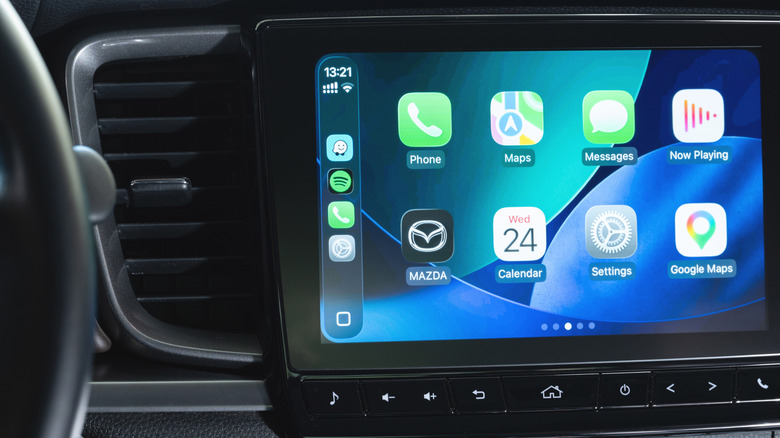
1. The Next Generation of CarPlay
Apple has already teased its next-generation CarPlay architecture—a sweeping vision designed to take over every screen in the car, including the digital instrument cluster, climate controls, and passenger displays. This system promises deep hardware integration, allowing drivers to manage fuel levels, speedometer graphics, seat heaters, and radio tuners natively through Apple’s interface. However, luxury and mass-market automakers alike have been slow to commit to this ultra-immersive version, wary of surrendering complete control of the brand’s interior digital identity to Cupertino.
2. A Softening of App Restrictions?
As autonomous driving technology slowly advances and Level 3/Level 4 autonomous capabilities loom on the horizon, the strict safety justification for banning productivity and entertainment apps will inevitably face pressure. If a vehicle is capable of self-driving on a highway, the argument against playing a casual puzzle game or browsing a web page during transit begins to weaken.
For now, however, app developers remain bound by Apple’s rigid categorical walls. If you have ever wondered why your favorite productivity app, game, or utility is missing from your car’s dashboard, the answer lies in a delicate balance between strict safety protocols, regulatory liabilities, and Apple’s unwavering vision of what driving should be. While minor cracks are forming—ushering in AI assistants, widgets, and parked-state video—CarPlay remains a tightly curated sanctuary designed to protect drivers from themselves, even if it occasionally leaves them wishing for just a little more digital freedom on the road.