The landscape of local artificial intelligence has taken a massive leap forward. Ollama, the wildly popular open-source platform designed to make running large language models and other AI systems locally effortless, has officially introduced native text-to-speech (TTS) capabilities to its macOS application. This milestone marks the first time the platform has expanded beyond traditional text generation, allowing users to experience synthesized, human-like speech entirely on their own hardware.
By integrating Phonon—a cutting-edge family of compact text-to-speech models developed by Gradium—Ollama is enabling real-time audio generation. Unlike cloud-dependent solutions that require continuous internet connectivity and transmit sensitive user inputs to remote data centers, Ollama’s new TTS pipeline operates completely offline. This ensures absolute user privacy while delivering immediate acoustic feedback.
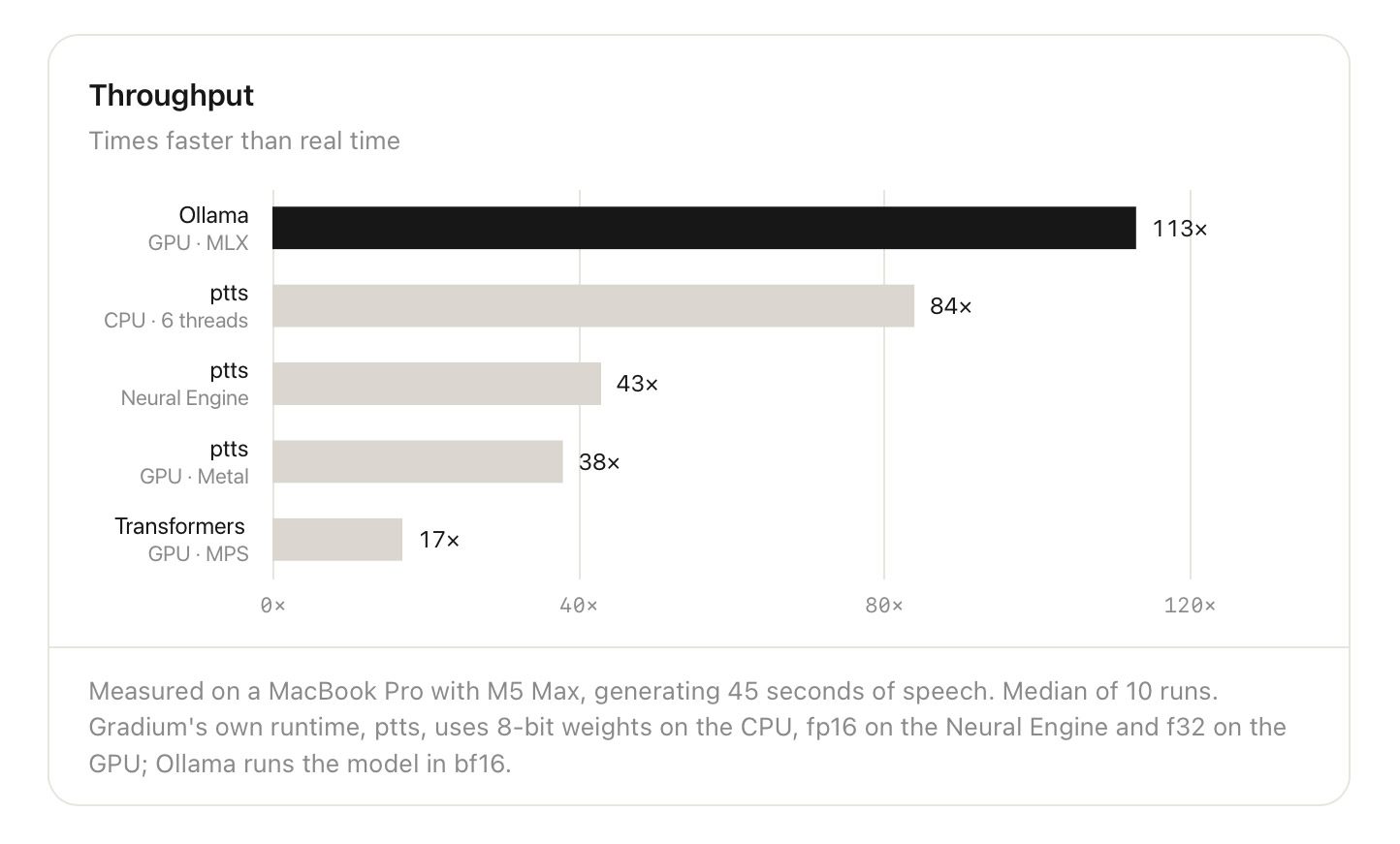
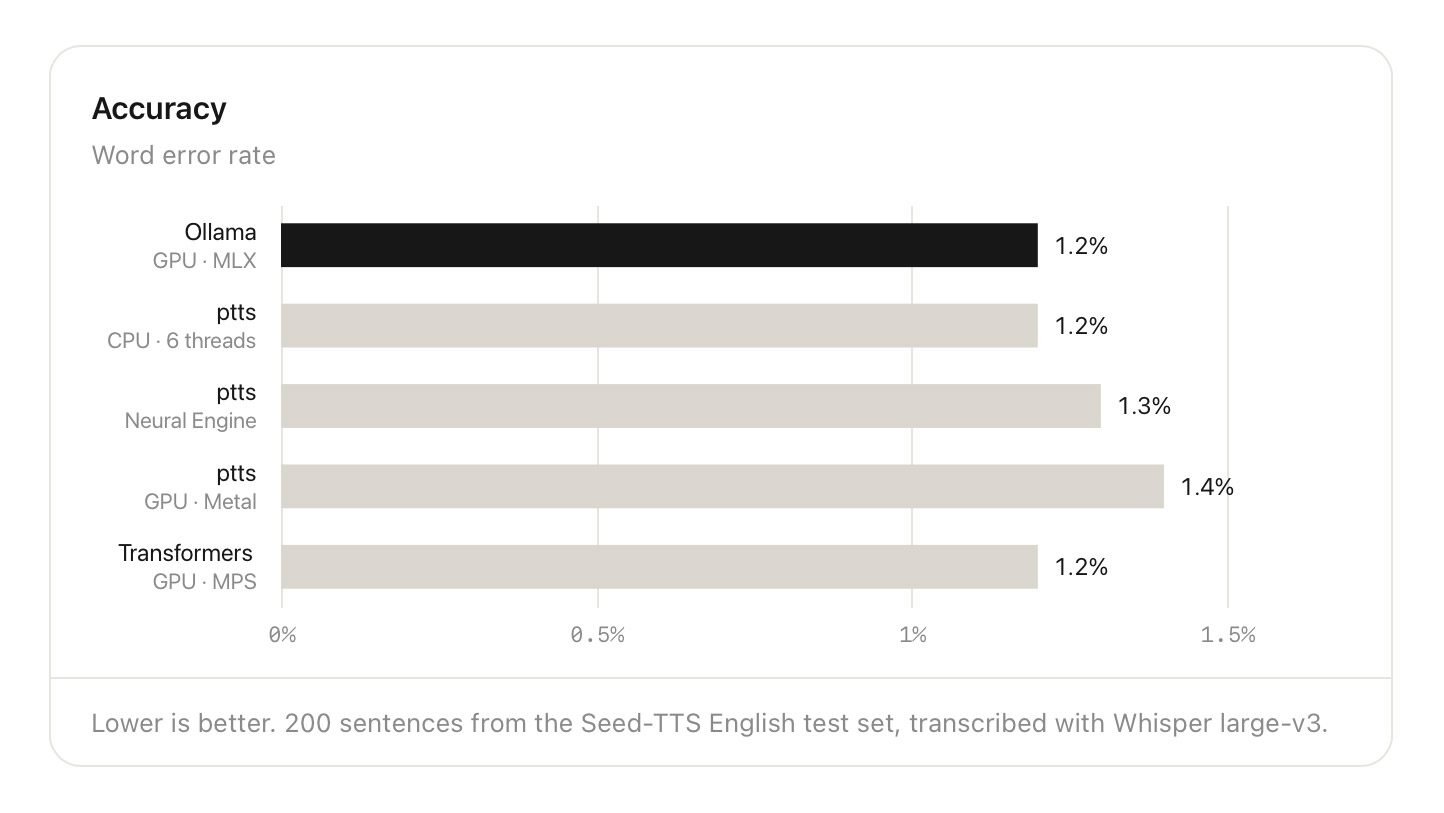
Crucially, this breakthrough relies heavily on Apple’s MLX, an open-source machine learning framework purposefully built to leverage the unified memory architecture of Apple Silicon. Harnessing the raw compute power of modern Mac hardware, Ollama’s implementation achieves a blazing-fast performance benchmark: tests conducted on a MacBook Pro powered by the M5 Max chip demonstrated a 35% faster speech generation rate compared to Gradium’s native implementation, all while matching the baseline word error rate of Hugging Face Transformers.
While the feature is currently live exclusively for macOS users running Ollama 0.40.11 or later, support for Windows and Linux systems is slated to roll out in the near future. This development solidifies Ollama’s status as a titan in the open-source developer ecosystem—boasting nearly 185,000 GitHub stars—and signals a paradigm shift toward fully localized, multi-modal consumer AI experiences.
Detailed Chronology of the Release
To understand the magnitude of this update, it is essential to trace how Ollama evolved from a simple command-line interface for running large language models into a comprehensive ecosystem for local machine learning.
The Rise of Local AI Infrastructure
For years, running sophisticated AI models meant relying on cloud computing giants like OpenAI, Anthropic, or Google. While powerful, this model introduced friction: ongoing subscription costs, mandatory internet connections, and persistent concerns regarding data privacy. Developers and privacy advocates craved a way to run models locally on consumer hardware.
Enter Ollama. Designed to streamline the setup, download, and execution of open-source models like Llama, Mistral, and Gemma, Ollama abstracted away the immense technical complexity of setting up Python virtual environments and hardware acceleration frameworks. Users could simply download the application, execute a single command, and interact with powerful models locally.
As the project scaled on GitHub—amassing more than 185,000 stars and roughly 18,600 forks—the development team continually sought ways to optimize performance. For macOS users, this meant a deep integration with Apple’s MLX framework. Built specifically for Apple Silicon (M-series chips), MLX allowed Ollama to tap directly into the unified memory architecture, drastically accelerating model inference speeds and expanding the range of compatible model sizes without bogging down system memory.
The Integration of Phonon and Real-Time Synthesis
Despite these hardware-level optimizations, Ollama’s capabilities remained strictly text-bound. Users could read AI-generated responses, but they could not listen to them natively within the platform without chaining external third-party tools or cloud APIs.
That limitation evaporated with the announcement of Ollama’s native speech model support. By partnering with Gradium to introduce the Phonon model family, Ollama bridged the gap between text generation and speech synthesis.
Unlike traditional text-to-speech engines that require the entire block of text to be processed before rendering a single audio file—introducing frustrating lag—Ollama’s speech pipeline generates audio in real time. As the underlying language model streams text tokens, the Phonon speech model simultaneously converts those tokens into spoken words. The result is a fluid, conversational experience where users can listen to responses as they are dynamically produced by the machine.
Supporting Context & Metrics
The technological achievement behind Ollama’s text-to-speech implementation is best understood through the lens of performance metrics, hardware optimization, and linguistic versatility.
Benchmarking Apple Silicon: The M5 Max Advantage
Running generative AI models locally places immense demands on hardware, particularly memory bandwidth and processing cores. While graphics cards dominate the desktop PC space for AI training and inference, Apple’s unified memory architecture presents a unique advantage. Because the CPU, GPU, and Neural Engine share a single pool of high-bandwidth memory, Apple Silicon Macs can load massive models directly into memory without the bottlenecks typically associated with moving data between system RAM and dedicated video RAM (VRAM).
Ollama’s engineering team capitalized on this architecture via the MLX framework. In rigorous internal testing using a MacBook Pro equipped with the M5 Max chip, Ollama’s integration of the Phonon model achieved staggering results:
35% Faster Generation: Ollama outperformed Gradium’s native implementation by over a third in throughput speed.
Uncompromised Accuracy: Despite the dramatic increase in speed, the model maintained the exact same word error rate (WER) found in the reference implementation hosted on Hugging Face Transformers.
These benchmarks prove that local consumer hardware is no longer just a compromise solution for budget-conscious developers; in many cases, it can outpace standard reference implementations while offering zero-latency and absolute privacy.
Linguistic Support and Voice Diversity
A text-to-speech system is only as good as its versatility. Phonon launches with robust multi-lingual and multi-accent capabilities designed to cater to a global audience.
The architecture supports five primary languages:
English
French
German
Spanish
Portuguese
To accommodate these languages, developers can choose between distinct single-language models or opt for a unified multilingual model capable of seamlessly transitioning across all five supported tongues. Furthermore, Phonon provides a variety of native voices featuring distinct regional accents—including options for American and British English—allowing developers and end-users to tailor the auditory experience to their exact preferences.
Official Statements and Developer Ecosystem
The rollout of Ollama 0.40.11 with native speech support has sent ripples through the open-source AI community. In their official release announcement, the Ollama team emphasized the significance of bringing multi-modality to local environments:
"Ollama can now turn text into speech. The first speech model is Phonon, a family of small, state-of-the-art text-to-speech models from Gradium. Speech models are now available for macOS, with Windows and Linux support coming soon."
For developers looking to integrate these capabilities into their own software stacks, Ollama has rolled out comprehensive API documentation, code examples, and audio samples. By exposing these speech models through the same familiar API structure developers already use for text inference, Ollama has drastically lowered the barrier to entry for building voice-activated local AI applications, offline transcription tools, and personalized synthetic voice assistants.
Future Outlook: What’s Next for Local AI?
The introduction of text-to-speech generation in Ollama is merely a stepping stone toward a broader, multi-modal future for on-device artificial intelligence. As consumer hardware continues to evolve—highlighted by the ever-increasing power of Apple’s M-series chips and the steady maturation of Neural Engines across Windows and Linux architectures—the boundary between cloud-based and local AI capabilities is rapidly dissolving.
Expanding Beyond macOS
While Mac users are currently enjoying the primary benefits of this update thanks to Apple’s MLX framework, Ollama has confirmed that Windows and Linux support for speech models is actively in development and will roll out shortly. This cross-platform parity will ensure that developers across all major operating systems can build and deploy voice-enabled local applications without vendor lock-in.
The Road to Full Multi-Modality
Looking ahead, the community anticipates further expansions into other modalities, including speech-to-text (transcription) and local computer vision processing natively integrated into the Ollama workflow. By unifying these disparate AI tasks under a single, highly optimized local platform, Ollama is positioning itself as the definitive operating layer for decentralized, private, and lightning-fast artificial intelligence.
For users eager to test the new features, Ollama version 0.40.11 or later is required. Developers can download the Phonon speech models directly through the platform today, opening up a new dimension of interactive, voice-driven AI that lives entirely—and privately—on the desktop.