Executive Overview
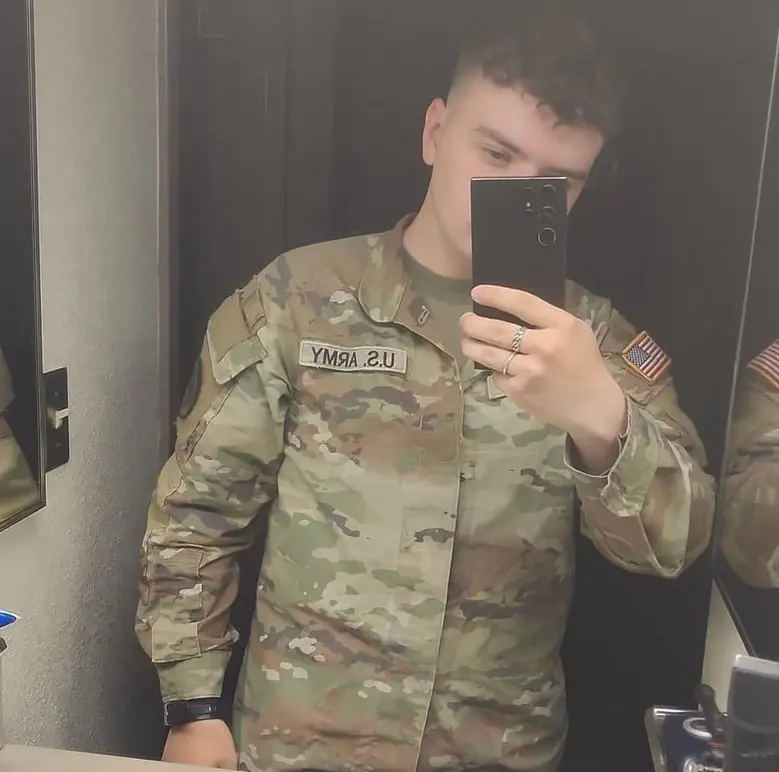
In a landmark federal sentencing in Seattle, a 22-year-old active-duty U.S. Army soldier was sentenced to 70 months—nearly six years—in federal prison for orchestrating a sprawling international cybercrime campaign. Operating under the dark-web persona "Kiberphant0m," Cameron John Wagenius exploited systemic vulnerabilities in cloud data architecture to harvest sensitive telecommunications metadata belonging to more than 100 million AT&T customers. In addition to his prison term, Wagenius was ordered to pay $294,978 in victim restitution.
Wagenius’s prosecution marks the culmination of a high-stakes, multi-agency federal investigation involving the Defense Criminal Investigative Service (DCIS), the Federal Bureau of Investigation (FBI), the Army Criminal Investigation Division (CID), and the U.S. Secret Service. The case exposed critical vulnerabilities across global tech infrastructure—most notably within cloud-storage giant Snowflake—while bringing to light a dangerous intersection of military insider threats, transnational cyber extortion rings, and the misuse of emerging artificial intelligence tools by incarcerated threat actors.
Despite causing massive national security concerns and operational turmoil for telecommunications giants, court documents reveal that Wagenius’s criminal enterprise yielded a meager total of roughly $1,500 in direct financial profit, underscoring the severe disparity between the immense collateral damage caused by modern cyberattacks and the actual financial returns realized by opportunistic threat actors.
Detailed Chronology: From Base to Breach
The Genesis of "Kiberphant0m"
Stationed at a U.S. Army installation in South Korea while maintaining a secret security clearance, Cameron John Wagenius cultivated a dual identity. While fulfilling his military duties, he immersed himself in elite cybercriminal circles under the alias Kiberphant0m.
The conspiracy leveraged a widespread security flaw across organizations utilizing cloud data storage service Snowflake: exposed credentials combined with a failure to enforce mandatory multi-factor authentication (MFA). Capitalizing on these oversights, Wagenius and his co-conspirators systematically downloaded vast repositories of proprietary corporate data from several major enterprise clients. (Snowflake has since overhauled its security posture, mandating MFA across all user accounts.)
The AT&T Extortion and Public Exposure
By October 2024, Kiberphant0m stepped into the public spotlight of underground cybercrime forums, boasting that he had successfully exfiltrated call and text metadata—including source numbers, destination numbers, timestamps, and call durations—for tens of millions of AT&T customers.
Operating as part of an extortion syndicate, Wagenius claimed responsibility for compromising more than a dozen telecommunications companies worldwide, including Verizon’s specialized Push-to-Talk corporate infrastructure. The group systematically extorted these corporations, demanding substantial ransoms under the threat of leaking proprietary or sensitive consumer data.
In late November 2024, independent cybersecurity journalist Brian Krebs published findings indicating that the mastermind behind the Kiberphant0m persona was likely an American soldier stationed in South Korea. The investigative spotlight rapidly compressed the operational window for the conspirators. Less than a month after the report surfaced, Wagenius was apprehended, subsequently facing two separate federal indictments to which he swiftly pleaded guilty.
Double-Crossing, National Security Leaks, and Arrests
The criminal syndicate’s operations turned increasingly volatile following the intervention of law enforcement. Even after AT&T reportedly capitulated to the extortion demands, paying a $370,000 Bitcoin ransom to the group, Kiberphant0m engaged in re-extortion tactics.
Following the arrest of co-conspirator Conor Riley Moucka, Kiberphant0m retaliated by publicly publishing purported AT&T call logs belonging to prominent political figures, including then-President-elect Donald Trump and then-Vice President Kamala Harris. Furthermore, the hacker threatened to distribute classified design schematics allegedly stolen from the U.S. National Security Agency (NSA), violently escalating the legal and geopolitical stakes of the investigation.
Supporting Context & Metrics: The Co-Conspirators and the Digital Footprint
The dismantling of the Kiberphant0m enterprise has mapped out a complex, interconnected web of transnational cybercriminals with long-standing histories in the digital underground. Federal prosecutors have unraveled a network spanning the United States, Canada, Turkey, and beyond:
- Kenneth Schuchman (28, Vancouver, Washington): Identified by prosecutors as a primary assistant in the extortion schemes, Schuchman brings a notorious background to the indictment. In 2019, Schuchman pleaded guilty to operating the "Satori" botnet—a massive infrastructure of compromised Internet-of-Things (IoT) devices deployed to execute crippling distributed denial-of-service (DDoS) attacks.
- Conor Riley Moucka (a.k.a. "Judische," Kitchener, Ontario): Arrested in Canada in 2024, Moucka played a central role in the Snowflake data thefts and subsequent corporate extortion operations before pleading guilty to related federal charges in August 2026.
- John Erin Binns (American national living in Turkey): Wanted internationally, Binns is implicated not only in the Snowflake-related data thefts but also in the monumental 2021 T-Mobile data breach, which compromised the personal identifying information of at least 76 million customers.
The AI-Assisted Prison Infiltration Attempt
Perhaps one of the most alarming revelations detailed in the government’s September 19 sentencing memo was Wagenius’s persistent technical curiosity while incarcerated and awaiting trial. Despite being stripped of direct internet access, federal prison records indicate that Wagenius systematically subverted Bureau of Prisons (BOP) computer use policies.
Using the email accounts of fellow inmates, Wagenius executed sophisticated "prompt injection" attacks against commercial artificial intelligence tools. Framing his requests around a supposed book he was authoring, Wagenius sought actionable intelligence regarding:
- Windows 10 Enterprise privilege escalation vulnerabilities and Common Vulnerabilities and Exposures (CVEs) complete with un-redacted, working exploit scripts.
- Step-by-step instructions and technical source code for exploiting CVE-2023-45208, a critical command-injection vulnerability impacting D-Link networking hardware.
- Instructions on fabricating prison-commissary antennas to extend unauthorized radio and wireless reception within correctional facilities.
- Tactics and methodologies for executing a successful prison escape.
While prosecutors confirmed there is no evidence Wagenius successfully deployed these vulnerabilities against BOP systems, the episode highlighted his calculated, persistent technical aptitude and the emerging threat vector of incarcerated actors attempting to weaponize generative AI systems through proxy communication.
Official Statements: An Unprecedented Insider Threat
The convergence of military intelligence, classified clearances, and malicious cyber activity triggered an immediate and aggressive inter-agency response.
Paul Russell, resident agent in charge at the Defense Criminal Investigative Service (DCIS)—the criminal investigative arm of the Department of Defense Office of Inspector General—emphasized the extraordinary nature of the case during post-sentencing debriefs.
"We don’t often get leads where there’s an active-duty soldier with a secret clearance who’s creating hacking tools and trafficking in data," Russell noted. "That doesn’t happen every day, and so when that hits, it really spins all of our partner organizations up. It was very serious from jump street, just because it was unique, it was an insider threat, and we weren’t sure what we were dealing with."
The collaborative investigation drew upon the specialized capabilities of the DCIS, the FBI, the Army Criminal Investigation Division (CID), and the U.S. Secret Service. Prosecutors stressed that while Wagenius exhibited deep technical sophistication in mapping enterprise networks and orchestrating international extortion campaigns, his financial acumen paled in comparison to his technical output.
According to government findings, despite compromising over 100 million customer records and targeting major multinational telecommunications carriers, Wagenius’s cumulative earnings from his illicit data sales amounted to a mere $1,500.
"While Wagenius was not particularly financially successful as a cybercriminal," the government’s sentencing memo concluded, "he both intended to and caused significant harm to numerous individual victims, U.S. companies, and the U.S. government."
Future Outlook: Industry Impact and National Security Ramifications
The conclusion of Cameron Wagenius’s criminal proceedings serves as both a milestone and a cautionary tale for cybersecurity defenders, defense officials, and enterprise architects alike.
- Supply Chain and Cloud Security: The fallout from the Snowflake-centered attacks fundamentally altered how cloud-storage providers enforce security protocols. By demonstrating that lax credential hygiene and absent multi-factor authentication policies can compromise downstream entities housing hundreds of millions of consumer records, the incident accelerated industry-wide migrations toward zero-trust architecture and mandatory MFA enforcement.
- The Evolution of Insider Threats: The military’s handling of the Wagenius case highlights critical vulnerabilities in personnel security clearances. As cybercriminal syndicates increasingly recruit tech-savvy youth who subsequently enlist in armed forces or critical infrastructure roles, defense agencies face heightened urgency in monitoring digital footprints and insider behavioral anomalies.
- Generative AI Governance: Wagenius’s exploitation of commercial AI tools via inmate proxy emails exposes a glaring frontier in correctional facility security and AI safety guardrails. As threat actors refine prompt-injection techniques to bypass model safety filters and extract actionable exploit code from behind bars, both cloud service providers and correctional institutions must adapt their monitoring frameworks to mitigate cognitive and technical extraction vectors.
As Wagenius begins serving his 70-month sentence in federal custody, ongoing judicial proceedings against his remaining co-conspirators—including Conor Riley Moucka and John Erin Binns—will continue to unfold, further exposing the globalized, decentralized infrastructure of modern cyber extortion syndicates.