Executive Overview
Apple has quietly extended its complimentary access to satellite-powered features for millions of existing iPhone users for an additional year. Revealed in a footnote within the company’s high-profile iPhone 18 Pro press release, the decision means owners of the iPhone 14, iPhone 15, and now iPhone 16 lineups will continue to enjoy uninterrupted, off-grid communication capabilities without paying a subscription fee.
First launched in late 2022 alongside the iPhone 14, Apple’s suite of satellite tools has evolved from a basic emergency lifeline into a robust, multi-faceted communication ecosystem. It now encompasses Emergency SOS, Find My location sharing, Roadside Assistance, and standard text messaging via satellite. Originally promised as a two-year complimentary perk for early adopters, Apple has systematically pushed back the expiration date year after year.
While the announcement offers immediate relief to consumers who feared looming subscription costs, it also deepens a lingering industry-wide mystery: How, when, and how much will Apple ultimately charge for a service that can mean the difference between life and death? As the tech giant rolls out its latest flagship devices—the iPhone 18 series—this latest extension provides a vital window to examine the evolution of satellite connectivity in consumer smartphones, the economic realities facing mobile satellite service providers, and the profound safety implications of keeping these networks free.
Detailed Chronology: The Evolution of Apple’s Satellite Roadmap
To understand the significance of this latest extension, it is necessary to trace the trajectory of Apple’s satellite ambitions from a speculative industry rumor to an indispensable hardware standard.
The Inception: iPhone 14 and the Two-Year Promise (2022)
When Apple unveiled the iPhone 14 lineup in September 2022, it introduced a feature that fundamentally changed expectations for mobile hardware: Emergency SOS via satellite. Partnering with satellite infrastructure provider Globalstar, Apple embedded custom radio components and specialized software directly into the iPhone, enabling users to connect directly to orbiting satellites when entirely outside cellular and Wi-Fi coverage.
At the time, Apple made a critical commitment: the service would be free for two years starting from the activation of any new iPhone 14 device. This window was designed to give Apple time to evaluate usage patterns, stress-test infrastructure, and establish a viable commercial model. Concurrently, the company launched Find My via satellite, allowing hikers, travelers, and adventurers to broadcast their geographical coordinates manually while off the grid.
The First Reprieve: The iPhone 14 Extension (November 2023)
As the initial two-year clock began to wind down for early adopters in late 2023, industry analysts and consumers alike braced for the announcement of a pricing tier. However, in November 2023, Apple quietly updated its documentation to grant an extra year of free access specifically to existing iPhone 14 users. This pushed the expiration horizon out further, buying the company time as it worked to expand both the geographic footprint of the service and its functional capabilities.
Broadening the Suite and the Second Extension (2024–2025)
Apple did not rest on its laurels. Recognizing the immense value of off-grid communication, the company systematically enhanced the satellite ecosystem:
- Roadside Assistance via satellite: Developed in partnership with AAA and other providers, this feature allowed stranded motorists to summon mechanical help even in cellular dead zones.
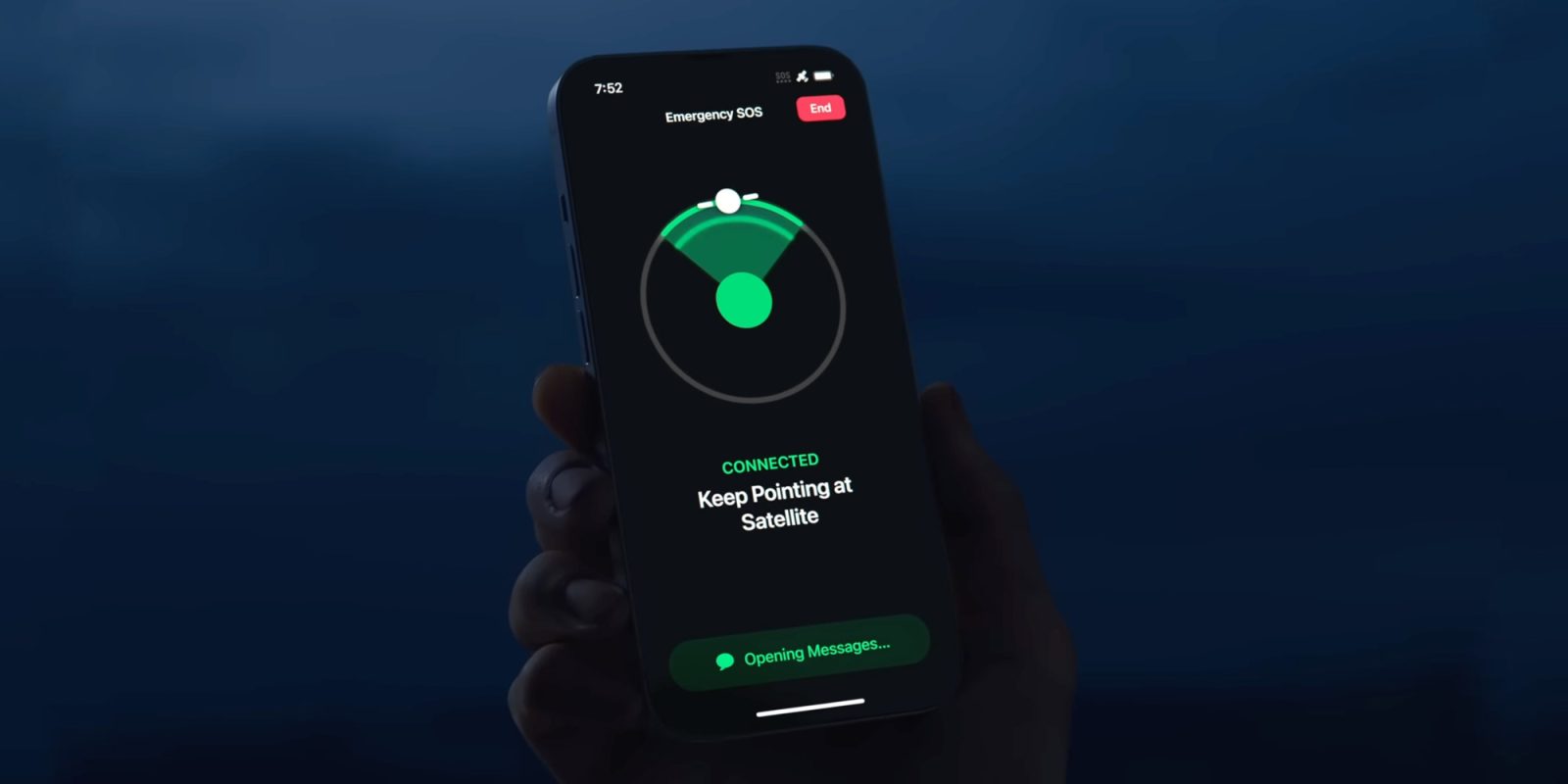
- Messages via satellite: Introduced with iOS 18, this monumental update allowed users to send and receive regular text messages, emojis, and Tapbacks via satellite without needing to trigger an active emergency.
Recognizing that these new features had vastly different adoption timelines, Apple issued a broad extension last year, sweeping both iPhone 14 and iPhone 15 users into a unified complimentary window. Without the newly announced extension found in the iPhone 18 Pro press release, these users would have seen their free access expire later this year, forcing Apple’s hand regarding monetization.
The Current State: The iPhone 18 Pro Footnote (September 2026)
Buried deep within the technical footnotes of the September 2026 iPhone 18 Pro launch announcements, Apple confirmed the streak continues. The company announced that existing users of the iPhone 14, iPhone 15, and now iPhone 16 families will receive a one-year extension on their complimentary access.
According to the official wording:
"The free trial will be extended for iPhone 14, iPhone 15, and iPhone 16 users who have activated their device in a country that supports Apple’s satellite features prior to midnight PT on September 9."
Meanwhile, purchasers of the brand-new iPhone 18 Pro, iPhone 18 Pro Max, and other newly introduced models will receive their own standard one-year complimentary trial upon device activation, keeping the ecosystem harmonized for early hardware adopters.
Supporting Context & Metrics: The Mechanics of Off-Grid Communication
Behind the consumer-facing interface of a blue text bubble or an emergency questionnaire lies an immensely complex web of aerospace engineering, ground station routing, and heavy corporate investment.

The Infrastructure Behind the Screen
Apple’s satellite capabilities are not powered by magic; they rely on a massive capital investment in Low Earth Orbit (LEO) satellite constellations, primarily operated by Globalstar. Apple established a multi-million-dollar partnership framework, funding infrastructure upgrades, dedicated spectrum allocation, and specialized receiver hardware embedded within the iPhone’s silicon and antenna arrays.
When a user initiates an emergency transmission or sends a satellite message, the iPhone guides them via on-screen UI prompts to point their device directly at a passing satellite moving at thousands of miles per hour overhead. The data packet is beamed up to the satellite, relayed down to a ground station gateway, and subsequently routed into traditional emergency dispatch networks (Public Safety Answering Points, or PSAPs) or cellular messaging infrastructure.
Financial Commitments and Strategic Investments
Apple’s financial backing of Globalstar has been vital to keeping the network operational and expanding its global reach. Apple has routinely poured hundreds of millions of dollars into prepayments, infrastructure enhancements, and equity arrangements to secure priority bandwidth.
From an economic perspective, maintaining this infrastructure is profoundly expensive. Satellites require constant maintenance, spectrum licensing fees, and ground-station operations. The fact that Apple continues to absorb these operational costs rather than passing them directly to consumers underscores how central satellite connectivity has become to the overarching iPhone value proposition. It is no longer viewed merely as a niche utility for extreme mountaineers, but as a core pillar of device safety and global reliability.
Official Statements and Industry Implications
The lack of a concrete pricing strategy from Apple has fueled years of speculation across the tech and telecommunications sectors. To date, executive leadership has remained tight-lipped about what happens when the complimentary periods finally conclude.
The Public Safety Dilemma
The central debate surrounding the monetization of iPhone satellite features is ethical and political, rather than purely financial. Industry analysts point out that charging a monthly or annual subscription fee for Emergency SOS could create dangerous barriers to access.
If a hiker stranded in a remote wilderness area realizes their satellite subscription has lapsed and they cannot afford a $10-per-month fee to call for rescue, the resulting tragedy could spark severe regulatory backlash and public relations nightmares for Apple.

Because of this, many insiders speculate that Apple may permanently decouple emergency services from commercial fees, adopting a freemium model:
- Free-tier core services: Emergency SOS, Roadside Assistance, and basic life-safety transmissions remain permanently free for the lifetime of the hardware.
- Paid-tier auxiliary services: Non-emergency satellite messaging, high-bandwidth data transfers, or specialized recreational tracking features could eventually require a subscription.
Competitor Landscapes: The Android Response
Apple’s aggressive push into satellite communications has forced the rest of the mobile industry to scramble. Major Android manufacturers and chipset designers—including Qualcomm, Google, and Samsung—have built native satellite messaging capabilities into their ecosystems, often utilizing alternative networks like Iridium or Skylo.
However, monetization models across the Android landscape remain fragmented. Some carriers bundle satellite texting into premium cellular plans, while others have experimented with manufacturer-led subscription models. Apple’s continuous extension of free access sets a fierce consumer-friendly benchmark that puts pressure on Android competitors to match or exceed these value offerings.
Future Outlook: Will Apple Ever Charge?
As we look toward the horizon of mobile technology, several critical questions remain unanswered. Will the year 2027 finally mark the end of free extensions, or will Apple continue pushing the expiration date forward as older devices are phased out?
The Lifecycle of Older Devices
As the iPhone 14 family edges further into its legacy years, the hardware base will eventually shrink. By continuously pulling newer models—such as the iPhone 15 and iPhone 16—into the free extension umbrella, Apple is effectively buffering its user base against premature subscription shock.
However, maintaining free satellite connectivity for hundreds of millions of active devices worldwide represents a staggering, ongoing operational expense. At some point, economic realities must align with corporate strategy.
What Consumers Should Expect Next
- Geographic Expansion: Apple will likely continue rolling out its satellite services to additional countries and regulatory jurisdictions, increasing the overall footprint of the network.
- Gradual Differentiation: As messaging via satellite matures, Apple may introduce advanced features—such as photo sharing or low-bandwidth web browsing over satellite—and wall them off behind a paid subscription tier, while keeping emergency text functions strictly free.
- Carrier Partnerships: In the coming years, we may see deeper integration between traditional cellular carriers and satellite providers, potentially leading to carrier-subsidized satellite access built directly into high-tier postpaid mobile plans.
Conclusion
For now, existing iPhone 14, 15, and 16 users can breathe a sigh of relief. Apple’s decision to extend free satellite access for another year ensures that peace of mind remains complimentary. Whether this serves as a temporary bridge to a future subscription model or the permanent baseline of modern smartphone ownership remains one of the tech world’s most closely watched questions. One thing is certain: satellite connectivity has transitioned from a futuristic science-fiction concept into an expected, non-negotiable expectation of modern mobile life.