Executive Overview
In a development that underscores the complex and often grueling reality of pioneering next-generation computing platforms, Apple has reportedly laid off at least 60 employees tied directly to its Virtual Reality (VR) and spatial computing divisions. According to an investigative report by AppleInsider, the cuts have hit an entire team dedicated to VR development within the broader Apple Vision Group and related operational structures. While Apple has opted not to officially comment on or confirm the specifics of the layoffs, the restructuring marks the latest milestone in a calculated, systemic internal pivot.
For months, industry watchers, financial analysts, and supply chain insiders have tracked Apple’s subtle maneuvering away from the rapid iteration of heavy, enclosed spatial headsets. Instead, the company is reallocating capital, engineering talent, and executive oversight toward lighter, artificial intelligence-powered smart glasses.
This strategic recalibration does not signal a total abandonment of visionOS or spatial computing. Rather, it highlights a maturation—and sobering scaling back—of a product category that executive leadership continues to frame as being in its "early innings." As Apple balances structural layoffs, internal reorganization, and soaring component costs, the overarching trajectory of its hardware ecosystem is undergoing a profound transformation.
Detailed Chronology: The Dismantling of the Vision Products Group
The recent layoffs did not occur in a vacuum; they are the culmination of a multi-year organizational restructuring that began long before the public became aware of internal friction.
The Breakup of the VPG
More than a year ago, prominent Bloomberg tech journalist Mark Gurman reported that Apple had quietly dismantled the standalone Vision Products Group (VPG). Historically, the VPG operated as an isolated, high-intensity silo—a specialized task force combining hardware and software engineering explicitly focused on bringing the Apple Vision Pro to market.
Following the headset’s commercial debut, Apple dissolved this unified entity. Staff members were systematically integrated back into the company’s larger, mainstream hardware and software engineering organizations. This structural decentralization signaled a shift: spatial computing was no longer treated as a quarantined "moonshot" project, but rather as a core architectural component that needed to interface cleanly with iOS, macOS, and iPadOS development pipelines.
Concurrently, executive leadership experienced significant shuffling. Mike Rockwell, the veteran executive who originally spearheaded the VPG and guided the Vision Pro through its lengthy gestation, was reassigned to lead Apple’s sweeping overhaul of Siri—a testament to the company’s absolute urgency surrounding generative AI integration.

The Recent Layoffs
The latest reporting from AppleInsider confirms that the organizational reshuffling has moved past mere structural reassignments into direct headcount reductions. By cutting at least 60 positions tied to dedicated VR development and the legacy architecture of the VPG, Apple is trimming fat on a platform whose consumer adoption curve has proven stubbornly gradual.
Despite these cuts, the corporate machinery rolls forward. Apple continues to iterate on visionOS—with updates like visionOS 27 rolling out to developers and enterprise users—even as the physical roadmap for major new enclosed hardware iterations takes a backseat to more commercially viable consumer form factors.
Supporting Context & Metrics: Hardware Iterations, Pricing Pressures, and Enterprise Pivots
To fully understand Apple’s current stance on spatial computing, one must examine the hardware trajectory, pricing realities, and enterprise reception of the Vision Pro ecosystem over the past several years.
Hardware Evolution: The M5 Upgrade
In October 2025, Apple quietly injected new life into its spatial computing hardware lineup by introducing an updated Apple Vision Pro powered by the M5 chip. This internal silicon refresh yielded tangible performance gains, enabling roughly 10% more rendered pixels and smooth refresh rates of up to 120Hz.
Despite these performance optimizations, the base price remained anchored at $3,499—a prohibitive barrier that kept the device firmly in the hands of enterprise developers, early adopters, and specialized industrial sectors.
However, the macroeconomic environment soon caught up with Apple’s supply chain. In June 2026, amid a severe global memory crunch that triggered widespread price hikes across Apple TV, iPad, Mac, and HomePod product lines, the base price of the Vision Pro was bumped up to $3,699. This upward pricing pressure further complicated the device’s market position, restricting its commercial footprint primarily to niche enterprise environments, medical training facilities, and corporate visualization suites.
The Enterprise and Medical Lifeline
As consumer excitement cooled relative to the initial hype surrounding the 2024 launch, Apple successfully found a dependable refuge for the Vision Pro: enterprise and medicine.
Surgeons, medical researchers, and corporate design teams have embraced spatial computing for tasks that genuinely benefit from immersive 3D visualization. These use cases have provided a stabilizing counterweight to sluggish consumer sales, validating the hardware’s underlying capabilities even as the consumer-facing VR market struggles to achieve mainstream velocity.
Official Statements and Leadership Vision
Apple’s official posture regarding spatial computing remains carefully calibrated. Executives consistently preach patience, framing the current turbulence as a natural byproduct of launching an entirely new computing paradigm.
Steve Sinclair on visionOS and Long-Term Commitment
Two months prior to the latest layoffs, Spatial Insider’s Justin Ryan directly questioned Apple Senior Director Steve Sinclair—who leads product marketing for visionOS—regarding persistent industry rumors that the Vision Pro had been put "on ice" and that the core development team had been disbanded.
Sinclair pushed back against the narrative of abandonment, emphasizing Apple’s generational view of the technology:
"It’s still early innings for spatial computing. And so, there’s a lot of things that we’re doing, we’re learning, and continue to improve on and continue to invest in. And so I would hope that updates like visionOS 27 and all the things that we’re adding, and all the capabilities that we’re unlocking, whether it’s for consumer use or it’s for business use, serves as evidence that we are invested in this platform and we’re invested in this idea of spatial computing and building these capabilities that just can’t be done on any other device."
John Ternus on the "Extraordinary Product"
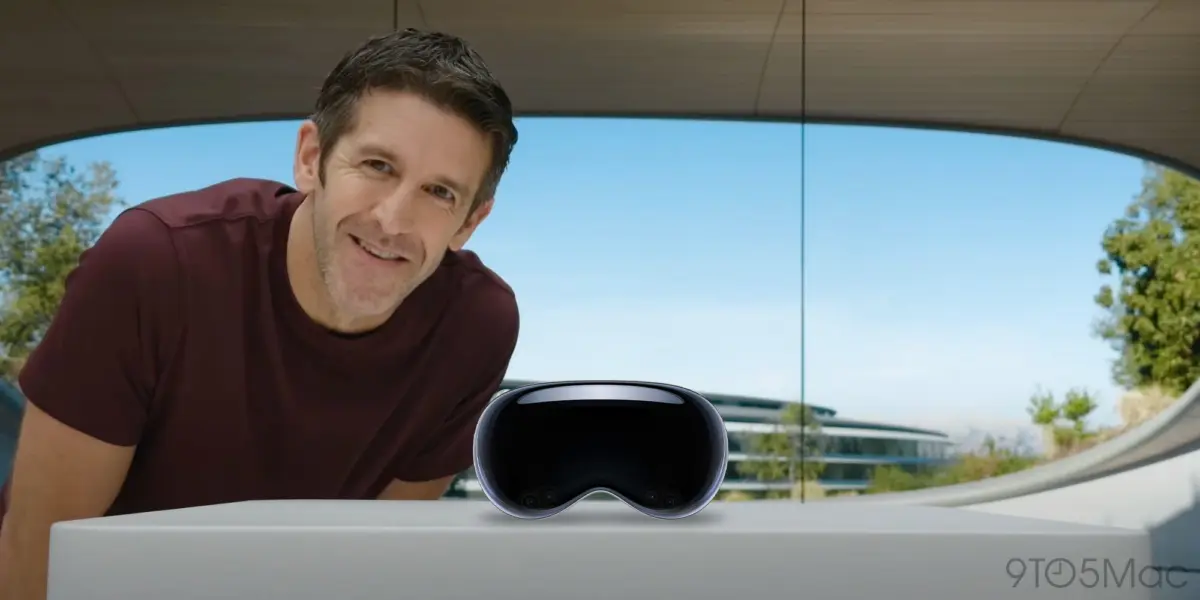
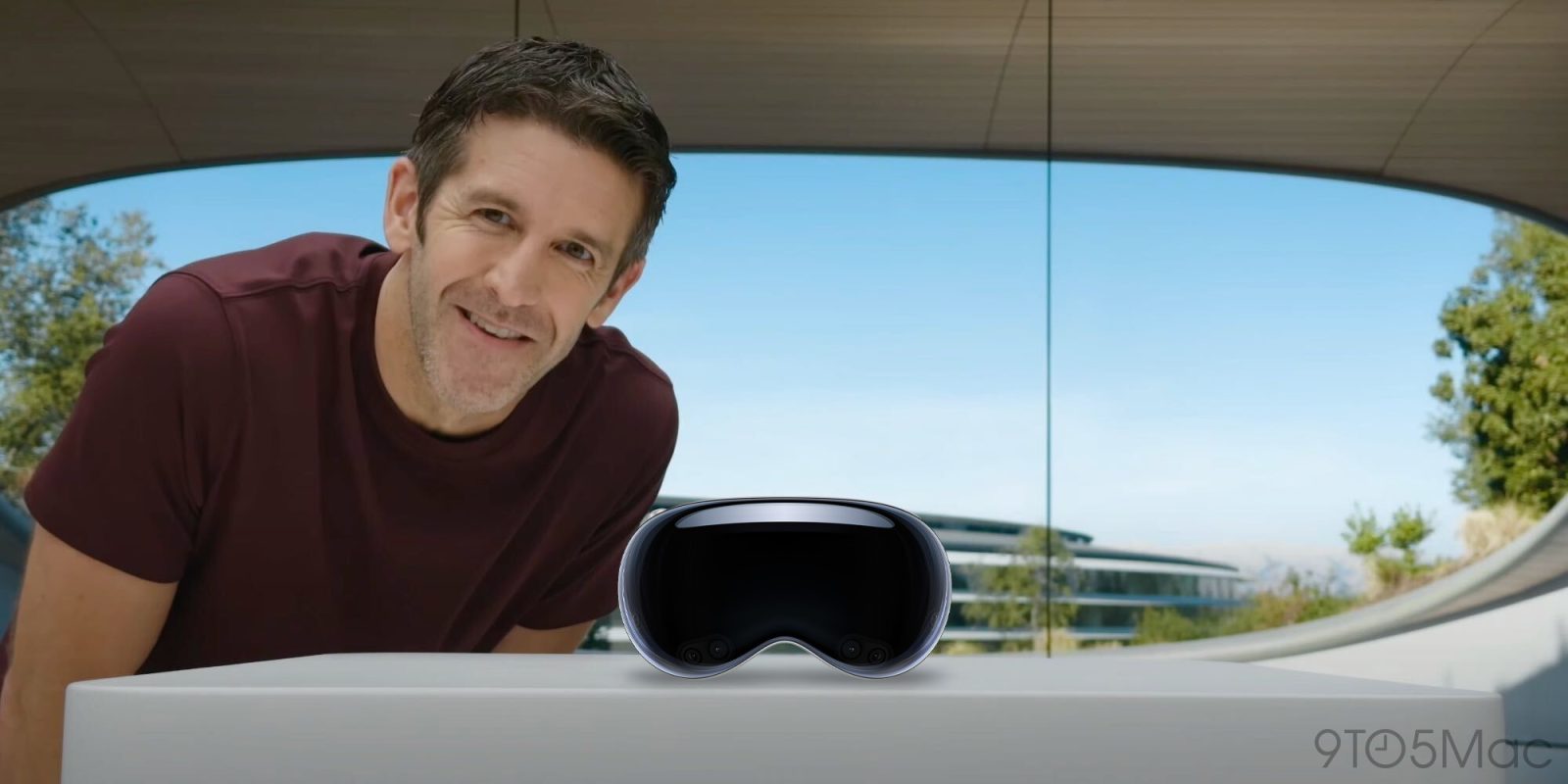
Sinclair’s sentiment closely mirrors public remarks made by incoming CEO John Ternus in April 2026. Addressing the state of the platform, Ternus described the Vision Pro as an "extraordinary product" while reiterating that Apple views itself as being in the "early innings" of spatial computing, pointing explicitly to growing momentum in enterprise and healthcare applications.
Future Outlook: The Pivot to AI Smart Glasses
While the Vision Products Group has been fragmented and reduced in size, Apple’s engineering resources have not vanished—they have been redirected. The company’s primary hardware focus in the wearable space is rapidly shifting away from bulky, enclosed VR headsets and toward lightweight, AI-integrated smart glasses.

The Roadmap to WWDC 2027
Industry leaks indicate that Apple’s inaugural AI smart glasses are slated for a high-profile unveiling at WWDC 2027, with a commercial release expected later that same year. Unlike the Vision Pro, these glasses are rumored to eschew high-power AR optical displays in favor of a sleek, traditional form factor powered by onboard cameras, deep Siri integration, and advanced Visual Intelligence features.
Apple had initially harbored ambitions to debut the wearable product line earlier, with a projected launch targeted for early 2027. However, the timeline was strategically pushed back as leadership re-evaluated privacy-related safeguards. This caution has been amplified by the intense public scrutiny and privacy backlash faced by competitors like Meta in the smart glasses sector. Apple wants to ensure its entry into ambient AI optics avoids the pitfalls of constant surveillance concerns that have plagued rival products.
Conclusion: A Pragmatic Evolution
Apple’s recent layoffs within its VR division do not mark the death of spatial computing in Cupertino; rather, they represent a pragmatic corporate correction. By trimming redundant specialized teams, absorbing talent into broader engineering houses, and shifting capital toward AI wearables, Apple is hedging its bets.
The Vision Pro remains a technological tour de force—albeit an expensive and niche one. As Apple prepares for its next era under leadership transition, the focus is shifting from heavy immersion to ubiquitous, everyday artificial intelligence. The spatial computing dream is far from dead, but it is being forced to grow up, adapt, and share floor space with the AI revolution.