Executive Overview
Last week, the sudden and mysterious death of a 28-year-old laboratory worker in a remote Siberian city triggered a wave of global anxiety. The victim, employed at a specialized anti-plague research facility, passed away under obscure circumstances that quickly fueled international speculation. Early reports suggested a catastrophic laboratory accident involving a broken test tube, while regional officials initially cited the plague as the explicit cause of death before hastily walking back their statements with the qualifier "possibly." As independent outlets reported that nearly 200 individuals had been placed under quarantine, Russian authorities pushed back, attributing the death to an "unknown etiology" of pneumonia.
The mere mention of the word plague is enough to evoke centuries-old cultural trauma, summoning phantoms of the Black Death, medieval doctors in terrifying beaked masks, and biblical retributions. Yet, behind the sensational headlines and the primal fear associated with the term, public health experts emphasize a critical distinction: the true anxiety surrounding this incident has very little to do with the actual disease.
While epidemiologists and biosecurity specialists are monitoring the situation closely—primarily due to legitimate questions regarding Russian biosafety protocols and the historical weaponization of pathogens—the general public faces virtually zero risk of a widespread outbreak. To understand why this Siberian case has transfixed the world, one must untangle the biological realities of Yersinia pestis from the heavy psychological baggage carried by its infamous name.
Detailed Chronology: The Siberian Lab Incident
The sequence of events leading to the global media frenzy remains murky, shaped by conflicting official statements, leaked local reports, and the inherent opacity surrounding high-containment research facilities in Russia.
- The Initial Event: The tragedy began in a remote Siberian city, home to an anti-plague research institute—a facility dedicated to studying dangerous pathogens. A 28-year-old laboratory worker fell violently ill and subsequently died.
- The Broken Test Tube Rumors: Early, unverified reports circulated within regional circles suggesting that the technician had fallen ill following a routine containment breach or the accidental breakage of a test tube containing bacterial strains.
- Conflicting Government Declarations: In the immediate aftermath, a regional government official in the vicinity publicly declared that the woman had died of the plague. As international media picked up the story, that statement was swiftly revised to insert the word possibly, signaling a tightening of official information channels.
- Quarantine Measures: Independent regional news outlets reported that close contacts of the victim, alongside individuals who may have crossed paths with her prior to her hospitalization, were rounded up. Nearly 200 people were placed under varying degrees of medical observation and quarantine.
- The Official Denial: As global anxiety mounted, Russian federal authorities officially denied that the death was caused by the plague, instead attributing the fatality to "pneumonia of unknown etiology."
- International Assessment: The World Health Organization (WHO) and international epidemiologists stepped in to review the data, ultimately reporting no signs of secondary infections spreading beyond the initial circle of observation. Nevertheless, the opaque handling of the incident immediately raised red flags among international biosecurity experts.
Supporting Context & Metrics: The Biology and History of Yersinia pestis
To evaluate the true threat level of the Siberian incident, it is essential to look past the historic mystique and examine the hard science of the disease.
What is the Plague?
The plague is a real, active zoonotic disease caused by the bacterium Yersinia pestis. The pathogen primarily infects fleas and the small wild mammals—such as rodents—that host them. Depending on how the bacteria enters the human body, it manifests in three clinical forms:
- Bubonic Plague: The most common form, characterized by painful, swollen lymph nodes (buboes) resulting from an infected flea bite.
- Septicemic Plague: Occurs when the bacteria multiply in the blood, leading to tissue death, shock, and organ failure.
- Pneumonic Plague: The most severe and contagious form, affecting the lungs. This type can account for symptoms mimicking severe pneumonia—potentially explaining the Russian authorities’ diagnosis of "pneumonia of unknown etiology."
Modern Metrics vs. Historical Scale
While the plague is frequently lethal if left untreated, it is vastly less common and far more manageable today than it was in centuries past.
- Global Burden: According to the World Health Organization, there are roughly 1,000 to 2,000 cases reported worldwide annually, predominantly concentrated in endemic regions across parts of Africa, Asia, and the Americas.
- United States Cases: A handful of cases occur in the U.S. each year. For instance, a young man tragically died of pneumonic plague in Arizona, highlighting that the disease still exists in nature without triggering societal collapse.
- Comparative Impact: In modern times, the plague claims very few lives compared to seasonal viruses. By contrast, the regular seasonal influenza kills thousands of people in the United States alone every single year.
Official Statements and Epidemiological Consensus
The stark contrast between public panic and expert calm lies in the fundamental nature of how Yersinia pestis spreads and how easily it can be treated with modern medicine. Prominent epidemiologists, including contributors to resources like Your Local Epidemiologist, have systematically dismantled the notion that the Siberian case could blossom into a global catastrophe.
Why Epidemiologists Aren’t Worried About an Outbreak
- Availability of Antibiotics: Unlike medieval Europe, modern medicine possesses highly effective antibiotic treatments. If administered early, these drugs easily clear the bacterial infection. Furthermore, antibiotics can be prescribed prophylactically (preventatively) to anyone who has had close contact with an infected individual.
- Low Contagiousness: Unlike respiratory viruses that linger in the air or spread via asymptomatic carriers, the plague is not easily transmitted. Even pneumonic plague—the most contagious variant—requires close, direct contact with respiratory droplets. Simply walking past someone or sharing a room briefly is generally insufficient to transmit the bacteria.
- Rapid Symptom Onset: Symptoms of pneumonic plague emerge rapidly, often within 24 hours of infection. This rapid progression leaves very little time for an infected individual to move about undetected, limiting the window for silent community transmission. This stands in stark contrast to pathogens like hantavirus, which can feature incubation periods lasting up to 42 days, requiring lengthy quarantines.
The Biosecurity Dimension
While public health experts maintain that the general public is at virtually zero risk, biosecurity experts view the situation through a different lens.
Pneumonic plague has long been cataloged by the U.S. Centers for Disease Control and Prevention (CDC) as a Category A bioterrorism agent due to its high mortality rate if untreated and its potential for aerosol dissemination. Because Russia has a documented history of historical bioweapons research, the presence of plague samples in a regional lab naturally attracts intense scrutiny.
If a strain had been genetically modified to exhibit antibiotic resistance, it would represent a grave concern. However, specialists emphasize that such scenarios remain entirely hypothetical. As epidemiologists aptly note: It is the job of biosecurity experts to worry about worst-case scenarios; that worry should not transfer to the general public, as your personal risk remains essentially nil.
Cultural Psychology: Why the Word "Plague" Terrifies Us
Even for seasoned public health journalists and scientists, the word plague elicits an involuntary physical reaction. Why does this single word carry such disproportionate psychological weight?
1. The Shadow of the Black Death
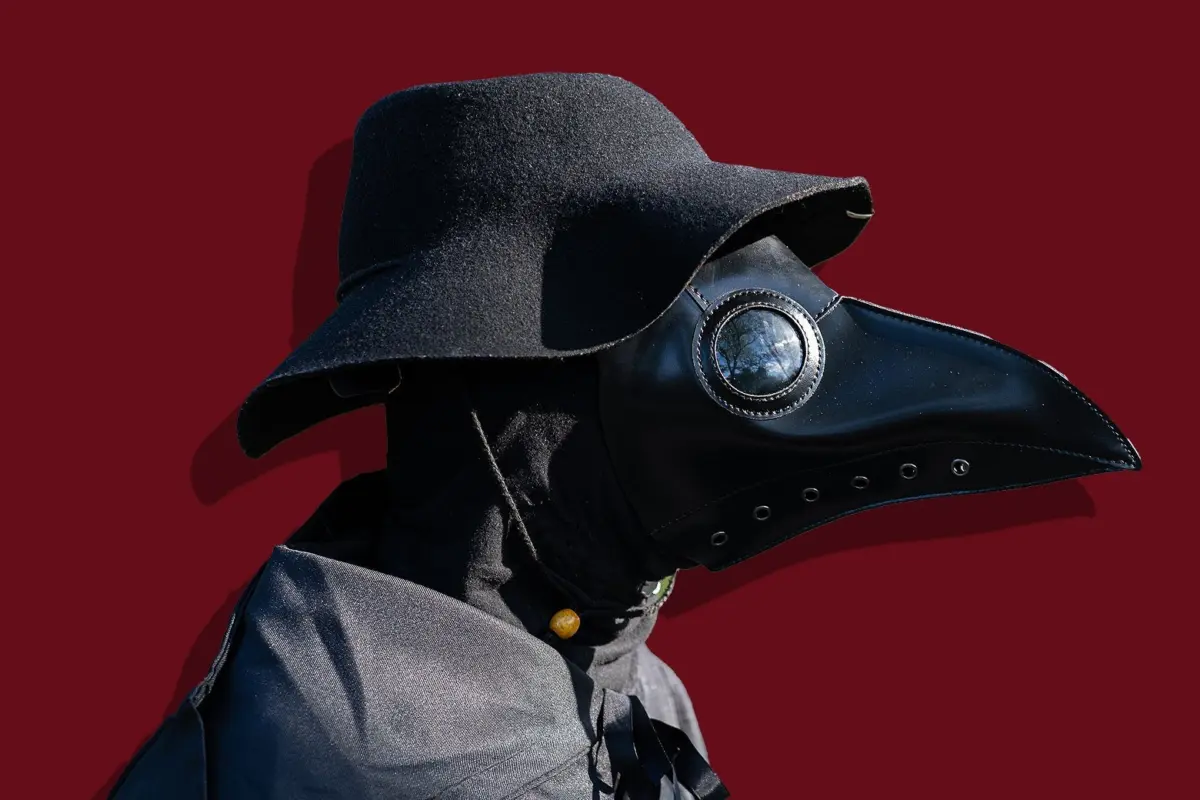
Generations of students have been taught the grim history of 14th-century Europe. The bubonic plague wiped out at least a third of the continent’s population—an estimated 25 million people—shattering feudal systems and leaving an indelible scar on human memory. Compounding this terror are the enduring visual artifacts of the era, such as the haunting, beaked masks worn by 16th- and 17th-century doctors, which became synonymous with inevitable mortality.
2. Biblical and Supernatural Connotations
Long before microbiology identified bacteria, plague was shorthand for divine retribution. The biblical account of the ten plagues of Egypt associated widespread suffering with the wrath of God, turning disease into a supernatural phenomenon. During the Middle Ages, watching healthy individuals struck down instantly by an invisible force felt demonic. Over time, the term expanded linguistically to describe any rapidly spreading, high-mortality crisis—cementing phrases like "avoiding someone like the plague" in everyday lexicon.
3. The COVID-19 Echo
The recent collective trauma of the COVID-19 pandemic has primed modern societies to react intensely to novel disease reports. While COVID-19 was caused by a coronavirus rather than a bacterium, the cultural experience was identical to historical plagues: overloaded hospitals, enforced isolation, global lockdowns, and the modern equivalent of the plague doctor’s beak—KN95 masks. Consequently, when a headline mentions a "plague" death in 2026, it instantly reactivates the collective grief and anxiety of our own recent history.
Future Outlook
As international agencies continue to monitor developments surrounding the Siberian laboratory incident, the trajectory of the story points toward institutional accountability rather than public health emergency.
- Transparency Demands: The primary friction point moving forward will be diplomatic and scientific pressure on Russia to provide transparent accounting of its biosafety standards, laboratory containment protocols, and the exact nature of the research being conducted at its anti-plague institutes.
- Zero Domestic Threat: For populations outside of Russia—particularly in Western nations—the likelihood of encountering or contracting plague from this event is virtually nonexistent.
- The Real Takeaway: The Siberian plague case serves as a powerful reminder of how language shapes perception. While government transparency and laboratory biosecurity are legitimate arenas for international oversight, the public can rest easy. The shadow of the plague looms large in our history books and cultural psyche, but modern medicine ensures that the bacteria remains a manageable medical footnote rather than an apocalyptic harbinger.