Executive Overview
In an era defined by hyper-digitization, our reliance on centralized authorities—ranging from traditional banking institutions to massive data-storage conglomerates—remains an entrenched architectural flaw of the modern internet. For decades, conducting an online transaction or archiving sensitive data has required placing explicit trust in a third-party intermediary. If you wish to purchase a good online without physical cash, you must register an account, yield sensitive credit card information, and submit to the oversight of a payment processor. If that centralized server is compromised, your personal identity and financial assets are immediately exposed.
Enter blockchain technology: a paradigm-shifting architecture designed to eliminate the need for centralized intermediaries, ensuring absolute data integrity, cryptographic security, and unyielding transparency. Often conflated erroneously with cryptocurrencies like Bitcoin, blockchain is, in reality, the foundational bedrock upon which the decentralized digital economy is built.
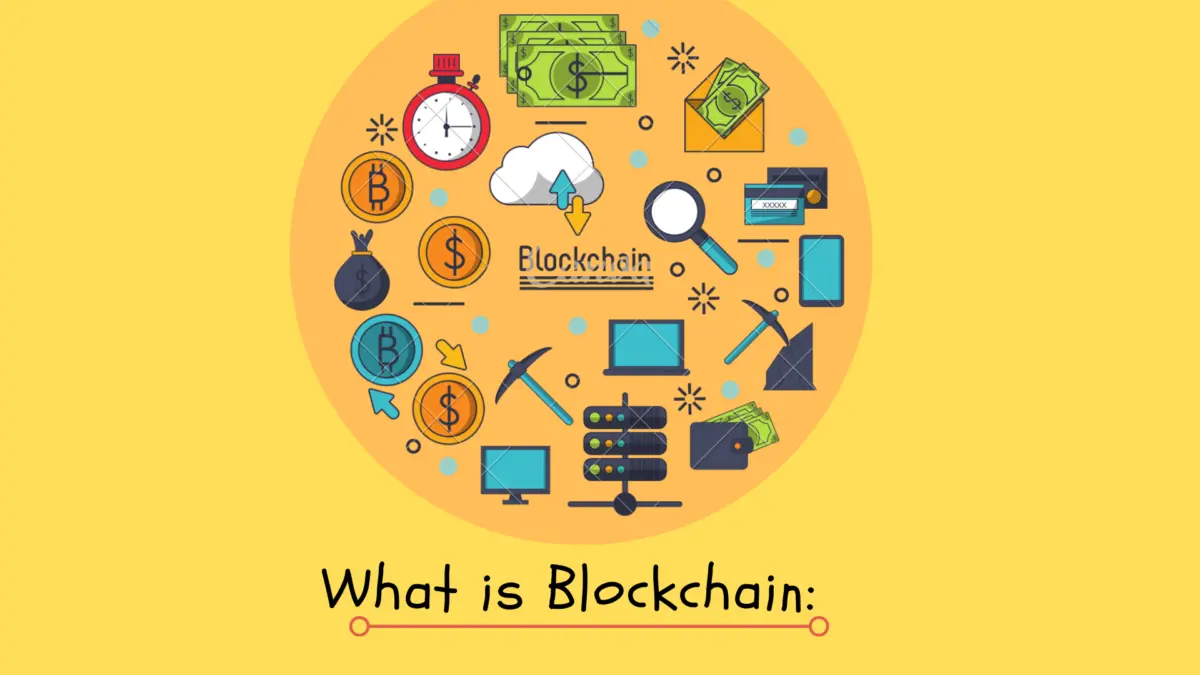
At its core, a blockchain is a distributed ledger technology (DLT) that records digital information and distributes it across a vast peer-to-peer network of computers, known as nodes. Once recorded, data within a blockchain cannot be retroactively altered, tampered with, or destroyed without the consensus of the network. This immutability transforms how humanity conceptualizes trust, removing the necessity of middlemen in legal contracts, financial transactions, supply chain tracking, and beyond. As major enterprises—including Walmart, Siemens, Pfizer, and Unilever—rapidly integrate DLT into their operational frameworks, blockchain is no longer viewed as a speculative digital novelty. It is rapidly becoming the gold standard for secure enterprise data management.
Detailed Chronology: The Evolution of Distributed Consensus
While popular awareness of blockchain surged alongside the meteoric rise of Bitcoin in the late 2000s, the technological lineage of distributed ledgers spans decades of cryptographic research and theoretical computer science.
1991: The Genesis of Cryptographic Timestamping
The conceptual roots of blockchain can be traced back to 1991, long before the advent of digital currencies. Two mathematicians and researchers, Stuart Haber and W. Scot Stornetta, sought to solve a fundamental problem: how to reliably timestamp digital documents so that they could not be backdated or tampered with.
Published in their landmark paper, they proposed a cryptographically secured chain of blocks where each document’s timestamp was mathematically linked to the one preceding it. If anyone attempted to alter a single document within the archive, the cryptographic hash would break, immediately exposing the tampering. This mechanism laid the theoretical groundwork for the immutable data structures used today.
1998: Nick Szabo and "Bit Gold"
Nearly a decade later, in 1998, computer scientist and legal scholar Nick Szabo conceptualized a decentralized digital currency mechanism known as "Bit Gold." Szabo’s design called for a system where users would dedicate computational power to solving cryptographic puzzles, thereby generating secure, unforgeable digital tokens. Although Bit Gold was never formally implemented at scale, it anticipated the core economic and computational mechanics of modern proof-of-work blockchains, while also introducing the concept of "smart contracts"—self-executing code stored on a distributed ledger.
2008–2009: The Satoshi Nakamoto Breakthrough and Bitcoin
The true crystallization of blockchain technology occurred in October 2008, when an anonymous developer or collective operating under the pseudonym Satoshi Nakamoto published the whitepaper titled "Bitcoin: A Peer-to-Peer Electronic Cash System."
Nakamoto solved the notoriously difficult "Byzantine Generals Problem"—the challenge of achieving decentralized consensus among untrusted network participants—by combining Haber and Stornetta’s hash-chained timestamps with a novel proof-of-work consensus algorithm. On January 3, 2009, Nakamoto mined the Genesis Block (Block 0) of the Bitcoin blockchain, embedding a newspaper headline regarding bank bailouts into the code as a permanent testament to the system’s anti-establishment ethos. For the first time in human history, value could be transferred globally across the internet without the validation of a central bank.
Supporting Context & Metrics: Decoding the Mechanics of DLT
To fully grasp why blockchain represents a technological leap forward, one must understand how its architecture diverges fundamentally from traditional relational databases.
Blockchain vs. Traditional Databases
| Feature | Traditional Database | Blockchain Technology |
|---|---|---|
| Architecture | Client-Server model; centralized. | Peer-to-peer (P2P) network; decentralized. |
| Control | Controlled by a single administrator or organization. | Distributed across all network participants (nodes). |
| Data Modification | Authorized administrators can alter, update, or delete data at will. | Data is append-only; historical blocks are immutable and cryptographically secured. |
| Trust Model | Requires trust in the central database operator. | Trustless; secured purely by mathematics, cryptography, and consensus protocols. |
| Transparency | Often siloed and private; vulnerable to insider manipulation. | Fully or partially public; transparent audit trails accessible to network validators. |
How a Blockchain Operates: Step-by-Step
- Transaction Initiation: A user initiates a transaction—whether it is the transfer of digital currency, the execution of a smart contract, or the logging of supply chain data.
- Broadcasting to the Network: This transaction is broadcast across a peer-to-peer network comprising thousands of independent computers, or nodes.
- Validation and Verification: The nodes validate the transaction using established algorithmic protocols (e.g., verifying digital signatures, checking balances, ensuring rules are met).
- Block Formation: Once verified, the transaction is grouped together with other validated transactions into a data structure known as a block.
- Cryptographic Linking: The new block is permanently chained to the preceding block using a unique cryptographic hash—a complex mathematical signature generated from the data inside the block.
- Consensus and Immutability: Through consensus mechanisms (such as Proof of Work or Proof of Stake), the network agrees on the validity of the new block. Once appended to the ledger, the data becomes permanent, transparent, and mathematically impossible to alter retroactively.
Official Statements & Enterprise Adoption
While skeptics once dismissed blockchain as a speculative bubble driven purely by cryptocurrency enthusiasts, Fortune 500 corporations have quietly integrated distributed ledger technology into their core operational infrastructures. The transition from experimental trials to enterprise deployment underscores DLT’s utility in enterprise data integrity, regulatory compliance, and risk mitigation.
Revolutionizing Supply Chain Transparency: IBM’s Food Trust
One of the most profound enterprise applications of blockchain is traceable provenance. Bacterial outbreaks involving pathogens such as E. coli and Salmonella in packaged foods, alongside accidental allergen contamination (such as peanuts), have historically plagued the global food supply chain. Traditionally, tracing the origin of contaminated produce required months of exhaustive manual auditing across fragmented, paper-based, and proprietary digital systems.
Global enterprises like Walmart, working alongside technology leaders via IBM’s Food Trust blockchain platform, have radically altered this paradigm. By logging every stage of a food product’s journey—from farm harvest and processing facilities to shipping containers and supermarket shelves—onto an immutable distributed ledger, supply chain operators can isolate the precise origin of a contamination outbreak in mere seconds rather than weeks.
In an official statement regarding enterprise blockchain deployment, industry analysts note:
"Blockchain shifts enterprise data management from isolated silos to shared, verifiable truths. When multiple disparate organizations must collaborate without absolute pre-existing trust, a distributed ledger provides the cryptographic baseline required to eliminate friction, fraud, and delay."
Beyond agriculture, corporate giants such as Siemens, Pfizer, AIG, and Unilever have deployed tailored blockchain networks to optimize smart logistics, automate insurance claims processing, verify pharmaceutical authenticity, and ensure ethical sourcing compliance.
The Myth of Centralized Vulnerability vs. Decentralized Security
A common critique leveled against early internet architectures is the vulnerability of honeypot databases. When a centralized server storing millions of consumer records or financial profiles is breached, the data is entirely compromised.
Blockchain neutralizes this vulnerability through absolute decentralization. Because a complete copy of the ledger is distributed across thousands of independent nodes worldwide, there is no single point of failure. If an attacker successfully compromises a single node within a blockchain network, the remaining nodes instantly cross-reference the fraudulent alteration, reject the corrupted data, and maintain absolute systemic integrity.
Future Outlook: The Next Decade of DLT Integration
As we look toward the horizon of the next five to ten years, the integration of blockchain technology across diverse industrial sectors is poised to accelerate exponentially.
1. Financial Services and Central Bank Digital Currencies (CBDCs)
While decentralized cryptocurrencies continue to challenge traditional monetary hegemonies, central banks worldwide are actively developing their own Central Bank Digital Currencies (CBDCs) powered by permissioned blockchain networks. These systems promise to slash cross-border settlement times from days to seconds while drastically reducing administrative overhead.
2. Healthcare and Patient Data Sovereignty
Healthcare systems suffer from fragmented patient record management, interoperability hurdles, and severe data privacy vulnerabilities. Blockchain-based medical record architectures will empower patients with cryptographic ownership of their health data, allowing them to grant temporary, revocable access to healthcare providers without risking centralized data leaks.
3. Legal Smart Contracts and Digital Identity
The proliferation of smart contracts—self-executing code embedded within blockchains that automatically execute terms when predefined conditions are met—will streamline real estate acquisitions, intellectual property licensing, and corporate governance. Furthermore, decentralized digital identity frameworks will liberate citizens from relying on fragile state-issued databases for credential verification.
Conclusion
Blockchain technology has matured past the volatile hype cycles of its infancy. It is no longer merely the engine driving digital assets; it is a profound structural upgrade to the architecture of human trust. As businesses, governments, and developers continue to unlock the multifaceted utility of distributed ledgers, the coming decade will cement blockchain as an invisible, indispensable utility powering the secure, transparent exchange of value and information across a hyper-connected global society.