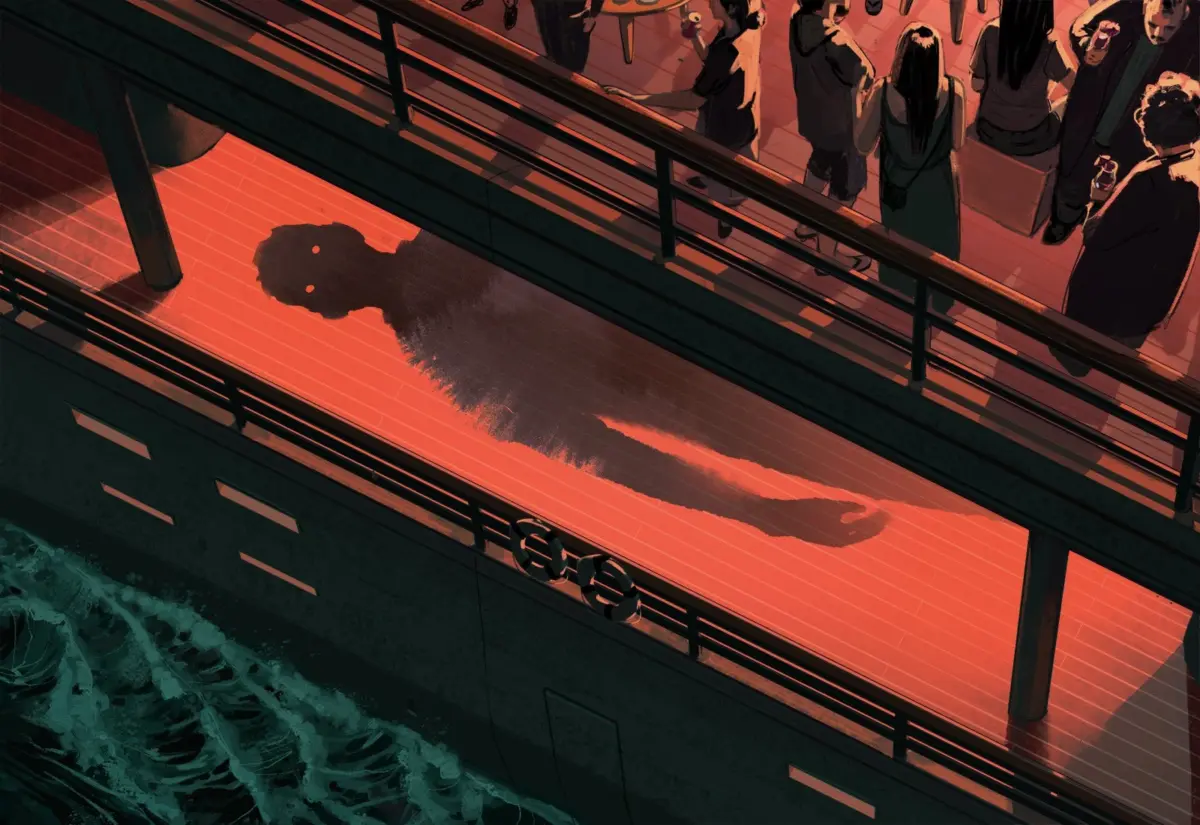
For millions of vacationers worldwide, the multi-billion-dollar cruise industry symbolizes the pinnacle of luxury, relaxation, and carefree escape. Megaships operated by corporate giants such as Carnival Corporation, Royal Caribbean, Disney Cruise Line, and Norwegian Cruise Line serve as floating cities complete with upscale restaurants, sprawling spas, waterparks, and theaters. However beneath this polished veneer of paradise lies a deeply troubling, systemic crisis: sexual assault is the most prevalent reported crime on cruise ships, according to the Federal Bureau of Investigation (FBI).
Despite generating record revenues—with Carnival Corporation alone pulling in nearly $19 billion in a single pre-pandemic fiscal year—major cruise operators have systematically resisted calls to meaningfully upgrade onboard security and safety protocols. Confidential internal corporate depositions, hundreds of pages of civil court records, and extensive interviews with victims, maritime attorneys, former security officials, and safety advocates reveal an industry that frequently prioritizes corporate liability management and shareholder profits over passenger protection.
Victims face a labyrinth of legal hurdles, including shortened one-year statutes of limitations, mandatory cross-country litigation venues dictated by cruise lines, and a severe lack of independent, on-site law enforcement. Meanwhile, internal whistleblowers and security directors have repeatedly testified that executive leadership routinely rejected requests for expanded closed-circuit television (CCTV) coverage and increased security personnel, citing budget constraints and a lack of cabin space. As the post-pandemic cruise sector surges back with aggressive marketing campaigns, reported sex crimes have climbed near historic highs, exposing a regulatory vacuum that leaves passengers vulnerable at sea.
Detailed Chronology & Case Studies
The Carnival Miracle (December 2018)
On the first Saturday of December 2018, the Carnival Miracle cast off from Cozumel, Mexico, making its way across the Caribbean toward Tampa, Florida. Among the 2,000 passengers was a 21-year-old woman experiencing her first-ever cruise, identified in court documents as Jane Doe.
After spending the day tanning, drinking, and socializing, Doe attended a comedy show with her friend and acquaintances. Around midnight, she went running across the ship’s decks. As she ascended a stairwell, a Carnival crew member intercepted her, lured her into a janitor’s closet, and locked the door.
"I remember being scared seeing him holding the lock, so I started asking him where he was from to, like, calm the situation down, and he just kept saying that I looked like his girlfriend," Doe recalled in her deposition. The crew member then raped her.
Upon escaping, Doe reported the assault to guest services. Taken to the ship’s medical facility, she recounted the event to a shipboard doctor, who allegedly apologized and remarked, "Unfortunately, this happens all the time."
When the ship docked in Tampa, FBI agents boarded the vessel. However, during the subsequent litigation, it was revealed that Carnival had failed to preserve crucial evidence, including the rape kit administered on board, which a lawyer stated was simply thrown out. Furthermore, Carnival could not produce surveillance footage or the assailant’s complete employment file. Though the alleged attacker was fired, he was never criminally charged. In July 2022, a Miami federal court jury ordered Carnival Cruise Line to pay Doe over $10.2 million in damages—believed to be the largest sum ever awarded in a sexual assault case against a major cruise line. Carnival has denied wrongdoing and appealed the verdict.
The Disney Wonder and "G." (August 2012)
Systemic failures extend across multiple major lines, including Disney Cruise Line. In August 2012, an 11-year-old girl identified as "G." was molested by a restaurant crew member in an elevator while the ship was docked in Florida, captured entirely on CCTV.
Dawn Taplin, a former Florida law enforcement officer recruited by Disney as a security officer following a public relations disaster involving the 2011 disappearance of crew member Rebecca Coriam, reviewed the elevator footage. Taplin stated that she urged senior officers to contact the FBI immediately while still docked in Port Canaveral. Instead, management waited until the ship reached international waters.
Although local Bahamian police later secured a signed confession from the assailant, he was not arrested or prosecuted; instead, he was repatriated to India. Investigations subsequently revealed that the former employee went on to secure employment with another major operator, Norwegian Cruise Line. G. and her family reported receiving no psychological counseling or meaningful follow-up support from Disney.
The Sky Princess (2021)
In January 2023, a 27-year-old woman identified in court filings as Jane Doe (referred to here as B.U.) filed a civil lawsuit against Princess Cruises, alleging she was raped in 2021 by an art gallery employee aboard the Sky Princess—and subsequently diagnosed with HIV.
B.U. stated she was lured into an art storage room while intoxicated and forcibly assaulted. Trapped on the ship for the remainder of the five-night voyage with her assailant still aboard, she suffered in silence. Months later, persistent physical symptoms led her to the emergency room, where she received her HIV diagnosis in February 2022. She has since suffered from severe PTSD, anxiety, and depression. Carnival Corporation, Princess Cruises’ parent company, filed a motion to dismiss the case on procedural grounds.
Supporting Context & Metrics
The Scale of Onboard Crime
Federal data underscores that sexual assault is an endemic issue within the cruise industry. Since 2015, the FBI has logged 454 reported allegations of sex crimes on cruise vessels. Experts emphasize that this figure represents only a fraction of actual offenses, noting that more than two-thirds of sexual assaults in the United States go unreported to law enforcement, according to the Rape, Abuse & Incest National Network (RAINN).
Following pandemic-related shutdowns, as the cruise industry launched aggressive marketing campaigns to revive tourism, reported assaults rebounded sharply. In 2022, the U.S. Department of Transportation recorded 87 alleged sexual assaults on cruise ships—the second-highest total since federal crime data publication began in 2010. Notably, nearly one in four reported sexual assaults on cruise lines since 2015 have been committed by crew members hired to protect passengers.
Corporate Negligence and Security Deficiencies
Internal corporate depositions unsealed in civil litigation demonstrate that cruise executives have long been warned about severe security vulnerabilities. In a 2015 deposition concerning a rape aboard the Carnival Sensation, Carnival’s then-security director, Michael Panariello, admitted he had been requesting increased security staffing in passenger corridors since 2007, only to be repeatedly rebuffed by senior management citing budget constraints and a lack of cabin space.
Similar testimony from Robert Williams, Carnival’s senior manager of investigations, confirmed that a 2013–2014 internal security assessment found fleets deficient in both the quantity and strategic placement of CCTV cameras, particularly in high-traffic passenger areas. Despite these clear internal warnings, executive leadership declined to implement widespread security enhancements.
Maritime security experts point out that unlike land-based jurisdictions, cruise ships lack an independent, on-scene police force. Onboard security personnel—often minimally trained—frequently manage crime scenes, interview witnesses, and handle digital or physical evidence. Plaintiffs’ attorneys have repeatedly documented instances where vital CCTV footage, keycard logs, and physical evidence were either mishandled, overwritten, or discarded.
Official Statements & Industry Defense
The Cruise Lines International Association (CLIA) maintains that cruise ships represent one of the "safest vacation options in the world," asserting that serious crime rates are significantly lower at sea than in comparable land-based populations. Citing a 2019 study by Northeastern University criminology professor James Alan Fox, CLIA argues that the risk of sexual assault is exceedingly low due to multiple layers of security and controlled environments.
"Cruise lines have a zero-tolerance policy when it comes to criminal behavior, and allegations of major crimes on cruise ships are extremely rare," CLIA stated.
Similarly, Carnival Corporation issued statements emphasizing its commitment to guest health and safety, highlighting that out of nearly 25 million guests who sailed across its brands since 2018, only 145 allegations of assault were reported. The company stresses that its vessels feature dedicated security departments, medical facilities, and regular training drills conducted alongside FBI special agents.
However, victim advocates argue that these statistical comparisons are misleading. Jamie Barnett, president of the advocacy group International Cruise Victims—whose daughter died of a drug overdose on a Carnival cruise—argues that major cruise lines find it "much more profitable and financially beneficial to just settle each claim or lawsuit on a case-by-case basis" rather than investing heavily in structural security overhauls.
Future Outlook & Legislative Reform
Meaningful regulatory change at the federal level has proven exceptionally difficult to secure. The Cruise Vessel Security and Safety Act of 2010 remains the primary piece of federal legislation governing cruise safety, requiring lines to report major crimes to the FBI.
For over a decade, U.S. Senator Richard Blumenthal (D-CT) has championed the Cruise Passenger Protection Act. The proposed legislation seeks to:
- Extend the statute of limitations for filing civil lawsuits against cruise lines from one year to three years.
- Mandate stricter security staffing requirements and the installation of comprehensive surveillance systems.
- Establish a dedicated federal hotline for reporting crimes at sea.
- Require cruise operators to notify the FBI within four hours of an alleged incident and prevent vessels from departing U.S. ports before law enforcement can board and investigate.
While comprehensive passage of the bill has stalled due to intensive lobbying by the cruise industry—which Open Secrets reports has spent over $21.6 million lobbying Congress over a five-year period—incremental provisions have been successfully attached to broader defense legislation. These include mandates requiring qualified onboard physicians and the installation of additional security cameras with mandatory 20-day retention periods.
As the cruise sector continues its post-pandemic expansion, legal experts and safety advocates maintain that voluntary corporate measures are insufficient. Until federal lawmakers enact binding, comprehensive oversight that strips cruise corporations of liability shields and mandates independent law enforcement integration at sea, passengers stepping aboard luxury liners will continue to navigate a perilous legal and physical vacuum.