Executive Overview
The video game industry often finds itself locked in a perpetual cycle of technological escalation. As hardware capabilities scale upward with each console generation, developers face mounting pressures to deliver photorealistic graphics, seamless physics engines, and cinematic presentations. Yet, this relentless pursuit of visual fidelity frequently comes at a steep cost: streamlined mechanical depth, restricted player agency, and a homogenization of design systems.
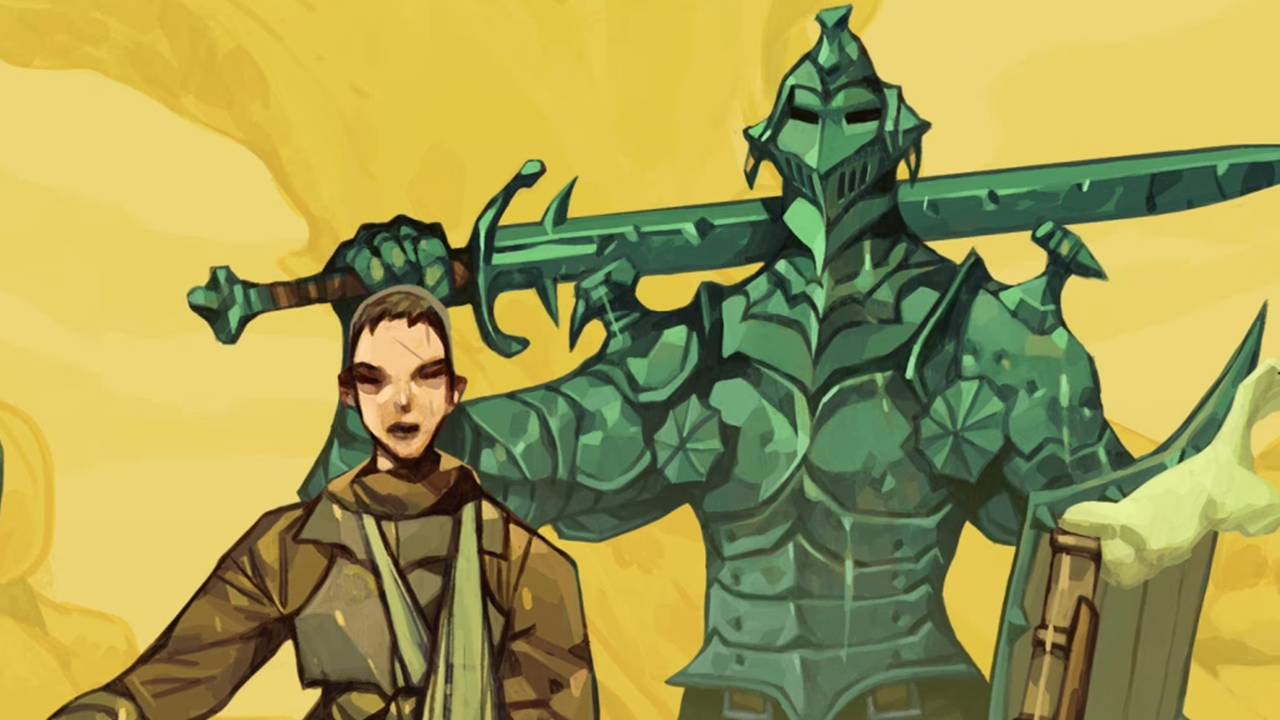
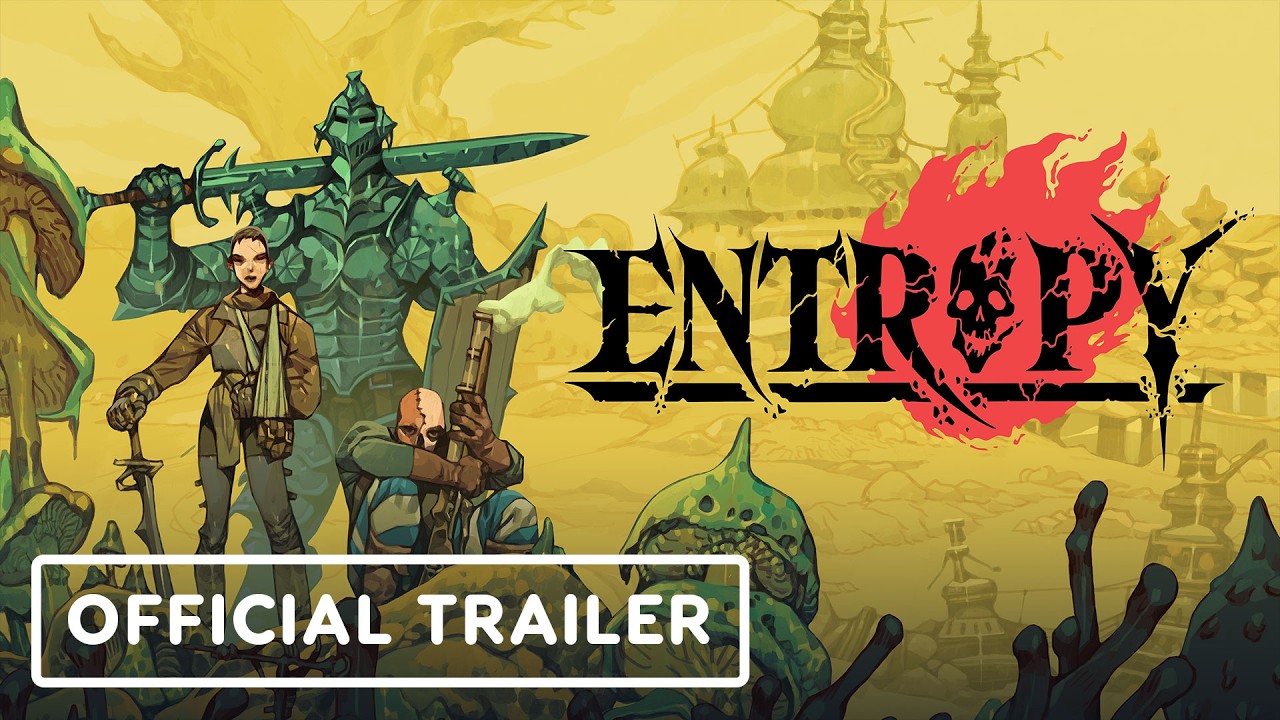
Enter Entropy, the latest early access role-playing game from publisher DreadXP and developer Lovely Hellplace—led by creative mind James Wragg. Following the critical and commercial success of Dread Delusion—a first-person RPG that served as a striking homage to retro classics like King’s Field and The Elder Scrolls—the studio is charting a radically different course. Entropy takes clear cues from classic Japanese Role-Playing Games (JRPGs) such as Final Fantasy 10 and Lost Odyssey, while infusing its core design with the gritty, reactive, and systemic storytelling of seminal PC titles like the original Fallout.
Far from neatly fitting into a single genre box, Entropy melds a large tactical party size with permadeath, granular locational damage, and a gritty post-apocalyptic aesthetic. Behind this eclectic mix lies a deliberate design philosophy: looking backward to tabletop traditions to solve modern video game limitations. By stripping away the requirement for hyper-realistic asset pipelines, Lovely Hellplace has unlocked a level of mechanical freedom, narrative reactivity, and player customizability rarely seen in contemporary digital RPGs.
Available now in early access on Steam alongside a substantial free demo, Entropy is shaping up to be a profound study in how developers can harness retro aesthetics to amplify deep, systemic role-playing mechanics.
Detailed Chronology: From Retro Homages to Post-Apocalyptic Horizons
The developmental journey of Entropy cannot be separated from the legacy of Lovely Hellplace’s previous breakout hit, Dread Delusion. Released to widespread acclaim, Dread Delusion established the studio’s signature aesthetic: a low-fi, textured, retro-3D visual language that immediately invoked nostalgia for the late-1990s and early-2000s era of PC and console role-playing games. However, whereas Dread Delusion served as James Wragg’s love letter to open-world, first-person exploration adventures in the vein of Bethesda’s early catalog, Entropy represents a distinct pivot toward structural tactical combat and party management.
The Shift from First-Person Exploration to Tactical Depth
In the early conceptual phases of Entropy, Wragg and his team wrestled with how to evolve their design philosophy without losing the distinct indie charm that defined their debut. While Dread Delusion focused on immersive, solitary wandering across floating islands and decayed surreal landscapes, Entropy demanded a tighter, more rigid tactical framework.
The developers turned their attention toward traditional JRPG tropes—specifically the deliberate pacing, turn-based clarity, and emotional resonance of games like Final Fantasy 10 and Lost Odyssey. Yet, wrapping a modern gaming experience purely in JRPG conventions felt incomplete to a developer raised on the systemic freedom of classic PC titles. Consequently, the team injected elements of squad management, high-stakes tactical risk, and a bleak, unforgiving post-apocalyptic narrative tone reminiscent of 1997’s Fallout.
The Early Access Launch and Iterative Development
As Entropy entered its early access phase on Steam, supported by an expansive public demo, players were immediately introduced to a world defined by desolation and stark tonal contrasts. The opening sequences deliberately subvert expectations, contrasting moments of jarring levity—such as a theatrical play staged in the ashes of society—with the grim reality of a collapsing world.
Through the early access roadmap, Lovely Hellplace has committed to an iterative development style, utilizing player feedback to refine party balancing, polish user interfaces, and expand the web of side quests. According to recent developer commentary, the game’s narrative scope has expanded dramatically during development, with side stories ballooning the script far beyond initial projections because the team simply found themselves unable to resist crafting rich, interwoven micro-narratives for every corner of their wasteland.
Supporting Context & Metrics: The Anatomy of Entropy
To understand what makes Entropy tick under the hood, one must examine the specific mechanical pillars that set it apart from contemporary industry standards. The game synthesizes influences from several distinct tactical and role-playing subgenres, resulting in a dense web of interlocking systems.
| Feature Category | Implementation in Entropy | Primary Inspirations |
|---|---|---|
| Combat & Party System | Large active party size with grid/turn-based tactical positioning and permanent character death. | Final Fantasy 10, Lost Odyssey, Mordheim |
| Damage Modeling | Granular locational damage allowing targeted strikes to limbs, weapons, or enemy weak points for specific debuffs. | Fallout 1 (Called Shots / pre-VATS system) |
| World & Narrative | Bleak, desolate post-apocalyptic setting featuring high narrative reactivity and branching dialogue choices. | Fallout 1, Classic Western CRPGs |
| Visual & Asset Pipeline | Low-fidelity, stylized 3D graphics that bypass heavy animation costs to maximize mechanical variety. | Retro indie conventions, Tabletop RPG rulebooks |
The Mechanics of Combat: Locational Damage and Tactical Risk
One of Entropy’s standout systemic features is its locational damage model. Modern CRPGs and action games often abstract combat into straightforward health-pool attrition. However, Entropy reaches back to the original Fallout—specifically its "called shots" mechanic that predated the cinematic VATS system of later sequels.
In Entropy, players can accept an accuracy penalty to target specific enemy zones, limbs, or weak points. This opens up profound tactical avenues during advanced encounters:
- Disarmament: Players can specifically target and disable an enemy wielding a devastating high-tier weapon, effectively neutralizing a major threat before it can strike.
- Weak-Point Exploitation: Heavily mutated adversaries often feature grotesque, bulbous weak points—reminiscent of classic survival-horror design—which can be focused down for massive damage multiplication or crippling status afflictions.
- Permadeath and Party Management: Because character death carries permanent consequences, every combat encounter transforms from a routine puzzle into a high-stakes calculation of risk versus reward.
Escaping the Asset Pipeline Trap
Perhaps the most critical structural metric governing Entropy’s development is its relationship between visual fidelity and mechanical depth. High-fidelity AAA role-playing games are constrained by the sheer cost of modern asset creation. Every unique weapon, status effect, and animation requires extensive modeling, rigging, motion capture, and collision programming, severely limiting how many distinct gameplay variables a developer can afford to implement.
By embracing a low-fi, stylized aesthetic, Lovely Hellplace sidestepped this bottleneck entirely. Because the game does not rely on hyper-realistic animations for every single weapon swing or status transition, the development team gained the creative freedom to flood the game with an astonishing variety of unique items, custom rules, and idiosyncratic status conditions.
Official Statements & Developer Insights
In recent discussions with lead developer James Wragg, the core philosophy driving Entropy came into sharp focus. Wragg was candid about how his creative inspirations shifted between projects, drawing a direct line from his previous work to his current design framework.
"In many ways, if Dread Delusion was my take on The Elder Scrolls, then this is my take on Fallout," Wragg explained during an interview. "The original Fallout, Fallout 1, is one of my favorite games, and we’re riffing on that quite a lot with Entropy."
This reverence for foundational game design extends beyond computer RPGs into the realm of tabletop gaming. Wragg highlighted the profound influence of Mordheim, the classic 1999 small-unit tactical tabletop game published by Games Workshop, on how he views character progression and customizability.
"What I love about tabletop is, it’s just pen and paper," Wragg noted. "You can house rule stuff as much as you want, so we’ve got a bunch of custom rules in our campaign. It really encourages creativity because you make your little guys and you customize them based on how you load out your character."
Wragg expanded on how tabletop design philosophy provides limitless inspiration for digital developers who are willing to look past modern graphical expectations:
"Something like Mordheim has so much character customization—almost beyond most video games—because it’s tabletop. The developers never actually had to code in the graphics of swinging all these different weapons, and I think that freedom I found really inspiring."
This realization sparked a full-circle intellectual journey for the developer. When he first began tinkering with hobby-level game development—work that would eventually materialize as Dread Delusion—he dove deep into the history of tabletop gaming to understand the DNA of digital role-playing games.
"I just found myself being like, why? Why do RPGs do these things?" Wragg recalled. "If you’re designing an RPG, you have to go back to the source on tabletop games because so many of the systems that exist within modern AAA RPGs, they originated with Dungeons & Dragons and all those other spin-off games and war games."
"It just comes from the core of wanting to understand how games tick. It just feels natural to go back to the roots of tabletop role playing games if you want to work on a role playing game, because they really haven’t deviated all that much from them, even at this point."
Future Outlook: What Lies Ahead for Entropy
As Entropy continues its early access run on Steam, the trajectory for Lovely Hellplace points toward an ambitious expansion of both its mechanical systems and its narrative scope.
Community-Driven Iteration
Early access serves as a crucial testing ground for a game as systemic as Entropy. Balancing a tactical party-based RPG featuring permadeath and complex locational damage requires continuous tuning based on thousands of player runs. The existence of the free demo has allowed a broad audience to test the waters without financial commitment, resulting in an active community feedback loop on Steam forums and social channels.
Narrative Bloat and Content Expansion
As noted by Wragg, the team’s unbridled passion for crafting side stories has caused the game’s overall word count and quest density to balloon significantly. While this presents logistical challenges for pacing and localization, it ensures that the final release will offer an exceptionally rich world ripe for exploration. Players seeking sprawling, reactive narratives where minor choices ripple across the post-apocalyptic landscape will find plenty to sink their teeth into as updates roll out.
The Broader Impact on Indie RPGs
Entropy stands as a testament to the viability of counter-cultural game design in the modern indie space. By rejecting the siren song of hyper-realism and instead leaning into the abstract, rules-heavy freedom of tabletop gaming and retro PC classics, Lovely Hellplace is carving out a distinct niche. If Entropy successfully fulfills its early access promise, it may well inspire a broader wave of developers to prioritize systemic depth, player agency, and mechanical imagination over sheer graphical polygon counts.
For fans of tactical depth, unyielding post-apocalyptic atmospheres, and uncompromising RPG design, Entropy is easily one of the most compelling projects to watch in the current landscape.