Executive Overview
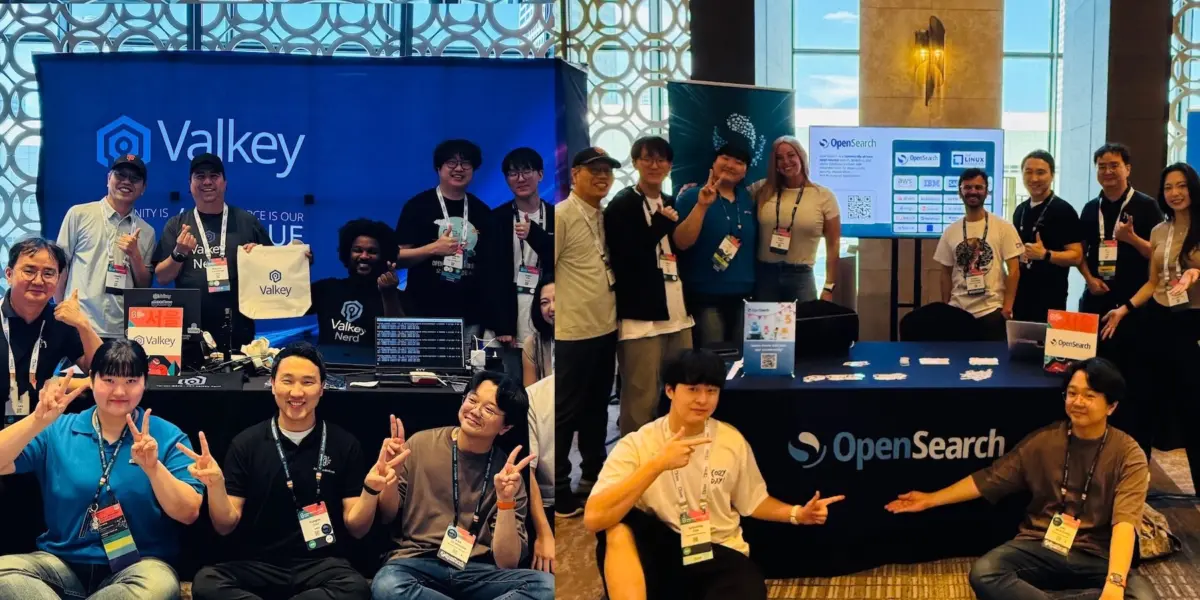
In the fast-evolving landscape of enterprise cloud computing, the intersection of open-source innovation and managed hyperscale infrastructure has never been more critical. Last week, AWS contributors took center stage at the Open Source Summit Korea 2026 and the adjacent MCP DevSummit Seoul 2026, reinforcing Amazon’s deep-seated commitment to community-driven Linux Foundation projects. Over four dynamic days, engineers, community leaders, and enterprise developers converged to share insights, collaborate on architectural challenges, and push the boundaries of modern search, observability, and high-performance data caching.
At the heart of the AWS presence in Seoul were two powerhouse open-source technologies: OpenSearch and Valkey. Both projects have recently achieved significant major milestones, introducing breakthrough capabilities that directly address the demands of modern cloud-native architectures—ranging from hyperscale vector search for artificial intelligence applications to multi-tenant memory optimization and throughput acceleration.
This article explores the technical advancements unveiled at Open Source Summit Korea 2026, details the recent ecosystem upgrades introduced by OpenSearch 3.7 and Valkey 9.1, and examines how AWS is seamlessly integrating these innovations into managed services like Amazon OpenSearch Service and Amazon ElastiCache. Furthermore, we analyze the broader strategic implications of community-driven engineering for enterprise developers navigating the complexities of unstructured data, observability, and real-time workloads.
Detailed Chronology: A Week of Collaboration in Seoul
The four-day gathering in Seoul served as a vital nexus for the Asia-Pacific (APAC) open-source community, bringing together diverse contributors who form the backbone of the OpenSearch and Valkey ecosystems.
Day 1–2: Kickoff and Community-Driven Engagement
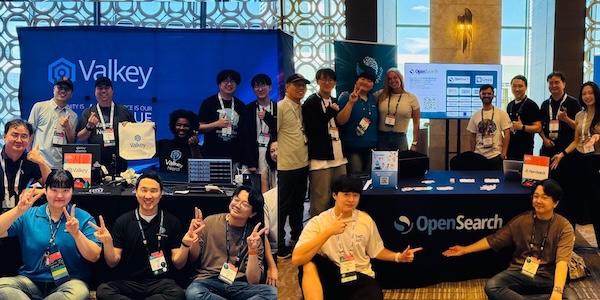
The summit commenced with keynote addresses and technical sessions focusing on the resilience, governance, and scalability of Linux Foundation projects. AWS engineering teams, alongside prominent figures from the regional developer community, established a central hub at the exhibition floor.
A standout feature of the engagement was the active participation of Korean OpenSearch community leaders, who volunteered to staff the project booths, mentor first-time contributors, and guide enterprises looking to transition to open-source observability stacks. These leaders facilitated peer-to-peer technical deep dives, unpacking architectural best practices for migrating legacy log-management systems into unified OpenSearch clusters.
Day 3: The Seoul User Group Meetup
Mid-week proceedings extended beyond the formal conference walls into the local developer ecosystem. The OpenSearch Project Seoul User Group Meetup drew an enthusiastic crowd of practitioners, data architects, and site reliability engineers (SREs).
The meetup provided a collaborative forum for local engineers to present real-world case studies. Discussions centered on overcoming latency bottlenecks in multi-region deployments, fine-tuning retrieval-augmented generation (RAG) pipelines using OpenSearch vector capabilities, and establishing rigorous Service Level Objective (SLO) tracking across complex microservices architectures. By fostering these grassroots connections, AWS and the broader Linux Foundation ecosystem continue to build resilient support networks that empower local developers to solve global-scale problems.
Day 4: Forward-Looking Panels and Future Roadmaps
The final day of the summit shifted focus toward the future. Panel discussions explored the intersection of open-source data stores and generative AI tooling, particularly highlighting how decentralized developer communities can rapidly prototype and deploy integrations that keep pace with proprietary software advancements. The event concluded with calls to action for code contributions, documentation enhancements, and upcoming regional meetups scheduled throughout the remainder of 2026.
Supporting Context & Technical Metrics: OpenSearch 3.7 and Valkey 9.1
To fully understand the excitement surrounding the AWS booth at Open Source Summit Korea 2026, one must examine the profound technical leaps made by the core open-source projects earlier this year. Both OpenSearch and Valkey have delivered generational updates that redefine performance baselines for enterprise workloads.
OpenSearch 3.7: Unified Observability and Hyperscale Vector Search
Released on June 9, 2026, OpenSearch 3.7 represents a monumental step forward for enterprise-grade search and observability suites. As organizations grapple with exponentially growing volumes of unstructured data, the challenge of maintaining operational visibility across logs, metrics, and traces has intensified.
OpenSearch 3.7 introduces a revolutionary unified interface that allows practitioners to query data streams, trigger real-time alerts, and track Service Level Objectives (SLOs) across logs, traces, and metrics from a single pane of glass. This eliminates the operational friction traditionally associated with toggling between siloed monitoring tools.
Crucially for the artificial intelligence and machine learning community, OpenSearch 3.7 dramatically accelerates vector search performance. Through aggressive algorithmic optimizations and underlying hardware acceleration, the platform delivers vector retrieval speeds up to 5.5x faster than previous iterations. This performance enhancement is a game-changer for enterprises deploying semantic search, recommendation engines, and complex RAG workflows backed by large language models (LLMs).
Integrating OpenSearch 3.7 on AWS
Capitalizing on these open-source advancements, AWS rolled out support for OpenSearch version 3.7 on Amazon OpenSearch Service starting July 30, 2026. Fully managed Amazon OpenSearch Service domains can now harness the 5.5x vector search acceleration out of the box, alongside enhanced search relevance tuning and the advanced diagnostic capabilities of Query Insights. This integration allows organizations to deploy cutting-edge AI search applications without the overhead of managing underlying infrastructure scaling, cluster resizing, or index sharding.
+-------------------------------------------------------------------+
|               Amazon OpenSearch Service (v3.7)                    |
|                                                                   |
|  +-----------------------+  +----------------------------------+  |
|  | Unified Observability |  |     Hyperscale Vector Search     |  |
|  |  (Logs, Metrics,      |  |   (Up to 5.5x Faster Retrieval   |  |
|  |   Traces & SLOs)      |  |    for AI & RAG Workloads)       |  |
|  +-----------------------+  +----------------------------------+  |
|                                                                   |
|  +-------------------------------------------------------------+  |
|  |                Enhanced Query Insights & Tuning             |  |
|  +-------------------------------------------------------------+  |
+-------------------------------------------------------------------+
Valkey 9.1: Redefined Performance and Memory Efficiency
On the high-performance data caching and primary datastore front, Valkey continues its rapid evolution as the premier open-source fork of Redis. Released on May 19, 2026, Valkey 9.1 introduced critical architectural refinements designed to maximize CPU efficiency and minimize memory overhead.
The headline feature of Valkey 9.1 is its redesigned I/O threading model. By re-architecting how network read and write operations are distributed across CPU cores, the project achieved a throughput increase of up to 17% under heavy concurrent workloads. This ensures that latency-sensitive applications—such as real-time bidding engines, high-frequency financial platforms, and large-scale session management stores—can handle massive request spikes with unwavering consistency.
Furthermore, Valkey 9.1 addresses memory footprint optimization head-on. The release incorporates advanced data structure compaction techniques that reduce memory usage for strings under 128 bytes by up to 20%. In dense multi-tenant caching deployments where millions of small keys are stored, this reduction translates directly into substantial infrastructure cost savings and higher cache hit ratios per node.
Integrating Valkey 9.1 on AWS
Bridging this upstream innovation to enterprise cloud consumers, AWS announced on June 23, 2026, that Valkey 9.1 is generally available in Amazon ElastiCache for node-based clusters. Managed ElastiCache deployments running Valkey 9.1 deliver the promised 17% throughput boost and 20% string memory efficiency, while layering on enterprise-grade security features such as enhanced access control lists (ACLs) and encryption in transit and at rest. This makes it an ideal backend for multi-tenant cloud-native applications requiring strict workload isolation and sub-millisecond response times.

Official Perspectives and Community Impact
The synergy between hyperscale cloud providers and open-source foundations is often a delicate balancing act, but events like Open Source Summit Korea 2026 demonstrate how cooperative engineering yields mutual benefits.
Industry analysts and community leaders at the summit emphasized that the longevity of modern open-source projects depends on healthy ecosystems where commercial backing accelerates R&D without compromising project neutrality. AWS contributors working alongside independent developers on OpenSearch and Valkey exemplify this collaborative model. By feeding upstream performance patches—such as the Valkey I/O threading optimizations and OpenSearch vector indexing improvements—back into the public repositories, AWS ensures that the entire developer community thrives, regardless of whether they deploy on-premises, on competing clouds, or via managed AWS services.
Local Korean community leaders who participated in the user group meetups echoed these sentiments, noting that direct access to core contributors demystifies complex architectural upgrades and accelerates enterprise adoption of cloud-native technologies.
Future Outlook: The Road Ahead for OpenSearch and Valkey
As the technology sector looks toward the remainder of 2026 and beyond, the trajectories of OpenSearch and Valkey point toward deeper convergence with artificial intelligence, edge computing, and ultra-low-latency distributed systems.
Upcoming Milestones
- OpenSearch Roadmap: Future iterations are expected to focus heavily on native neural search enhancements, automated query planning for complex multimodal data, and deeper integration with cloud-native security information and event management (SIEM) frameworks.
- Valkey Roadmap: Ongoing development continues to refine cluster management scalability, explore advanced persistence mechanisms, and further optimize memory fragmentation handling for multi-gigabyte datasets.
Engaging with the Community
For developers, architects, and technical leaders eager to stay at the cutting edge of these developments, engagement opportunities abound. AWS engineering teams will continue hosting and sponsoring upcoming community events, hackathons, and virtual workshops. Practitioners are encouraged to monitor the official OpenSearch Events and Valkey Events portals to connect directly with contributors.
Additionally, builders looking to expand their technical repertoire can explore upcoming in-person and virtual gatherings through the AWS Events Explorer, startup-focused sessions, and regional AWS Community Days. Joining the broader AWS Builder Center provides a collaborative space to share architectural solutions, access developer-centric content, and engage with peers shaping the future of cloud computing.
As open-source projects mature and managed cloud services abstract away undifferentiated heavy lifting, the partnership between communities and hyperscalers will remain the bedrock upon which the next generation of digital infrastructure is built.