In the fast-paced ecosystem of modern software engineering, the friction between frontend deployment platforms and robust cloud infrastructure has historically been a persistent bottleneck. Developers building high-performance web applications, serverless architectures, and artificial intelligence models have long juggled multiple consoles, intricate permission frameworks, and disjointed billing channels.
A major paradigm shift has arrived to alter this status quo. Vercel, the platform of choice for millions of developers building scalable web experiences, has announced native integration with Amazon Web Services (AWS), bringing the industry-standard durability, scalability, and performance of Amazon Simple Storage Service (Amazon S3) directly into the Vercel Marketplace and v0 by Vercel.
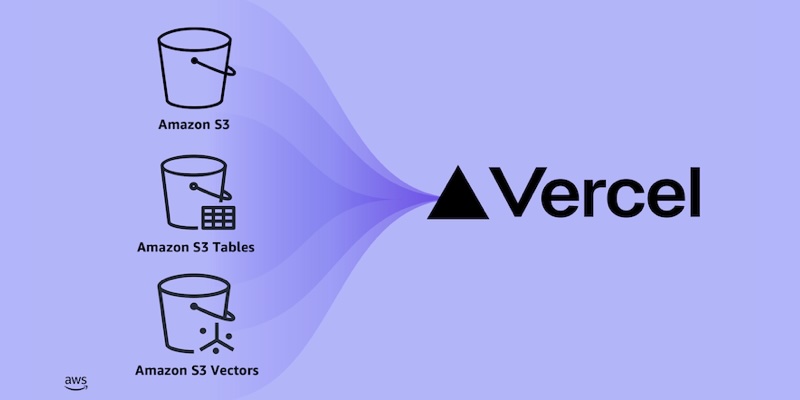
This deep architectural collaboration introduces native support for three distinct, high-demand workloads: everyday object storage, advanced analytics via Amazon S3 Tables, and high-performance vector search through Amazon S3 Vectors. By eliminating the need to manually navigate the AWS Management Console to provision storage buckets, configure AWS Identity and Access Management (IAM) policies, and manually manage long-lived static credentials, the integration transforms how developers handle data infrastructure.
Crucially, the partnership implements a secure, ephemeral authentication model leveraging OpenID Connect (OIDC). At runtime, Vercel functions exchange short-lived tokens via AWS Security Token Service (AWS STS), ensuring that no static API keys or credentials ever rest insecurely in environment variables or application codebases. Combined with pre-existing integrations for Amazon Aurora, Amazon DynamoDB, and Amazon OpenSearch Serverless, developers can now orchestrate an entire enterprise-grade application stack—ranging from relational database tiers to object, vector, and open table storage—all unified under a single AWS account and consolidated billing framework.
Detailed Chronology & Technical Implementation
The rollout of Amazon S3, S3 Tables, and S3 Vectors on Vercel represents months of behind-the-scenes engineering aimed at merging two distinct developer experiences into a cohesive, streamlined workflow.
Provisioning in Seconds
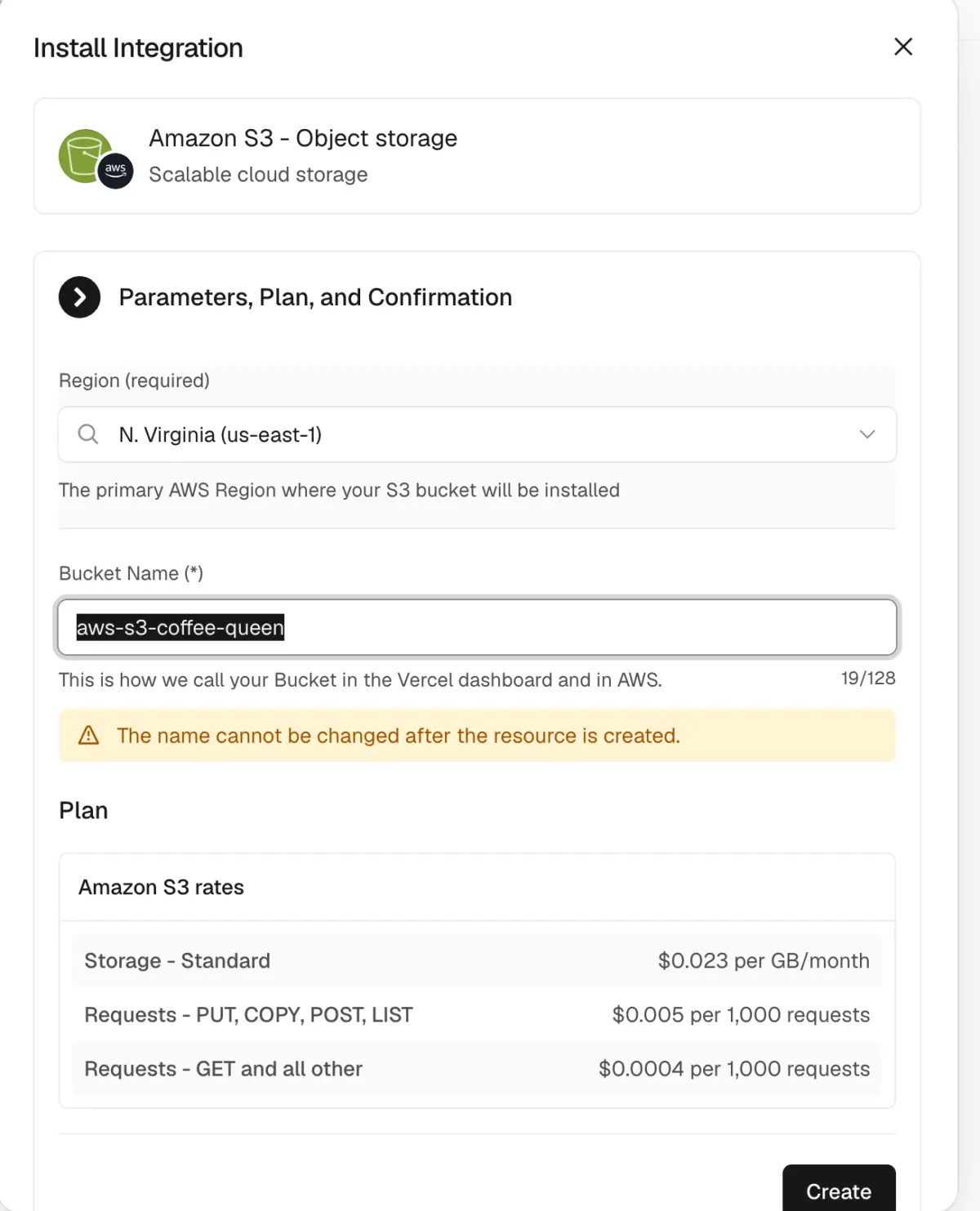
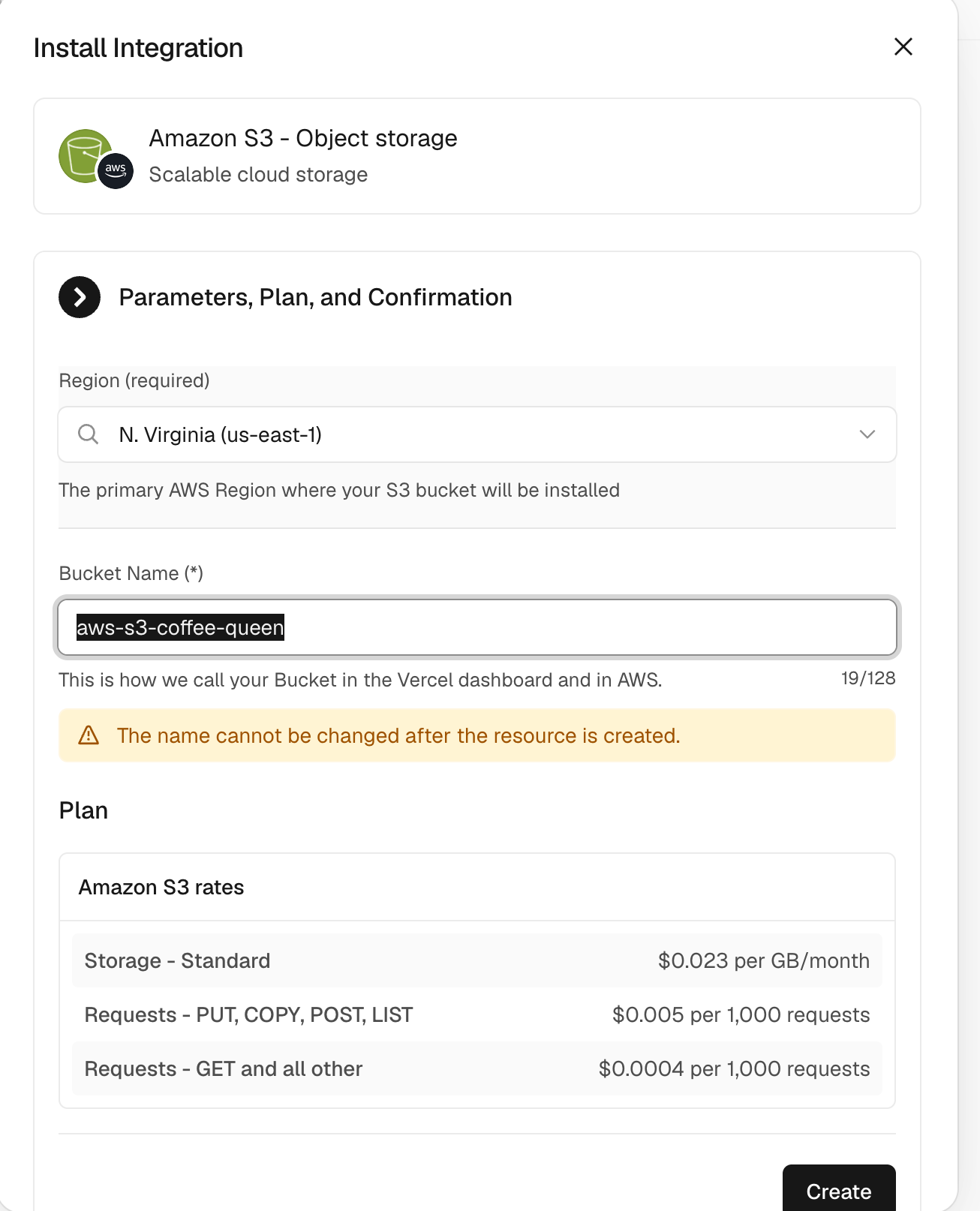
The developer journey begins inside the Vercel dashboard. By navigating to the Storage tab and selecting "Create," users can choose AWS as their provider, designate their preferred S3 bucket type (general purpose, table bucket, or vector bucket), specify an AWS Region, and instantiate the resource in mere seconds.
Once provisioned, linking the resource to a target project is handled seamlessly. Utilizing the Vercel Command Line Interface (CLI), developers run:
vercel link
vercel env pull .env.local
Behind the scenes, the integration securely injects runtime environment variables, including AWS_REGION, AWS_ROLE_ARN, AWS_RESOURCE_ARN, and resource-specific specifiers like S3_BUCKET_NAME. Rather than relying on hardcoded access keys and secret keys, the runtime utilizes the awsCredentialsProvider function from @vercel/functions/oidc. This module handles the automated exchange of OIDC tokens for temporary, scoped AWS STS credentials.
1. Everyday Object Storage with Next.js
For standard media uploads, document hosting, and unstructured data, interacting with an S3 general-purpose bucket is now frictionless. Within a Next.js API route or Server Action, developers can instantiate the official AWS SDK v3 client protected by Vercel’s native OIDC credential provider:
Operations such as listing files (ListObjectsV2Command) or retrieving them (GetObjectCommand) follow the exact same clean, secure initialization pattern.
2. High-Performance Analytics with S3 Tables
Modern data-intensive web applications frequently demand robust analytical querying capabilities directly over large datasets. Amazon S3 Tables fulfill this requirement by providing S3 storage purpose-built for analytics, featuring fully managed Apache Iceberg tables with automated table maintenance, compaction, and optimization.
Developers can now leverage lightweight analytical engines like DuckDB running directly inside a Vercel Function. By attaching the S3 Table bucket via its Amazon Resource Name (ARN), engineers can execute complex aggregate queries at the edge or within serverless functions without provisioning an expensive standalone data warehouse cluster:
import  DuckDBInstance  from "@duckdb/node-api";
import  awsCredentialsProvider  from "@vercel/functions/oidc";

const creds = await awsCredentialsProvider(
  roleArn: process.env.AWS_ROLE_ARN,
)();

const db = await DuckDBInstance.create();
const conn = await db.connect();

await conn.run("INSTALL aws; LOAD aws; INSTALL httpfs; LOAD httpfs; INSTALL iceberg; LOAD iceberg;");

await conn.run(`
  CREATE SECRET s3cred (
    TYPE s3,
    KEY_ID '$creds.accessKeyId',
    SECRET '$creds.secretAccessKey',
    SESSION_TOKEN '$creds.sessionToken',
    REGION '$process.env.AWS_REGION'
  );
`);

await conn.run(`
  ATTACH '$process.env.AWS_RESOURCE_ARN' AS s3tables (
    TYPE iceberg,
    ENDPOINT_TYPE s3_tables
  );
`);

const rows = await (await conn.run(`
  SELECT town_city, AVG(median_price) AS avg_price
  FROM s3tables."$process.env.S3_TABLES_NAMESPACE".town_monthly
  GROUP BY town_city
  ORDER BY avg_price DESC
  LIMIT 10
`)).getRowObjects();
(Note: When implementing DuckDB inside Next.js, adding @duckdb/node-api to serverExternalPackages in next.config.mjs ensures native bindings are compiled and loaded correctly without bundling issues).
3. Native Vector Search with S3 Vectors
As artificial intelligence and Retrieval-Augmented Generation (RAG) architectures dominate software development, managing embeddings efficiently has become critical. Amazon S3 Vectors provide purpose-built, cost-optimized vector storage natively inside S3, eliminating the absolute necessity of spinning up and maintaining an external vector database for semantic search, AI agents, and inference workflows.
While S3 Vectors do not generate embeddings natively, they allow seamless indexing, storage, and similarity querying of pre-computed vectors. Querying an index using the official AWS SDK is straightforward:
Beyond manual dashboard selection, this integration is deeply wired into v0 by Vercel, the company’s generative UI and application-building tool. Developers can communicate their architectural requirements entirely in natural language.
By prompting v0 with directives such as "Build a photo gallery where users upload images using AWS,""Create a support bot that answers questions from my uploaded PDFs," or "Construct an analytics dashboard for my clickstream data," the AI agent automatically provisions the correct S3 resource type, configures the environment variables, establishes project bindings, and outputs production-ready frontend and backend code.
Supporting Context & Metrics
To appreciate the significance of this release, one must examine the operational overhead it eliminates. In traditional enterprise cloud deployments, configuring storage required a multi-step orchestration across disparate teams:
IAM Configuration: Setting up least-privilege roles, trust policies, and cross-account access vectors.
Secret Management: Rotating AWS Access Key IDs and Secret Access Keys, mitigating security leakage risks, and auditing credential usage.
Billing Fragmentation: Reconciling independent invoices or managing complex enterprise discount sharing arrangements across multiple vendor dashboards.
By consolidating these workflows, Vercel and AWS are targeting the friction points that slow down modern shipping cadences. Developers retain absolute ownership of their infrastructure because every S3 resource is provisioned directly within their own AWS account—preserving complete control over compliance, data residency, and native AWS security tooling.
Financial Incentives and Availability
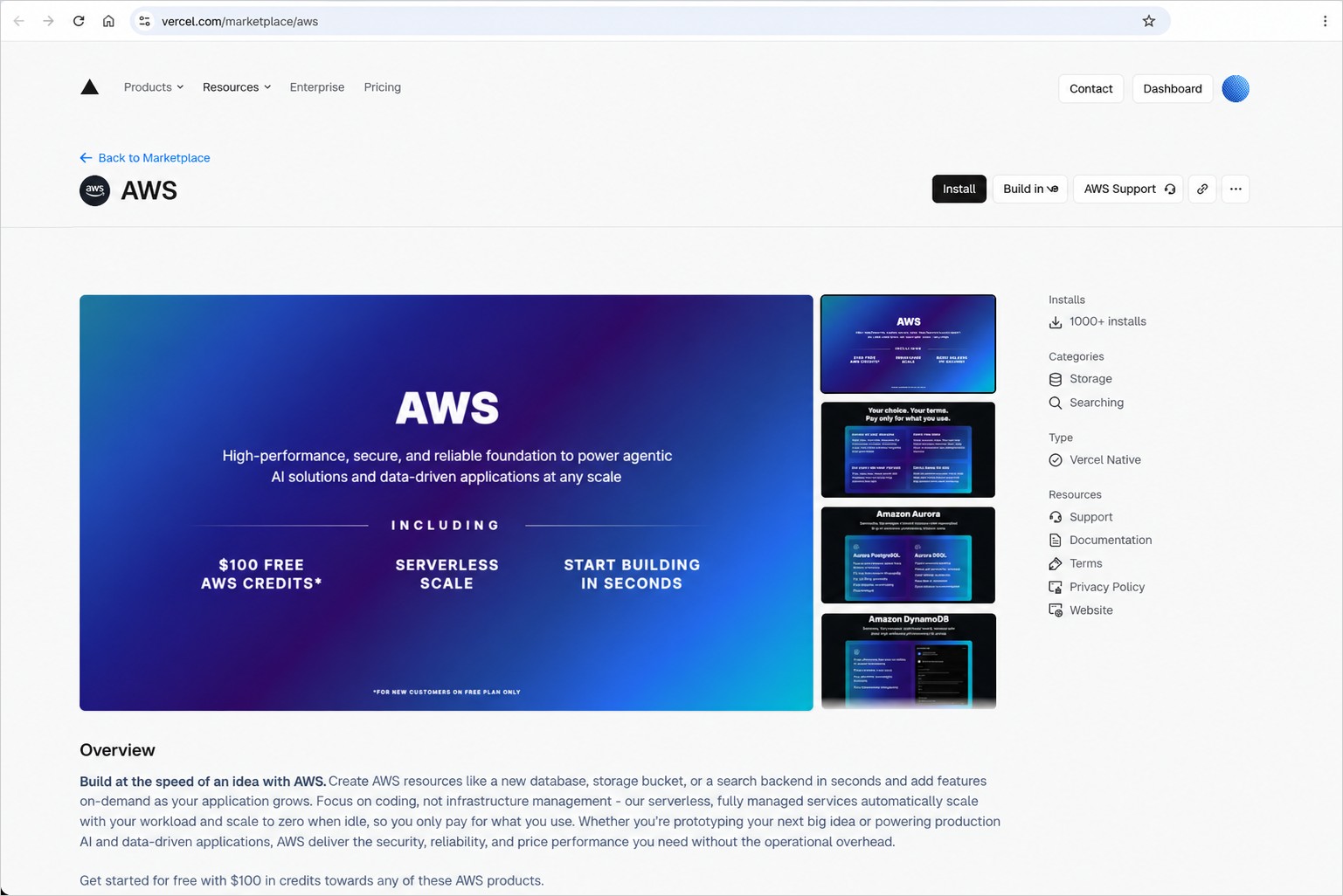
To encourage adoption, the integration itself carries no additional software licensing fee from Vercel; developers pay strictly for standard Amazon S3 storage, request, and data transfer pricing. Furthermore, developers who choose to create a brand-new AWS account directly through the Vercel provisioning workflow receive $100 in AWS credits valid for six months.
For teams with existing cloud infrastructure, Vercel fully supports linking pre-existing AWS accounts, allowing enterprises to leverage their existing commitments and maintain centralized billing while utilizing Vercel’s streamlined provisioning layer exclusively for new buckets created on the platform.
Amazon S3, S3 Tables, and S3 Vectors are generally available starting today across all commercial AWS Regions supported by Vercel.
Official Statements and Industry Implications
The convergence of frontend deployment platforms and hyperscale cloud infrastructure marks a mature phase in the evolution of serverless and cloud-native application development. Industry analysts view the collaboration as a masterclass in reducing cognitive load for developers without sacrificing enterprise-grade security or scalability.
"Storage is the lifeblood of modern web and AI applications," noted lead platform engineers close to the project. "By marrying the unmatched elasticity and reliability of Amazon S3 with Vercel’s developer-first deployment workflow, we are removing the bureaucratic and administrative barriers that traditionally slowed down cloud adoption. Developers can now focus entirely on writing business logic and shipping user experiences, confident that their underlying data layers are secure, performant, and scale automatically."
Security experts have been particularly vocal in praising the architectural choice to rely entirely on OpenID Connect (OIDC) rather than static, long-lived access keys. By enforcing short-lived, dynamically rotated session tokens via AWS STS at runtime, the attack surface for credential theft is reduced to near zero. This aligns perfectly with modern zero-trust security postures demanded by enterprise compliance frameworks.
Furthermore, the ability to effortlessly combine Amazon S3 with AWS databases—such as storing structured file metadata in Amazon Aurora, document text and state in Amazon DynamoDB, vector embeddings in S3 Vectors, and analytical logs in S3 Tables—creates a unified data fabric. Developers no longer need to piece together disparate third-party storage vendors; they can build cohesive, high-performance applications backed by the proven resilience of the AWS cloud.
Future Outlook
As artificial intelligence agents, real-time analytics, and serverless architectures continue to dominate software engineering roadmaps, the boundary between application code and cloud infrastructure will continue to blur. The integration between Vercel and Amazon S3 sets a new benchmark for how platform-as-a-service (PaaS) providers and hyperscalers can collaborate to simplify developer tooling.
Looking ahead, we can anticipate deeper integrations leveraging AI-driven provisioning agents like v0, expanding automated optimization for query workloads, and enhanced telemetry bridging Vercel’s deployment analytics directly with AWS CloudWatch and AWS Cost Explorer. For development teams striving to ship faster, safer, and more scalable applications, the message is unequivocal: the friction-filled era of manual cloud provisioning is coming to a close, replaced by a streamlined, secure, and unified developer experience.
Developers looking to get started can immediately explore the documentation and deploy their first workloads by visiting v0.app or navigating to the AWS integration page on the Vercel Marketplace. To dive deeper into API specifications, troubleshooting guides, and regional availability, engineering teams can also leverage the AWS MCP Server and associated plugins within their preferred AI-assisted development environments.