Executive Overview
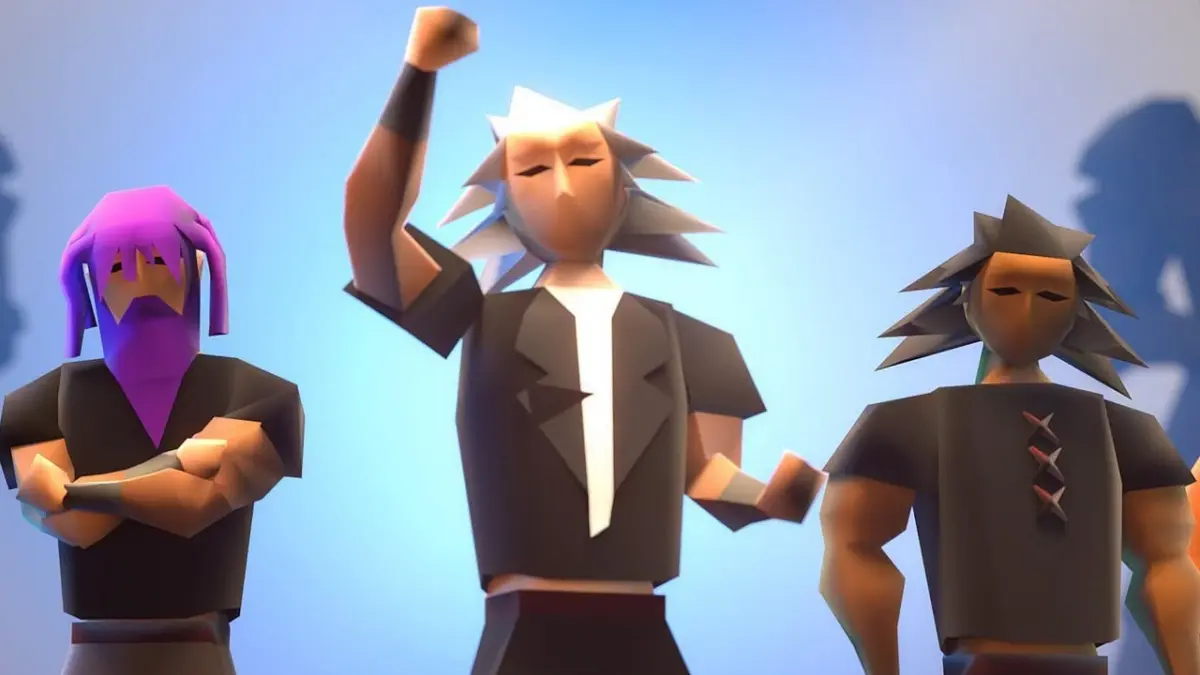
The video game industry is no stranger to unexpected collaborations, but few carry the poetic symmetry of Jagex—the storied British developer behind the legendary Massively Multiplayer Online Role-Playing Game (MMORPG) RuneScape—doubling down on its relationship with solo developer Games by Malcs. In an announcement that has sent ripples of excitement through both the idle gaming community and the legacy RuneScape fandom, Jagex has officially partnered with the indie creator for the upcoming Melvor Idle 2. Billed officially as Melvor Idle 2 – A RuneScape Adventure, this move cements a multi-year working relationship into a marquee, officially branded franchise extension.
For years, classic MMORPGs like RuneScape have worn their mechanics proudly on their sleeves. They are games predicated on the quiet, methodical satisfaction of watching numbers increase—a loop often affectionately (and sometimes derisively) referred to as a "grindfest." Melvor Idle took that core philosophy and stripped it down to its fundamental components, offering players the mechanical depth of RuneScape‘s twenty-plus skills without the physical requirement of active keyboard-and-mouse movement.
Now, with Jagex stepping up to lend its official branding and corporate backing, Melvor Idle 2 aims to capture an even wider audience. Yet, in an era dominated by predatory monetization and aggressive microtransactions, the most startling aspect of the announcement is not the high-profile partnership, but the developer’s steadfast promise: Melvor Idle 2 will feature absolutely zero microtransactions. This deep dive explores the history of this unlikely pairing, the mechanics and expectations surrounding the sequel, and what this means for the broader landscape of idle and MMORPG gaming.
Detailed Chronology: From Indie Passion Project to Official Jagex Partnership
To understand the significance of Melvor Idle 2, one must trace the timeline of how a fan-made, browser-based passion project wormed its way into the corporate halls of one of Britain’s most enduring game studios.
Phase One: The Genesis of a RuneScape-Inspired Dream
Long before Malcs—the pseudonymous solo developer behind Games by Malcs—began crafting Melvor Idle, he was simply a dedicated player of Old School RuneScape. Frustrated by the inability to progress his character while away from the screen due to work or life commitments, Malcs set out to build a game that captured the soul of Gielinor’s skilling systems.
Released initially as an indie project, Melvor Idle leaned heavily into the aesthetics, naming conventions, and mathematical frameworks of RuneScape. Chopping trees, burning logs, fishing sharks, and fighting monsters were all translated from active inputs into passive, time-based progression loops. Players quickly noticed the heavy inspiration, and rather than issuing copyright strikes or legal warnings, the community embraced the project for its ingenuity and nostalgic charm.
Phase Two: The 2019–2021 Publishing Agreement
Recognizing the undeniable synergy between Melvor Idle and its own properties, Jagex made a landmark move in late 2021. The corporate giant officially signed Games by Malcs as a publishing partner, bringing the indie title under the Jagex umbrella for distribution. At the time, however, the game retained its standalone identity without direct RuneScape branding plastered across its storefronts.
When the partnership was first announced on community forums like Reddit, veteran RuneScape players greeted the news with a healthy dose of skepticism. Having weathered decades of controversial monetization updates, microtransaction pushes, and corporate shifts within Jagex, the community worried that the cozy indie gem would be corrupted by corporate greed. Fortunately, those fears proved unfounded; Melvor Idle continued to receive steady, well-received expansions like Throne of the Herald without compromising its core design philosophy.
Phase Three: The Official Branding Shift for Melvor Idle 2
Fast forward to the present day, and the relationship has graduated to an entirely new tier. Jagex and Games by Malcs have formally announced Melvor Idle 2 – A RuneScape Adventure. While the sequel deliberately avoids taking place within the literal borders of Gielinor—opting instead for its own distinct universe—Jagex has bestowed its sacred intellectual property branding upon the title. According to official company statements, the publisher’s renewed support and financial backing are designed to scale the sequel into a much larger, more polished experience while preserving the indie heart that made the original a cult classic.
Supporting Context & Metrics: The Anatomy of an Idle Phenomenon
To appreciate why Jagex is investing heavily in Melvor Idle 2, it is vital to examine the unique market dynamics of the idle and incremental gaming genres, as well as the unique demographic crossover with RuneScape veterans.
| Feature / Metric | The Original Melvor Idle | Melvor Idle 2 (Upcoming) |
|---|---|---|
| Primary Developer | Games by Malcs (Solo) | Games by Malcs & Jagex Support |
| Publisher | Jagex Partners | Jagex |
| Setting | Melvor (Inspired by Gielinor) | Expanded Original Universe |
| Max Skill Level | Varies (Typically 99+) | Increased to 120 |
| Monetization | Premium/Expansion Model | Zero Microtransactions |
| Visual Fidelity | Minimalist / UI-Driven | Overhauled, Modernized Visuals |
The Psychology of the "Number Go Up" Loop
Critics of traditional RPGs often lambest the genre for reducing complex gameplay loops into mindless psychological manipulation: watching an arbitrary integer ascend from 1 to 99. Melvor Idle took this critique and turned it into a badge of honor. By stripping away the requirement for twitch reflexes, complex 3D navigation, or high-end hardware, the game isolated the purest dopamine hit of RPG progression—planning out skill synergies, acquiring rare drops, and optimizing resource generation rates.

The Aging Gamer Demographic
A massive driver behind the success of both RuneScape and Melvor Idle is the demographic shift of the modern gamer. Millions of players who spent their childhoods or teenage years grinding stats in RuneScape during the mid-2000s are now adults with demanding careers, families, and limited free time.
They still crave the deep progression systems and nostalgic dopamine hits of their youth, but they no longer have eight hours a day to spend clicking on rocks in the Lumbridge swamp. Melvor Idle bridges this gap perfectly, allowing aging millennials to "play" an MMORPG-style progression grind passively while sitting at an office desk or sleeping.
Official Statements and Industry Reactions
The announcement of Melvor Idle 2 has generated significant commentary from both the development teams and the gaming community at large.
In its official launch blog, Jagex articulated the reasoning behind the official branding integration:
"Melvor Idle takes a lot of inspiration from RuneScape and you can just feel it… Jagex’s support and branding is intended to help make the game even bigger. While Melvor Idle 2 doesn’t take place in Gielinor, we think a fan-built idle game inspired by our MMOs is more than worthy of the title."
Perhaps the most reassuring statement for returning players concerns the game’s financial model. In an era where mobile and idle games are routinely criticized for aggressive pay-to-win mechanics, energy meters, and real-money currency shops, the announcement blog proudly and unequivocally proclaimed that the sequel will feature "no microtransactions."
Reaction across social media platforms and community hubs has been overwhelmingly positive. On Reddit and Discord, where initial announcements of corporate partnerships are usually met with immediate cynicism, the explicit guarantee of a microtransaction-free experience has defused most anxieties. Fans are instead choosing to focus on the promised mechanical expansions, such as the raised level cap of 120 and completely overhauled user interfaces.
Future Outlook: What Lies Ahead for the Franchise?
As Games by Malcs and Jagex look toward the horizon, Melvor Idle 2 represents a fascinating case study in how legacy IP holders can successfully nurture indie talent without suffocating creative freedom.
By keeping development firmly in the hands of the original creator while providing the financial cushion, marketing muscle, and brand validation of a major studio, Jagex is setting a blueprint for collaborative game development. Melvor Idle 2 does not need to reinvent the wheel; it simply needs to refine the formula that made its predecessor a beloved staple of the idle genre.
Whether players are diving in for the revamped visuals, the push to level 120, or simply the comforting, nostalgic loop of watching their virtual avatars chop digital wood while they sleep, Melvor Idle 2 proves that the grind—when done right—never truly gets old. And should players ever feel entirely lost in this new, non-Gielinor world, they can always rest easy knowing somewhere out there, a fellow adventurer is ready to spam "buying gf" in a global chat window.