Executive Overview
Paris Fashion Week has long served as a theatrical crucible where the boundaries between reality, performance, and costume dissolve. Yet, few creative directors manage to capture the liminal space between the silver screen and the asphalt quite like Julian Klausner. For the Spring/Summer 2027 (SS27) season, the Dries Van Noten creative director turned his discerning eye toward the rich visual tapestry of classic cinema, translating the golden age of Hollywood into a contemporary masterclass on the pure, unfiltered joy of getting dressed.
Where the brand’s AW26 collection looked to the structured, nostalgic iconography of schools and academia, SS27 shifted its focus to the dramatic duality of the actress. “An actress, after a day on set, takes the streets back to reality,” Klausner articulated via Instagram, framing the narrative backbone for a collection deeply rooted in old Hollywood glamour. By exploring the psychological architecture of dressing up, Klausner posed a fundamental question to the fashion zeitgeist: When do we actually feel glamorous?
The resulting collection was not merely a passive homage to the cinematic greats of the past; it was an active interrogation of how we perform our identities through clothing. From clever, tongue-in-cheek custom film posters emblazoned across silk evening wear to deconstructed symbols of mid-century luxury, Klausner balanced grand cinematic scale with the intimacy of playing dress-up in front of a mirror. In doing so, he cemented Dries Van Noten’s continued relevance in a shifting luxury landscape, proving that true style lies in the "undone" moments rather than stifling perfectionism.
Detailed Chronology: From Script to Runway at Paris Fashion Week
The Conceptual Genesis: Translating the Silver Screen
The conceptual journey of Dries Van Noten SS27 began long before the first model stepped foot onto the Paris runway. In the weeks leading up to Paris Fashion Week, Klausner immersed himself in the mechanics of cinematic illusion—not just how costumes function on camera, but how actors transition from the heightened reality of the soundstage to the mundane unpredictability of urban life.
This juxtaposition became the logistical and creative compass for the season. The collection captures the exact moment an actress sheds her professional facade, stepping out of a studio lot and onto the concrete, carrying an undercurrent of dramatic flair into the daylight. It is a study in contrasts: heavy theatricality meeting utilitarian reality, and elevated glamour crashing against casual street style.
The Runway Presentation: A Theatrical Unveiling
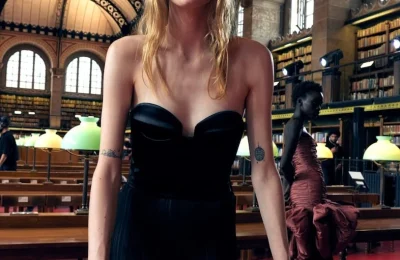
As the lights went down at the Dries Van Noten SS27 show in Paris, the audience was immediately transported into a vintage cinematic universe. The set design echoed the backstage corridors of a 1950s Hollywood studio, complete with warm, amber lighting and mirrored accents that invited viewers to reflect on their own relationship with clothes.
The casting mirrored this duality. Models walked not with the mechanical, icy march typical of contemporary high-fashion shows, but with an energized character-driven presence. They embodied distinct archetypes—the femme fatale returning from a night shoot, the ingenue caught in an unexpected downpour, the aging starlet defiantly clutching onto past glories.
The pacing of the show was deliberate. It built from grounded, everyday tailoring injected with subtle eccentricities into full-blown maximalist displays of texture, print, and silhouette. By the time the finale rolled around, the runway felt less like a commercial presentation of garments and more like the climatic final scene of an avant-garde film noir.
Supporting Context & Metrics: Cinema’s Enduring Romance with the Runway
A Storied Lineup of Cinematic References
While Klausner’s approach for SS27 felt remarkably fresh, the marriage of cinema and high fashion is a storied tradition that has repeatedly yielded some of the most iconic moments in runway history. The medium of film offers designers a ready-made narrative arc, a visual shorthand that instantly communicates mood, class, and era to an audience saturated in pop culture.
- Alexander McQueen (SS96): Long before digital mood boards dominated design studios, Alexander McQueen was mining cult cinema for dark, psychological inspiration. His SS96 show featured models literally stumbling onto a water-slicked catwalk, their disheveled appearances and haunting garments drawing direct inspiration from Tony Scott’s vampire cult-classic The Hunger (1983). The collection blurred the lines between high fashion and horror, establishing McQueen as fashion’s ultimate auteur.
- Gucci under Alessandro Michele (AW15): Few designers have leaned as heavily into cinematic domesticity as Alessandro Michele during his tenure at Gucci. For AW15, Michele famously pulled fabric patterns and color palettes straight from Margot Tenenbaum’s eccentric, book-lined bedroom walls in Wes Anderson’s The Royal Tenenbaums (2001). It was a masterclass in nostalgic maximalism that defined a generation of indie-sleaze aesthetics.
- Paco Rabanne by Julien Dossena (AW19): Julien Dossena’s ode to David Lynch’s psychological labyrinth Mulholland Drive at Paco Rabanne AW19 saw chainmail, cinematic tailoring, and enigmatic silhouettes collide. The collection captured the paranoid, glamorous underbelly of Los Angeles, proving that metal and mesh could convey narrative depth just as effectively as traditional textiles.
The Dries Van Noten Innovation: Inventing the Canon
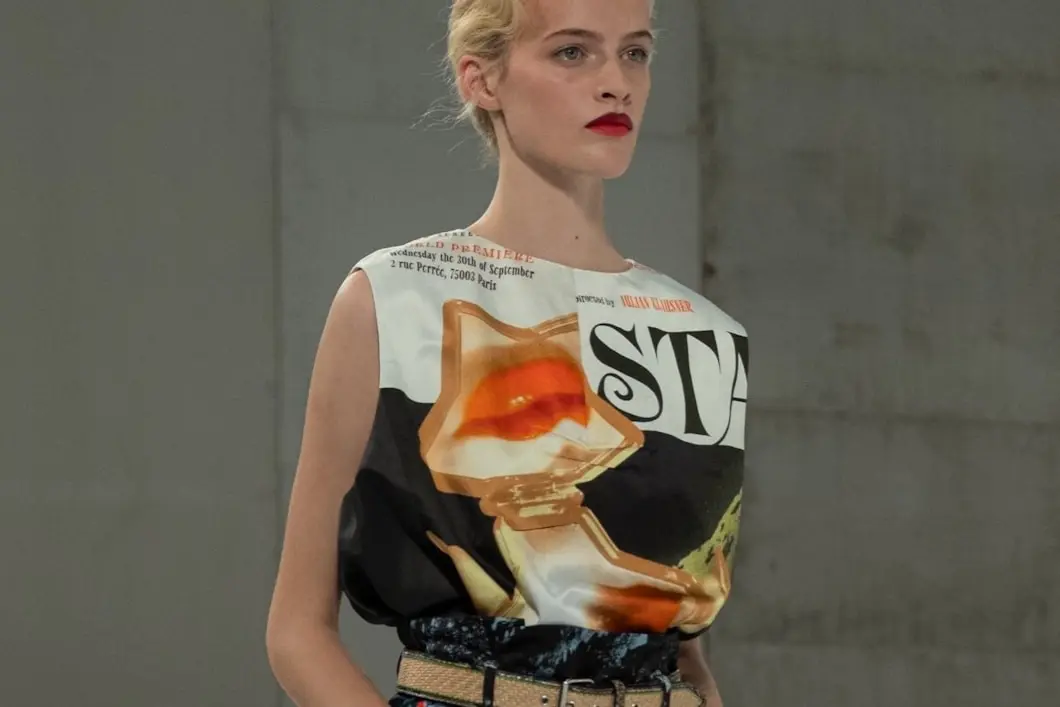
Where previous designers borrowed existing cinematic universes, Julian Klausner took a uniquely self-referential route for Dries Van Noten SS27. Instead of relying on established masterpieces, Klausner invented an entirely fictional slate of golden-age film references, printing them directly onto garments.
Runway looks featured slinky silk dresses, boxy tops, flowing trench coats, and sweeping midi skirts overlaid with colourful, retro-style fake movie posters. Titles such as "Lacquer and Lace," "Ruffle Her Feathers," and "Vipère: Watch out! She’s venomous!" functioned simultaneously as graphic prints and tongue-in-cheek commentary on the tropes of classic Hollywood cinema. This meta-narrative turned every model into a walking movie marquee, cementing the collection’s central thesis: that we are all directors, actors, and audiences in the daily film of our lives.
Official Statements & Design Philosophy
Inside Klausner’s Creative Manifesto
Through a series of detailed Instagram posts and backstage interviews, Julian Klausner laid bare the intellectual framework guiding the Dries Van Noten SS27 collection. His words offer an intimate look at the emotional mechanics of style:
"Playing in front of the mirror, trying things on, getting into a role. A red lip, a dazzling brooch, a cinched belt — so little is needed to spark that feeling."
This minimalist toolkit—red lips, brooches, cinched waists—was juxtaposed against a maximalist canvas of piled-on layers and subversive silhouettes. Klausner emphasized that the magic of glamour does not require an exorbitant budget or red-carpet perfection; rather, it is accessible through the micro-rituals of daily dressing.
Furthermore, Klausner addressed the deliberate subversion of traditional luxury codes within the collection:
"We played with symbols of glamour, universal signs with which anyone is familiar, and played them off, looking for the undone rather than the grand."
This pursuit of the "undone" became the defining aesthetic signature of the SS27 lineup. Leopard print tops were casually tucked beneath austere sheer jackets; crisp striped shirting and razor-sharp blazers were completely blanketed in glittering crystal embellishments; and sensible, bourgeois skirt sets were cut from bright, martini-print fabrics. It was as if classic Hollywood icons had been plucked out of a 1950s Technicolor masterwork and unceremoniously dropped into the pragmatic realities of 2026.
Future Outlook: The Evolution of Narrative Fashion
Redefining Storytelling on the Runway
As the luxury market continues to mature and consumer fatigue sets in against rapid-fire micro-trends, narrative-driven collections like Dries Van Noten SS27 offer a vital antidote. Julian Klausner has proven that a heritage brand can successfully pivot toward conceptual storytelling without losing its commercial footing or historical DNA.
The success of SS27 signals a broader shift in contemporary fashion design. The modern consumer is no longer satisfied with clothes that merely look good on a screen or a hanger; they demand narrative depth, emotional resonance, and a sense of play. By turning garments into fictional film posters and deconstructing universal symbols of glamour, Klausner has set a high benchmark for how runway shows can function as immersive theatrical experiences.
What Lies Ahead for Dries Van Noten
Looking toward the upcoming AW27 and SS28 seasons, the industry will undoubtedly be watching to see how Klausner builds upon the momentum established in Paris. By successfully navigating the delicate transition from the school-yard nostalgia of AW26 to the silver-screen glamour of SS27, Klausner has demonstrated a remarkable range as a creative director.
The challenge ahead lies in sustaining this level of intellectual rigor while expanding the brand’s global footprint. If SS27 is any indication, however, Klausner’s cinematic lens will continue to find beauty in unexpected places—transforming the mundane rituals of everyday life into blockbuster moments of high fashion.