Executive Overview
In the fast-paced ecosystem of social media trends, few phenomena capture the public’s collective self-obsession quite like a viral personality or preference assessment. In November 2026, the internet found its latest psychological mirror in the "My Type Quiz" (also known as the "My Type Test" or "Your Type Test"). Hosted on the minimalist domain mytype.fyi, this free online face-preference application quickly graduated from a quiet beta test into an absolute powerhouse of viral engagement on X (formerly Twitter).
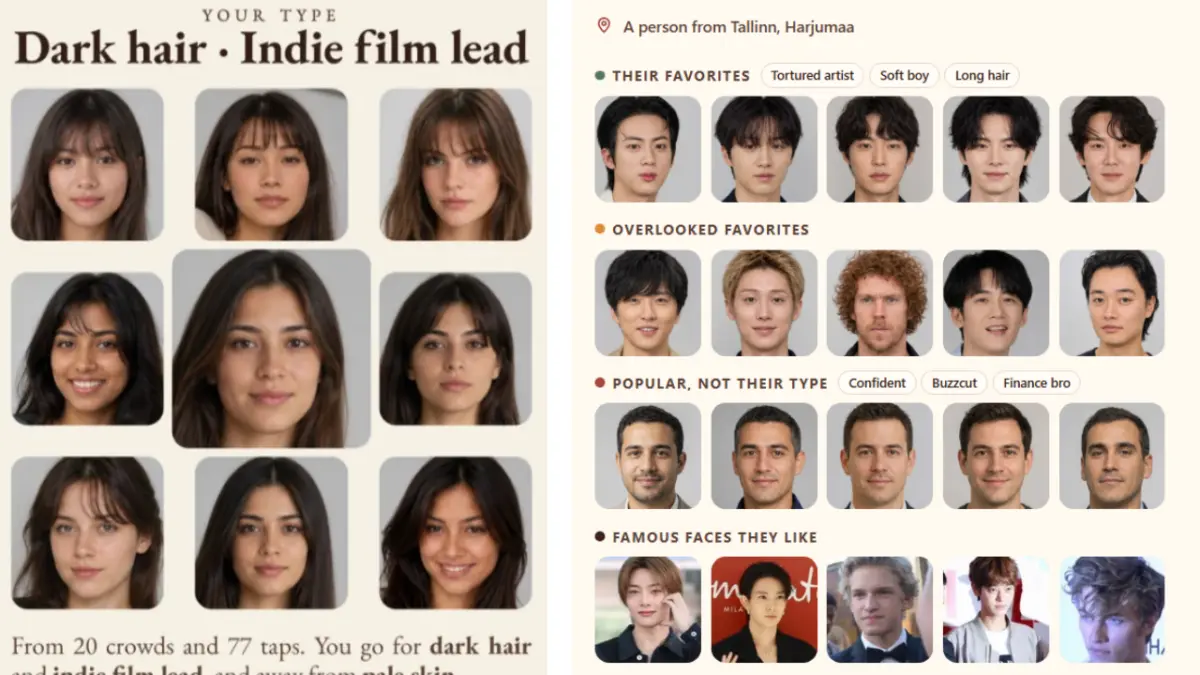
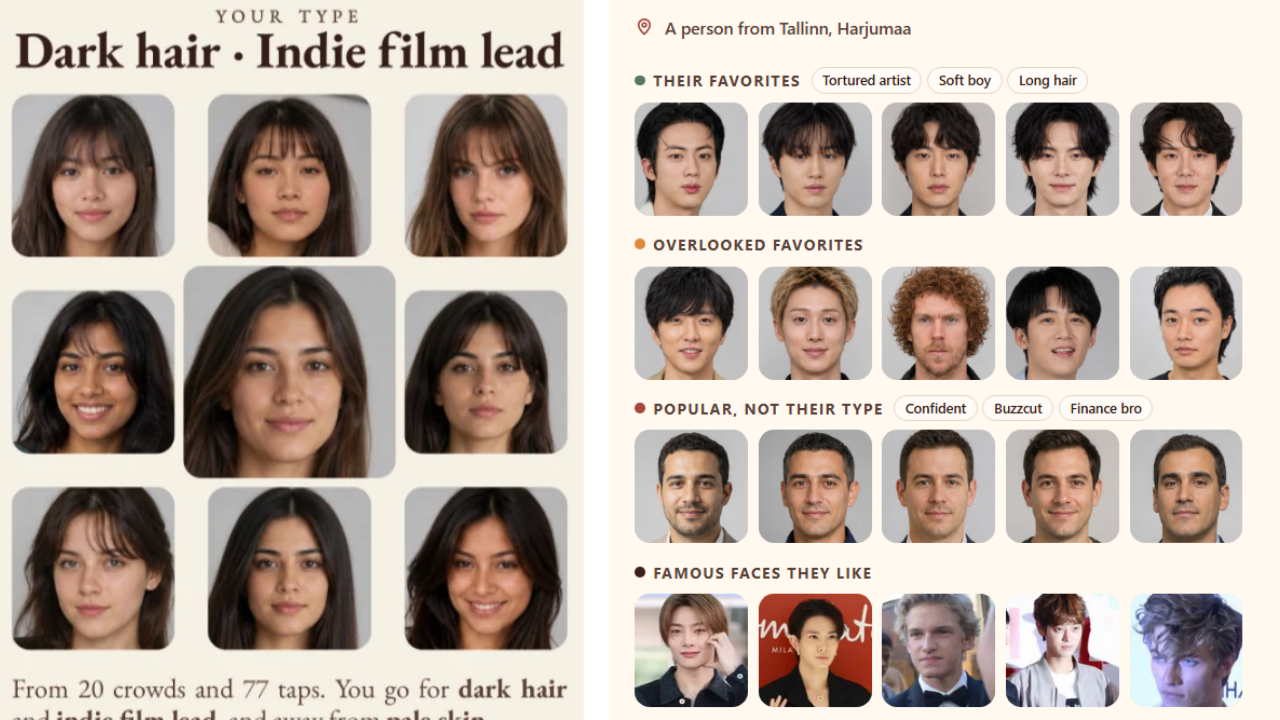
At its core, the quiz leverages a gamified, data-driven approach to human attraction. By presenting users with rapid-fire "crowds" of 12 AI-generated and user-submitted faces, the platform records thousands of micro-decisions—taps, rejections, and hesitations—to synthesize a comprehensive, highly granular report of an individual’s subconscious aesthetic biases.
However, what began as a harmless exercise in digital introspection rapidly devolved into cultural warfare. As prominent figures and everyday users alike broadcasted their hyper-specific algorithmic archetypes—ranging from "pageant queens" and "soft boys" to polarizing classifications of youthfulness and ethnicity—the platform transformed into a lightning rod for intense social critique. Accusations of algorithmic bias, hypergamy, and uncomfortable sociological revelations turned the trend into what one viral poster memorably dubbed "9/11 for women."
This investigative report explores the origins, mechanical inner workings, rapid escalation, and fierce cultural backlash surrounding the My Type Quiz, examining how a simple preference test held up an uncomfortable mirror to modern digital dating culture.
Detailed Chronology: From Quiet Beta to Global Phenomenon
Genesis and the Summer of 2026
According to ICANN registration records, the domain mytype.fyi was officially secured on July 21st, 2026. Built by developers aiming to map human aesthetic preferences using modern computational tools, the site spent late summer in a closed or limited beta phase. Early testers described a functional, albeit quiet, platform where users could preview the mechanics of choosing faces from randomized grids.
Although the site was technically accessible in late October 2026, its creators deliberately paced the formal rollout. Early users who stumbled upon the beta noted its distinct mechanics: participants select whether they want to evaluate men or women, and are then thrust into a continuous loop of selection. Each crowd presents 12 faces—a dynamic mixture of synthetic, artificial intelligence-generated portraits and real user-submitted adult photographs. Selecting a face immediately replaces it, creating a seamless, hypnotic testing loop. After roughly 20 rounds (translating to 10 to 15 minutes of continuous sorting), the engine compiles enough data to generate a personalized report, though users are permitted to push through up to 50 crowds for hyper-refined metrics.
The Spark: Razib Khan and the Virality Tipping Point
The platform’s trajectory shifted permanently on November 6th, 2026. Geneticist, writer, and prominent internet commentator Razib Khan (@razibkhan) took to X to share a direct link to his personalized My Type Quiz results.
The impact was immediate and staggering. Driven by Khan’s substantial following and the novelty of the data output—which revealed his statistical leaning toward "pageant queens" and "sorority girls" while filtering out "dark academia"—the post caught fire. Archived snapshots from the mytype.fyi internal blog revealed that Khan’s post accumulated over 3.3 million views before it was eventually deleted.
The psychological hook was set. By allowing users to quantify their subconscious aesthetic leanings down to specific demographic percentages and comparative baselines, the quiz provided the ultimate social media flex: hard data on one’s own superficial desires.
The November Explosion: Quote-Tweets and Collective Shock
As November 7th and 8th rolled around, the platform experienced exponential growth. Quote-posts, replies, and dedicated result threads saturated X feeds globally.
- November 7th: User @princessmaxxin posted a pair of screenshots detailing their overwhelming statistical preference for East Slavic facial structures, captioning the post simply with "audibly gasped." The post pulled in 1.79 million views.
- November 8th: The trend hit a critical cultural pivot when user @NastrondScourge shared a comprehensive collage of their result traits under the dry observation, "Bit of a pattern here." The post exploded, ultimately raking in a staggering 16.2 million views and over 19,000 likes within five days.
What followed was a cascading wave of user responses that rapidly turned the platform from a fun novelty into a public interrogation of personal morality, ethics, and hidden biases.
Supporting Context & Metrics: How the Engine Works
To understand why the My Type Quiz generated such fierce controversy, one must examine the sophistication of its analytical backend. Unlike basic personality quizzes that assign arbitrary archetypes based on color choices or favorite foods, mytype.fyi relies on comparative statistical weighting.
The Mechanics of Subconscious Sorting
When a user evaluates 12 faces at a time across 20 to 50 rounds, the algorithm performs several underlying calculations:
- Attractiveness Baseline Correction: The system separates general consensus beauty from individual preference. It maps how much an individual’s taps align with the broader public pool versus how often they select idiosyncratic outliers.
- Trait Extraction: The platform identifies recurring micro-features—such as jawline structure, eye-spacing, lip fullness, and perceived age markers—and categorizes them into digestible cultural archetypes (e.g., "horse girl," "Instagram model," "finance bro," "soft boy").
- Demographic Cross-Referencing: Users are provided with data breaking down their preferences across various global and ethnic categorizations (Middle Eastern, East Asian, White, South Asian, Latino, and Black), alongside metrics querying whether their selections skew toward hypergamous or populist beauty standards.
Data Metrics at a Glance
- Average Session Time: 10 to 15 minutes per complete test (20–50 crowds).
- Sample Size per Round: 12 simultaneous faces.
- Viral Velocity Peak: November 6th – November 10th, 2026.
- Primary Distribution Channels: X (Twitter), cross-posted to Telegram channels (such as Russian-language interest groups by November 9th), and niche aesthetic blogs.
Official Statements and the Social Backlash
As millions of users processed their data, the cultural conversation curdled. The transparency provided by the quiz exposed uncomfortable truths—or perceived truths—about the psychological profiles of internet users, leading to intense digital warfare on X.
The Backlash Against User @NastrondScourge
The viral collage posted by @NastrondScourge on November 7th became the epicenter of the platform’s social reckoning. The user’s breakdown revealed a stark preference for ultra-youthful, heavily stylized traits while actively filtering out features associated with mature, mainstream adult aesthetics.
The response from the broader internet was swift and unforgiving:
- @aphrosociety quote-posted the results with the scathing remark, "Yes, terrible taste." (1.35 million views).
- @brownsugaaaa3 escalated the critique, arguing that the preferred faces leaned heavily into uncanny valley territory resembling underage youth, while disliked counterparts represented normal adult features (1.02 million views).
- @oldheaded delivered a blistering moral condemnation, writing, "When you can instantly tell someone is both racist and a pdophile,"* a post that amassed over 1.67 million views and 112,000 likes.
- @cold_and_quiet added fuel to the fire with side-by-side comparison imagery, expressing absolute disbelief at the psychological parameters governing modern male digital preferences (6.05 million views).
Perhaps the most culturally resonant summary of the entire debacle came from user @DF_UniatePapist, whose succinct declaration—"This post is 9/11 for women"—captured the feelings of exhaustion, alienation, and grim amusement felt by female users watching men publicly document what the internet cynically dubbed their "subconscious manufacturing parameters."
Various Examples and Cultural Manifestations
Beyond the high-drama exposés of user preference graphs, the platform fostered a wide array of emergent subcultures and self-deprecating humor.
- The Anti-AI Sentiment: Some users, exhausted by the relentless inundation of synthetic imagery in modern software, rebelled against the quiz’s reliance on computer-generated faces. User @JDabknee famously declared, "‘my type’, I am never taking another AI quiz again," accompanied by satirical results featuring "Anonymous & Public Bathroom Vibes."
- Meme-ified Archetypes: Users began sharing specialized humor derived from the site’s bizarre nomenclature, leaning into compound aesthetics like "dewy saddle sprinter," "clean girl + coastal preppy + horse girl," and "fresh-faced polish with outdoorsy, sporty energy."
- The "Tapping" Obsession: Content creators on TikTok and X began publishing screen-recordings of themselves frantically clicking through crowds, spawning short-form video essays about whether conscious curation defeats the purpose of an algorithm designed to track unconscious impulse.
Future Outlook: A Flash in the Pan or a Permanent Metric?
As the calendar turns past the initial November 2026 frenzy, the long-term viability and cultural footprint of mytype.fyi remain subjects of active debate among internet sociologists and data scientists.
Can a preference quiz built on AI-generated faces and rapid-fire clicking genuinely decode the complex, multifaceted nature of human romantic attraction? Most psychologists would argue no; human attraction is deeply contextual, reliant on pheromones, voice, body language, shared history, and emotional resonance—none of which can be captured in a static 2D grid of synthetic pixels.
Yet, the My Type Quiz succeeded wildly where it mattered most to the modern attention economy: it weaponized human vanity and curiosity. By packaging algorithmic self-reflection into shareable, highly aesthetic report cards, the platform engineered the ultimate social media mirror.
Whether mytype.fyi sustains its traffic or fades into obscurity alongside past viral trend-cycles like gradient personality tests and alignment charts, it has left an indelible mark on late-2026 digital discourse. It proved, once and for all, that while internet users may claim to value depth, nothing drives engagement quite like holding up a mirror to our most superficial, quantified desires—and watching the digital world tear itself apart over the reflection.