Executive Overview
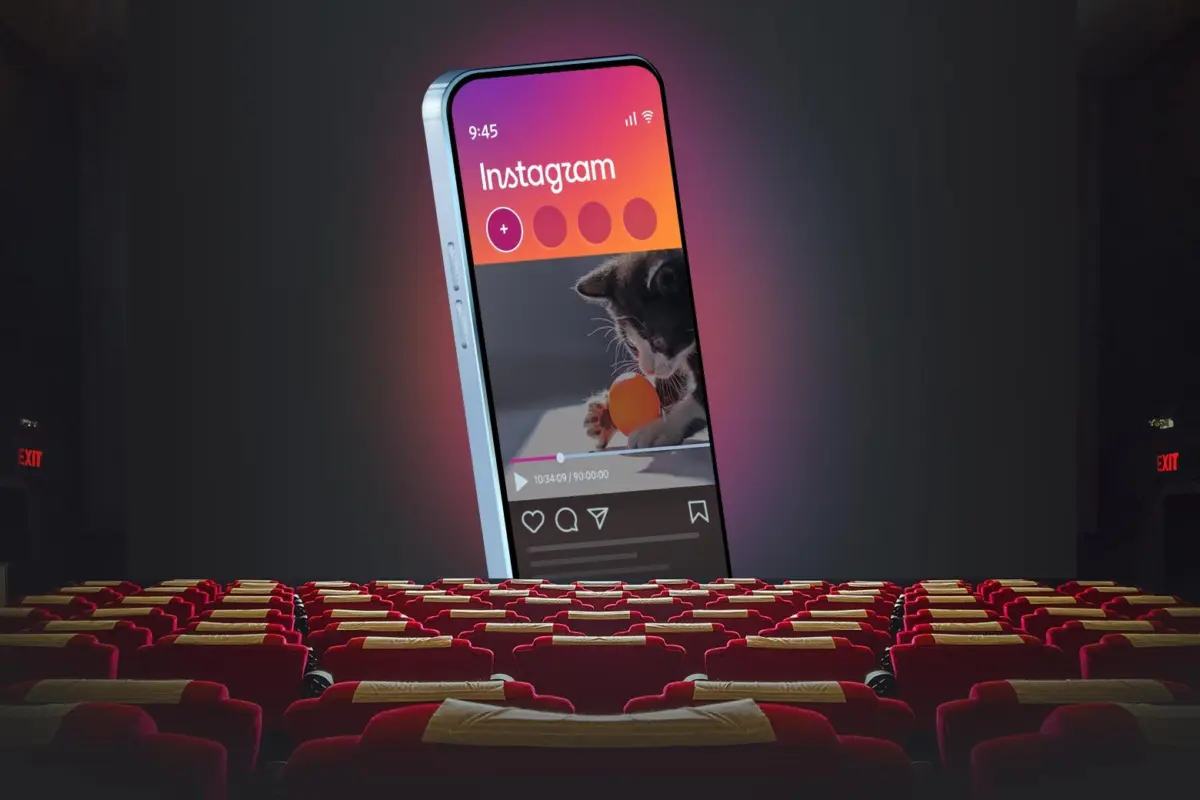
Instagram is undergoing a foundational identity crisis. Meta’s recent announcement that the platform will pilot 90-minute horizontal “feature” videos—designed to seamlessly bridge viral short-form clips with full-length podcasts and shows—signals a dramatic pivot in strategy. This move directly counters long-standing assurances from Instagram head Adam Mosseri, who historically resisted long-form content out of fear that it would disrupt the intimate, rapid-fire ecosystem of Stories and Reels.
Yet, this strategic pivot is less a bold vision for the future than a desperate surrender to present realities. For years, the user-to-user community that originally defined Instagram has been steadily crowded out by algorithmic curation, sponsored content, undisclosed brand partnerships, and ad placements. With Reels dominating nearly half of user screen time by 2025, Instagram has abandoned its illusion as a digital scrapbook for friends. Instead, it is transforming into a broadcast network—a digital trough of polished, optimized media slop.
This investigation explores the sociological cost of this corporate pivot. As the platform has optimized for commercial viability and aesthetic perfection, users have retreated into self-censorship, terrified of the "panopticontent" trap where every digital footprint is preserved, judged, and monetized. To rescue Instagram from becoming a sterile, algorithmic shopping mall playing perpetual white noise, this article argues that users must abandon their obsession with curated perfection. It is time to embrace a chaotic, radically vulnerable era of human storytelling—because if the future of social media is going to be consumed as passive entertainment, we might as well make it deliciously messy.
Detailed Chronology: From Personal Scrapbook to Broadcast Network
To understand how Instagram arrived at its current crossroads, one must trace its evolution from a square-format photo-sharing app into a multi-billion-dollar attention machine.
Phase 1: The Era of Organic Community (2010–2016)
In its infancy, Instagram was defined by friction and authenticity. Photos were uploaded in rigid squares, filters were heavy-handed and uniform, and feeds were strictly chronological. Users posted blurry party pictures, poorly lit meals, and mundane life updates without fear of an overarching algorithm. Friendships were forged across digital divides through comment sections and mutual follows. The stakes were remarkably low because the content felt disposable and personal.
Phase 2: The Algorithmic Shift and the Rise of Sponcon (2017–2021)
As Meta (then Facebook) sought to maximize user retention and ad revenue, the chronological feed was replaced by algorithmic sorting. This structural shift quietly prioritized engagement-driving metrics over genuine social connection. Influencer culture exploded, turning aesthetic curation into a lucrative career. Slowly, organic posts from real-life friends were pushed down the feed, replaced by brand partnerships, targeted ads, and hyper-stylized lifestyle content.
Phase 3: The TikTok Panic and the Short-Form Hegemony (2022–2025)
Threatened by TikTok’s meteoric rise, Instagram aggressively pushed Reels, reshaping its entire interface to favor vertical, looping video content. By 2025, data revealed that Reels accounted for an astounding 46 percent of total time spent on the app. Users stopped looking at feeds to see what their acquaintances were up to; instead, they began treating Instagram as a passive entertainment feed, mindlessly scrolling through recycled content, cross-posted TikToks, and influencer clips.
Phase 4: The 90-Minute Pivot (Early 2026)
In January 2026, Meta dropped its most radical announcement yet: a pilot program enabling 90-minute horizontal videos. As Tessa Lyons, VP of Product at Instagram, explained to industry analysts, the feature allows users watching a short podcast clip on Reels to click through and instantly stream the full-length feature. Adam Mosseri conceded that while he had resisted long-form video for years to protect short-form engagement, the company is now leaning fully into the streaming paradigm. Instagram is no longer a social network; it is a video-on-demand platform.
Supporting Context & Metrics: The Anatomy of a Sterile Feed
The push toward 90-minute features is not happening in a vacuum. It is the mathematical conclusion of an algorithmic feedback loop that has systematically drained the joy out of peer-to-peer sharing.
- The Reels Dominance: Industry metrics from early 2026 indicate that short-form video consumption drives nearly half of all app engagement. Users are no longer opening Instagram to check in on high school acquaintances; they are opening it to consume professionally produced or clip-farmed media.
- The Death of In-Feed Friendships: Organic, uncurated photo posts from everyday users have plummeted. When ordinary users do post, their content is heavily scrutinized against professional standards.
- The "Panopticon" Effect: As legal scholars and digital culture critics have noted, the permanence of the internet has fostered a culture of hyper-vigilance. A viral essay by media theorists termed this modern digital existence "panopticontent"—a constant state of self-surveillance where users act as their own wardens, editing out any trace of messiness, failure, or raw emotion before hitting publish.
This hyper-curation has created a paradox: while the platform claims to celebrate "authenticity," true authenticity has been replaced by sophisticated facsimiles. People now curate their "baby hard-launches" and their formal "breakup announcements" with the precision of a corporate PR firm. Because no one dares to look foolish, petty, or unpolished, users have grown fatigued, fleeing to hyper-niche algorithmic rabbit holes—such as watching endless loops of horse-hoof cleaning ASMR—simply because human interaction on the app has become too sanitized to bear.
Official Statements & Industry Perspectives
The friction between Instagram’s legacy identity and its corporate ambitions is best captured in the public statements of its leadership.
- Tessa Lyons, VP of Product at Instagram: Defending the new long-form initiative, Lyons emphasized the seamless utility for modern media consumers. "What you’re now going to be able to do is, you see a clip of a podcast that you love, you can just click and continue watching or watch the full video… because creators are going to be able to link these Reels to their overall feature," she noted in interviews with entertainment trade publications.
- Adam Mosseri, Head of Instagram: Acknowledging the internal philosophical debate, Mosseri admitted in launch communications that he had fought against long-form video for "a long time." His primary hesitation was structural: dedicating screen real estate to feature-length media risks cannibalizing the quick, dopamine-driven interactions that built the Reels empire. Yet, commercial pressures ultimately overrode traditional hesitation.
Meanwhile, cultural commentators point out that the platform’s attempts to inject manufactured drama via algorithmic promotion pale in comparison to organic human messiness. High-profile moments—such as Megan Thee Stallion publicly calling out professional athletes on Instagram Stories to millions of followers—prove that audiences still crave raw, unvarnished human narratives. When celebrities and influencers drop the PR facade and engage in genuine, unfiltered expression, engagement spikes because it touches a primal human nerve.
Future Outlook: Rescuing Instagram Through Radical Vulnerability
As Meta floods its ecosystem with ad space and long-form video infrastructure, regular users face a stark choice. We can continue participating in the grand masquerade—posting meticulously filtered, lifeless highlights that feed an uncaring algorithm—or we can reclaim the platform through an intentional return to messiness.
If Instagram is to survive as a space for human connection rather than transforming into the digital equivalent of a dollar store playing Judge Judy on an infinite loop, users must unlearn their fear of embarrassment.
What a Messy Renaissance Looks Like:
- The Pre-Breakup Post: Share the infatuation while it’s blindingly rose-tinted. Post the awkward photo of your situationship before he inevitably texts you that he "isn’t ready for a real relationship," allowing your community to weigh in on his questionable height and haircut.
- Cryptic Text Accountability: Lean into the drama. Post the cryptic post-breakup update so your friends can gather in the comments section to ceremoniously boo your ex.
- Embracing Flaws: Bring back unvetted polls, questionable life choices (like keeping that regrettable infinity-symbol tattoo), and unfiltered selfies that defy corporate aesthetic standards.
We shamed each other out of being petty, and in doing so, we sterilized the internet. The future of social media does not depend on cleaner feeds, higher-resolution podcast clips, or corporate optimization. It depends on ordinary people daring to be extraordinarily human on main. It might not be healthy, but in an era of algorithmic decay, radical messiness is the only salvation we have left.