Executive Overview
Paris, the historic birthplace of photography and a perpetual sanctuary for the visual arts, is once again at the epicentre of the global creative community. Paris Photo, the world’s premier international art fair dedicated exclusively to the medium, has triumphantly returned to the monumental, glass-domed expanse of the newly restored Grand Palais.
This year’s edition marks a watershed moment for the fair, bringing together a staggering array of 246 elite exhibitors hailing from 38 countries. From legendary, market-defining galleries and world-renowned masters to agile younger spaces and groundbreaking digital innovators, the fair offers an exhaustive cross-section of photographic history and contemporary discourse. Beyond the breathtaking curatorial displays within the Grand Palais, the entire French capital has transformed into an immersive cultural ecosystem. The city is currently abuzz with high-profile book launches, gallery openings, VIP receptions, and institutional exhibitions that spill out from the central venue into the Left Bank, the Marais, and beyond.
Paris Photo remains the definitive global barometer for the photography market, serving as a critical nexus where curators, collectors, museum directors, and critics converge. As the fair unfolds its extensive weekend programme—featuring intimate book signings, intellectually rigorous in-conversation events, and forward-looking panels—we offer an in-depth journalistic dispatch of the unmissable photographers, provocative thematic showcases, and defining artistic voices currently commanding attention at the fair.
Detailed Chronology: Navigating the Aisles of the Grand Palais
The sprawling geography of the Grand Palais allows Paris Photo to construct a nuanced historical narrative, seamlessly connecting the pioneers of the 20th century with the avant-garde practitioners of today. Traversing the grand halls reveals a meticulously curated sequence of booths, each offering distinct windows into the human condition, memory, and technological shifts.
Historical Reverberations and Provocations
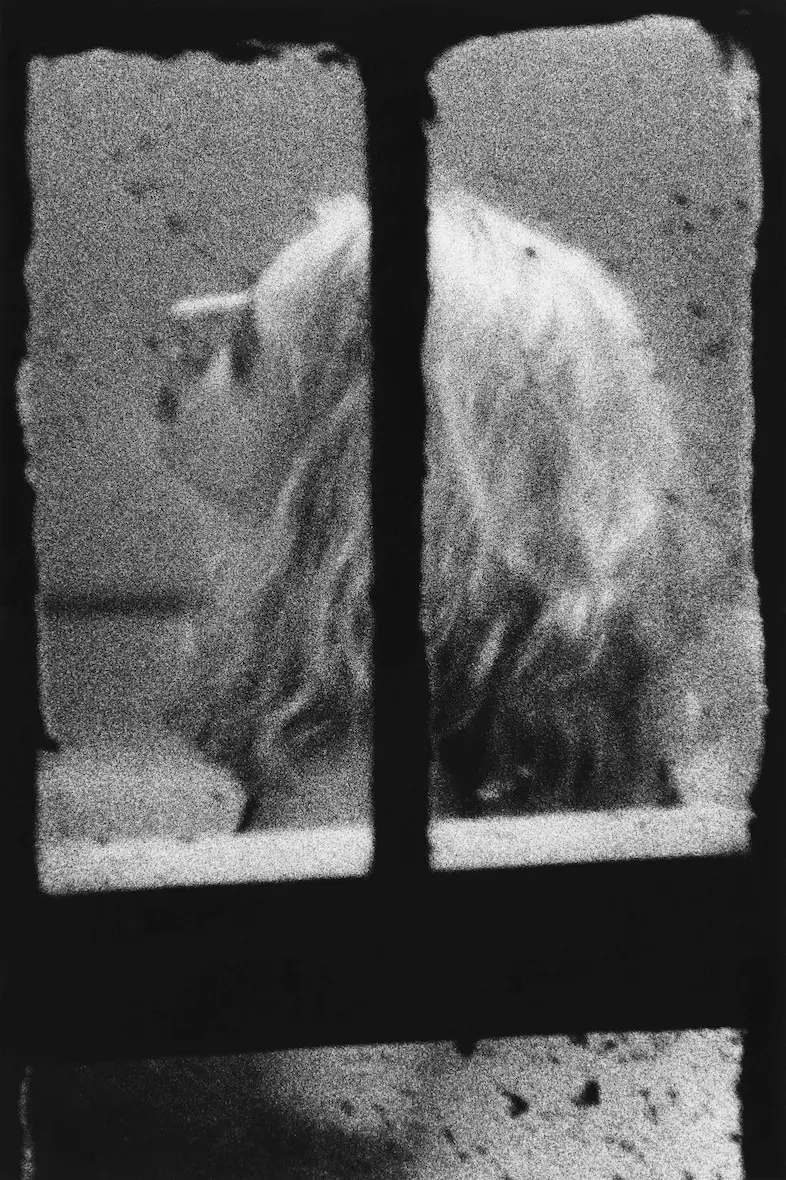
Entering the central sections of the fair, visitors are immediately confronted by the heavy hitters of modern photography history. Among them, Michael Hoppen Gallery commands significant attention with a powerful, concentrated presentation of works by the late Masahisa Fukase, one of Japan’s most eminent yet profoundly controversial visual artists.
Fukase, whose harrowing and obsessive 1973 series From Window documented his then-wife Yoko leaving their Tokyo apartment each morning, is represented at the booth through a selection spanning the 1960s to the 1990s. The curation features rare works, including a striking view of the Paris skyline partially obscured by a strangely emotive, blurred human hand, alongside explicit, high-contrast, grainy black-and-white nudes. This tightly edited selection encapsulates the introspective, melancholy, and frequently unsettling spirit that defines Fukase’s enduring legacy.
Equally visceral is the historical documentation presented by Galerie Miranda, which features the notorious and compelling work of New York City-born photographer Merry Alpern. In 1993, Alpern gained access to a friend’s loft in Manhattan’s Wall Street district and noticed an unintended vantage point: the window directly overlooked the bathroom of an after-hours sex club across the alleyway.
From this hidden position, Alpern documented the covert transactions and human interactions unfolding inside. The resulting series, Dirty Windows, is an unflinching montage of illicit commerce—cash exchanging hands, drugs being prepared, tangled lingerie, passionate embraces, and unzipped trousers. Voyeuristic, abject, and profoundly unsettling, Alpern’s work remains as uncomfortable to consume today as it is impossible to ignore, forcing viewers to confront the ethics of looking.
Contemporary Intersections: Fashion, Identity, and Digital Avant-Garde
Moving into the contemporary and digital sectors, the fair shifts from gritty urban voyeurism to ethereal, hyper-stylized explorations of identity and the body.
At the Kominek gallery booth—representing the Berlin-based contemporary space, publisher, and bookshop—visitors are drawn to the striking imagery of Viviane Sassen. Known for seamlessly fusing high fashion, fine art, and photojournalism, Sassen’s visual language is instantly recognizable and arresting. Her display highlights photographs from Frau Holle, a collaborative book project created alongside artist Emmeline de Mooij. The series serves as a poetic and visceral meditation on the bodily experience of womanhood, framing desire not merely as an emotion, but as an invisible, elemental force shaping physical reality.
Identity and heritage take center stage at the Fahmy Malinovsky Gallery booth, which showcases the poignant work of French-born artist Silina Syan. Triggered by an early formative trip to Bangladesh with her father, Syan adopted the camera as an alternative linguistic tool to bridge a profound generational and cultural divide—specifically, her inability to speak her family’s native tongue. In her ongoing series Made in Bangladesh, Syan explores the complexities of mixed heritage, cultural hybridity, and ornamentation, translating personal displacement into universally resonant visual poetry.
Meanwhile, stepping into Paris Photo’s dedicated Digital Sector reveals the uncanny nocturnal worlds captured by Los Angeles-based digital artist Summer Wagner, presented by the London-New York gallery Nguyen Wahed. Wagner’s dreamlike compositions depict friends illuminated solely by the eerie, cold glow of smartphone screens and cigarette lighters as they lounge in grass or sprawl across living room sofas. The longer one lingers before these digital prints, the deeper the atmosphere descends into an uncanny, disquieting realm, reflecting modern alienation and hyper-connectivity.
Archival Rediscoveries and Youthful Dramas
The fair also serves as a vital platform for archival recovery and the celebration of youth culture. Jackson Fine Art’s monumental presentation of work by Joseph Szabo coincides perfectly with the major publication of American Teen. Edited by cinematic auteur Sofia Coppola and published jointly by MACK and Important Flowers, this monograph celebrates Szabo’s legendary 25-year tenure teaching photography in a Long Island high school. Spanning from the 1960s through the 1990s, Szabo’s portraits capture the theatrical drama, angst, beauty, and poignant vulnerability of adolescence with unmatched authenticity.
Adding a layer of transnational glamour to the historical narrative, Rolf Art and Tomas Redrado Art have joined forces to present the archival treasures of Ricardo Martínez Paz. Fleeing Buenos Aires in the 1970s during the height of Argentina’s civic-military dictatorship, Martínez Paz sought refuge in Paris. Swept up in the intoxicating currents of the French capital’s glittering fashion world and bohemian nightlife, he transitioned into a dual career as a fashion stylist and photographer. His newly unearthed archive stands as a dazzling testament to an era of unbridled creativity, capturing the icons and aesthetics of European high society and creative subcultures alike.
Supporting Context & Metrics: The Scale of Paris Photo
To understand the cultural gravity of Paris Photo, one must examine the staggering logistical and economic scale of the event.
- Exhibitor Footprint: This year’s edition hosts 246 exhibitors, setting a high-water mark for post-pandemic international participation.
- Global Diversity: Galleries, publishers, and independent art spaces hail from 38 countries, reinforcing Paris Photo’s status as the most geographically diverse art fair dedicated to the medium.
- Sectoral Breakdown: The fair is meticulously organized into specialized zones, including the Main Sector (showcasing established international galleries), the Digital Sector (highlighting cutting-edge technology, AI, and screen-based media), the Prismes Sector (dedicated to large-scale installations and monumental works), and the Edition Sector (representing rare photography books and independent publishers).
- Economic Impact: Industry analysts project that the influx of tens of thousands of international collectors, curators, and art tourists generates millions of euros for the Parisian hospitality, luxury, and tourism sectors during the autumn shoulder season.
Official Statements and Curatorial Vision
The leadership behind Paris Photo has continually emphasized the fair’s evolving role not just as a commercial marketplace, but as an indispensable educational and cultural institution.
In a joint statement released ahead of the opening, fair organizers reflected on the symbolic significance of filling the Grand Palais:
"Returning to the Grand Palais is more than a logistical homecoming; it is a reaffirmation of Paris’s historic claim as the spiritual heartland of photography. By bringing together nearly 250 exhibitors from 38 nations, we are providing a panoramic view of how the medium has evolved—from the chemical experiments of the 19th century and the darkroom alchemy of the 20th, to the algorithmic and digital frontiers of the 21st. Paris Photo remains committed to championing diverse voices, rigorous scholarship, and uncompromising artistic vision."
Curatorial consultants for the specialized sectors have likewise pointed to the growing appetite for boundary-pushing work. Speaking on the integration of the Digital Sector, a senior advisory committee member noted:
"Photography is no longer confined to gelatin silver prints on fiber-based paper. Today’s practitioners are questioning the very nature of the image, utilizing digital manipulation, light projection, and interactive media. Our aim at Paris Photo is to demonstrate that these new methodologies do not dilute the medium’s history, but rather extend its lineage into uncharted philosophical territory."
Future Outlook: The Trajectory of the Photographic Market
As the weekend programming reaches its zenith—highlighted by high-profile book signings, panel discussions exploring the ethical boundaries of archival image-making, and intense collector acquisitions—the broader trajectory of the photography market appears robust, albeit increasingly sophisticated.
The strong institutional and commercial reception of historical provocateurs like Merry Alpern and Masahisa Fukase indicates that contemporary collectors are increasingly drawn to works that possess deep psychological weight, historical friction, and ethical complexity. At the same time, the enthusiastic embrace of emerging voices such as Silina Syan and digital innovators like Summer Wagner signals a generational shift. The market is actively rewarding artists who interrogate hybrid identities, digital alienation, and the shifting parameters of human intimacy.
Looking ahead, Paris Photo has firmly cemented its blueprint for the future: balancing the preservation of analog traditions with an aggressive, open-minded embrace of digital and multidisciplinary evolution. For collectors, curators, and enthusiasts wandering beneath the vaulted glass ceiling of the Grand Palais, the message is resoundingly clear—photography remains one of the most vital, disruptive, and emotionally resonant mediums of our time.