Executive Overview
The landscape of modern entertainment has long been defined by the convergence of traditional media and interactive gaming, but few crossovers have matched the sheer scale of the alliance between The Walt Disney Company and Fortnite developer Epic Games. Following months of rampant industry speculation regarding a potential full-scale takeover, Disney leadership has firmly put buyout rumors to rest.
In a recent interview with Bloomberg Live, Disney President and Chief Creative Officer Dana Walden addressed the persistent whispers of a complete acquisition, clarifying that while the entertainment giant holds a massive equity stake in Epic Games, swallowing the creator of Unreal Engine whole is simply "not something Disney is entertaining, at least right now."
This definitive stance provides a clearer picture of how the House of Mouse intends to approach the gaming sector moving forward. Rather than pursuing an outright merger or acquisition—a move that would rank among the largest corporate buyouts in gaming history—Disney is doubling down on a collaborative strategy.
By leaning into multi-year product rollouts, cross-media intellectual property integration, and shared technological frameworks, Disney and Epic Games are charting a course that values operational synergy over total corporate ownership. As both companies prepare for a wave of high-profile product launches over the next two years, the industry is watching closely to see how this high-stakes partnership redefines digital entertainment spaces.
Detailed Chronology: From Investment to Acquisition Rumors
To fully understand Disney’s current stance on Epic Games, it is necessary to retrace the timeline of their evolving relationship—a journey marked by staggering financial investments, leaked internal ambitions, and a rapidly expanding ecosystem within Fortnite.
Early 2024: The Groundbreaking $1.5 Billion Stake
The cornerstone of the modern Disney-Epic relationship was officially laid in early 2024, when Disney announced a massive $1.5 billion investment to acquire an equity stake in Epic Games. At the time, the move was hailed as a watershed moment for both corporations. Then-CEO Bob Iger framed the partnership as Disney’s largest-ever foray into the video game industry, explicitly designed to build an expansive, persistent games and entertainment universe tightly integrated with Fortnite.
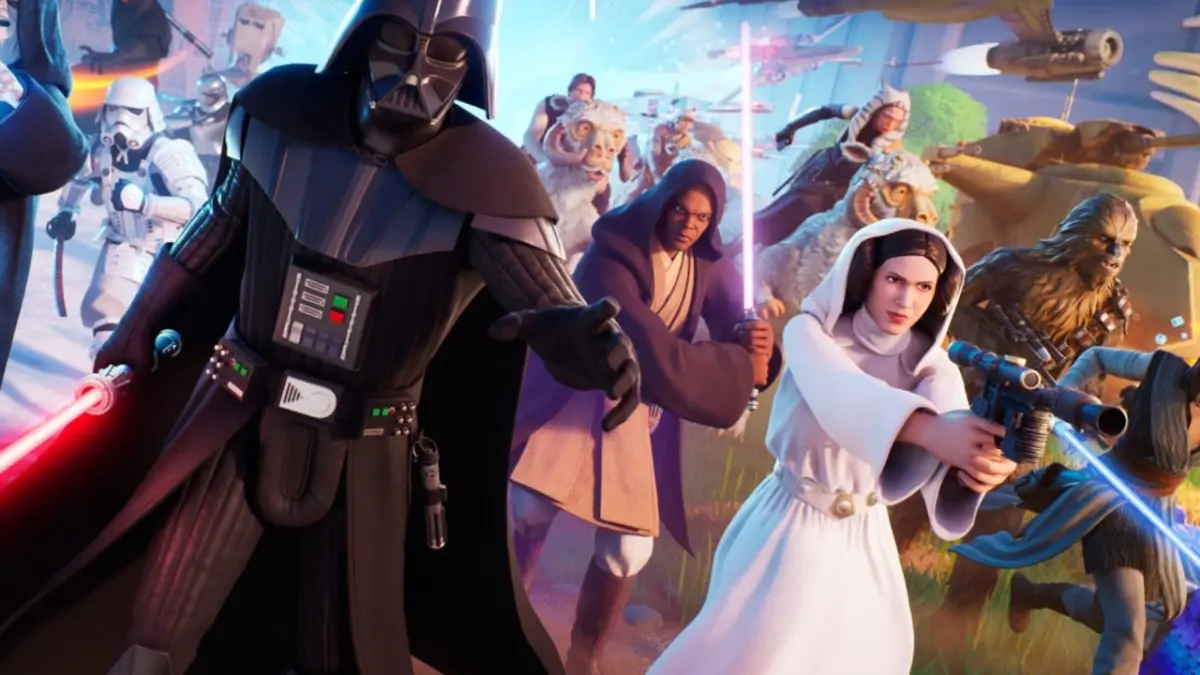
The promise was simple yet revolutionary: Disney’s iconic brands—spanning Star Wars, Marvel, Pixar, and Disney Animation—would no longer merely be guest appearances in Fortnite; they would help form a foundational layer of an interoperable entertainment ecosystem where users could play, watch, shop, and create.
March 2026: Whispers of an Imminent Takeover
As the multi-year partnership began bearing fruit through various in-game events, digital skins, and licensed minigames, external observers began to wonder if a minority equity stake was merely a stepping stone. In March 2026, prominent tech reporter Alex Heath reported that industry insiders and select Disney executives were actively "waiting for that moment" to go all-in on an outright acquisition of Epic Games, viewing the initial partnership as a testing ground for a permanent corporate union.
The rationale behind these rumors was sound on paper: Disney has historically preferred owning its foundational intellectual property and distribution channels outright. Integrating Epic’s cutting-edge Unreal Engine technology and its massive distribution hub (Fortnite) directly into Disney’s corporate structure would have given the media conglomerate unprecedented vertical integration in the interactive entertainment space.
April 2026: Uncovering the Disney Extraction Shooter
The plot thickened in April 2026, when a comprehensive Bloomberg report revealed that Epic Games was deep into development on a brand-new extraction shooter featuring beloved Disney characters, with an ambitious target launch window set for November 2026. This project signaled a dramatic escalation in the partnership, moving beyond cosmetic crossovers and into original, dedicated genre gameplay built specifically around Disney intellectual properties within Epic’s ecosystem.
Late 2026: Setting the Record Straight
As the industry entered the final quarter of 2026, rumors of a buyout continued to circulate despite the absence of an official reveal for the rumored Disney extraction shooter. Addressing these lingering financial and structural queries head-on, Dana Walden’s Bloomberg Live appearance definitively closed the book on acquisition talk for the foreseeable future. Walden confirmed that while serious conversations regarding equity stakes and foundational investments defined their initial pact, a complete buyout is not on the table. Instead, the focus has shifted entirely to execution, delivery, and a robust pipeline of upcoming joint launches.
Supporting Context & Metrics: The Mechanics of the Partnership
While an outright acquisition has been sidelined, the economic and creative ties binding Disney and Epic Games remain tighter than ever. The valuation of their alliance extends far beyond simple brand licensing; it represents a fundamental shift in how digital real estate is monetized and experienced.

The Financial Blueprint
Disney’s initial $1.5 billion cash injection into Epic Games bought them more than just a seat at the table—it established a joint venture built to withstand industry turbulence. Epic Games, valued in the tens of billions, relies on massive capital injections and strategic partnerships to sustain its sprawling operations, particularly in the wake of legal battles, shifting mobile marketplace dynamics, and the immense overhead required to maintain Unreal Engine and Fortnite.
For Disney, a $1.5 billion minority stake represents a highly efficient financial exposure to the gaming sector. It allows the company to share in the enormous revenue generated by Fortnite’s economy without bearing the full operational, legal, and managerial burdens of running a massive independent game development engine and storefront.
Blurring the Lines Between Physical and Digital Worlds
The collaboration has continually pushed the boundaries of traditional marketing and interactive design. Notable touchpoints of this partnership include:
- Disneyland-Exclusive Integrations: Pushing physical-to-digital synergy, Disney introduced exclusive Fortnite skins and rewards tied directly to physical visits at Disneyland, incentivizing theme park attendance through digital collectibles.
- Custom Game Creation Tools: Epic integrated developer toolsets empowering community creators and players to build and publish their own officially licensed Star Wars minigames and interactive worlds within Fortnite’s Unreal Editor (UEFN).
- Persistent Entertainment Universes: The ongoing development of dedicated hubs where users can seamlessly transition from watching serialized Disney content to participating in interactive gameplay loops.
Official Statements: Decoding the Executive Mindset
To understand why Disney is pumping the brakes on an acquisition while simultaneously accelerating its product pipeline, one must examine the precise language used by executive leadership.
During her Bloomberg Live interview, Dana Walden provided vital transparency regarding the current philosophy of Disney’s executive suite:
"Well, I think that it was pretty obvious that we had very serious conversations about an investment and an equity stake. Those are not the conversations we’re having right now, but we have a great partnership and a number of launches coming up over the next two years that are going to demonstrate the value of this partnership."
Analyzing Walden’s Remarks
- Acknowledgment of Past Ambitions: By openly admitting that "very serious conversations" regarding equity and investment took place, Walden validates the reporting that suggested Disney weighed a deeper financial entrenchment.
- The Pivot to Execution: The phrase "Those are not the conversations we’re having right now" serves as corporate shorthand for a closed door on M&A (Mergers and Acquisitions) activity. Disney is shifting its corporate bandwidth from financial restructuring to product delivery.
- The Two-Year Horizon: By highlighting "a number of launches coming up over the next two years," Walden places the burden of proof on the software itself. Disney expects the market value of the partnership to be proven not through corporate consolidation paperwork, but through consumer adoption, engagement metrics, and critically acclaimed software releases.
This sentiment echoes the foundational vision laid out by former CEO Bob Iger during the initial 2024 announcement, where he emphasized that the partnership offered "significant opportunities for growth and expansion" by bringing Disney worlds into groundbreaking new digital formats. The strategy has consistently favored collaborative creation over corporate absorption.
Future Outlook: What Lies Ahead for Disney and Epic Games?
With buyout rumors officially quelled, the immediate future of the Disney-Epic alliance will be defined by concrete software output. As the industry looks toward the remainder of 2026 and beyond, several key milestones will dictate the success of this high-profile pairing.
The Unfolding Product Pipeline
The upcoming two-year window mentioned by Walden is expected to be packed with major releases. While the rumored November 2026 Disney extraction shooter developed by Epic Games has yet to receive an official, widespread marketing rollout, industry analysts expect more details to emerge as the project nears its targeted release frame. If successful, this game could establish a new precedent for how AAA third-party intellectual property is adapted into multiplayer live-service environments.
The Evolution of Fortnite as a Universal Portal
Fortnite has steadily evolved from a battle royale shooter into a comprehensive "metaverse" platform housing music concerts, film screenings, and distinct game genres ranging from survival crafting (LEGO Fortnite) to racing (Rocket Racing) and rhythm games (Fortnite Festival). Disney’s ongoing integration ensures that its immense portfolio of intellectual property—spanning decades of cinematic history—will serve as a permanent anchor within this virtual landscape.
A New Model for Media Conglomerates
Disney’s decision to eschew an Epic Games acquisition in favor of a deep strategic partnership may well serve as a blueprint for traditional media companies struggling to navigate the modern gaming landscape. Buying massive interactive development studios outright often carries astronomical risks, cultural clashes, and integration hurdles—as evidenced by numerous troubled historical mergers across the tech and entertainment sectors. By retaining a powerful minority equity stake while empowering an independent powerhouse like Epic Games to handle development, Disney minimizes corporate overhead while maximizing creative output.
Ultimately, the Disney-Epic Games alliance proves that corporate ownership is not a prerequisite for transformative collaboration. As the next wave of joint projects hits digital storefronts over the coming years, gamers and entertainment fans alike will reap the rewards of an alliance that prioritizes shared creativity over corporate consolidation.