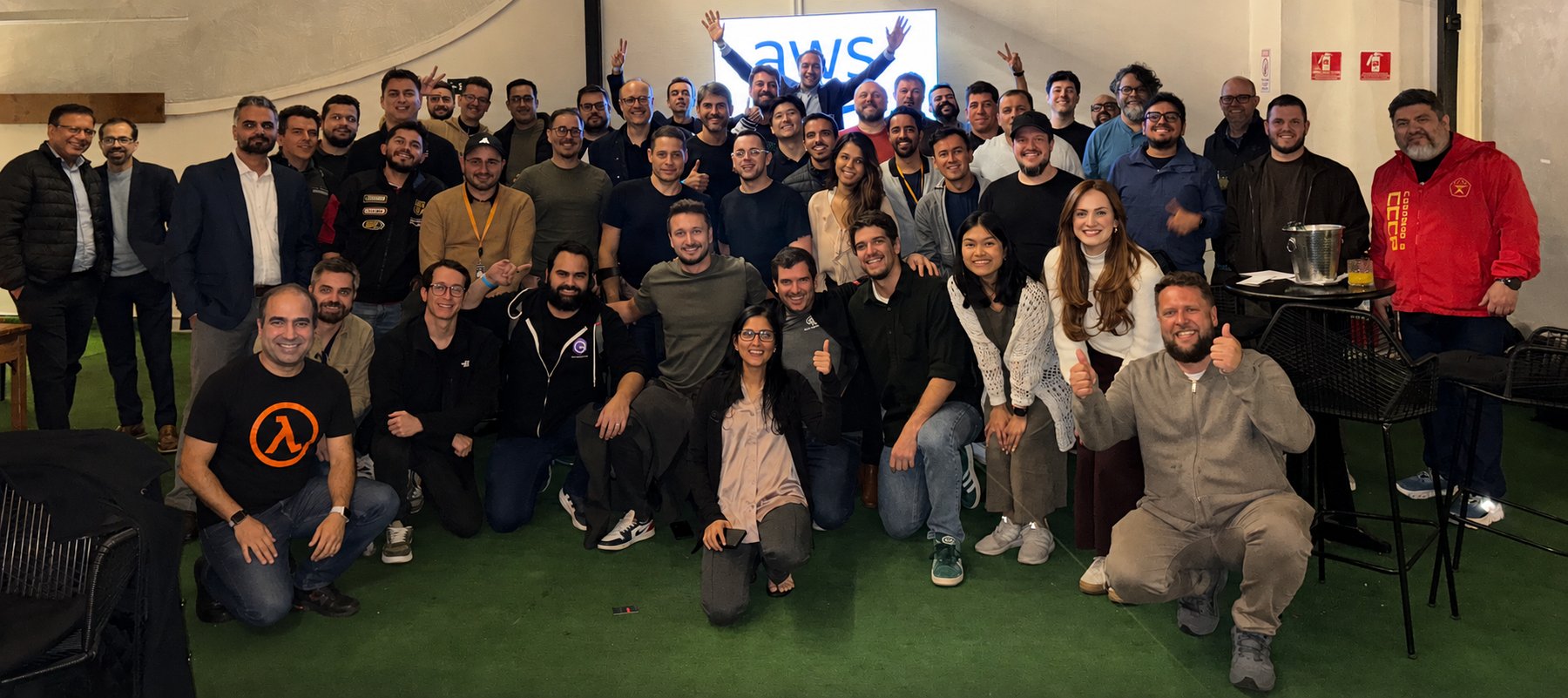
Amazon Web Services (AWS) continues to accelerate its dual-pronged strategy of community cultivation and global infrastructure expansion. In a recent three-day technical gathering in São Paulo, Brazil, software architects, engineers, and developers from across Latin America convened to exchange ideas, participate in hands-on workshops, and examine advanced cloud architectures. This vibrant convergence of regional talent underscores a core truth of modern software engineering: while advanced cloud tooling is essential, the human ecosystem surrounding it ultimately drives innovation and technical endurance.
Parallel to these community-building efforts in South America, AWS has announced a major European infrastructure milestone: the launch of a new AWS Local Zone in Athens, Greece. This strategic deployment is designed to bridge the gap between cloud-scale capabilities and strict local data residency requirements. By introducing localized compute and storage options—including native support for Amazon S3 and Amazon EBS Local Snapshots—AWS is empowering Greek enterprises and multinational organizations to process sensitive workloads within national borders. This ensures ultra-low, single-digit millisecond latencies for applications in financial services, healthcare, media production, and real-time gaming.
This report provides a comprehensive examination of these developments, exploring the intersection of regional developer communities, global edge infrastructure expansion, and the evolving compliance landscape for cloud consumers across EMEA and Latin America.
Detailed Chronology
The Latin American Developer Summit: São Paulo
The foundational narrative of the week centers on São Paulo, where AWS hosted a multi-day intensive technical summit. Bringing together top-tier technical builders from diverse corners of Latin America, the event served as a crucible for architectural collaboration.
Day One – Collaborative Foundations: Attendees participated in whiteboard sessions and architectural clinics. Discussions frequently centered on serverless migration patterns, multi-region database replication strategies, and cost-optimization frameworks.
Day Two – Hands-On Workshops: Engineers engaged in deep-dive labs focusing on container orchestration, machine learning pipelines built on Amazon SageMaker, and secure edge deployments.
Day Three – Community Synthesis and Feedback: The summit concluded with open-forum panels where regional customers and partners shared production challenges with AWS engineering teams, shaping the feedback loop for future product roadmaps.
The prevailing sentiment throughout the event was the undeniable value of physical proximity for technical communities. In regions where tech hubs are geographically dispersed, such gatherings provide an invaluable catalyst for knowledge transfer.
Shifting from community to infrastructure, the major operational headline of the week is the official launch of the AWS Local Zone in Athens, Greece.
Geographic and Strategic Significance: Athens represents a critical economic and industrial nexus in southeastern Europe. The deployment of a Local Zone directly addresses the growing demand for localized computing resources that comply with regional data sovereignty mandates.
Core Technical Specifications:
Compute Instances: The Athens Local Zone natively supports modern, high-performance compute instances, specifically the C7i, M7i, and R7i families powered by custom Intel processors.
Storage and Data Protection: Notably, this is the second Local Zone in the Europe, Middle East, and Africa (EMEA) region equipped with full support for Amazon S3 and Amazon EBS Local Snapshots. This configuration allows organizations to maintain local copies of data, execute rapid recovery workflows, and satisfy stringent in-country data residency laws.
Storage Classes: Integration with Amazon S3 One Zone-Infrequent Access provides a cost-effective tier for long-term data preservation without sacrificing rapid retrieval speeds.
Container Services: Amazon Elastic Container Service (Amazon ECS) is fully supported, allowing teams to run containerized microservices locally at the edge.
Supporting Context & Metrics
To fully understand the weight of these developments, one must examine the broader metrics of edge computing adoption and data residency compliance across global markets.
The Rise of Local Zones and Edge Computing
As modern applications demand real-time responsiveness—such as autonomous driving, high-frequency financial trading, remote surgical assistance, and immersive multiplayer gaming—data round-trip times to centralized cloud regions can introduce unacceptable latency.
Latency Benchmarks: Centralized AWS Regions typically offer double-digit millisecond latency. AWS Local Zones push core compute and storage services to population and industry centers, dropping latency to single-digit milliseconds.
Market Adoption Trends: According to recent enterprise cloud surveys, over 65% of organizations operating in highly regulated sectors (such as banking, healthcare, and government) cite data residency as a primary blocker for cloud migration. Infrastructure investments like the Athens Local Zone remove these barriers by keeping data physically sequestered within national boundaries while still granting access to elastic cloud infrastructure.
Latin America’s Tech Ecosystem Growth
The vibrant turnout in São Paulo is reflective of a broader economic trend: Latin America is experiencing an unprecedented surge in digital transformation.
Developer Population Growth: Over the past five years, the developer population in Latin America has expanded by more than 40%, fueled by a burgeoning startup scene in Brazil, Colombia, Mexico, and Argentina.
Cloud Spend Acceleration: Enterprises in LATAM are shifting capital expenditure (CapEx) toward operational expenditure (OpEx) models at an accelerated rate, prioritizing scalability and agility. Community-led technical events act as critical accelerators for this transition, demystifying complex cloud architectures for local enterprises.
Official Statements and Industry Perspectives
Leadership within AWS continues to emphasize that technology is only as powerful as the human network deploying it.
Reflecting on the São Paulo summit, senior AWS technical leadership noted:
"What struck me most wasn’t any single session, it was the energy of a technical community that so rarely gets to be in the same room. People traded architecture ideas over coffee, sketched out solutions on whiteboards, and left with a longer list of things to try than they arrived with. It’s a good reminder that, for all the tooling we build, the community around it is what makes the technology stick."
Regarding the architectural impact of the Athens Local Zone, infrastructure and sustainability specialists highlighted the dual benefit of performance and compliance:
"With this launch, you can process and store data in-country while delivering single-digit millisecond latency to your end users. AWS Local Zones place AWS infrastructure much closer to large population and industry hubs to support workloads such as financial services, healthcare, media production, and real-time gaming. For builders in Greece, this means running latency-sensitive workloads locally and meeting in-country data residency requirements, without managing your own data center infrastructure."
Industry analysts have praised the Athens rollout as a masterclass in targeted edge deployment. Rather than constructing massive, power-intensive data centers in every secondary market, AWS utilizes Local Zones to strategically inject high-performance compute exactly where regulatory and latency constraints demand it.
Future Outlook
Looking ahead, both the Latin American technical community and the European cloud infrastructure landscape are positioned for rapid evolution.
What to Expect in Latin America
Following the success of the São Paulo gathering, AWS plans to expand its grassroots builder engagement programs across the region. Upcoming quarters will likely feature:
Expanded Virtual and In-Person Hackathons: Focused on solving localized challenges in agriculture (AgTech), fintech, and public sector modernization.
Enhanced Localization of Learning Resources: Increased availability of Portuguese and Spanish-language certification paths, architectural whitepapers, and hands-on labs through the AWS Builder Center.
The Future of AWS Local Zones in EMEA
The successful deployment of advanced storage capabilities—specifically Amazon S3 and EBS Local Snapshots—in the Athens Local Zone sets a new technical precedent for future edge locations.
Regulatory Alignment: As governments across Europe continue to refine data sovereignty frameworks (such as stricter interpretations of GDPR and national cloud strategies), AWS’s ability to offer localized data persistence within Local Zones will become a decisive competitive advantage.
Next-Wave Workloads: We can anticipate further optimization for artificial intelligence and machine learning inference at the edge, allowing localized applications in Athens and other secondary EMEA hubs to run low-latency AI models without violating data residency laws.
Conclusion
Amazon Web Services’ latest developments reinforce a comprehensive vision for the future of cloud computing: one that balances global hyperscale capabilities with hyper-local execution and community empowerment. Whether through fostering collaborative engineering networks in São Paulo or deploying latency-busting, compliance-ready infrastructure in Athens, AWS is systematically removing the friction points that separate developers from their goals.
Builders are encouraged to stay engaged through the AWS Builder Center, monitor upcoming announcements on the official What’s New with AWS page, and participate in regional developer events.
Check back next Monday for another comprehensive Weekly Roundup highlighting the latest innovations from across the AWS ecosystem.