Executive Overview
In the modern enterprise cloud landscape, separation of concerns, strict boundary isolation, and robust security posture form the bedrock of architectural governance. As organizations scale their operations across hundreds—or even thousands—of discrete AWS accounts to enforce governance, audit compliance, and resource billing attribution, managing test and development environments efficiently becomes a complex balancing act.
Developers and systems architects constantly face a difficult choice: how to provide engineering teams with production-grade data fidelity for rigorous testing, experimentation, and debugging without compromising the stringent isolation, security, and access boundaries of production environments.
Addressing this fundamental architectural challenge head-on, Amazon Web Services (AWS) has announced a powerful evolution of its storage portfolio: cross-account copy support for Amazon Elastic Block Store (Amazon EBS) Volume Clones. Building upon the foundation laid last year with the introduction of instant, point-in-time EBS Volume Clones within a single Availability Zone, this new capability empowers cloud engineers to seamlessly copy EBS volume clones across distinct AWS accounts.
Crucially, this release introduces the ability to optionally re-encrypt those volumes using target-account-managed keys via AWS Key Management Service (AWS KMS).
By integrating deeply with AWS Resource Access Manager (RAM), this feature bridges the gap between production data utility and multi-account security isolation. Engineering teams can now instantly refresh development and staging pipelines in secondary sandbox accounts using live production data, while compliance officers maintain absolute assurance that production workloads remain tightly guarded and encrypted under strictly controlled cryptographic keys.
Detailed Chronology: The Evolution of EBS Cloners and Multi-Account Workflows
The Genesis: Instant Volume Clones
To fully appreciate the significance of today’s cross-account release, it is necessary to examine the trajectory of Amazon EBS storage innovation. Prior to the introduction of Volume Clones, duplicating large storage volumes inside AWS typically required taking a traditional snapshot, and then materializing a new volume from that snapshot. While reliable and foundational to cloud data management, this multi-step pathway introduced latency, administrative overhead, and consumption of intermediate storage resources—particularly when dealing with multi-terabyte enterprise databases and analytical engines.
Recognizing the need for zero-latency, metadata-driven storage instantiations, AWS introduced Amazon EBS Volume Clones. This capability allowed administrators to create instant, point-in-time, block-level copies of existing EBS volumes within the same Availability Zone. Utilizing a redirect-on-write architecture, Volume Clones provided immediate access to storage data without requiring a full data block copy upfront, drastically accelerating backup validation, local testing, and data-recovery workflows.
The Multi-Account Paradigm Shift
However, as enterprise customers increasingly adopted multi-account strategies—championed by frameworks like AWS Organizations and AWS Control Tower—a significant friction point emerged. While intra-account cloning solved local testing scenarios, it fell short for organizations enforcing strict "Landing Zone" models where production environments reside in a dedicated, highly locked-down account (e.g., Prod-Account), entirely separate from development, integration, and staging accounts (e.g., Dev-Account and Stage-Account).

To provision a test environment with production data under the old paradigm, engineers had to orchestrate complex, manual cross-account snapshot sharing workflows: taking a snapshot, modifying snapshot access permissions, sharing the snapshot ARN with the target account, copying the snapshot across accounts, managing target-side KMS keys, and finally provisioning a new EBS volume from that copied snapshot. This procedure was not only time-consuming and prone to configuration drift, but it also incurred unnecessary operational friction and delayed software delivery cycles.
The Introduction of Cross-Account Volume Clones
The new cross-account copy capability for EBS Volume Clones completely reimagines this workflow. By pairing the speed and efficiency of native volume cloning with the fine-grained governance of AWS RAM, AWS has streamlined data propagation across organizational boundaries.
The mechanism is elegant in its simplicity yet powerful in its execution:
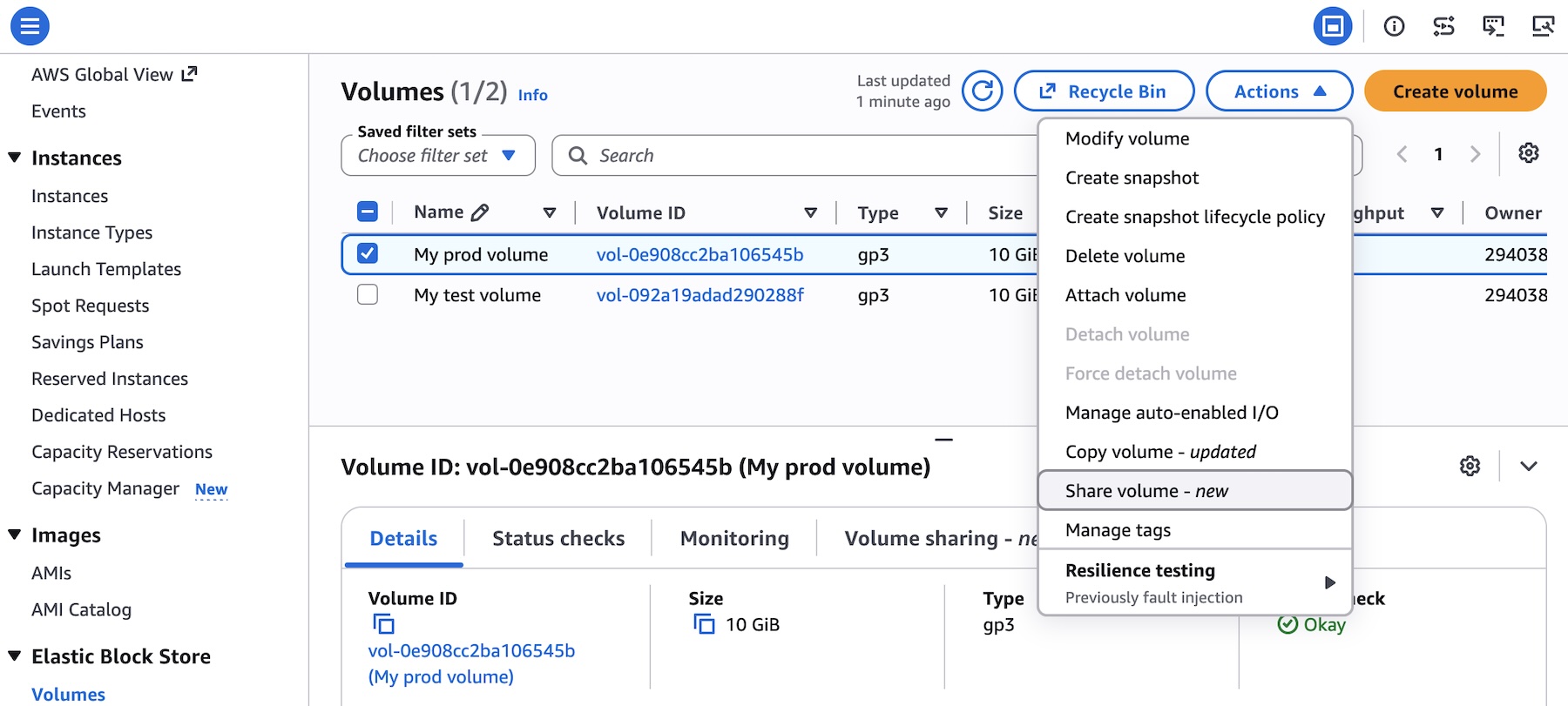
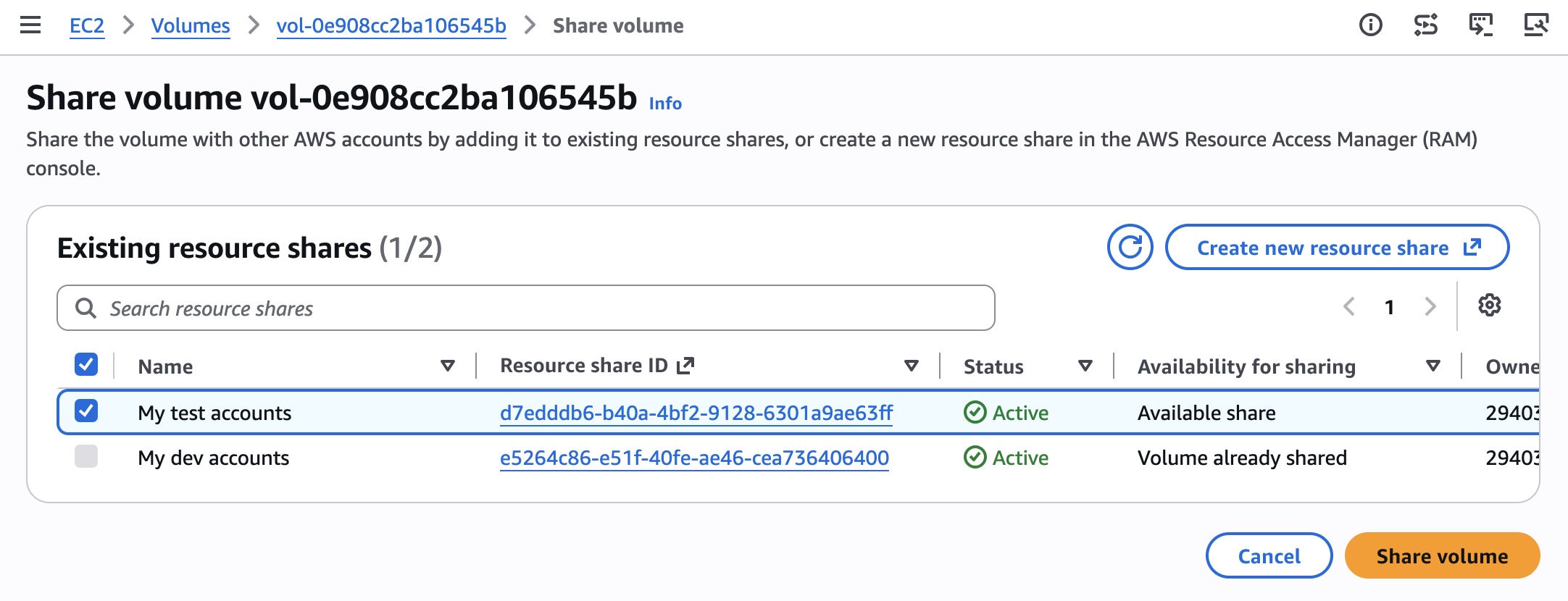
- Granting Access: The owner of the production EBS volume initiates a sharing action using the Amazon EBS console, tying the volume directly to an existing or new resource share via AWS RAM.
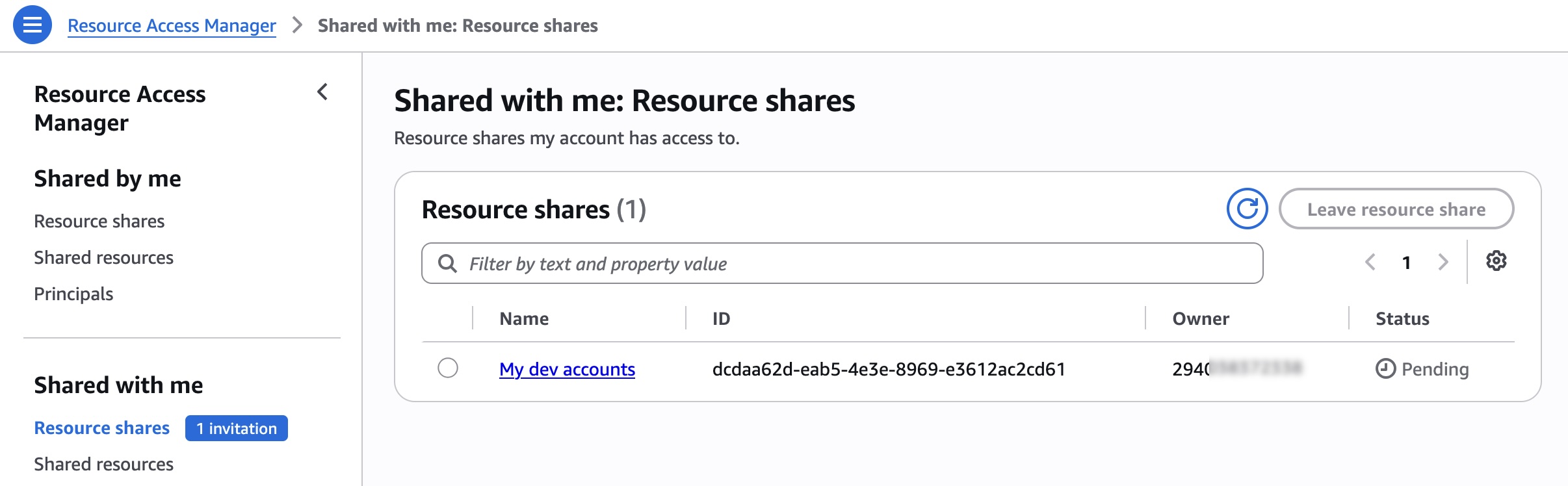
- Acceptance and Verification: The administrator of the target AWS account logs into the RAM console, reviews the resource share invitation, and formally accepts it.
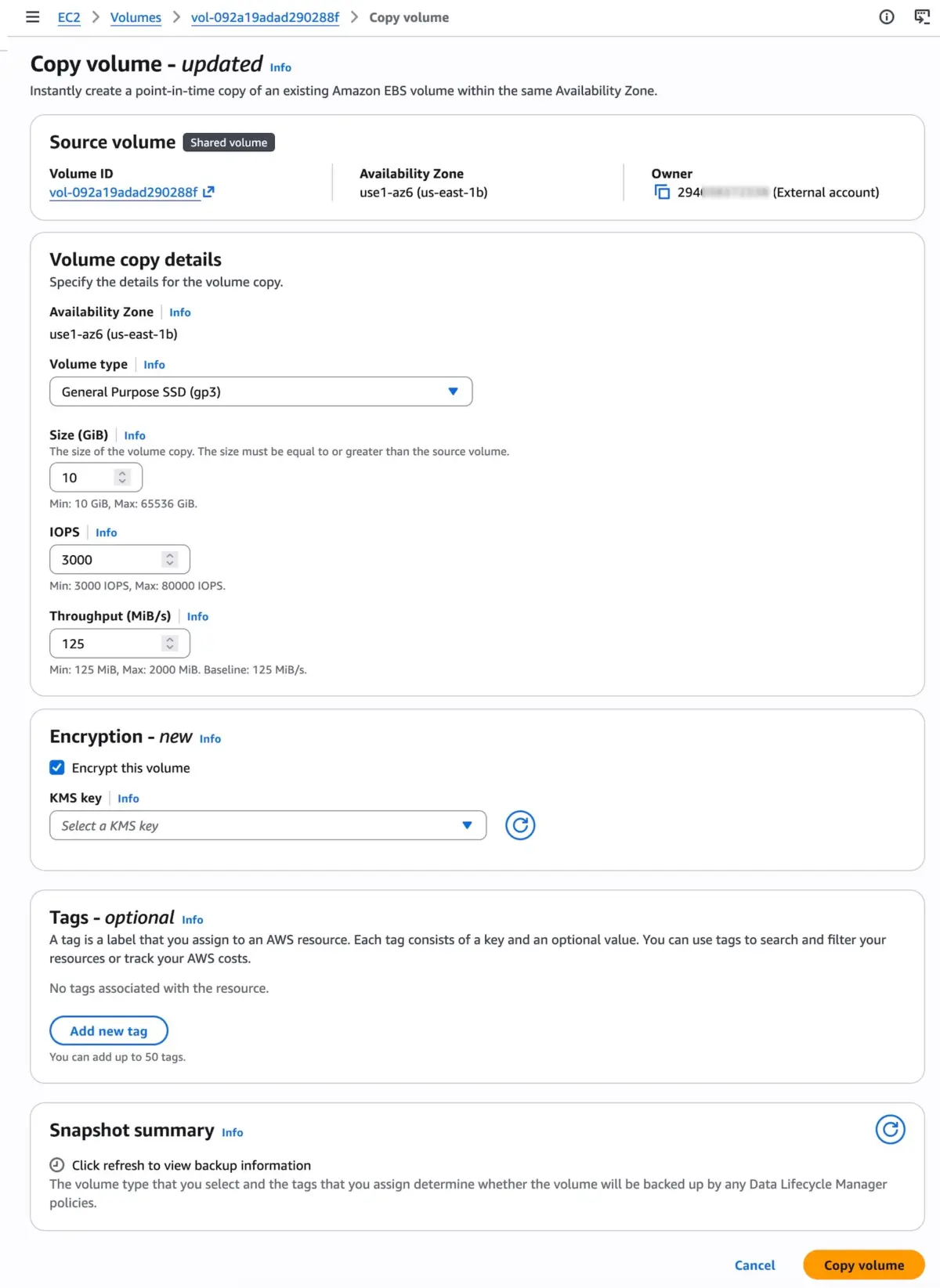
- Target-Side Copying: Once accepted, the shared volume immediately surfaces within the target account’s EBS console. The target engineer can then trigger a "Copy volume" operation.
- Cryptographic Customization: During this copy operation, the target account administrator can optionally apply a distinct AWS KMS customer-managed key (CMK) specific to that target environment, satisfying multi-tenant encryption requirements and regulatory compliance frameworks.
Supporting Context & Metrics: Operational Efficiency and Security Posture
Bridging Speed and Security in Enterprise CI/CD
In fast-paced software engineering organizations, the velocity of deployment pipelines is directly correlated to the quality and freshness of the data flowing through test and QA environments. Stale test data often fails to surface edge cases, race conditions, or performance bottlenecks that only manifest when applications encounter realistic, production-scale datasets.
With cross-account EBS volume cloning, organizations can establish automated, routine data refreshes from production to staging accounts without incurring the performance degradation or storage latency associated with legacy snapshot-to-volume hydration chains.
From an operational metrics perspective, this capability delivers significant advantages:
- Time-to-Data Reduction: Eliminating the intermediate snapshot creation and rendering steps compresses multi-hour data provisioning exercises into near-instantaneous operations.
- Storage Cost Optimization: By leveraging the underlying architecture of volume clones—which only allocate additional storage as data is modified—organizations avoid duplicating static data unnecessarily across accounts, driving down overall storage footprint costs.
- Granular Least-Privilege Access: By utilizing AWS RAM, access is managed at the resource level without requiring broad, overly permissive IAM cross-account trust relationships, adhering strictly to the principle of least privilege.
Cryptographic Isolation and Compliance
Compliance frameworks such as PCI-DSS, HIPAA, SOC 2, and GDPR mandate strict controls over data access, residency, and encryption keys. In a multi-account architecture, allowing a development account to read production data without proper cryptographic segregation represents a severe compliance vulnerability.
The integration of AWS KMS into the cross-account cloning workflow solves this challenge natively. When a volume is copied into a target account, the target account is not merely reading the production ciphertext under the production key; rather, it is re-encrypting the payload using its own designated target-account KMS key. This ensures that:
- Production security teams retain absolute revocation control over production keys.
- Development teams operate within an isolated cryptographic domain where production keys are never exposed or utilized outside of their designated boundary.
- Audit trails (via AWS CloudTrail) clearly record cross-account sharing events, acceptance statuses, and key usages, providing an immutable compliance ledger for internal and external auditors.
Official Statements and Architectural Guidance
Industry analysts and AWS architecture specialists have praised the release for addressing a long-standing operational pain point in enterprise cloud migration and management.
In releasing the feature, AWS storage leadership emphasized the company’s continuous commitment to listening to customer feedback:
"Enterprise customers have increasingly embraced multi-account strategies to enforce operational boundaries and security controls. However, this architectural best practice historically introduced friction when engineering teams needed to synchronize production data into isolated development and testing environments. With cross-account copy support for Amazon EBS Volume Clones, we are eliminating this dichotomy. Customers can now achieve the ultimate balance: uncompromising security isolation across account boundaries paired with frictionless, high-speed data mobility for modern CI/CD pipelines."
Furthermore, AWS documentation highlights the seamless programmability of the new feature. Beyond manual console interactions, administrators can orchestrate and automate cross-account volume sharing and copying programmatically using AWS APIs, the AWS Command Line Interface (CLI), and Infrastructure as Code (IaC) tools such as AWS CloudFormation and Terraform.

For developers leveraging AI-assisted coding environments and modern development toolchains, AWS has also ensured compatibility via the AWS MCP (Model Context Protocol) Server and associated plugins, enabling engineering teams to search API documentation, construct sharing policies, and query volume states directly from their preferred integrated development environments (IDEs).
Future Outlook: The Road Ahead for Cloud Storage Governance
As cloud infrastructures grow increasingly sophisticated, the boundaries between storage administration, security governance, and software delivery pipelines will continue to blur. The introduction of cross-account EBS volume cloning is not merely an incremental feature update; it represents a philosophical shift toward frictionless data governance—where data can move fluidly where it is needed for innovation, while remaining unconditionally locked down where it is governed for security.
Looking toward the future roadmap, cloud architects anticipate further enhancements in multi-account storage management. Potential areas of evolution include:
- Automated Policy-Driven Sharing: Native integration with AWS Organizations tag-based policies to automatically share specific production volume clones with pre-approved development accounts based on metadata tagging.
- Cross-Region Cross-Account Cloning: Extending the high-speed cloning paradigm across geographical regions to support global disaster recovery testing and multi-region active-active validation workflows.
- Enhanced Cost Allocation Tagging: Deeper integration with AWS Cost Explorer to automatically attribute storage clone consumption costs back to the specific business units or development accounts initiating the copy operations.
Getting Started Today
Cross-account volume clones for Amazon EBS are generally available starting today across all AWS Regions that currently support Amazon EBS Volume Clones. Organizations wishing to review regional availability and upcoming roadmap items can consult the AWS Capabilities by Region portal.
Cloud administrators and DevOps engineers can begin experimenting with the feature immediately by navigating to the Amazon EC2 console, selecting an eligible EBS volume, and choosing Share volume to initiate their first cross-account resource share via AWS RAM. As organizations adopt this capability, feedback can be directed to the AWS re:Post for Amazon EBS community or through standard enterprise AWS Support channels, helping shape the next generation of cloud storage innovation.