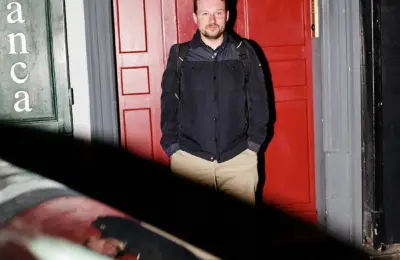
As the media landscape grapples with the converging forces of high-stakes technology, unprecedented public relations strategies, and deep-seated political anxieties, WIRED’s flagship podcast Uncanny Valley has offered a rare glimpse behind the curtain of modern journalism and institutional scrutiny. In a recent crossover episode, executive editor Brian Barrett and politics and science director Leah Feiger sat down with WIRED global editorial director Katie Drummond to unpack one of the most closely guarded secrets in recent media history: the three-year concealment of Nathan Fielder and Lance Oppenheim’s provocative new documentary, You Can See Everything.
Beyond the Hollywood cloak-and-dagger operations, the episode widened its lens to confront the sudden philanthropic impulses of Silicon Valley’s elite. From Anthropic’s allocation of 5 percent of its shares to a public benefit fund to Elon Musk’s headline-grabbing, albeit vague, promises of SpaceX stock distribution, tech billionaires are attempting to reframe their societal impact amid mounting public pushback and regulatory pressure.
Simultaneously, an investigative report by WIRED revealed a chilling nationwide harassment campaign targeting election offices across at least 32 states just weeks before the midterms—complete with suspicious letters and white powder. Together, these events sketch a complex portrait of an era defined by artificial intelligence overreach, political volatility, and the growing friction between corporate power and public trust.
Detailed Chronology: The Three-Year Secret of You Can See Everything
The genesis of WIRED’s viral cover story began not with a traditional press release, but with a high-security nondisclosure agreement (NDA) and an unexpected Uber ride. Fielder, renowned for his uniquely deadpan and socially disquieting comedy in projects like The Rehearsal and How To With John Nathan-Fielder, had spent a month living inside Elizabeth Holmes’s home in the weeks leading up to her 2022 imprisonment for the Theranos fraud.
Collaborating with codirector Lance Oppenheim, Fielder quietly constructed You Can See Everything, a documentary kept under wraps from the broader public for three years. Only a few dozen individuals viewed the project prior to its debut at the Telluride Film Festival. Katie Drummond was among them, though her journey to securing the exclusive cover story required absolute trust and a leap of faith.
"I got an email from [Fielder’s publicist] that said, ‘Do you have a few minutes to talk about Nathan Fielder?’" Drummond recounted during the podcast. "I wrote back and said, ‘I have all the time in the world.’"
Upon signing a strict NDA—unaware at the time that a movie, let alone a print magazine cover, was even on the table—Drummond and WIRED print director Reyhan Harmanci found themselves inducted into a tight circle of confidentiality. For Drummond, the initial communications carried a lingering paranoia: could this elaborate secrecy simply be an extension of Fielder’s famous public bits? She recalled Fielder’s deadpan CNN appearance with Wolf Blitzer, where he masqueraded as a serious aviation safety expert.
Ultimately, the interview proved to be entirely genuine, though profoundly challenging. Fielder, who openly admits a deep aversion to being interviewed, struggled with the vulnerability of explaining his creative process. Rather than detailing his direct emotional takeaways from observing Holmes and her inner circle—details he feared would skew viewers’ objective interpretations of the documentary—Fielder frequently turned the tables, interviewing Drummond herself about her thoughts on the film.
The resulting profile sparked a massive wave of online discourse, inadvertently reshaping Drummond’s digital footprint (complete with humorous AI overview mix-ups identifying her as a felon) while thrusting WIRED back into a broader historical reckoning.
Supporting Context & Metrics: WIRED’s Institutional Reckoning
The release of the Fielder profile did not happen in a vacuum. In tandem with the cover story, WIRED published a piercing retrospective by former editor Adam Rogers, examining how the magazine—alongside much of the mainstream tech media—became an early cheerleader for Theranos in the early 2010s.
During that era, a cultural worship of young, disruptive startup founders permeated tech journalism. Elizabeth Holmes capitalized on this milieu, leveraging her gender and youth to project an aura of revolutionary medical innovation. The media establishment, eager to champion the next great Silicon Valley paradigm shift, often failed to apply rigorous skepticism to unverified claims.
"It was really smart people making smart decisions within the context that they were operating at the time," Drummond reflected on the podcast. "But I think that context has really changed. And I think there’s a lot more necessary skepticism of these people and their ideas and where this money is getting funded from."
This institutional self-reflection mirrors a broader shift across the technology beat. Today’s tech journalists and editors operate in an ecosystem scarred by crypto crashes, generative AI labor disruptions, and systemic corporate deception. The juxtaposition of Fielder documenting Holmes’s final weeks before prison, coupled with WIRED’s candid confession of its past journalistic blind spots, underscores a profound cultural evolution: the honeymoon phase between the press and Silicon Valley is definitively over.
Official Statements and Corporate Philanthropy: A Tech Billionaire Pivot
While journalists deconstruct the sins of tech’s past, contemporary tech barons are aggressively engineering their public narratives for the future. Over a span of several days, major players in the artificial intelligence and aerospace sectors announced sweeping, yet vague, philanthropic initiatives.
On Sunday, AI safety and research firm Anthropic announced it would commit 5 percent of its company shares to a public benefit fund explicitly designed to address artificial intelligence’s displacement of the labor market. The fund is structured to issue charitable donations or direct capital toward "specific populations."
Just a day later, Elon Musk took to X (formerly Twitter) to promise that next year he will distribute a SpaceX share to every child in America, teasing it as the first of many such gestures. Though Musk provided no operational details, the announcement immediately drew public praise from political figures, including Donald Trump. Observers quickly calculated that even if executed, a fractional share distribution would amount to a nominal sum per individual, highlighting the superficial nature of the gesture.
These announcements arrive against a backdrop of plunging approval ratings for major tech entities. With data centers facing intense local backlash and the societal impacts of generative AI sparking bipartisan concern, tech companies are desperately searching for favorable PR levers.
As financial journalist Matt Levine observed, these corporate maneuvers reflect the distinct psychology of each entity:
- Anthropic projects institutional paternalism, asserting that only sophisticated AI labs possess the foresight to manage societal restructuring.
- Elon Musk leans into libertarian populism, favoring direct, decentralized equity distributions.
- Meanwhile, reports from outlets like the Financial Times previously indicated that OpenAI considered offering the United States government a 5 percent stake—signaling an eagerness to institutionalize ties with federal regulators.
Beneath the veneer of philanthropy lies a fundamental anxiety. These initiatives anticipate a near-future economic landscape hollowed out by automation, wherein tech monopolies dictate the terms of universal basic income (UBI) and public appeasement.
Future Outlook: Voter Intimidation and the Midterm Security Crisis
As the technology sector attempts to buy back its social license, the democratic fabric of the United States faces immediate, physical threats. A comprehensive multi-state investigation led by WIRED reporter David Gilbert revealed that election offices in at least 32 states received suspicious letters in the weeks leading up to the midterm elections—many of which contained mysterious white powder.
The campaign began when an official in the Louisiana Secretary of State’s Office opened a mail piece, triggering an emergency room rush and facility evacuation. Subsequent hazardous materials testing proved the substance non-hazardous, but the incident was far from isolated. Postal inspectors and the FBI confirmed that similar mailings targeted congressional offices and election infrastructure nationwide, hitting both Democratic and Republican jurisdictions indiscriminately.
While the United States Postal Service successfully intercepted the vast majority of the payloads before delivery, the psychological and operational toll on under-resourced election workers has been immense. Local election boards are already besieged by election-denial groups, budget constraints, and persistent rumors regarding poll interference.
Complicating the narrative further, intercepted communications—such as a letter intercepted in Utah bearing a fake Democratic Socialists of America (DSA) return address—hint at deliberate false-flag operations designed to fracture an already polarized electorate. The DSA has vehemently denied involvement. Security experts note that these tactics bear the hallmark of coordinated disinformation campaigns aimed at breeding generalized domestic distrust rather than advancing a coherent political agenda.
As voters head to the polls, the convergence of AI-driven labor anxiety, corporate posturing, and tangible threats to election integrity paints a turbulent picture for the immediate future. The institutions tasked with safeguarding democracy—and the journalists documenting their struggles—remain on high alert, navigating an environment where the boundaries between digital hype, institutional reckoning, and physical reality have never been more blurred.