In an era saturated by algorithmically optimized commerce, hyper-curated digital storefronts, and the sanitized, mass-marketed dreams of classical perfumery, a new olfactory venture is turning the industry’s foundational assumptions inside out. 12_things, a subversive fragrance brand founded by Charles Vickery, posits a radical counter-narrative: what if perfume did not seek to whisk you away to a sun-drenched Mediterranean yacht or a manicured botanical garden, but instead anchored you firmly in the gritty, decaying urban reality of the modern metropolis?
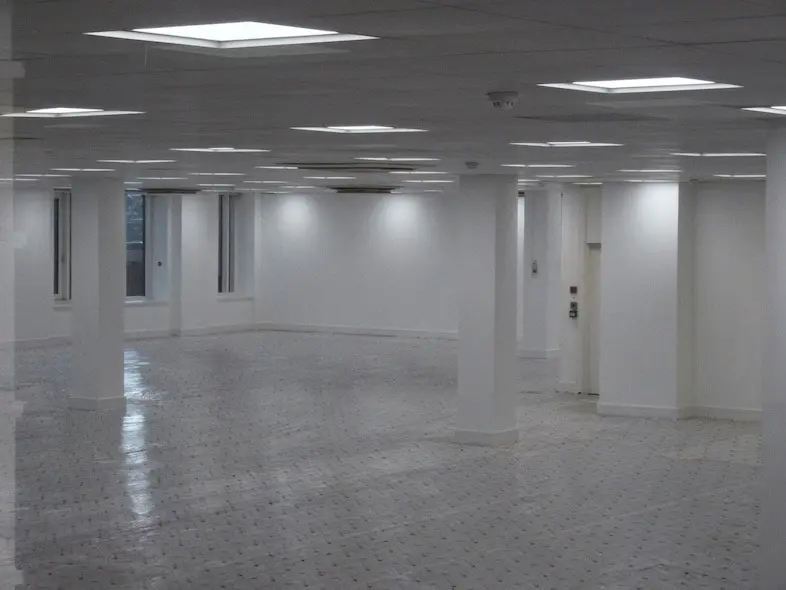
Drawing inspiration from liminal spaces, industrial decay, architectural voids, and even morgues, 12_things explores the corrupted beauty of the overlooked and the unpalatable. Eschewing the neat pyramid structures of traditional scent design, Vickery’s formulations blend high-end perfumery ingredients with notes of damp paper, cold metal, asphalt, ambergris, and iodine. Yet, the disruption is not confined merely to the juice within the bottle. The brand’s physical retail concept and digital footprint are engineered as acts of intentional friction: a vanishing storefront built from repurposed bank vault drawers that literally deconstructs itself with every sale, and an anti-website that requires customers to text a mobile number simply to gain access.
This deep dive investigates the genesis, philosophy, and disruptive mechanics of 12_things, examining how a brand rooted in the aesthetics of the void is capturing the cultural zeitgeist and redefining what it means to experience luxury in a hyper-digitized world.
Detailed Chronology: The Evolution of an Industrial Aesthetic
The conceptual arc of 12_things did not emerge overnight; rather, it developed as a reaction against the homogenizing forces of contemporary consumerism and the sterile predictability of mainstream fragrance marketing.
Phase I: Deconstructing the "Garden" Paradigm (Pre-Launch Conceptualization)
For decades, the commercial fragrance industry has operated on the promise of escapism. Perfumes are marketed as olfactory passports designed to transport the wearer to idealized locales—lush floral gardens, decadent dessert parlours, or glamorous nocturnal haunts. Charles Vickery recognized a profound disconnect between these aspirational fantasies and the lived reality of urban dwellers. Living and working in environments dominated by concrete, glass, and steel, Vickery began to question why the visceral, everyday smells of city infrastructure were systematically excluded from high-end perfumery.
Central to the brand’s foundational philosophy are two guiding maxims: "the world does not smell like a garden" and "every act of creation is at first an act of destruction." These tenets informed the development of initial accords that embraced entropy, decay, and the material residues of human habitation. Rather than masking the grit of the modern wasteland, Vickery sought to marry fine-art perfumery techniques with unvarnished industrial realities.

Phase II: The Formulation of the Wasteland (Product Development)
Moving from theory to chemistry, 12_things developed a portfolio of scents that actively challenge conventional olfactory comfort zones.
- Infrastructure was engineered to capture the brutalist poetry of the city, utilizing cold metal and rain-on-asphalt accords to mirror the damp grey streets of London.
- Void reinterpreted the immensely popular "skin scent" category. By anchoring legible top notes of Iso E Super and Ambroxan with deeper impressions of aged paper, damp moss, and Suederal, Vickery created the olfactory illusion of a person stepping indoors off a rain-soaked pavement.
- Condensation toyed with the familiar comfort of "fresh laundry" profiles, deliberately warping them by introducing the residual, lingering scents of an enclosed laundry room.
- Cold Storage emerged as the brand’s most confrontational statement: an unyielding exploration of mortality featuring cold metal, plastic, ambergris, iodine, and lichen—evoking the stark clinical atmosphere of a morgue while retaining a strange, organic undercurrent of zesty lime and salt.
Phase III: The Ephemeral Retail Manifestation (The Storefront Experience)
Rather than launching through conventional department stores or slick e-commerce platforms, 12_things manifested physically as an exercise in structural entropy. The retail space was constructed entirely from floor-to-ceiling repurposed bank vault drawers. These heavy metal compartments serve a dual purpose: they house the fragrance bottles like mini morgue drawers, and they act as the primary packaging.
When a customer purchases a fragrance, the entire metal drawer goes home with them. Consequently, the walls of the shop physically degrade with every single transaction. This self-destructive architectural loop ensures a finite lifespan for the store; once all the drawers are distributed, the space will permanently close, mirroring the very cycles of decay that inspired the perfumes within.
Phase IV: Digital Rejection and the Text-Message "Dealer"
In tandem with its physical ephemerality, 12_things engineered a digital strategy designed to alienate the casual browser. Eschewing standard e-commerce UI/UX best practices, the brand’s website was stripped down to a single, stark landing page hosting little more than a mobile phone number.
By forcing consumers to text an unknown entity just to gain access or inquire about purchasing, Vickery deliberately reintroduced friction into a consumer journey otherwise optimized for frictionless, one-click gratification. The setup intentionally invokes the clandestine aesthetic of a black-market exchange, positioning the acquisition of artful perfume as an intentional, highly engaged act rather than passive retail therapy.
Supporting Context & Metrics: The Rise of Unpleasant Pleasures
The emergence of 12_things occurs against a broader cultural and economic backdrop defined by shifting consumer psychology within the global beauty and fragrance market.

The Niche Perfumery Boom
Over the past decade, the global fragrance market has experienced a seismic shift away from legacy designer houses toward independent, niche, and avant-garde perfumeries. Consumers—particularly younger demographics fatigued by ubiquitous celebrity scents and mass-market dupes—are increasingly seeking out idiosyncratic, challenging, and narrative-driven olfactory experiences. According to recent retail data, niche fragrance sectors have consistently outperformed traditional legacy portfolios, driven by an appetite for rarity and authenticity.
The Psychology of Atypical Accords
The willingness of consumers to embrace unusual or even jarring scents is well-documented in behavioral science and consumer research. Humans have long exhibited a complex, paradoxical attraction to typically unpleasant or pungent stimuli—phenomena observed in the enduring appeal of petrol station forecourts, chemical disinfectants, old books, and damp basements.
Perfume houses have increasingly tapped into this psychological quirk, introducing atypical accords such as industrial ink, vinyl records, metallic compounds, and rubber into mainstream and luxury formulations (seen in experimental lines by brands like Yves Saint Laurent, Tom Ford, and Toskovat’). 12_things takes this psychological curiosity and radicalizes it, elevating industrial byproducts and indicators of decay into high-art compositions that force the wearer to confront the beauty hidden in plain sight.
Official Statements & Design Philosophy
The intellectual scaffolding of 12_things is anchored by Charles Vickery’s uncompromising vision for modern creative practice. In various statements detailing the brand’s ethos, Vickery has elaborated on the tension between artistic integrity and commercial ease:
"Traditional perfumery is always telling us to escape the world we live in; it wants to take us on holiday, and it excludes the beauty of the world we walk over. The world around us, especially in somewhere like London, is concrete, metal, glass; it’s grey and a bit miserable, but I wanted to turn that ugly brutality into something beautiful, because it’s human, we see it every day."
Addressing the camp, subversive subtext embedded within his formulations, Vickery notes the interplay between historical perfumery tropes and modern irreverence:

"We are living in this wasteland where brands are optimising everything for legibility and ease. You can imagine how something smells before you try it; everything is optimised to be purchased and shipped online with small bottles, perfectly rounded edges, all the same logo, same colour palette. I wanted to fuck with that and make something that was so heavy and inconvenient. You have to really want to understand what is going on here."
On the deliberate friction of the brand’s digital presence and the threat of algorithmic homogenization, Vickery emphasizes the necessity of human connection:
"I almost wanted people to think, is this a joke? What is this perfume brand from Shoreditch where you have to text the dealer? AI is slowly taking over every creative industry, so I wanted this brand to feel human because it is odd and inconvenient. You have to want to experience this perfume enough that you’ll text someone and ask for access to the website."
Future Outlook: Surviving the Wasteland
As 12_things continues to capture the imagination of the international avant-garde, its trajectory poses intriguing questions for the future of luxury retail and artistic creation. In an economic landscape increasingly dominated by automated content generation, algorithmic trend forecasting, and instant digital fulfillment, the brand serves as a potent reminder of the value of physical friction, narrative depth, and uncompromising artistic vision.
The ultimate success of 12_things will not be measured merely by sales volume or commercial scalability metrics—indeed, the self-destructive design of its flagship store actively resists endless corporate expansion. Instead, its triumph lies in its psychological impact: shifting cultural perceptions toward our immediate surroundings and proving that even within concrete urban wastelands, liminal voids, and spaces marked by decay, profound and resonant beauty can be found.
If wearers begin to look at the grey, rain-slicked pavement of their cities and think, "It’s not that grim outside after all," then Charles Vickery’s radical olfactory experiment will have achieved its ultimate purpose: injecting a resilient, unexpected spark of hope into the very heart of the modern void.