In the sprawling, congested corridors of Mumbai—a metropolis of over twenty million souls breathing in rhythm with the Arabian Sea—every street corner holds a theatrical stage. To capture this hyper-dense urban theater requires more than a camera; it demands an intimate, relentless devotion to the pulse of daily life. Enter Yash Sheth, a documentary photographer whose work evokes the literary wanderings of Vivian Gornick in The Odd Woman and the City. Sheth’s lens offers a kaleidoscopic, occasionally dizzying testament to human expressiveness and the unforgiving concrete landscape that houses it.
Five years into his visual documentation of Mumbai, Sheth’s portfolio has expanded far beyond the clichéd postcard imagery of the Gateway of India or Marine Drive. Instead, his practice has evolved from an intuitive artistic awakening into an ambitious sociological and ecological undertaking known broadly as The Monsoon Project.
What began as a young engineer’s restless escape from the corporate grind has matured into a multi-disciplinary visual investigation. Today, Sheth’s work bridges street photography, meteorological research, anthropological archiving, and environmental journalism. At the heart of this evolution is Varsha Ritu—a Sanskrit term for the rainy season—an ongoing project that started as a vibrant celebration of Mumbai’s annual deluge and has since transformed into a critical examination of the Indian monsoon in an era of rapid climate breakdown.
This article explores Sheth’s journey: from his accidental entry into the medium to his deep immersion in the flood-prone neighborhoods of Mumbai and the vulnerable agricultural heartlands of India. Through a rigorous journalistic lens, we examine how one photographer’s obsession with the weather has become an indispensable archive of contemporary ecological reality.
Detailed Chronology: From Fiber-Optic Cables to the Streets of Bombay
The Accidental Beginning
Yash Sheth’s entry into the world of visual arts was entirely unorthodox. Trained as an engineer—a common trajectory for young men navigating India’s intensely competitive academic ecosystems—Sheth initially approached photography as a casual diversion. During his university years, driven by a quiet curiosity about visual culture, he purchased the cheapest digital single-lens reflex (DSLR) camera available on the retail market.
Without formal instruction or a grand artistic manifesto, Sheth began wandering the city streets. He documented whatever caught his eye, relying on instinct rather than technical mastery. Yet, upon completing his engineering degree, reality intervened. For three grueling years, Sheth worked a conventional corporate job, supervising the complex physical installation of fiber-optic cables across urban landscapes.
It was a period of profound disillusionment. Bound to a desk and corporate expectations, Sheth found himself miserable, stifled by a vocation that offered no intellectual or creative nourishment. The breaking point arrived quietly, leading to a definitive life pivot. Sheth cast aside his engineering career to dedicate his days entirely to the streets.
The Evolution of the Walk
In the early days of his full-time transition, Sheth’s walks mirrored the standard tourist routes of Mumbai. He photographed the neo-Gothic arches of the Gateway of India, the sweeping arc of the Queen’s Necklace at Marine Drive, and the bohemian cafes of Bandra. Soon, however, he craved authenticity over aesthetics.
Seeking a purer connection to the city’s underbelly, Sheth adopted a radical methodology: he would board a local suburban train, disembark at a completely random station, and simply walk.
"I began like anyone would by taking photographs of the Gateway of India, Marine Drive and popular neighbourhoods like Bandra… But soon I just started getting off at any train station and began walking," Sheth recalls.
These unstructured walks became his classroom. Spending hours—sometimes entire afternoons and evenings—navigating narrow, labyrinthine alleys overlooked by mainstream guidebooks, Sheth immersed himself in the unfiltered rhythm of local life. He conversed with residents, observed micro-interactions, and trained his eye to catch fleeting gestures.
The Education of the Screen
To sharpen his craft, Sheth turned to self-education. Denied formal photography school training, he spent countless hours consuming archival material online, poring over the portfolios hosted by Magnum Photos and dissecting tutorials on YouTube.
He developed a rigorous method of visual analysis. Rather than quickly scrolling through images, Sheth would isolate a single historical or contemporary photograph and study it for hours. He analyzed how light fell across a subject, how complex compositions balanced chaos and order, and how micro-expressions betrayed internal emotional states.
"Now I don’t think too deeply about composition; everything I studied comes out when I make an image. It has become a part of my consciousness," Sheth explains.
This deep assimilation of masterclass techniques liberated his instincts. When he stepped onto the streets, the hours spent analyzing Magnum archives translated effortlessly into real-time framing, resulting in tightly composed, complex, and intensely atmospheric compositions.
Supporting Context & Metrics: The Anatomy of an Archive
Surreality and Street Realism
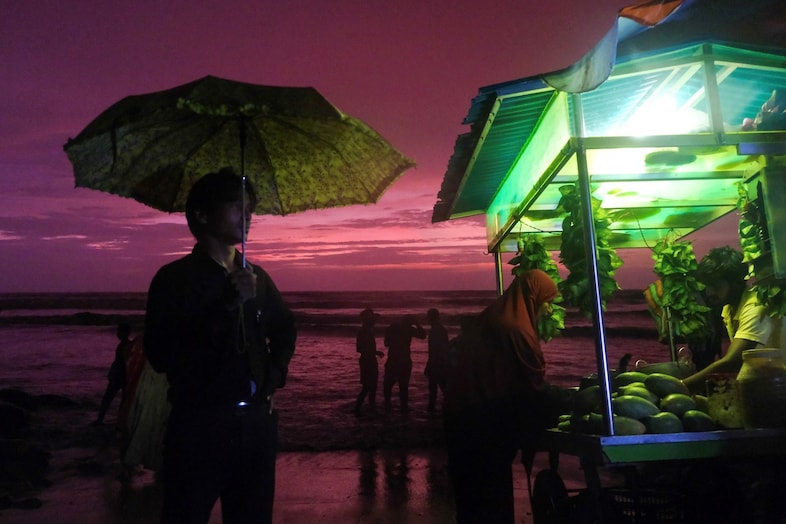
Sheth’s documentary style resists easy categorization. While grounded in the gritty reality of Indian street life, his compositions lean heavily toward the surreal and the experimental. He frequently employs bold, high-contrast framing and makes daring choices regarding light—notably utilizing an intense, direct camera flash to punch through Mumbai’s blinding midday sun, creating an artificial, cinematic isolation within hyper-crowded environments.
A scroll through his primary public archive on Instagram reveals an astonishing breadth of human and animal life:
- The Absurdist & The Mundane: A close-up frame of a stray goat wandering along a coastal shoreline with a sliver of watermelon delicately gripped in its teeth.
- Subculture & Performance: A muscular bodybuilder standing under harsh gym lights, his skin half-coated in liquid metallic paint ahead of a regional championship.
- Marginalized Communities: Intimate photographic series documenting men in traditional fishing villages adorned with gold-colored pomfret necklaces, as well as candid, unvarnished glimpses into Mumbai’s underground queer gatherings.
- Childhood Play: Perfectly geometrical, meticulously balanced shots of children playing in municipal playgrounds that possess an uncanny, staged quality—though Sheth insists every frame is strictly unscripted.
Despite the visual sophistication of these images, Sheth remains a purist regarding spontaneity. He never directs, stages, or orchestrates his subjects. His success relies entirely on patience, empathy, and being physically present at the exact intersection of time and space.
The Pivot to Meteorology: The Monsoon Project
While Sheth’s curiosity spans the entire spectrum of urban existence, nothing commands his attention quite like Varsha Ritu—the Sanskrit designation for the rainy season, which forms the cornerstone of The Monsoon Project.
[The Monsoon Project: A Multi-Branched Tree]
 ├── Root System: Childhood memories of monsoon cricket & relief from summer heat
 ├── Main Trunk: Varsha Ritu (Visual documentation of the Indian rains)
 └── Expanding Branches:
      ├── Urban Infrastructure: Documenting floods in low-lying Mumbai slums
      ├── Rural Agriculture: Tracking crop dependency and farmer livelihoods
      ├── Meteorological Research: Studying IMD weather patterns & cloud tracking
      └── Anthropological Archiving: Building long-term relationships with rural communities
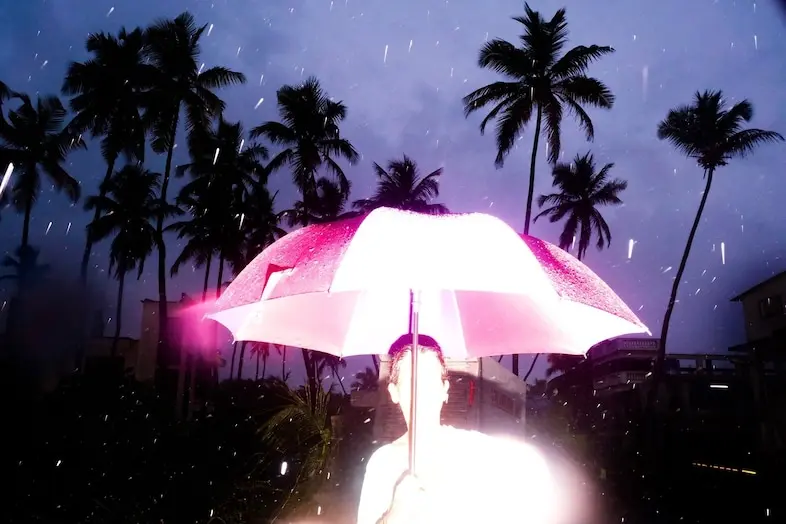
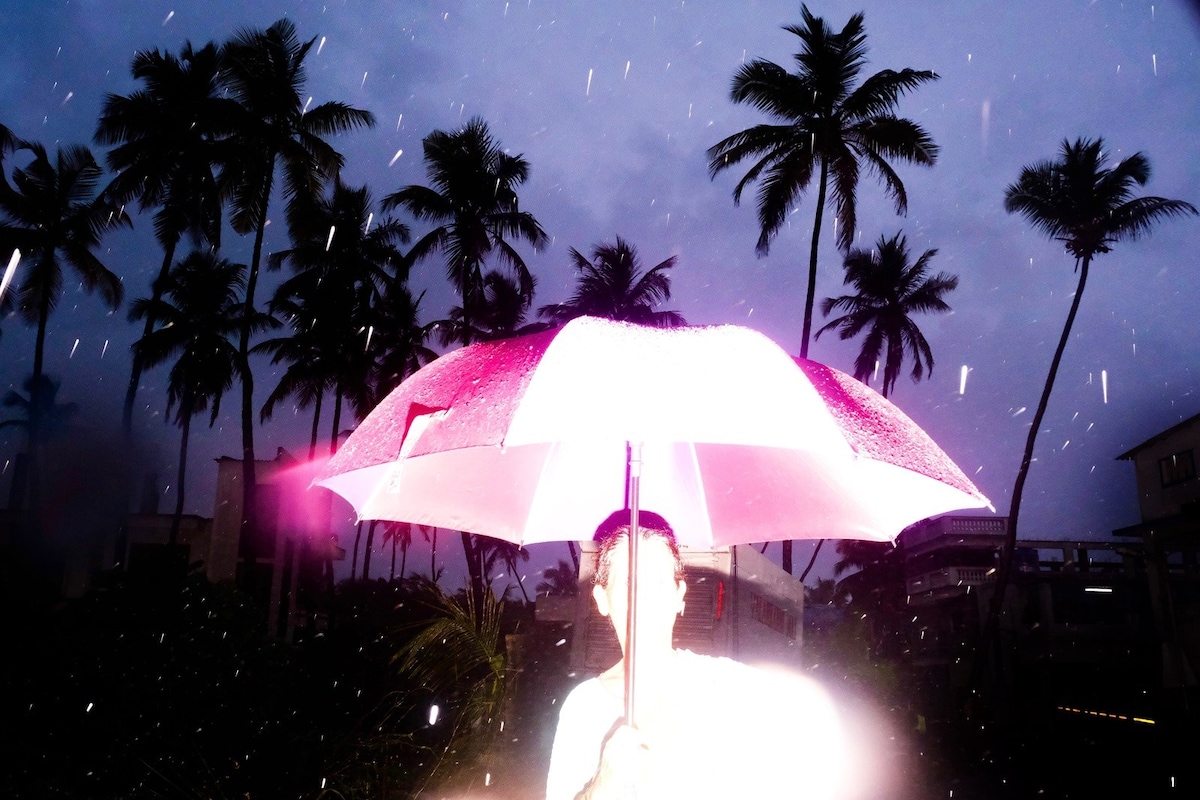
Initiated in 2021, the project initially began as an aesthetic tribute to Mumbai during the monsoon months. Armed with his camera, Sheth sought to capture the sudden, dramatic shift in the city’s mood when the torrential June rains broke the suffocating heat of the pre-monsoon summer. Early frames were defined by vibrant fields of color, chaotic seas of umbrellas, and the kinetic energy of citizens caught in sudden downpours.
However, as Sheth dedicated consecutive years to tracking the monsoon, his perspective shifted profoundly. Witnessing recurring urban infrastructure failures and listening to the testimonies of ordinary citizens forced him to confront a sobering reality: the monsoon in India is no longer behaving according to historical norms.
"The project is not solely about the Bombay rains anymore," Sheth reflects. "It has evolved into a study of the Indian monsoon, climate change, and how it is impacting the lives of people across the country."
Official Data & Environmental Implications
The transformation of The Monsoon Project from an urban art portfolio into an environmental documentary archive reflects broader, alarming shifts in South Asian climatology. According to reports from the India Meteorological Department (IMD) and independent climate research institutions, the Indian summer monsoon—traditionally spanning from June to September—has undergone erratic, volatile structural changes over the past decade.
Key Climatological Shifts Impacting Sheth’s Subject Matter:
- Delayed Onset and Compressed Spans: The monsoon frequently arrives later in the season than historical averages dictate, compressing months of expected rainfall into compressed, highly concentrated windows.
- Cloudbursts and Extreme Precipitation Events: Rather than steady, nourishing seasonal showers, regions across India increasingly experience hyper-localized cloudbursts, where unprecedented volumes of water fall within hours.
- Urban Waterlogging and Slum Vulnerability: In megacities like Mumbai, rapid and often unregulated urban development has severely compromised natural drainage systems. Low-lying informal settlements bear the brunt of this failure, frequently leaving families marooned on upper floors or facing days of stagnant, contaminated floodwaters.
- Agrarian Distress: Beyond the metropolitan borders, millions of smallholder farmers whose yields depend entirely on predictable rainfall patterns face severe economic instability due to unseasonal droughts followed by destructive floods.
Recognizing that visual artistry alone could not capture the scale of this ecological crisis, Sheth took an extraordinary step for a documentary photographer: he began formally studying meteorology.
Abandoning casual observation, Sheth now routinely analyzes satellite data, radar maps, and atmospheric reports published on the official IMD web portal. He tracks developing depression systems over the Arabian Sea and monitors convective cloud bands moving across the subcontinent.
"You can actually make out how long it will rain somewhere, so as the clouds move, I move with them," Sheth explains, detailing his logistics. "I have started using the Indian Meteorological Department website to see exactly where it is raining or is predicted to rain that afternoon; I then quickly take a local train to that area of Mumbai and wait for the rain to begin."
This data-driven approach allows him to position himself precisely where extreme weather intersects with vulnerable human communities, transforming him from a passive street flaneur into an active meteorological chronicler.
Anthropological Ethics and Community Integration
Unlike parachute journalists or transient street photographers who snatch images and vanish without a trace, Yash Sheth’s methodology is rooted in deep ethical reciprocity and long-term community engagement. He views The Monsoon Project not as a static collection of photographs, but as a living tree with an expanding root system.
Ethical Photography on the Frontlines of Crisis
Sheth’s presence in sensitive environments—whether navigating submerged informal settlements in Mumbai or visiting agrarian villages facing climate distress—is marked by radical transparency. He refuses to operate as an anonymous observer hiding behind long lenses.
"I’m not hiding in bushes, trying to be secretive about the image," Sheth asserts. "I respect their influence on the photograph and spend some time speaking to them and make sure to share the image with them on WhatsApp if they want to see it."
This simple act of digital sharing dismantles the traditional, extractive power dynamic inherent in documentary photography. By returning the digital assets directly to his subjects via mobile messaging platforms, Sheth builds immediate trust.
Over five years of relentless fieldwork, these casual interactions have blossomed into enduring personal relationships. Sheth regularly revisits the same rural communities and urban enclaves year after year.
"There are some villages I am always going back to. In those villages, families know me and invite me to their house for lunch. They are not just people I am photographing – they are my friends. I think that’s what photography, and this project, has given me. It’s a bridge to build a connection with the people you don’t know."
Future Outlook: The Expanding Branches of The Monsoon Project
As The Monsoon Project enters its sixth year of sustained documentation, Yash Sheth’s ambitions continue to scale outward. What began as a personal rebellion against an unfulfilling engineering career has crystalized into a vital, multi-disciplinary cultural archive.
Future Trajectories and Medium Expansion:
- Written Archives and Oral Histories: Recognizing that photography alone cannot capture the full narrative of climate displacement, Sheth is increasingly incorporating written essays, transcribed oral histories, and community interviews into his project framework.
- National Expansion: While Mumbai remains his primary operational base, Sheth’s meteorological tracking is pulling him deeper into India’s rural interior, expanding his coverage to drought- and flood-stricken agricultural districts across Maharashtra and neighboring states.
- Exhibitions and Public Engagement: Plans are underway to transition The Monsoon Project from digital platforms like Instagram into physical gallery spaces, photobooks, and educational installations designed to foster public discourse around urban resilience and climate adaptation in South Asia.
In an era dominated by hyper-curated, algorithmic content designed for fleeting digital consumption, Yash Sheth’s work offers a profound counter-narrative. By marrying rigorous meteorological study with deep human empathy, he reminds us that art and documentation are most powerful when they bear witness to truth. Through his lens, the rains of Mumbai and the fields of rural India are immortalized not merely as weather events, but as the living, breathing pulse of a changing world.
To follow Yash Sheth’s ongoing journey, study his meteorological dispatches, and track the evolution of The Monsoon Project, visit his official Instagram handle.