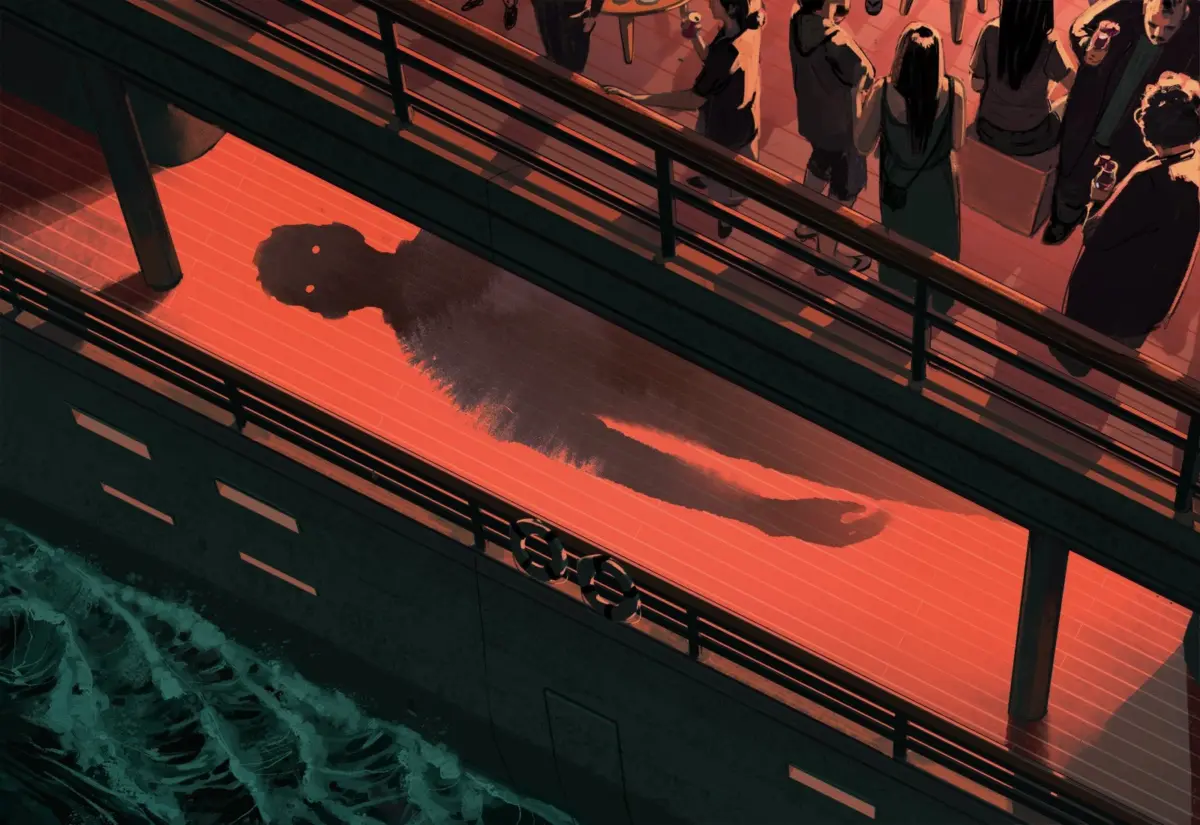
For millions of vacationers worldwide, a cruise represents the epitome of relaxation—an all-inclusive floating paradise where azure waters, world-class dining, and endless entertainment promise an escape from reality. Multi-billion-dollar corporations like Carnival Corporation, Royal Caribbean, Disney Cruise Line, and Norwegian generate massive revenues by selling this dream of carefree luxury. However, beneath the polished marketing campaigns, high-energy commercials, and festive deck-side events lies a dark, persistent undercurrent: sexual assault at sea.
According to Federal Bureau of Investigation (FBI) statistics, sexual assault is the most prevalent reported crime on cruise ships. Since 2015, hundreds of allegations have been officially logged, though legal experts and advocacy groups emphasize that these figures represent only a fraction of actual incidents due to widespread underreporting. Victims—ranging from minor children to adults—frequently encounter a corporate response prioritizing brand protection, institutional secrecy, and financial containment over transparent accountability and victim care.
Despite mounting civil lawsuits, multi-million-dollar jury verdicts, and harrowing firsthand accounts from survivors and former security personnel, major cruise operators have repeatedly resisted enacting comprehensive safety overhauls. Internal corporate records, whistleblower testimonies, and court depositions reveal a systemic pattern: security staffing shortages, poorly trained personnel, deficient closed-circuit television (CCTV) coverage, and a legal framework that places immense hurdles in the path of justice for victims of maritime crimes.
Detailed Chronology: Case Studies in Corporate Negligence
The systemic failures of the cruise industry are starkly illustrated by examining specific, documented incidents spanning over a decade. These accounts expose how major lines handle allegations, interact with federal law enforcement, and manage evidence.
The Carnival Miracle (December 2018)
On the first Saturday of December 2018, the Carnival Miracle cast off from Cozumel, Mexico, bound for Tampa, Florida. Among the 2,000 passengers was a 21-year-old woman taking her first-ever cruise, identified in court documents as Jane Doe. After spending the day tanning, drinking, and attending an evening comedy show, Doe went running around the ship’s decks near midnight.
According to a 2019 civil complaint, a Carnival crew member lured her into a service closet and locked the door. Despite her attempts to calm the situation, the crew member raped her. When the assailant finally unlocked the door, Doe rushed to her cabin, pursued by the employee, who asked to be let inside before she locked him out.
Hyperventilating and experiencing a severe panic attack, Doe reported the crime to guest services. Taken to the ship’s medical facility, she recounted the assault to a shipboard doctor, who allegedly responded, "Unfortunately, this happens all the time."
The ship docked in Tampa the following morning, where FBI agents boarded the vessel. However, critical evidence had already been compromised. Medical personnel had administered a rape kit and seized Doe’s clothes and underwear, but Carnival failed to preserve the rape kit or the garments. Furthermore, the company claimed surveillance footage and the alleged assailant’s employment file were no longer available.
Though Carnival fired the crew member, he was never criminally charged and was permitted to leave the country. In July 2022, a Miami federal jury ruled that Carnival was liable for the acts of its crew member and awarded Doe over $10.2 million in damages—believed to be the largest sum ever awarded in a cruise line sexual assault case. Carnival denied wrongdoing and pursued an appeal.
The Disney Wonder and the Case of "G." (August 2012)
Internal security operations and the handling of minors have long been central to criticisms of Disney Cruise Line. On August 5, 2012, while the Disney Wonder was docked in Florida, an 11-year-old girl—referred to as "G."—was allegedly molested by a crew member within minutes of boarding. Seeking the Wi-Fi password, G. asked a restaurant employee for directions; the employee grabbed her breasts. Later, when she entered an elevator to return to her room, the same employee followed her inside, blocked the doors, and forced a kiss on her mouth.
Dawn Taplin, a decorated former Florida law enforcement officer hired by Disney as a security officer following a series of public relations crises, reviewed the elevator CCTV footage, which corroborated the child’s account. Taplin urged senior officers to contact the FBI immediately while the ship remained docked in Port Canaveral. Instead, the ship cast off at 5 p.m., delaying notification to federal authorities until the vessel reached international waters.
When the accused crew member was questioned, he denied the allegations. According to Taplin, a senior Disney officer threatened the employee violently during the interview. When the ship docked in the Bahamas the next day, local police officers reportedly pressured the suspect into signing a confession. Rather than facing trial in the United States, the man was repatriated to India. Investigations later suggested he subsequently secured employment with another major cruise line. G. and her family received no counseling or follow-up support from Disney.
The Sky Princess (2021)
In January 2023, a 27-year-old woman filed a civil lawsuit against Princess Cruises, a subsidiary of Carnival Corporation, alleging that she contracted HIV after being raped by a gallery employee aboard the Sky Princess in 2021. Listed in court documents as Jane Doe and referred to as B.U., the victim stated she was lured into an art gallery storage room while intoxicated and assaulted.
Traumatized and trapped on the vessel for the remaining five nights of the cruise, B.U. did not report the incident immediately. Months later, persistent physical symptoms led to emergency room visits, resulting in her HIV diagnosis in February 2022. B.U. subsequently developed severe post-traumatic stress disorder (PTSD), anxiety, and depression. Princess Cruises’ parent company declined to comment on the specifics of the case, filing a motion to dismiss the lawsuit on procedural grounds.
Supporting Context & Metrics: The Scale of the Crisis
Federal Data and Prevalence
According to the FBI, sexual assaults remain the most frequently reported crime on cruise ships. Since 2015, hundreds of allegations have been officially logged with the Department of Transportation. Following the post-pandemic return of full-capacity cruising, reported incidents surged; in 2022, 87 alleged sexual assaults were documented on cruise ships—the second-highest total since the U.S. government began publishing maritime crime statistics in 2010.
Experts widely agree that reported numbers represent only the tip of the iceberg. According to the Rape, Abuse & Incest National Network (RAINN), more than two-thirds of all sexual assaults in the United States go unreported to law enforcement. At sea, the barriers to reporting are magnified by isolation, fear of retaliation, and psychological trauma.
The Security Deficit and Corporate Priorities
Internal corporate documents, depositions, and whistleblower testimonies reveal systemic deficiencies in onboard security:
- Understaffing: Former Carnival security directors, including the late Michael Panariello and retired executive Dominick Froio Jr., testified in various civil lawsuits that they had repeatedly requested additional security personnel to patrol passenger corridors since 2007. These requests were routinely denied by senior executives citing budget constraints and a lack of cabin space.
- Inadequate Surveillance: Audits conducted by cruise security managers revealed severe gaps in CCTV coverage, with passenger hallways, stairwells, elevators, and public corridors frequently lacking recording equipment.
- Minimal Training: Security officers on some vessels received as little as nine hours of online training upon hire, leaving them ill-equipped to handle, investigate, or preserve evidence for major felony crimes.
Jamie Barnett, president of the advocacy group International Cruise Victims—whose daughter died of a drug overdose on a Carnival cruise—summarized the corporate calculus: "It is much more profitable and financially beneficial for them to just settle each claim or lawsuit on a case-by-case basis… They don’t need to increase security and safety standards because they can continue to simply and legally avoid them."
Over the past two decades, major U.S. cruise lines—including Carnival, Royal Caribbean, Disney, and Norwegian—have settled at least 68 civil cases, nearly half involving minors, often under strict confidentiality agreements where companies explicitly deny liability.
Official Statements and Industry Defense
Cruise industry representatives strongly contest allegations that their vessels are unsafe. The Cruise Lines International Association (CLIA) maintains that cruise ships are among the "safest vacation options in the world," asserting that serious crime rates are exceedingly lower at sea than on land due to multiple layers of security.
Dr. James Alan Fox, a Northeastern University criminology professor who has served as a defense expert in cruise sexual assault cases, authored a 2019 study commissioned by CLIA. Analyzing FBI data, Fox concluded that per capita rates of sexual assault between 2015 and 2018 were significantly lower on cruises than in similarly populated U.S. cities. "No place is totally safe… Overall, the risk is very low. But not zero," Fox noted.
Carnival Corporation issued statements emphasizing its commitment to guest safety, highlighting that out of nearly 25 million guests who sailed across its brands since 2018, a small fraction of assault allegations were reported. The company maintains that its ships are equipped with dedicated security departments staffed by trained personnel, medical facilities, and robust investigative protocols.
Future Outlook and Legislative Reform Efforts
The Jurisdictional Void and Legal Hurdles
Unlike crimes committed on land, crimes at sea lack an immediate, independent local police force to secure crime scenes. Victims must rely on shipboard security personnel who may lack proper forensic training. Furthermore, federal agencies like the FBI face significant jurisdictional bottlenecks when ships are in international waters.
Victims seeking civil redress face formidable legal obstacles:
- Short Statutes of Limitations: Most major cruise lines require passengers to file civil lawsuits within one year of an alleged incident.
- Mandatory Venue Clauses: Cruise operators dictate the specific state and federal court where complaints must be filed, frequently requiring victims to travel cross-country.
- Jurisdictional Rights: Constitutional protections taken for granted on land often do not extend seamlessly onto foreign-flagged vessels operating in international waters.
Legislative Pushback: The Cruise Passenger Protection Act
For over a decade, lawmakers such as U.S. Senator Richard Blumenthal (D-CT) have pushed for legislative reform. Blumenthal has repeatedly introduced the Cruise Passenger Protection Act, which aims to:
- Extend the statute of limitations for civil lawsuits from one year to three years.
- Mandate increased security requirements, including enhanced CCTV coverage and retention of video records for 20 days.
- Establish a dedicated hotline for reporting crimes at sea.
- Compel cruise ships to notify the FBI within four hours of an alleged incident and prevent vessels from departing U.S. ports before federal law enforcement can intervene.
While broad federal legislation has faced heavy pushback from the cruise industry’s powerful lobbying apparatus—which OpenSecrets reports has spent tens of millions of dollars over the last five years—some targeted provisions have successfully been signed into law. Measures embedded in National Defense Authorization Acts (NDAA) now mandate qualified physicians on every vessel and require expanded camera coverage in common areas.
As cruise executives gather at annual industry summits under banners like "Forward Momentum," survivors, advocacy groups, and maritime attorneys continue to demand fundamental structural changes. Until comprehensive federal mandates replace voluntary corporate policies, the tension between multi-billion-dollar profit margins and passenger safety at sea will remain a defining crisis for the global cruise industry.
If you have information or a tip regarding allegations of abuse or sexual assault on cruise ships, contact investigative channels securely or reach out to law enforcement authorities immediately.