Executive Overview
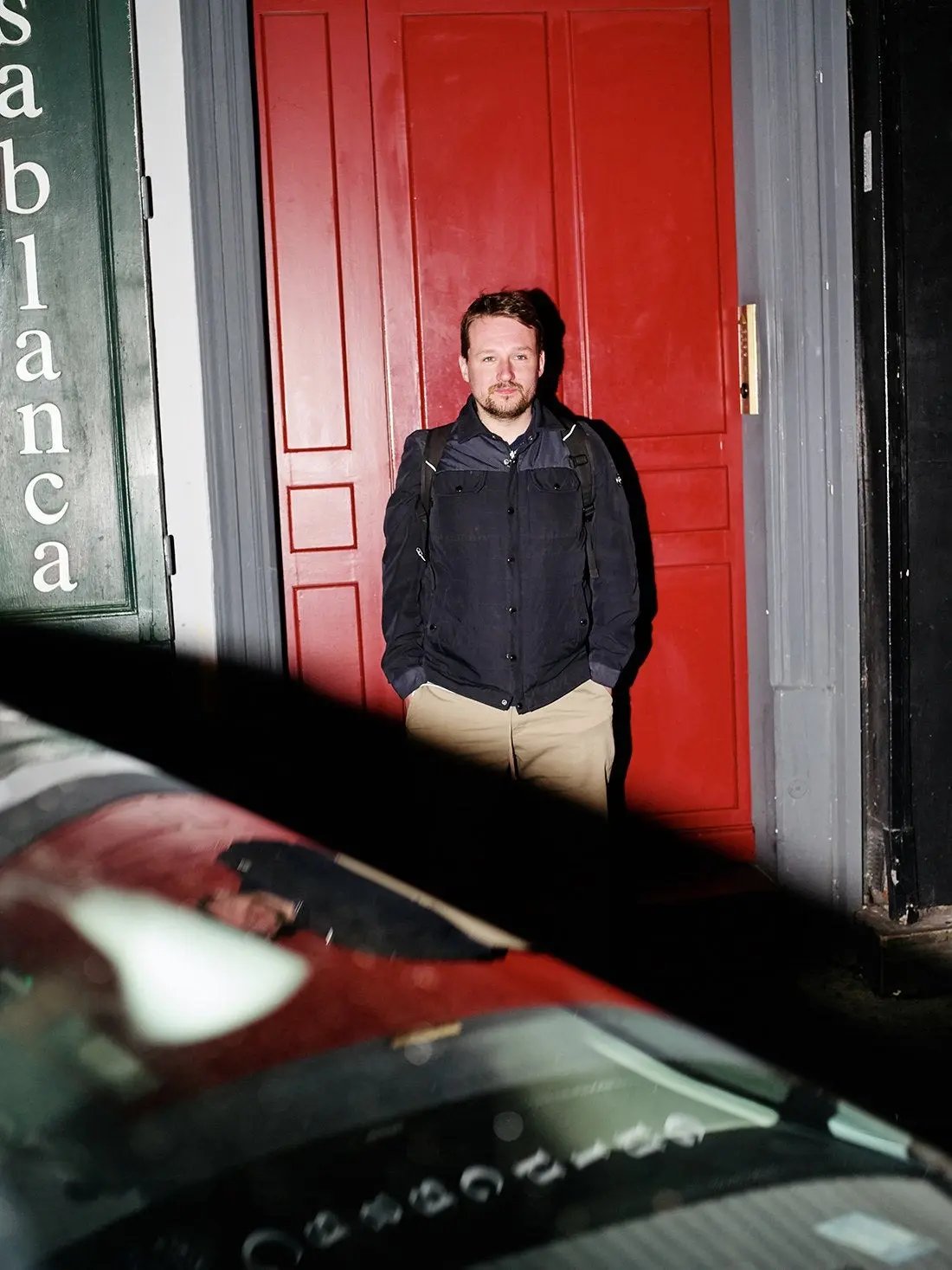
The landscape of modern journalism has undergone a tectonic shift over the past decade. Traditional television broadcasts and next-day broadsheets are increasingly sharing the informational ecosystem—and sometimes losing ground—to real-time, native-digital social media streaming. At the epicenter of this transformation in France is Rémy Buisine, a 32-year-old video journalist for the French online media outlet Brut.
During the volatile spring of 2023, as millions of French citizens took to the streets to protest President Emmanuel Macron’s contentious pension reforms—specifically the raising of the retirement age from 62 to 64—Buisine became an indispensable window into the chaos. Armed with little more than smartphones, protective gear, and an uncanny ability to connect with an intensely online generation, Buisine’s marathon livestreams captivated millions globally.
This article examines the mechanics of Buisine’s reporting during a historic day of demonstrations on April 6, 2023. It explores his unconventional career trajectory, the mechanics and psychological toll of frontline livestreaming, and what his meteoric rise signifies for the future of political journalism, civic engagement, and institutional media trust.
Detailed Chronology: Inside the April 6th Mobilization
The Prelude: Blending In with the Multitudes
The April 6 protest was already well underway when a reporter rendezvoused with Buisine. The demonstration’s scale was a matter of intense dispute, as is customary in France: police estimates placed the crowd at 57,000, while union organizers claimed upwards of 400,000 participants.
Despite his pivotal role as a digital chronicler of national unrest, Buisine wore no neon-yellow press armband at the onset. Dressed in a light navy puffer jacket and blue jeans, he blended seamlessly into the massive sea of humanity. Spotting his journalist contact from afar, Buisine shouted out a greeting before immediately pivoting back to operational matters, instructing a colleague to secure camera angles from the rear of the march.
As they walked toward the vanguard of the demonstration, Buisine deftly juggled two smartphones—one dedicated to professional operations, the other personal—snapping photos of protest signs for the Brut Instagram account. In the span of thirty minutes, half a dozen fans and peers intercepted him to exchange pleasantries, including a volunteer street medic checking in on his broadcast schedule.
Approaching the Hotspot: Montparnasse and the Gendarmerie
Stopping outside the Montparnasse railway station near the Brut offices, Buisine prepared for the inevitable escalation. From his backpack, he extracted hermetically sealed safety goggles, a gas mask, and tear gas decontaminant spray, stowing them in designated pockets of his jacket.
At precisely 3:29 p.m., a loud, concussive blast echoed down the boulevard. The crowd erupted into jeers, chanting "ACAB" with distinct French cadences. Near the Vavin metro station, clusters of young protesters dressed entirely in black and wearing face coverings lingered on the sidelines. A few yards ahead, beside the historic Café de la Rotonde, a line of gendarmerie—a militarized branch of the French law enforcement—formed a solid wall with riot shields raised.
By 3:37 p.m., the gendarmerie fired explicit warning shots. The atmosphere instantly grew taut. While some demonstrators retreated, Buisine surged forward, phone in hand, capturing footage ahead of his official livestream rollout. Black-clad youths materialized at the frontline, one striking a metal street barricade with a pipe as they advanced.
At this juncture, the reporting partner was forced to withdraw, adhering to a pre-arranged safety protocol. While Buisine is renowned for running directly toward police interventions, unaccredited civilians lack the protective gear and institutional backing required for frontline exposure. As the first tear gas canisters were launched into the thickening air, Buisine was already live.
Evening Escalation: Flames, Kettling, and Resilience
As night fell, the friction between demonstrators and authorities intensified. Buisine filmed protesters breaching a building after a resident reportedly hurled an object at them, and captured the terrifying moment the awning of the Café de la Rotonde caught fire. For roughly thirty minutes, he found himself trapped inside a vandalized bank branch surrounded by police forces.
Later in the evening, at the Place d’Italie, Buisine spent hours documenting a "kettling" operation—a controversial police tactic where law enforcement traps a crowd within a confined space. Here, cornered protesters broke into a chant honoring the journalist: "Ah Rémy, allez, allez, allez!"
Upon release, the remaining crowd marched down Avenue d’Italie, dragging garbage bins and setting fire to wooden debris to construct improvised blockades. Three members of the French National Assembly (deputies) appeared without their traditional tricolor sashes, granting brief interviews to Buisine.
At 10:54 p.m., after logging over 28,000 steps and broadcasting continuously for seven and a half hours, Buisine officially ended his livestream. On TikTok alone, 1.8 million viewers had tuned in. Yet, even as the formal broadcast concluded, he continued filming nearby fires. It took nearly forty minutes of persuasion from friends before he finally agreed to retreat to a kebab restaurant. Even there, while surrounded by peers, he continued processing and posting clips to Instagram and TikTok, his body still flooded with adrenaline.
Supporting Context & Metrics: The Rise of Brut and Digital Ethnography
The Genesis of a Digital Icon
Buisine’s path to becoming one of France’s most recognizable journalists is entirely non-traditional. Raised in a small village in northeastern France, he lacked familial connections to the media industry and struggled with traditional academic testing, which barred him from elite universities. After graduating from a horticultural technical high school, he took an entry-level job managing social media accounts for soccer players.
Relocating to Paris in August 2013, he secured a position as a community manager for Parisian radio stations. In 2015, capitalizing on the nascent livestreaming application Periscope, he began broadcasting the El Khomri labor law protests during his off-hours. Lacking formal journalism school training, Buisine learned his craft organically—gauging audience reactions in real-time and soliciting advice from veteran reporters on the streets.
His grassroots reporting caught the attention of media executives, leading to his appointment as a founding member of Brut in 2016. Initially, the traditional French political establishment viewed Brut with deep skepticism. Politicians were wary of engaging on native social media platforms. However, Buisine’s institutional credibility expanded dramatically over time, culminating in a landmark two-and-a-half-hour livestreamed interview with President Emmanuel Macron in 2020.
Metrics of Engagement and the Psychology of Livestreaming
The metrics surrounding Buisine’s coverage highlight a profound shift in consumer behavior. During the peak of the pension reform protests, Brut’s TikTok account gained one million followers in a single month, soaring to 4.2 million. Individual livestreams routinely attracted tens of thousands of concurrent viewers, with numbers spiking dramatically whenever Buisine encountered police aggression or physical danger.
This dynamic points to a complex paradox in modern viewership: danger validates authenticity. Audiences tune in precisely because the reporting is unvarnished, unedited, and physically perilous.
However, this exposure carries a severe psychological toll. Reflecting on past unrest—such as the violent Gilets Jaunes ("Yellow Vests") movement that began in 2018—Buisine recalled witnessing catastrophic injuries: open skulls, lost eyes, and maimed limbs. Despite the trauma, Buisine maintains that livestreaming is the only medium capable of capturing the true "essence" of a social movement. By granting ordinary citizens extended, uninterrupted platforms to voice their grievances—sometimes interviewing a single protester for 10 to 20 minutes—he bridges the gap between institutional politics and the disenfranchised working class from which he originated.
Official Statements and Institutional Perspectives
The friction between street-level digital journalism and state authorities remains a defining characteristic of contemporary French politics.
-
The State and Law Enforcement Perspective: Government officials and police syndicates have frequently defended aggressive crowd-control tactics, citing the presence of radicalized elements—often referred to as casseurs (property destroyers) or black-bloc actors—who infiltrate peaceful marches to commit arson and vandalism. From the perspective of the Ministry of the Interior, maintaining public order and protecting critical infrastructure justifies the deployment of gendarmes, tear gas, and kettling operations.
-
Press Freedom Advocates: Conversely, media watchdogs and journalists’ unions have repeatedly condemned police violence directed at accredited reporters and digital content creators. Despite laws designed to safeguard press freedom, journalists covering French protests routinely face batons, tear gas, and obstruction. Critics argue that aggressive policing against transparent media figures undermines democratic accountability and suppresses the documentation of potential abuses of state power.
-
The Digital Media Industry: Executives at Brut and similar native-digital outlets view their role as vital democratic infrastructure. By bypassing traditional editorial gates, they provide direct access to events as they unfold, forcing traditional broadcasters to adapt to faster, more transparent reporting standards.
Future Outlook
The events of spring 2023 in Paris offer a clear glimpse into the future of global journalism. As legacy media organizations grapple with declining trust and aging subscriber bases, native-digital journalists like Rémy Buisine demonstrate that audiences—particularly younger demographics—crave raw, empathetic, and unmediated access to breaking news.
Several key trends are poised to shape the future of this journalistic model:
- The Institutionalization of Digital Creators: Major news organizations are increasingly absorbing or partnering with independent streamers, recognizing that traditional broadcast formats alone cannot capture digitally native audiences.
- Safety and Regulatory Frameworks: The physical risks exposed by frontline livestreaming will force labor unions, media companies, and legal bodies to establish more robust safety protocols and legal protections for mobile and digital journalists.
- The Evolution of Civic Engagement: As politicians increasingly bypass traditional press conferences in favor of direct-to-consumer digital formats (exemplified by Buisine’s interview with Macron), the boundary between public relations, activism, and independent journalism will continue to blur, requiring audiences to develop higher levels of media literacy.
Ultimately, whether reporting on a burning Parisian barricade or a structural collapse in Marseille, journalists operating in the mold of Rémy Buisine have permanently altered how historical moments are recorded, consumed, and remembered.