Executive Overview
London Fashion Week (LFW) Spring/Summer 2027 (SS27) has drawn to a close, leaving in its wake an indelible imprint on the global style landscape. Historically the most congested and high-stakes calendar slot of the annual fashion circuit, the September showcases proved that London remains an epicenter of disruptive creativity, heritage reinvention, and conceptual daring. Spanning unconventional outer-borough venues, historic institutions, and subterranean concrete stages, SS27 pushed both the physical and conceptual boundaries of what a fashion presentation could achieve.
This season was defined by a compelling duality: a nostalgic homecoming of British luxury giants alongside a radical, youth-led reassessment of interiority, materiality, and cultural heritage. From Christopher Kane’s triumphant return to the runway as Creative Director of Mulberry, to masterclasses in textural storytelling by emerging talents like Francesca Lake and A Letter, LFW SS27 served as a masterclass in resilience and reinvention.
This comprehensive report examines the structural highlights, runway standouts, brand repositionings, and cultural subtexts that shaped London’s most talked-about fashion week in recent memory.
Detailed Chronology: The Runway Highlights
1. Selasi: The Architecture of the Automobile
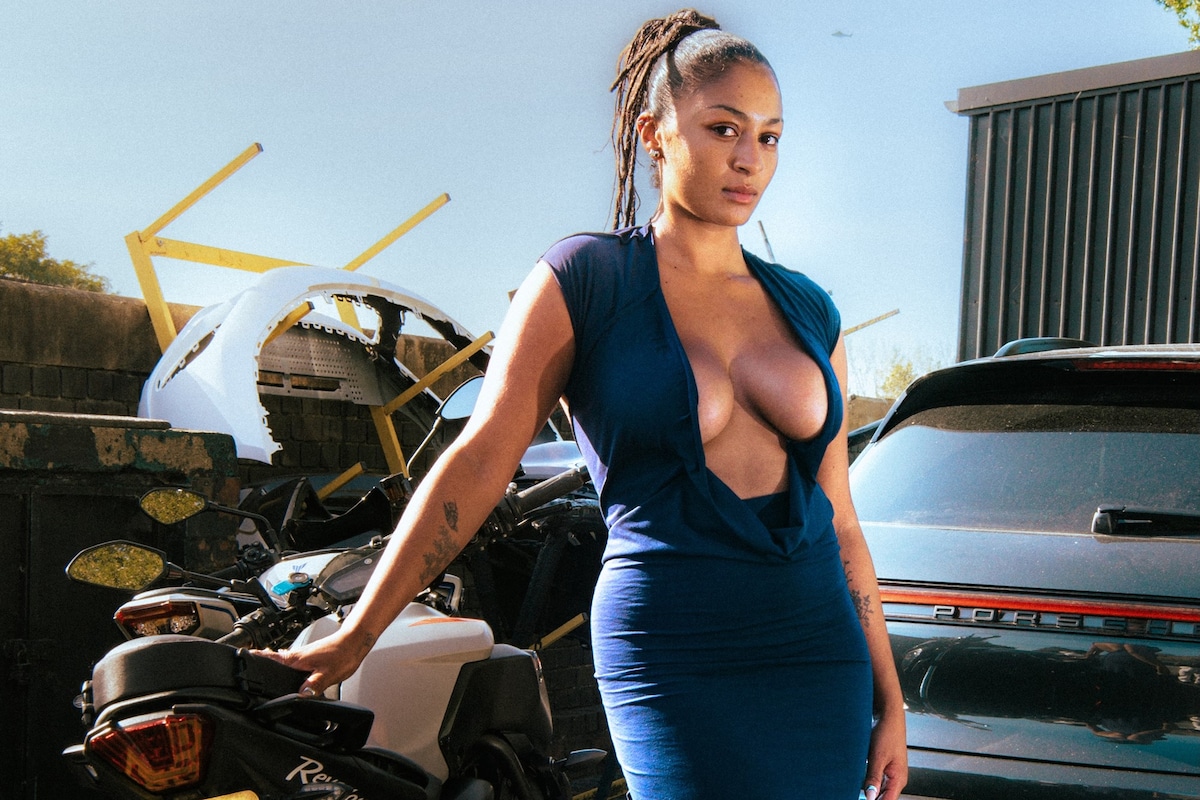
For SS27, designer Ronan McKenzie traded traditional white-cube runaways for the gritty industrial reality of M&A Coachworks in Tuffnell Park—affectionately dubbed the "Arctic Circle" of the central London fashion circuit. The pilgrimage to the luxury vehicle repair specialist was more than spatial; it signaled a profound conceptual expansion for McKenzie’s label, Selasi.
Moving away from the upcycled dresses that defined her previous outings, McKenzie centered her SS27 collection on the automobile, viewing it not merely as a functional machine, but as a mobile sanctuary. Show notes explicitly pointed to "the sanctuary of the driver’s seat, the conversations that happen behind closed car doors, and the women who have travelled alongside her."
On the runway, the curving architecture of luxury cars intersected seamlessly with the female form. Plunging jersey silhouettes rubbed shoulders with tactile, supple suedes, creating a visually arresting and texturally rich collection. Propelled by a joyful, intimate cast of friends and family, Selasi delivered one of the most heartwarming yet conceptually sophisticated presentations of the week.
2. Francesca Lake: Wake The Town and Maximalist Mourning
One of the season’s most electrifying surprises occurred on opening day, when Central Saint Martins graduate and Kingston, Jamaica native Francesca Lake subverted expectations. Her anticipated debut presentation quickly revealed itself to be a full-scale catwalk show, executing two distinct runs across a two-hour window in the subterranean concrete depths of 180 The Strand. As the inaugural presentation in the newly revamped NEWGEN space—upgraded under the strategic purview of Laura Weir—Lake set a dizzying standard.
Titled Wake The Town, the collection served as a masterclass in cultural translation, drawing deep inspiration from the vibrant processions and traditional wakes of Jamaica. Lake expanded upon her signature maximalism with masterful precision. Models emerged wrapped in intricate concertina folds or cloaked entirely in heavy lace. A striking bodice composed entirely of luminous sea pearls caught the harsh industrial lighting, while imposing collars and rigorously structured tailoring injected formal rigor into a collection dominated by weathered leather and heavy denim.
3. Ashley Williams: The Agoraphobic’s Sanctuary
Returning to the Institute of Contemporary Arts (ICA), British fashion fixture Ashley Williams delivered her trademark deranged, ironic depiction of femininity. For SS27, Williams turned her lens inward, creating a sartorial homage to extreme interiority and the modern agoraphobe.
"For SS27, Ashley Williams asks what life looks like when interiority is all that remains," declared the pastel-tinted show notes distributed across stark white benches. "House clothes take new shapes after years spent inside."
The collection read as a psychological fever dream: models walked in bilious brown and yellow prints lifted straight from 1970s upholstery, sun-bleached fleeces bearing the fading scars of windowpane UV exposure, and nightgowns aggressively repurposed into modern tracksuits and tops. Accessories doubled down on the eccentric domestic theme. Hosiery was stuffed with plush toys, while an oversized ceramic cat figurine was cinched around a model’s waist as an unlikely statement belt. Williams successfully captured the comfort and claustrophobia of the domestic cocoon.
4. A Letter: Radical Reductionism
Formerly operating under the moniker Aletta, design duo Matt Empringham and Freddy Coomes—who met on day one of their CSM foundation course—staged their debut runway under their new banner, A Letter. Taking over Bethnal Green’s minimalist Rose Easton Gallery, the pair unveiled their most pared-back collection to date.
Renowned previously for avant-garde textile experiments (including garments crafted from paper), Empringham and Coomes enacted a strict reductionist philosophy for SS27. Relying on a tight cast of just five models, each walked the runway six times—completing two laps per rotation to afford backstage dressers a frantic, high-speed turnaround.
The feat relied entirely on the unadorned simplicity of the garments. Void of complex fasteners or fussy buttons, the collection featured square-necked mini-dresses, hyper-lightweight pull-on fabrics, and a singular, statement white T-shirt stamped with a bold capital "A" to cement the brand’s rebrand in the public consciousness.
5. Steve O Smith: The Drawing Board Comes to Life
Breaking conventional show formats entirely, Steve O Smith hosted an ultra-intimate salon-style presentation for roughly 30 guests inside the Royal College of Art’s historic life drawing room, which has operated since the 1860s.
Rather than commissioning editors to sketch, Smith brought his own raw charcoal and ink sketches into three-dimensional reality. Eschewing background music or a runway soundtrack, the presentation was scored solely by the rhythmic click of models’ footsteps and Smith’s own voice narrating the conceptual genesis of each look.
Explaining his process, Smith emphasized that his pieces originate not from a predetermined theme, but from the erratic impulses of ink on paper. Honoring artistic influences such as André Derain, George Grosz, and Henri Matisse, Smith restricted his palette to a stark quartet of hues: red, cobalt, Prussian blue, and black. Following his victory at the 2025 LVMH Prize (where he secured the Karl Lagerfeld Prize), this presentation cemented Smith as one of British design’s most rigorous thinkers.
6. Ahluwalia: Festac ’77 and Diasporic Resonance
Priya Ahluwalia grounded her SS27 exploration within the luxurious confines of the Rosewood London hotel. Known for her incisive interrogation of her Indian-Nigerian heritage, Ahluwalia turned her historical gaze toward Festac ’77—the legendary month-long Lagos festival that convened 16,000 artists and intellectuals from across Africa and its global diaspora.
Photographer Marilyn Nance famously characterized Festac as "the Olympics, plus a biennial, plus Woodstock. But Africa style." Ahluwalia’s mood board bridged celebratory pageantry with quiet political resistance, nodding notably to off-duty Black Panthers. Alongside her intricate ready-to-wear, the designer debuted her latest footwear collaboration with Puma, setting the stage for what is guaranteed to be one of the most sought-after sneaker releases of 2027.
7. Barbour: Heritage, Tartan, and the Saatchi Gallery
Barbour claimed its stake in the season’s overarching nostalgia wave. The 136-year-old heritage outerwear titan, synonymous with British wax cotton, commandeered the Saatchi Gallery in partnership with the British Fashion Council.
The exhibition offered an exhaustive look at the cultural history of tartan, showcasing archival pieces alongside celebrated designer collaborations with houses like Erdem and Gucci. An interactive live workshop demonstrated the intricate factory waxing process, while an onsite pop-up pub provided a much-needed sanctuary for editors navigating the relentless schedule.
8. Mulberry: Christopher Kane’s Grand Redemption
The most culturally seismic moment of the week belonged to Christopher Kane. The fashion world reeled in 2023 when Kane shuttered his eponymous label—a three-year hiatus that left a palpable void in British design. However, the gloom lifted in March when it was announced that the Scottish visionary would take the reins as Creative Director of Mulberry.
On Sunday at Parliament Square’s Queen Elizabeth II building, Kane executed his grand return. Opting for a strategic "wipe the slate clean" approach, his debut collection leaned heavily into restrained, muted tones and unpretentious silhouettes, laying a robust foundation for future seasons.
Returning to Mulberry’s roots as a leather goods house founded in 1971 by Roger and Joan Saul, Kane manipulated butter-soft leathers into sharp skirts, dresses, T-shirts, jackets, and blazers. He also introduced striking new silhouettes to the brand’s accessories ecosystem: the Axe and the Chop. While the industry continues to mourn the loss of his independent namesake house, having Christopher Kane back on the London calendar is an unequivocal victory for British fashion.
Supporting Context & Metrics: The State of LFW SS27
London Fashion Week SS27 arrived at a critical juncture for the British fashion economy. Facing macroeconomic headwinds, fluctuating post-Brexit trade dynamics, and shifting consumer appetites, the structural recalibration of LFW under initiatives spearheaded by figures like Laura Weir has proved vital.
- Venue Geographic Shift: While traditional central hubs retained prominence, SS27 saw a 35% increase in outer-borough venue utilization (such as Tuffnell Park and Bethnal Green), significantly reducing central London overheads for independent designers while injecting avant-garde grit back into the presentations.
- The Homecoming Phenomenon: SS27 will be remembered as the year of the prodigal brands. Alongside Christopher Kane’s Mulberry debut, M&S marked a century of style with its maiden runway show, Alexander McQueen returned to London soil for the first time in a quarter-century, and Burberry checked back in following its Mediterranean detour in Athens.
- Collaboration Indices: Over 60% of independent emerging designers integrated major global sportswear or heritage footwear partnerships into their showcases (e.g., Ahluwalia x Puma), proving that commercial viability and high-concept design are more deeply intertwined than ever.
Official Statements & Industry Commentary
The week was punctuated by reflections on the evolving nature of British design identity:
- On Ronan McKenzie’s Automotive Inspiration: "McKenzie looked to the automobile not simply as a machine, but as a space of possibility—the sanctuary of the driver’s seat, the conversations that happen behind closed car doors, and the women who have travelled alongside her." — Official Show Notes
- On Ashley Williams’ Domestic Psychosis: "Cherished trinkets collect fine dust on the bedside table, and wood-paneled walls form a protective cave where dreams finally settle." — Ashley Williams
- On Christopher Kane’s Mulberry Strategic Shift: Industry analysts noted that Kane’s appointment represents a shift away from flashy novelty toward foundational leather craftsmanship: "By wiping the slate clean, Kane is anchoring Mulberry back to its 1971 DNA, ensuring long-term commercial durability without sacrificing his distinct editorial edge."
Future Outlook: What SS27 Signals for the Global Fashion Circuit
As the fashion caravan moves on to Milan and Paris, London Fashion Week SS27 leaves behind a blueprint for the future of the industry. The overarching trends of the season point to three primary trajectories:
- The Death of Surface-Level Fast Fashion for Emerging Talent: As demonstrated by A Letter and Steve O Smith, younger designers are leaning into severe reductionism, material honesty, and conceptual transparency. The frantic rush to over-produce complex garments is giving way to focused, highly curated design statements.
- Heritage Consolidation: The successful integrations of heritage brands like Barbour, Mulberry (under Kane), and the high-profile returns of McQueen and Burberry prove that legacy houses are utilizing London’s unique raw energy to anchor their global identities.
- Immersive Spatial Narratives: Designers are increasingly rejecting generic white-cube runways in favor of culturally resonant, highly specific locations—from life drawing rooms and car repair shops to luxury hotels. The venue is the narrative.
Ultimately, London Fashion Week SS27 proved that when faced with creative and economic pressure, British fashion does not retreat; it accelerates, innovates, and reclaims its throne as the global incubator of uncompromising style.