Executive Overview
In the hyper-accelerated ecosystem of Silicon Valley, the standard blueprint for launching a venture-backed startup is ruthlessly uniform: secure a computer science degree from an elite institution, log institutional hours at a FAANG (Facebook, Apple, Amazon, Netflix, Google) or high-growth tech enterprise, cultivate an extensive network of venture capital connections, and pitch an AI-powered software-as-a-service (SaaS) solution engineered for hyper-growth and immediate market disruption.
Lilly Chen shattered every expectation of this archetype.
As the co-founder and CEO of Philadelphia-based FSH (pronounced "fish") Technologies, Chen oversees a venture-backed enterprise modernizing the hidden, bureaucratic infrastructure of the public sector—from K-12 school meal administration to legacy public records management. Yet, her professional journey defies conventional corporate storytelling.
At age 16, confronted with debilitating hospitalizations for Graves’ disease and profound dissatisfaction with the American healthcare system, Chen stepped entirely outside conventional society. She left high school, took monastic vows as a Buddhist monk, and spent two years in meditation, study, and reflection—including months isolated in a remote Chinese monastery. Upon returning to the United States, she secured admission to Colorado College without a high school diploma, competed professionally in Dota 2, built foundational AI training infrastructure as a software engineer at Meta (Facebook), and ultimately walked away from big tech in the wake of the January 6, 2021, Capitol insurrection.
Today, Chen leads a rapidly scaling enterprise that has secured $25 million in total funding, highlighted by a $20 million Series A round that closed in roughly a week. Backed by prominent investors including Contrary, General Catalyst, Lachy Groom, and Ramp, FSH represents a rare breed of public-sector tech company: one that rejects superficial AI wrappers in favor of deep structural integration. Chen’s unconventional path—bridging monastic contemplation, competitive esports, and enterprise AI engineering—has forged a leadership philosophy rooted in patience, systematic inquiry, and an unwavering commitment to solving society’s most overlooked problems.
Detailed Chronology: From Graves’ Disease to the Monastery
A Health Crisis and a Radical Interruption
The genesis of Chen’s unorthodox worldview began in her mid-teens. Afflicted with Graves’ disease—an autoimmune disorder that causes an overactive thyroid—Chen endured repeated, traumatic hospitalizations. Frustrated by the limitations, bureaucracy, and fragmented care she experienced navigating the Medicaid system, her mother proposed a radical intervention: leave the United States, relocate to China, and embrace a monastic life.
For a teenager, the transition was jarring yet transformative. Ordained in the United States, Chen spent approximately two years living as a monk. Months were spent in a remote Chinese monastery devoid of internet connectivity. Her daily existence was defined by meditation, physical labor—such as feeding koi ponds—and a deeply simplified material life sustained by food grown on-site or provided by neighboring villagers.
Crucially, the monastic environment provided unexpected physical healing. Stripped of the chronic stressors of modern adolescence and sustained by a consistent regimen, her thyroid condition stabilized.
The Literary Catalyst and Return to Academia
With no access to external media or bookstores, Chen relied entirely on the physical books she had brought with her, reading and rereading them in various quiet corners of the monastery. This deep, unhurried engagement caught the attention of a fellow monk, who engaged her in philosophical discussions about her love of reading and her future.
When the conversation shifted to higher education and why she was not attending university, Chen cited her chronic health struggles. The monk observed that she appeared entirely healthy. The realization struck Chen: her health had recovered, and her self-imposed exile from society had run its course.
Returning to the United States, Chen homeschooled herself and applied directly to Colorado College. Astonishingly, she was admitted without a high school diploma or traditional academic transcripts. Turning 20 during her freshman year, she immersed herself in rigorous quantitative coursework, ultimately graduating in 2019 with a dual major in mathematics and economics.
Esports, Meta, and the Breaking Point
During her undergraduate years, Chen cultivated a diverse set of competencies. She competed professionally in Dota 2, an arena that afforded her an early, practical exposure to elite-tier algorithmic behavior when she played against early iterations of OpenAI’s game-playing bots.
Following graduation, Chen transitioned into the technology sector, eventually landing a role as a software engineer at Meta in Boston and California. Within the social media giant, she focused on building the heavy-duty infrastructure required to train complex artificial intelligence models.
However, Chen’s tenure at Big Tech collided with a profound moral reckoning. On January 6, 2021, while attending a remote company-wide meeting at Meta, she watched live news coverage of the assault on the U.S. Capitol on a secondary screen. Deeply troubled by Meta’s algorithmic role in facilitating the coordination of political violence, Chen reached an irrevocable conclusion.
"I realized that I couldn’t work for Big Tech anymore," she recalls. She resigned shortly thereafter, stepping into professional uncertainty without a concrete startup idea, driven only by a desire to align her technical skills with work that possessed genuine ethical weight.
Supporting Context & Metrics: Building FSH Technologies
Securing Early Conviction Without a Pitch
Unemployed and navigating the post-corporate landscape, Chen relied on the introspection she had practiced during her monastic years. She returned to fundamental questions: What made her happy? What mattered to her? What was she uniquely good at? Programming remained her most formidable, tangible tool. The challenge was finding a domain worthy of application.
Through Envision—a student-run accelerator explicitly designed to support nontraditional founders—Chen was introduced to Contrary, an early-stage venture capital firm renowned for backing category-defining companies like Ramp and Anduril Industries. In 2021, before Chen had even crystallized the business model that would become FSH, Contrary wrote her an initial pre-seed check.
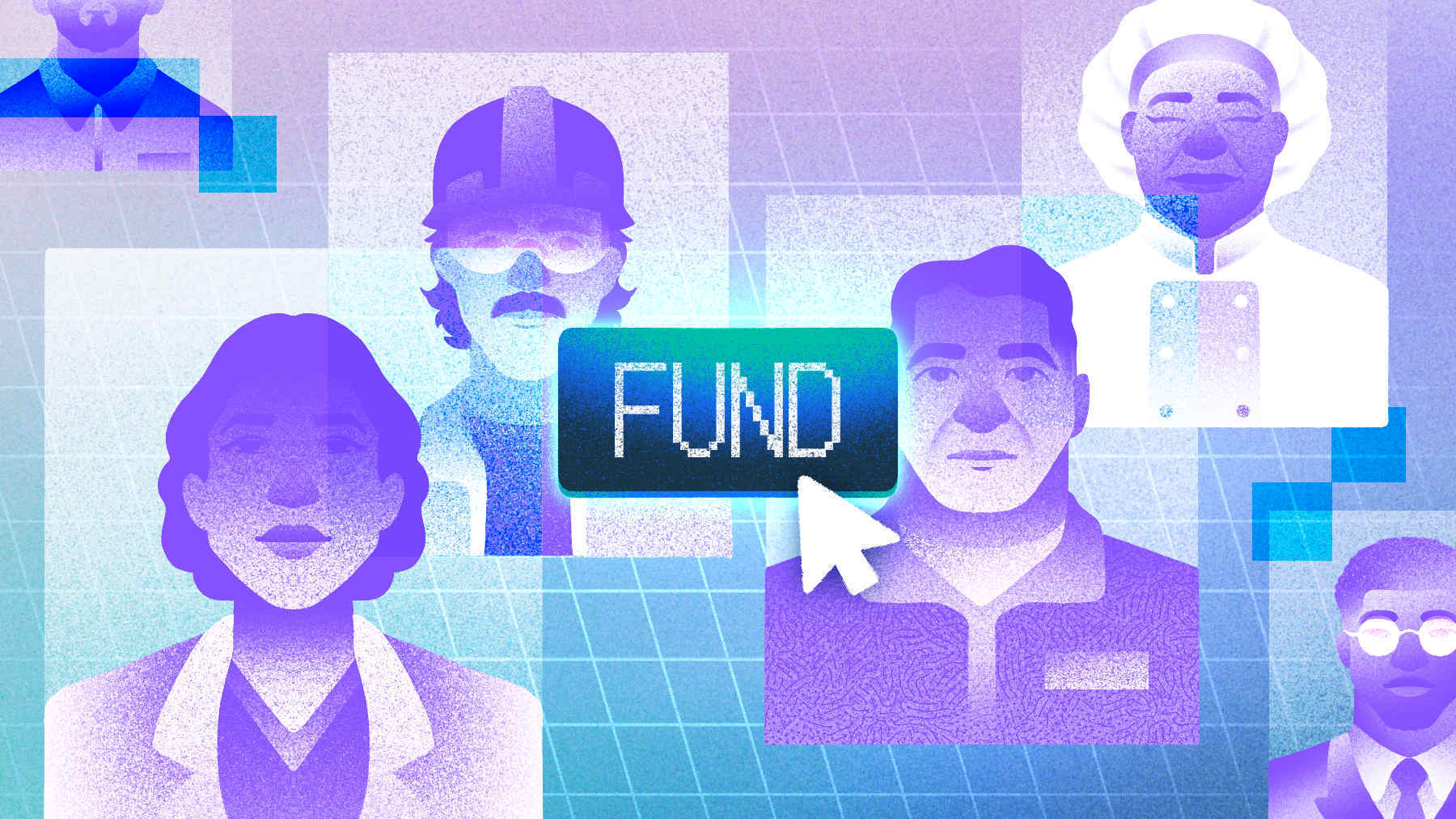
Investors were captivated not by a polished, institutional slide deck, but by Chen’s earnest articulation of purpose and her fierce determination to solve a deeply entrenched, systemic problem. This early capital afforded her the runway to experiment, listen, and research. By 2024, the enterprise solidified into FSH Technologies. Notably, Jason Chen, the Contrary investor who initially championed her vision, transitioned into the company as its Chief Operating Officer.
Financial Trajectory and Funding Rounds
FSH Technologies has rapidly evolved from an exploratory research project into a heavily capitalized enterprise. The company has raised a cumulative $25 million in venture capital.
The cornerstone of this financial momentum is a recent $20 million Series A funding round—a transaction Chen notes was finalized in approximately one week. The round drew participation from some of the most respected names in the venture ecosystem, including:
- Contrary (Lead seed investor)
- General Catalyst
- Lachy Groom
- Ramp
- Scribble Ventures
- Operator Partners
- Basis Set Ventures
Despite substantial venture backing, FSH’s initial revenue growth reflected the notoriously slow sales cycles of the public sector. In its first operational year, the company generated less than $100,000 in revenue—a humbling metric that underscored the immense patience required to sell software to government agencies. Operating with a lean, highly focused team of approximately 8 to 9 core employees, FSH maintains a disciplined approach to headcount growth, prioritizing structural impact over vanity scaling.
Official Statements and Core Philosophy
The "Fish or Pond" Epistemology
Chen’s approach to enterprise software architecture is deeply informed by her monastic training. She frequently recounts a parable from her time feeding koi ponds at the monastery. The head monk would periodically test her mindfulness with a cryptic question: “Are you the fish, or are you the pond?”
Initially baffled, Chen pondered the riddle for months, eventually identifying with a specific fish that avoided conflict, swam with the collective, and occasionally ventured off independently. The head monk’s corrective response was profound: "You’re the pond, not the fish."
For Chen, this metaphor became a masterclass in systemic thinking. In the context of government technology, most software vendors act like the fish—focusing narrowly on isolated features, surface-level user interfaces, or superficial AI wrappers. Chen argues that slapping a generic chatbot onto a broken municipal database resolves virtually none of the underlying dysfunction.
Instead, building the "pond" requires understanding the complex socio-technical ecosystem: why information is siloed across municipal departments, why updating a website requires navigating layers of bureaucratic approvals between IT, communications, and policymakers, and why administrative friction persists beneath the paperwork.
Tackling the Unsexy Infrastructure
Government administrative processes—permits, licenses, public records requests, grant applications, and K-12 school meal coordination—are notoriously antiquated. Rather than chasing high-profile consumer tech trends, Chen deliberately sought out the most unglamorous, foundational challenges plaguing local and federal governance.
FSH has targeted two primary verticals in its early deployment phase:
- K-12 Food Services: Streamlining the complex administrative burdens school districts face in coordinating daily meal planning, nutritional compliance, and state/federal reimbursement requirements.
- Public Records & Archive Management: Digitizing and organizing legacy paper documents that routinely force citizens to physically visit municipal offices to complete basic civic transactions.
While FSH selectively incorporates artificial intelligence—such as optical character recognition (OCR), automated translation, and natural-language search capabilities—Chen insists that AI must function strictly as an internal tool within the software architecture, rather than an autonomous agent attempting to manage entire bureaucratic workflows without human oversight.
Slow is Smooth, Smooth is Fast
Chen’s leadership ethos directly repudiates the toxic overwork culture pervasive in Silicon Valley. She is openly skeptical of startup founders who romanticize sleeping under desks or logging eighty-hour workweeks as badges of honor, viewing such behaviors as performative metrics that ultimately undermine cognitive endurance and product quality.
Instead, Chen instills a disciplined motto across her engineering and operations teams: "Slow is smooth, and smooth is fast."
"We think slowly about a lot of things, and then we do things quickly," Chen explains. By deeply analyzing the human dynamics, departmental politics, and procedural bottlenecks of an agency before writing a single line of code, FSH ensures its software deploys with minimal friction and maximum systemic utility.
Future Outlook
As FSH Technologies scales following its $20 million Series A injection, the company stands at the vanguard of a quiet revolution in govtech. The public sector represents a multi-billion-dollar market long neglected by agile venture-backed startups due to arduous procurement cycles and risk-averse institutional buyers. By pairing deep systemic empathy with robust engineering and institutional venture backing, Chen is proving that civic infrastructure can be modernized without sacrificing security, compliance, or human-centric design.
Looking toward the horizon, Chen’s trajectory serves as a profound indictment of conventional resume-worship. Her journey—from a chronically ill teenager in meditation robes to a pioneering software engineer, competitive gamer, and venture-backed CEO—demonstrates that extraordinary innovation often originates at the margins.
"You definitely end up finding your own way if you just stick to being weird," Chen reflects. As FSH continues to untangle the bureaucratic paperwork choking local governments nationwide, that unconventional resilience is transforming the unsexy plumbing of American public infrastructure into a model for modern, efficient governance.