Executive Overview
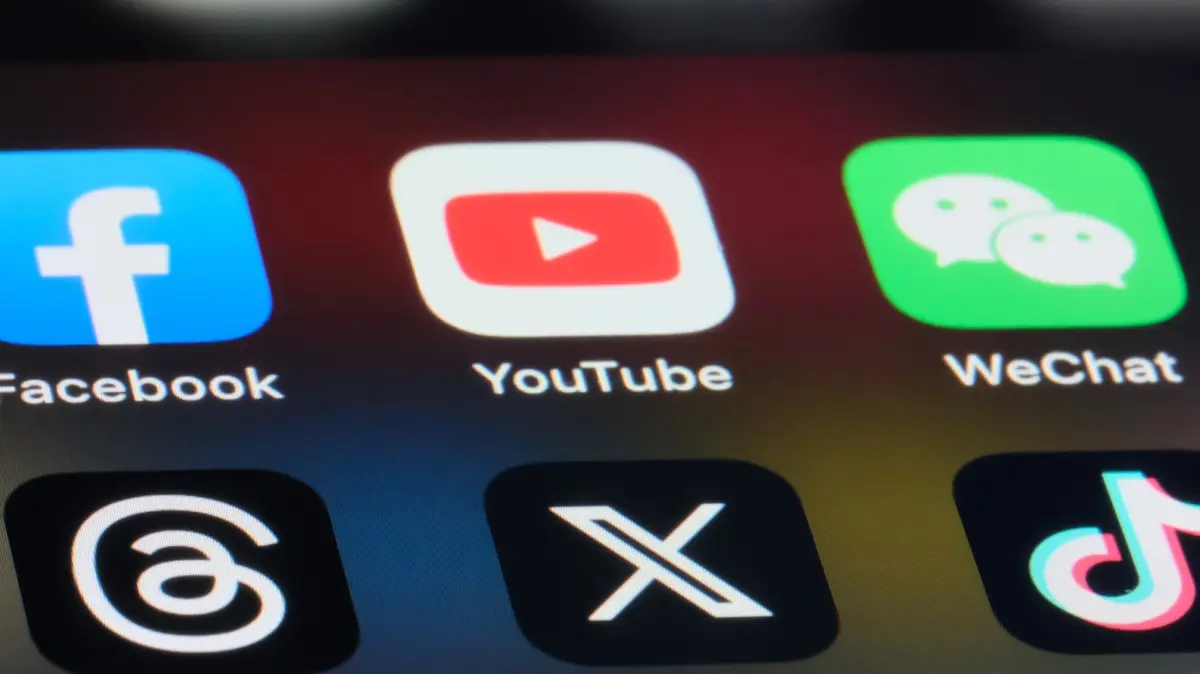
In a decisive legislative maneuver that places the Mediterranean nation at the bleeding edge of global digital regulation, the Hellenic Parliament has officially passed a sweeping nationwide ban prohibiting children under the age of 15 from accessing mainstream social media platforms. Spearheaded by Prime Minister Kyriakos Mitsotakis, the statute marks one of the most aggressive state-level interventions into youth digital consumption within the European Union. Scheduled to officially go into effect on January 1, 2027, the law directly targets ubiquitous technological ecosystems including TikTok, Instagram, Facebook, and X (formerly Twitter).
The newly minted legislation transcends conventional digital safety warnings or voluntary parental guidelines, establishing mandatory, robust technical enforcement mechanisms. Under the framework of the law, social media operators will be legally required to implement reliable and proportionate age-verification technologies to block underage users. Furthermore, the Greek state is rolling out specialized infrastructural applications—namely the "Kids Wallet" and "Gov.gr" apps—designed to pair directly with minors’ mobile devices to enforce network restrictions while preserving user privacy through zero-knowledge cryptographic proofs known as "age tokens."
While the administration champions the legislation as an indispensable safeguard for youth mental health and social development, the policy has catalyzed intense national and international debate. Critics point toward persistent technical hurdles in age-verification protocols, potential threats to juvenile privacy, and the broader implications of state-mandated digital curation. Nevertheless, backed by strong domestic polling and pushed through by Prime Minister Mitsotakis’s majority government in the face of opposition pushback, Greece is deliberately positioning itself as a regulatory vanguard. The nation’s ultimate ambition is clear: to pressure Brussels and establish a hardline blueprint that the broader European Union—and the international community—may soon be forced to follow.
Detailed Chronology: From Classroom Restrictions to National Legislation
The enactment of the under-15 social media ban is the culmination of a systematic, multi-year escalation by the Greek government to wrest control of children’s attention from the digital sphere. The timeline of this regulatory trajectory highlights a methodical strategy that began within the physical boundaries of the classroom before expanding into the digital ether.
Phase 1: The Classroom Crackdown (2024)
Long before sweeping social media algorithms were targeted at the legislative level, the Mitsotakis administration took aim at the immediate vector of distraction: the smartphone in the classroom. In 2024, Greece implemented a strict ban on mobile phones in all primary and secondary schools across the country. Students were permitted to bring phones to school for emergency transit purposes, but devices were legally required to remain strictly powered off inside schoolbags during instructional hours and breaks. Violators faced immediate disciplinary actions, including temporary suspensions. This initial policy served as a crucial testing ground, gauging both public sentiment and administrative enforceability regarding state intervention in youth technology habits.
Phase 2: The Political Announcement (Early 2026)
Building on the perceived success of the school phone restrictions, Prime Minister Kyriakos Mitsotakis formally announced plans for a comprehensive national social media ban targeting minors under 15 earlier in 2026. Acknowledging the friction the policy would undoubtedly cause among tech-native youth and libertarian critics, Mitsotakis publicly characterized the impending bill as a "difficult but necessary" measure. The announcement immediately sent ripples through the European regulatory landscape, transforming a fringe academic debate into a concrete governmental objective.
Phase 3: Legislative Battle and Parliamentary Passage (Late 2026)
As the drafted text of the bill moved through the Hellenic Parliament in the autumn of 2026, it met with fierce resistance. Minority parties raised substantial concerns regarding civil liberties, government overreach, and the technical viability of state-enforced age verification. Recognizing that consensus could not be reached through traditional bipartisan compromise, Prime Minister Mitsotakis utilized his ruling majority to force the bill through parliament. The final legislative hurdle was cleared in October 2026, solidifying the law’s official status.
Phase 4: Implementation and the Road to 2027
With the law now officially on the books, Greece has entered an intensive transition period leading up to the hard enforcement deadline of January 1, 2027. During this window, tech giants must restructure their onboarding pipelines to integrate compliant age-verification architectures for Greek IP addresses. Simultaneously, state digital agencies are finalizing the rollout of the "Kids Wallet" and "Gov.gr" mobile applications, ensuring that parents have the necessary digital infrastructure to lock down their children’s devices well before the New Year mandate takes legal effect.
Supporting Context & Metrics: The Crisis of Youth Digital Consumption
The Greek government’s willingness to deploy draconian legislative measures is rooted in mounting clinical evidence and sociological data concerning the destructive impact of unregulated screen time on developing minds. Public health authorities, child psychologists, and educational bodies have increasingly raised alarms over the systemic erosion of adolescent well-being tied directly to algorithmic social media feeds.
The Psychological Toll on Minors
Modern social media platforms are deliberately engineered using variable-ratio reinforcement schedules—mechanisms identical to those found in slot machines—to maximize user retention and daily active engagement. For children and adolescents, whose prefrontal cortices (the regions responsible for impulse control, risk assessment, and long-term planning) remain underdeveloped well into their twenties, these platforms present an asymmetrical psychological battlefield.
Empirical research cited by Greek health authorities during the legislative debates highlights staggering correlations between heavy social media consumption and the exponential rise of adolescent anxiety disorders, clinical depression, body dysmorphia, sleep deprivation, and suicidal ideation. Algorithms optimized for engagement frequently trap vulnerable youth in echo chambers characterized by cyberbullying, toxic comparison culture, and radicalizing content. By cutting off access at age 15, the Greek state aims to preserve the formative early adolescent years from the ravages of hyper-monetized attention economies.
Public Sentiment vs. Political Opposition
Despite the sweeping nature of the ban—which restricts a medium that has become deeply embedded in modern youth culture—polling data reveals an overwhelming mandate from the adult population. Nation-wide opinion surveys conducted ahead of the final vote indicated that a clear majority of Greek parents and older citizens strongly support the legislation. Decades of watching children retreat into digital isolation within their own homes have created a profound appetite for state-backed intervention.
Conversely, political opposition within parliament argued that prohibition is a blunt instrument that fails to address the root causes of digital addiction. Critics asserted that bans merely drive underground behavior, forcing tech-savvy youth to utilize virtual private networks (VPNs) or fake accounts to bypass restrictions, thereby stripping away parental oversight rather than enhancing it. Furthermore, minority parties questioned the wisdom of making Greece an isolated regulatory island ahead of broader European harmonization.

Official Statements: Perspectives from the Front Lines of Policy
The ideological battle lines surrounding Greece’s new law are best understood through the articulated positions of its primary architects and international observers.
Prime Minister Kyriakos Mitsotakis
Defending the legislation as an act of fundamental governmental duty, Prime Minister Mitsotakis emphasized that inaction is no longer a morally viable option for modern states.
"It would have been very easy to do absolutely nothing today and wait for the perfect European law. But the challenge is here. Children are sinking into the internet every day, and I believe a responsible government must do what it is obliged to do."
Mitsotakis has made no secret of his broader geopolitical ambitions. The prime minister has explicitly stated that his administration’s ultimate goal is to use Greece’s domestic statute as a wedge to push the entire European Union toward a unified, continent-wide prohibition for minors.
Minister Dimitris Papastergiou
Dimitris Papastergiou, Greece’s Minister of Digital Governance and Artificial Intelligence, provided crucial technical clarifications regarding how the state intends to enforce the ban without transforming the nation into a surveillance state. Addressing concerns over user privacy, Papastergiou detailed the functioning of the state-backed infrastructure:
"Parents would also need to download apps backed by the state called Kids Wallet or Gov.gr that are paired to their child’s device and block access. Those apps are designed to protect privacy and minimize data collected by using ‘age tokens’ that can confirm someone’s age while minimizing the disclosure of their personal data."
By utilizing cryptographic "age tokens," the Greek government aims to satisfy legal verification requirements without forcing citizens—adults and minors alike—to surrender sensitive biometric data or state identification documents directly to foreign-owned technology conglomerates.
Future Outlook: The Global Ripple Effect and Technological Hurdles
As Greece counts down to the January 1, 2027 implementation date, the international community is watching with intense scrutiny. The nation’s bold experiment sits at the intersection of evolving global child-safety legislation and severe technological implementation hurdles.
The Global Regulatory Wave
Greece is not operating in a complete vacuum, though it is certainly pushing the envelope. Australia recently made global headlines as the first nation to enact a full social media ban for children, though early reports indicate that enforcing ironclad age verification across open networks has proven exceptionally challenging. Meanwhile, the European Commission has introduced the EU Kids Act, a legislative framework aimed at curtailing youth access to digital platforms across member states, though its current iteration proposes an outright ban only for children under 13—a threshold noticeably more lenient than Greece’s under-15 cutoff.
The Technical Challenge of Age Verification
The ultimate success or failure of Greece’s pioneering law will not be decided in parliamentary chambers, but in the server rooms of Silicon Valley and through the practical execution of the state’s "Kids Wallet" infrastructure. Enforcing a strict age barrier requires platforms to accurately verify the age of every user without compromising the fundamental right to digital privacy.
Historically, platforms have relied on self-reported birthdates—a system easily circumvented by any minor with a keyboard. Emerging solutions, ranging from third-party identity verification services to advanced zero-knowledge proofs (such as the Greek ministry’s proposed "age tokens"), offer promising technical pathways, yet all carry inherent vulnerabilities. If platforms fail to comply with these rigorous verification standards once the law goes live, they face severe financial penalties enforced under the robust architecture of the European Union’s broader Digital Services Act (DSA).
Conclusion
Greece’s decision to ban social media for children under 15 is a watershed moment in the modern history of the internet. It signals the definitive death of the utopian era of unbridled digital expansion, replacing it with an era of aggressive, state-enforced digital borders. Whether the law becomes a celebrated blueprint for global child protection or an administrative cautionary tale of digital overreach will depend entirely on the execution of its technical safeguards in the months leading up to January 2027. One reality, however, is indisputable: the wild west of youth social media consumption is drawing to a close, and Greece has fired the opening shot.