Executive Overview
For years, the prevailing narrative surrounding Apple Inc. has focused on its measured, methodical approach to market adoption. In an era defined by the explosive, high-stakes sprint of generative artificial intelligence, critics and industry insiders alike have frequently accused the Cupertino-based tech giant of moving too slowly, allowing more agile competitors to define the parameters of the modern computing landscape.
Now, those external pressures are beginning to manifest internally. According to a sweeping report by Bloomberg’s Mark Gurman, newly minted Apple CEO John Ternus has initiated a dramatic internal push, demanding that software chief Craig Federighi significantly accelerate the company’s software development roadmaps—particularly regarding artificial intelligence.
The friction points to a broader cultural and strategic reckoning within Apple’s executive suite. Ternus, seeking a more aggressive posture against competitors who have captured the public imagination with advanced AI agents, recently held a closed-door confrontation with Federighi. The software chief—widely respected as one of Apple’s most vital executives—is facing mounting pressure to pivot from iterative updates to sweeping, paradigm-shifting transformation.
Compounding these strategic anxieties, Apple faces potential leadership attrition. Mike Rockwell, the visionary behind the Vision Pro headset and current Vice President of Siri Engineering, is reportedly contemplating stepping down. Such a departure would threaten continuity at a critical juncture, especially as Apple attempts to steer its revamped, AI-powered digital assistant through a turbulent deployment cycle.
As Apple experiments with new development pipelines designed to leverage automated coding agents, the coming months will test whether the company can successfully modernize its legendary engineering culture without losing the meticulous attention to detail that has defined its hardware and software legacy for decades.
Detailed Chronology: The Escalation of the AI Impasse
To understand the current tension inside Apple’s executive offices, one must trace the convergence of external AI disruption and internal structural habits. For the better part of a decade, Apple operated under a philosophy that prioritized polish, system-wide integration, and user privacy over first-mover advantage. While this strategy successfully built a trillion-dollar ecosystem, it left the company structurally ill-equipped for the rapid iteration cycles demanded by Large Language Models (LLMs) and generative AI applications.
The pressure intensified following the dismissal of Apple’s former AI leader, a transition that thrust Craig Federighi into the role of de facto "AI czar." Despite taking on these sweeping responsibilities, Federighi’s long-standing operational methodology remained largely unchanged. Known for a hyper-focused, micro-managed approach to software engineering, Federighi historically preferred a 12-to-18-month planning horizon—a stark contrast to the multi-year roadmaps standard in Apple’s hardware divisions.
The Closed-Door Confrontation
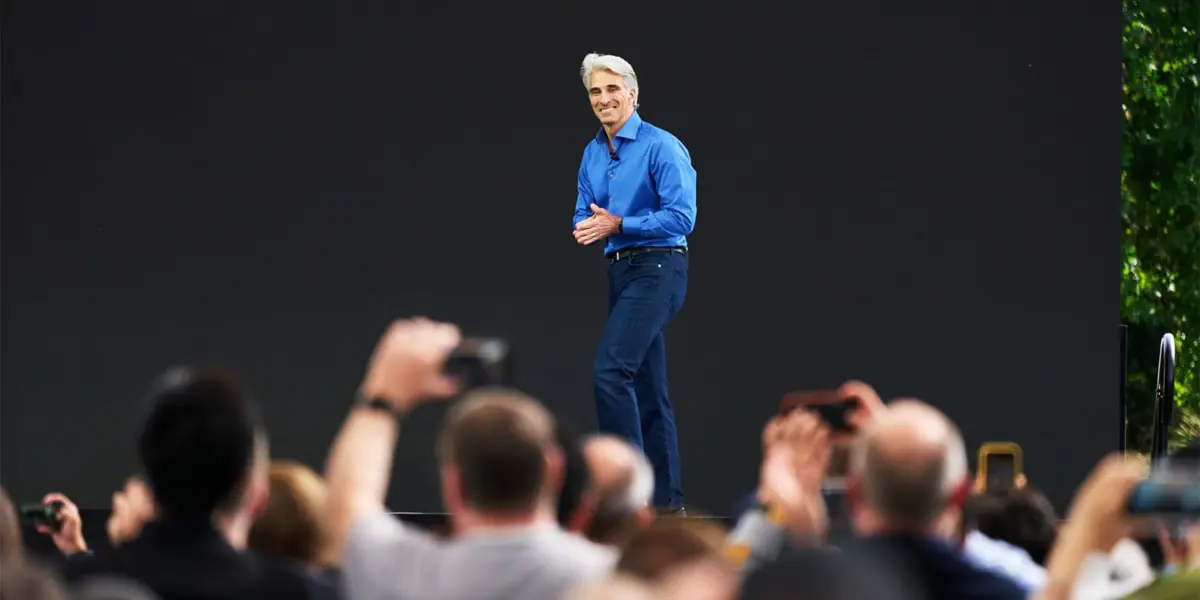
The ideological standoff reached a boiling point in recent weeks. John Ternus, stepping into his role as CEO with a mandate for modernization, convened a high-stakes, closed-door meeting with Federighi.
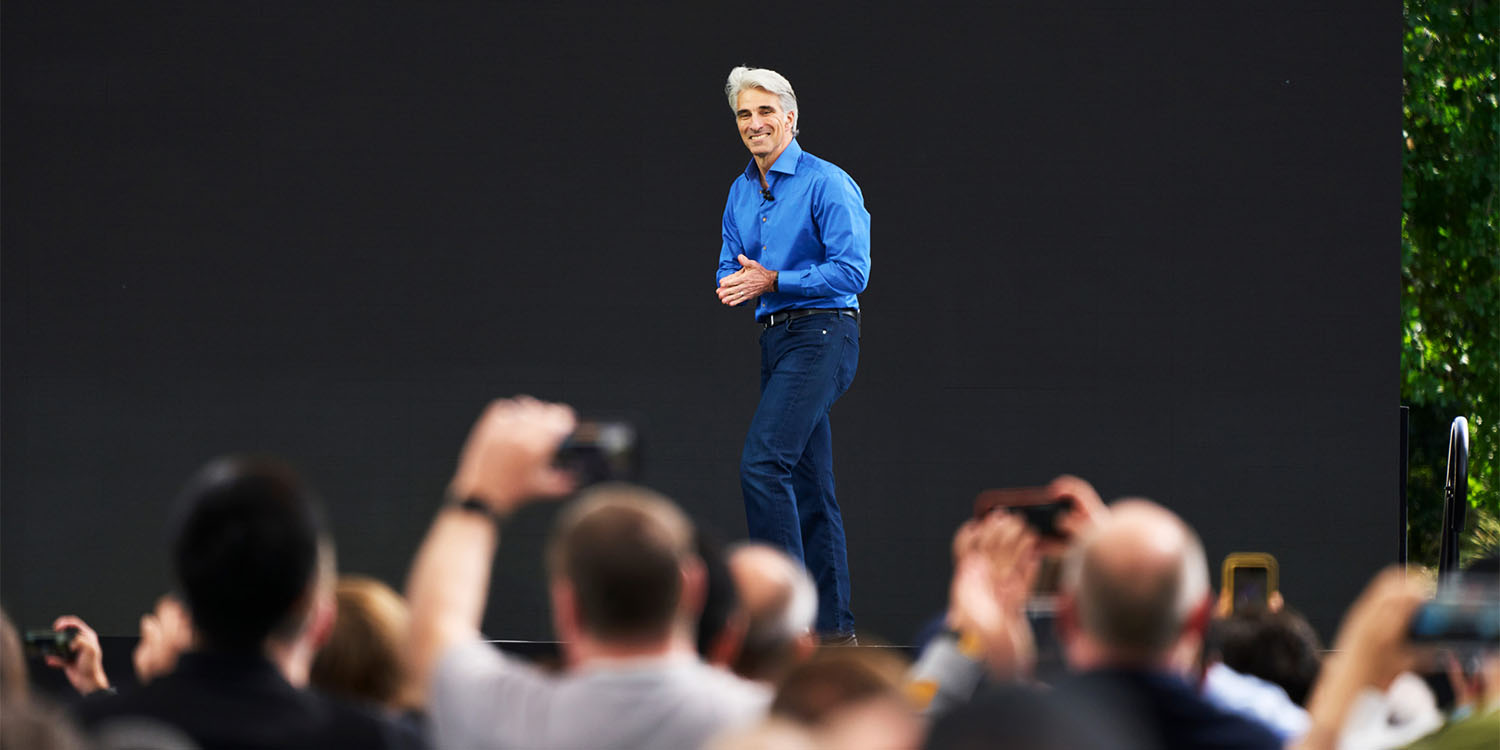
According to insider accounts, Ternus made little secret of his frustration. Dismayed by what he perceives as an institutional reluctance to embrace AI with the urgency demanded by the current market, Ternus explicitly instructed his software chief to overhaul the company’s roadmap. The directive was clear: Apple must move far beyond routine, incremental improvements to Siri and begin conceptualizing truly agentic AI frameworks that can rival or surpass offerings from OpenAI, Google, and Microsoft.
Furthermore, the clash highlights a growing realization within Apple’s executive leadership that the traditional playbook of waiting for a technology to mature before releasing a proprietary, highly polished version is no longer viable in the fast-moving AI sector.
Supporting Context & Metrics: Management Styles and Internal Dissent
The friction between Ternus and Federighi is mirrored further down the organizational chart, where Federighi’s hands-on management style has increasingly become a point of contention among software engineering and design teams.
The Bottleneck of Micro-Management
Within Apple’s Software Engineering organization, Federighi is legendary for his deep technical fluency and active participation in architectural and design reviews. While this level of engagement historically fostered products of exceptional stability and design coherence, it has created a distinct bureaucratic bottleneck in the AI era.
Employees within the software and design divisions have reportedly expressed frustration, noting that Federighi’s dominant presence in major decisions leaves limited room for competing ideas to gain traction. Armed with an encyclopedic command of technical minutiae, Federighi is known for vigorously debating opposing viewpoints and dismantling proposals that do not align with his vision.
While rigorous debate is a hallmark of elite engineering cultures, critics argue that this dynamic has calcified internal innovation. Some team members feel they possess "limited influence" over the broader product direction, a sentiment that threatens to stifle creative risk-taking precisely when Apple needs it most.
The Horizon Mismatch
Compounding the management style debate is the fundamental mismatch in planning horizons. While Apple’s hardware engineering teams routinely map out product pipelines three to five years in advance—securing supply chains, custom silicon iterations, and industrial design pathways—Federighi’s software group has traditionally operated on much tighter, reactive 12-to-18-month cycles.
In the pre-AI era, this agile software timeline allowed Apple to rapidly respond to changing consumer preferences and ship annual OS updates with clockwork precision. However, building foundational AI architectures, training proprietary models, and developing agentic software capabilities require sustained, multi-year research and infrastructure investments. Bridging this operational gap is one of the primary challenges facing Apple’s leadership today.
Leadership Vulnerabilities: The Potential Departure of Mike Rockwell
The management challenges facing Apple extend well beyond the software chief’s office. The company is now confronting the real possibility of losing another critical visionary: Mike Rockwell.

As the mastermind behind the Vision Pro mixed-reality headset and the current Vice President of Siri Engineering, Rockwell occupies one of the most strategically vital roles in the company. Following an embarrassing two-year delay that plagued the rollout of Apple’s next-generation AI-infused Siri features, Rockwell was tasked with righting the ship and integrating advanced machine learning capabilities across Apple’s core operating systems.
Reports indicate that Rockwell is seriously considering stepping down from his role as Vice President of Siri Engineering—or leaving Apple entirely—sometime next year. Such a departure would deal a severe blow to the company’s product pipeline. Rockwell has long been viewed as one of the few executives capable of navigating the complex intersection of high-end hardware, spatial computing, and complex software systems. Losing him during a pivotal transition phase for Siri and Apple’s broader AI ambitions would force a disruptive reshuffling of engineering leadership at the worst possible time.
Adapting the Pipeline: Enter Agentic AI and Structural Evolution
Despite the internal turbulence and leadership pressures, Apple is actively attempting to restructure its engineering processes to foster faster, more creative development cycles.
In tandem with the push for accelerated roadmaps, Gurman’s report highlights that Apple is experimenting with an entirely new development pipeline. Capitalizing on recent leaps in the capabilities of automated coding agents, the company is reallocating time for its software engineers. Under the experimental workflow, engineers are being granted roughly 50% more time dedicated to coding, prototyping, and exploration, while significantly reducing the hours spent on tedious integration tasks and legacy boilerplate maintenance.
This structural shift suggests that Apple recognizes it cannot simply demand more work from its existing workforce; it must fundamentally alter how software is built. By automating routine integration bottlenecks and leveraging AI tools internally, Apple hopes to empower its engineering talent to innovate faster and break free from traditional development constraints.
Future Outlook
As Apple navigates this critical crossroads, the path forward remains complex. The immediate future will test whether John Ternus can successfully shift the corporate mindset from methodical caution to aggressive execution.
For Craig Federighi, the mandate from the CEO requires a delicate balancing act. To satisfy leadership, the software chief may need to loosen his famously firm grip on the software engineering organization, delegating more autonomy to subordinate leaders and allowing fresh strategic perspectives to take root. If Federighi can adapt his management style and empower his teams to embrace longer-term, high-risk AI strategies, Apple may successfully reinvent its software development engine for the decades ahead.
Conversely, if internal friction persists—compounded by the potential loss of veteran leaders like Mike Rockwell—Apple risks falling further behind in the relentless race for AI supremacy. The coming year will ultimately determine whether Cupertino can maintain its legendary standard of polish while mastering the breakneck speed of modern software innovation.