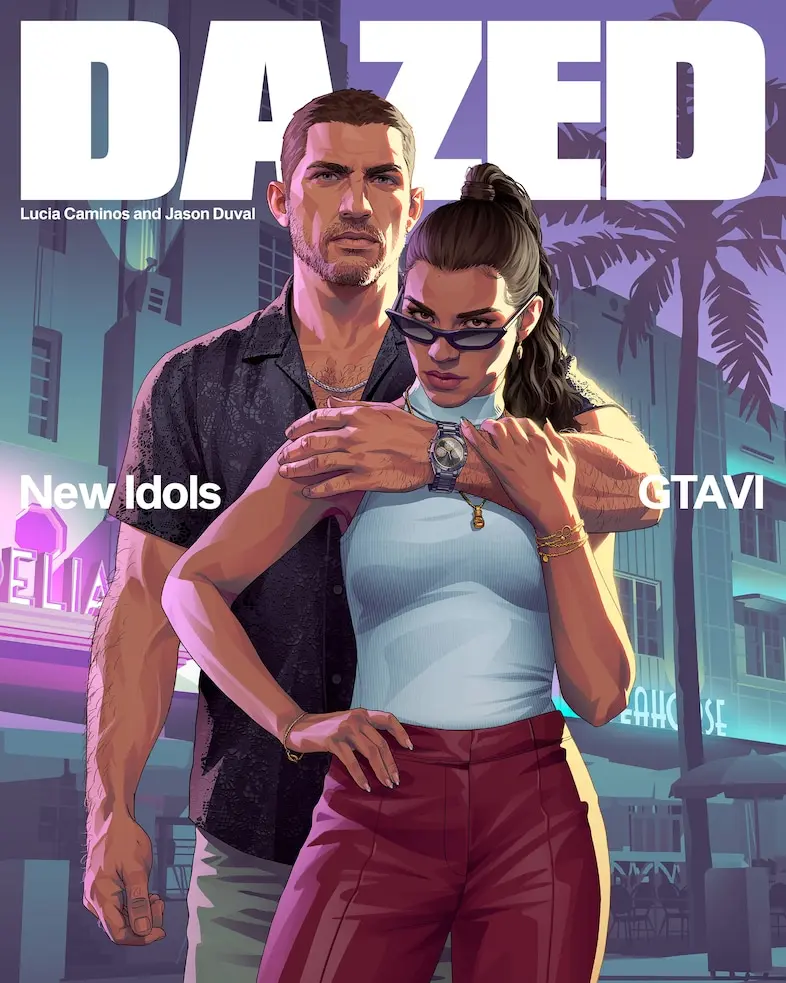
By the Dazed Cultural Desk Published in the Autumn 2026 Issue (Available internationally September 10)
Executive Overview
Thirteen years have passed since Rockstar Games altered the cultural landscape with the release of Grand Theft Auto V—a title that shattered global entertainment records by clearing one billion dollars in a mere three days, comfortably outstripping any Hollywood blockbuster or literary milestone of its era. Five years later, the studio followed this monumental success with Red Dead Redemption 2, a critically acclaimed western epic that pivoted the medium toward unprecedented emotional depth and environmental realism.
Now, standing on the precipice of a new gaming epoch, the studio faces the ultimate test of its own legacy. Grand Theft Auto VI, slated for release on November 19, for PlayStation 5 and Xbox Series X/S, transports players away from the sun-bleached asphalt of San Andreas and drops them squarely into Leonida—a fictionalized, hyper-detailed recreation of Florida anchored by the glittering, neon-drenched expanse of Vice City.
Carrying the weight of a decade-plus development cycle, staggering production budgets rumored to dwarf architectural marvels, and an insatiable global fandom, GTA VI is not merely a video game sequel. It is a generational cultural artifact. By fusing the anarchic, satirical DNA of the franchise with cutting-edge behavioral simulation, a groundbreaking dual-protagonist narrative, and a meticulously researched socio-economic ecosystem, Rockstar Games is attempting to construct the most reactive, believable virtual world in the history of interactive entertainment.
Detailed Chronology & Production Evolution
The genesis of Grand Theft Auto VI began almost immediately after the dust settled on GTAV’s historic 2013 launch. Over the ensuing thirteen years, the development landscape at Rockstar underwent a seismic transformation. To execute a vision of this magnitude, the studio’s internal workforce more than doubled in size compared to the staffing footprint of Red Dead Redemption 2, expanding into a sprawling global network of specialized divisions.
Building Leonida: A Decade of On-the-Ground Research
Rather than relying solely on archival footage and digital maps, Rockstar deployed dedicated research teams to Florida and Miami over a ten-year span. These operatives immersed themselves directly in the state’s distinct cultural subcultures, embedding themselves within local communities to capture the authentic cadence, visual markers, and socio-economic realities of the region.
Firsthand Fieldwork: Jamie-Lee Lloyd, senior art director for characters, notes that the team regularly met with ex-criminals, law enforcement officers, club promoters, gun dealers, and regional influencers. This cross-referencing of street-level realities with journalism and literature ensured that the cast of GTA VI would transcend lazy tropes.
Specialized Talent Pools: To achieve unprecedented authenticity, Rockstar brought in more than 50 real-world street artists to design authentic murals in districts like Vice City’s Stockyard (modeled after Miami’s Wynwood district). Furthermore, the vehicle-handling physics engine was tuned in collaboration with professional race-car drivers.
Decentralized Development: The studio established specialized hubs, including an entire branch in Los Angeles dedicated almost exclusively to the behavioral complexity and daily routines of non-player characters (NPCs).
Supporting Context & Metrics: The Anatomy of a Living World
What separates GTA VI from its predecessors is its pursuit of total systemic immersion. While past entries allowed players to operate with god-like impunity, the Leonida of GTA VI pushes back. Every action ripples through a complex, reactive ecosystem.
The Physics of Consequence and Identity
The game expands and refines the bodily simulation systems introduced in previous titles, elevating them to a philosophical level akin to a digital Picture of Dorian Gray.
The Living Body: Food intake directly dictates Jason and Lucia’s weight, while consistent physical exertion builds and tones muscle mass. Neglecting basic needs—such as remaining on the run from law enforcement for days without sleep or engaging in multi-day benders—leaves visible, visceral fatigue written onto the avatars’ faces and bodies.
Social Repercussions: Walking down a public street carrying an assault rifle will no longer be met with passive indifference; the city and its citizens will actively respond, shifting the risk-reward matrix of open-world chaos.
The Fashion Ecosystem: Overseen by Miami-based stylist Jillian Carr, the game’s retail and aesthetic landscape reflects the profound vanity of Vice City. Driven by social media culture, celebrity worship, and transient tourism, the in-game brands, clothing lines, and consumer products serve as mirrors for the player’s personal expression, tracking shifting trend cycles in real time.
A Soundtrack Rooted in Modern Florida
The audio landscape of GTA VI mirrors the dynamic realities of 2020s southern hip-hop and electronic culture. According to narrative lead Rupert Humphries, the team explored everything from underground house parties in Overtown and gritty venues like Booby Trap on the River to ultra-exclusive South Beach clubs where tables command thousands of dollars. The resulting soundtrack and narrative weave through this spectrum, featuring modern icons and rising stars like Real Dimez, whose viral in-game social media footprints chart their ascent.
Official Statements: The Visionaries Behind the Project
The sheer weight of expectation surrounding GTA VI is an omnipresent reality for its creators, yet the leadership team views this pressure not as a burden, but as a unique institutional privilege.
"However, I don’t know that any amount of external pressure could compare with the pressure we put on ourselves as a team… We look back at our previous games with a critical eye and see where we want to evolve based on what we didn’t do as well as we would have liked to, either because we didn’t have the time, resources or technological capabilities, or in some cases things we just didn’t do as well or consider as fully as we could have."
— Rob Nelson, Head of Development and Co-Studio Head at Rockstar North
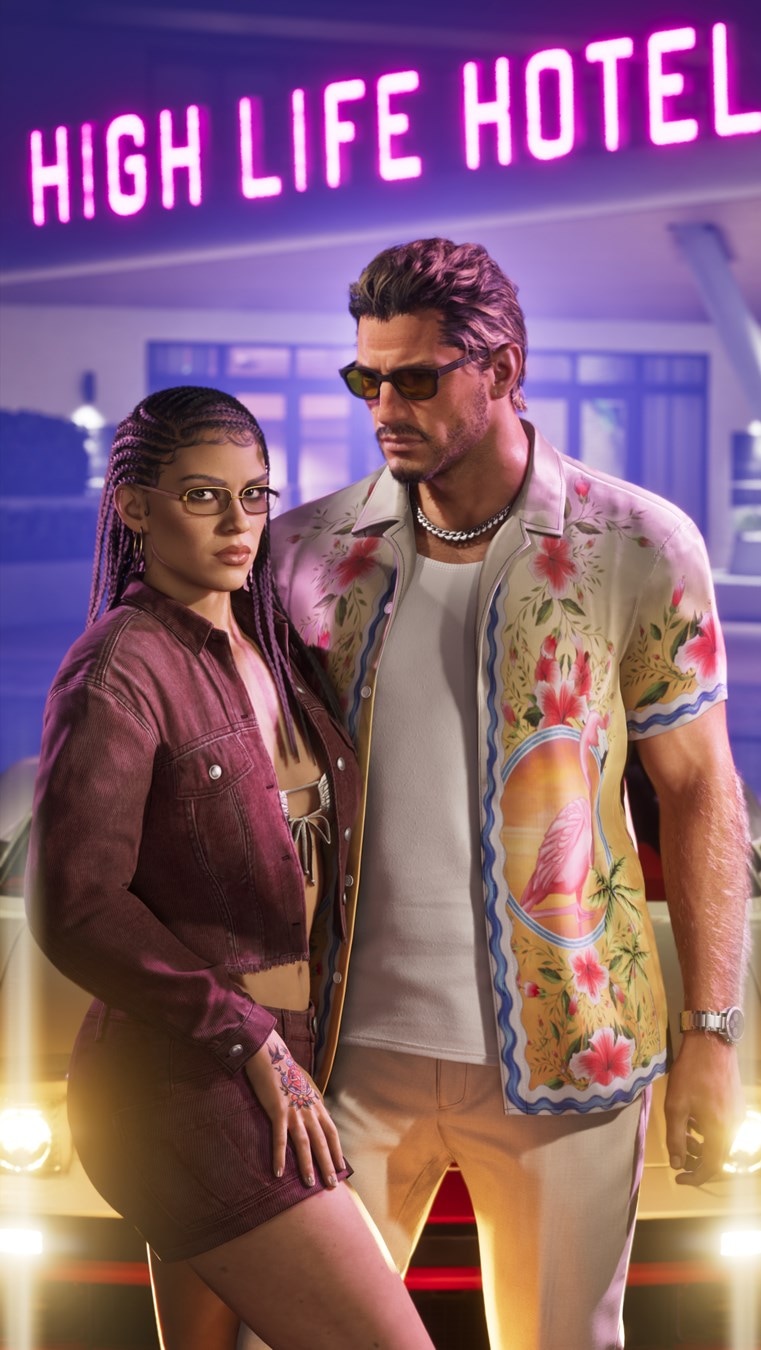
The narrative framing of the game marks a deliberate departure from traditional franchise tropes, introducing the series’ first playable romantic couple: Jason Duval, an ex-military drug runner, and Lucia Caminos, a fighter fresh out of prison.
"The thing we love about this medium is the way these characters aren’t empty avatars that you can do whatever you want with… Their story becomes a journey you share with them."
— Rob Nelson
This "Bonnie and Clyde" dynamic allows players to seamlessly shift perspectives—swapping from driving down the highway to browsing functional, in-game social media feeds from the passenger seat, or executing high-stakes heists through fluid cooperative mechanics.
The cultural framework of the world was approached with strict anthropological curiosity rather than cynical parody, as game writer Michael Wiafe explains:
"It’s easy to go in with a cynical view and say, ‘Well that’s weird, put it in the game,’ but we couldn’t just stop there. We have to bring a sense of discovery to the players too, not just repeat cliches that already exist."
This commitment to lived-in realism is echoed by senior art director Jamie-Lee Lloyd, who emphasizes the depth of their field research:
"We will meet with ex-criminals, law enforcement, club promoters, gun dealers and anyone notorious or influential who’ll take our calls. We hang out, get a feeling for the place, listen to the stories, cross-reference that with books and journalism, and try to get to the heart of which characters will bring the city we are creating to life."
Stu Petri, vice president of 2D/UI design, highlights how even the peripheral elements of the world serve a deeper narrative purpose:
"[GTA VI’s] brands reflect the aspirations, aesthetics and lifestyles of the people that inhabit our world’s spaces."
Finally, stylist Jillian Carr distills the essence of the setting:
"Vice City is built around vanity. Between social media, celebrity culture and a constant flow of tourists, appearances carry significant weight, and trend cycles turn over quickly."
Future Outlook: The Next Decade of Gaming
As November 19 approaches, the industry watches with bated breath. Grand Theft Auto VI represents the zenith of modern blockbuster game development—an endeavor combining cinematic storytelling, cutting-edge technical simulation, and deep socio-cultural satire.
By grounding its chaotic DNA in the authentic, sun-baked complexities of Leonida, Rockstar Games has engineered an environment designed not merely to be beaten, but to be inhabited. Whether players choose to follow Jason and Lucia down their harrowing path of crime and romance, or simply lose themselves in the rhythmic pulse of Vice City’s neon-lit streets, GTA VI stands ready to define the cultural conversation for the next ten years and beyond.