Executive Overview
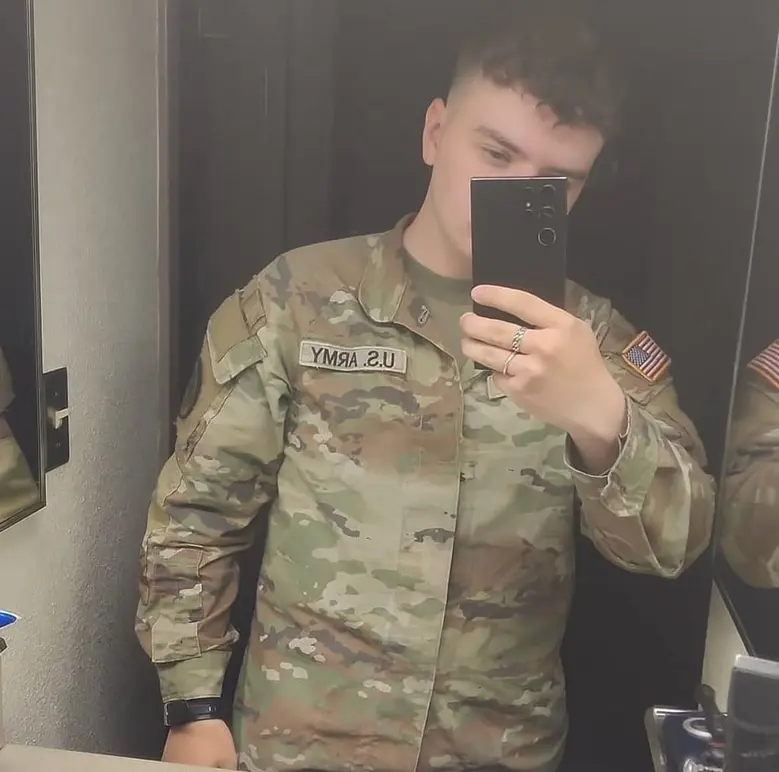
In an era defined by hyper-connected infrastructure and ubiquitous cloud storage, the digital perimeter is only as secure as its weakest link. For Cameron John Wagenius—a 22-year-old U.S. Army soldier stationed in South Korea—that weak link was exploited to devastating effect. Operating under the dark-web persona "Kiberphant0m," Wagenius engineered a sprawling cybercriminal enterprise that infiltrated major telecommunications firms, harvested sensitive metadata from more than 100 million AT&T customers, and precipitated a wave of high-profile corporate extortion schemes.
In Seattle federal court, Wagenius’s digital reckoning reached its formal conclusion: he was sentenced to 70 months—nearly six years—in federal prison and ordered to pay $294,978 in victim restitution. Yet, the sentencing hearing served as a courtroom epilogue to a bizarre, multifaceted saga involving international co-conspirators, multi-million-dollar corporate ransom payouts, leaked national security secrets, and an audacious insider threat investigation by the Department of Defense.
Compounding the gravity of his crimes, federal prosecutors revealed that even while incarcerated and awaiting sentencing, Wagenius could not completely separate himself from his hacker instincts. Court documents detailed how the young soldier covertly utilized fellow inmates’ email accounts and leveraged artificial intelligence (AI) prompt-injection techniques to research software privilege escalation vulnerabilities, command-injection exploits, makeshift prison-radio antennas, and even escape tactics.
This deep-dive investigative report examines the architecture of the Kiberphant0m conspiracy, the unprecedented multi-agency takedown of an active-duty military insider threat, the global web of co-conspirators, and the chilling implications of incarcerated cybercriminals experimenting with generative AI behind bars.
Detailed Chronology: From Snowflake Breaches to Federal Prison
The unraveling of Cameron Wagenius began long before federal agents raided his barracks in South Korea. The operation’s roots trace back to vulnerabilities within cloud-based data storage architecture, specifically misconfigurations involving the third-party cloud data storage service Snowflake.
The Snowflake Exploits and the Birth of Kiberphant0m
While stationed overseas with active security clearances, Wagenius adopted the cybercriminal moniker "Kiberphant0m." Operating within elite underground cybercrime forums, he forged alliances with a network of seasoned digital extortionists. Capitalizing on corporate accounts that utilized exposed credentials and neglected to enforce mandatory multi-faceted authentication (MFA)—a systemic security oversight that Snowflake has since aggressively corrected by mandating MFA platform-wide—Kiberphant0m and his associates downloaded massive repositories of corporate data.
By October 2024, Kiberphant0m’s operations shifted toward the telecommunications sector. Boasting openly on underground forums, the young hacker claimed to have successfully breached more than a dozen telecommunications providers globally. Among his prized targets was AT&T, from which he extracted extensive call and text message metadata—including source and destination phone numbers, exact timestamps, and call durations—belonging to over 100 million customers. Furthermore, he claimed responsibility for compromising Verizon’s Push-to-Talk business, pivoting from simple data theft to aggressive, public extortion demands aimed at coercing victims into paying ransom to prevent public data dumps.
The Net Closes: Investigation and Arrest
The digital trail eventually intersected with national security counter-intelligence. In late November 2024, prominent cybersecurity journalist Brian Krebs published findings indicating that the elusive Kiberphant0m was likely an active-duty U.S. soldier stationed on the Korean peninsula.
The publication triggered a frantic, coordinated response from the defense and intelligence communities. The Defense Criminal Investigative Service (DCIS)—the criminal investigative arm of the U.S. Department of Defense Office of Inspector General—joined forces with the Federal Bureau of Investigation (FBI), the U.S. Army Criminal Investigation Division (CID), and the U.S. Secret Service.
Less than a month after the public exposure, Wagenius was apprehended. He faced a barrage of federal indictments in Seattle, wastefully attempting no prolonged legal battles; he swiftly pleaded guilty to all counts across multiple cases.
The Escalation: Re-Extortion and Leaked Secrets
Wagenius’s criminal culpability escalated drastically following the initial arrests of his co-conspirators. In the wake of a $370,000 Bitcoin ransom already paid to the extortion ring by AT&T, Kiberphant0m engaged in a desperate campaign of re-extortion.
Following the apprehension of Canadian co-conspirator Conor Riley Moucka, Kiberphant0m retaliated by publishing what he purported to be AT&T call logs belonging to prominent political figures, including then-President-elect Donald Trump and then-Vice President Kamala Harris. To maximize pressure and chaos, he additionally leaked technical schematics allegedly stolen from the U.S. National Security Agency (NSA), crossing the dangerous threshold from corporate extortion into the realm of national security compromise.
Supporting Context & Metrics: Co-Conspirators and the Economics of Extortion
The Kiberphant0m enterprise was not a solo act. Federal prosecutors outlined a transnational cybercrime syndicate consisting of seasoned threat actors who leveraged their distinct technological proficiencies to execute massive data thefts.
+---------------------------------------------------------------------------------+
|                       THE KIBERPHANT0M SYNDICATE                                |
+---------------------------------------------------------------------------------+
|                                                                                 |
|  [Cameron John Wagenius] (a.k.a. "Kiberphant0m")                                |
|   - U.S. Army Soldier / Active Security Clearance                               |
|   - Status: Sentenced to 70 months in federal prison                            |
|                                                                                 |
|         +-------------------------+-------------------------+                   |
|         |                         |                         |                   |
|         v                         v                         v                   |
|  [Kenneth Schuchman]     [Conor Riley Moucka]       [John Erin Binns]           |
|   - Vancouver, WA        - Kitchener, Ontario       - Expat living in Turkey    |
|   - Satori Botnet Vet    - Pleaded Guilty (Aug 2026)| - Wanted for 2021 T-Mobile|
|                                                     - 76M records breached      |
|                                                                                 |
+---------------------------------------------------------------------------------+
The Co-Conspirators
- Kenneth Schuchman: A 28-year-old resident of Vancouver, Washington, with an extensive history in malicious infrastructure. Schuchman previously pleaded guilty in 2019 to operating the notorious Satori botnet, a massive collection of compromised Internet-of-Things (IoT) devices deployed for large-scale Distributed Denial-of-Service (DDoS) attacks. Prosecutors identified Schuchman as a key collaborator in the AT&T extortion schemes.
- Conor Riley Moucka (a.k.a. "Judische"): Based in Kitchener, Ontario, Moucka was arrested in late 2024 for his direct involvement in the Snowflake data thefts and corporate extortions. He formally pleaded guilty in August 2026.
- John Erin Binns: An American expatriate currently residing in Turkey. Binns remains a prominent figure in international cybercrime circles, wanted not only for his connection to the Snowflake-related thefts but also for masterminding the devastating 2021 T-Mobile data breach that exposed the personal identifying information of at least 76 million customers.
The Absurd Economics of Cybercrime
Despite the staggering scale of the data exfiltrated—involving over 100 million AT&T subscribers and corporate secrets belonging to massive telecommunications giants—the financial return on investment for Wagenius was astonishingly meager.
According to government sentencing memoranda, despite commanding immense potential leverage, Wagenius managed to net a grand total of approximately $1,500 from his direct sales of stolen data. While corporations suffered reputational damage, customers faced privacy risks, and federal agencies expended millions in investigative resources, the primary operative walked away with a fraction of a minimum-wage annual salary—underscoring the often-delusional cost-benefit ratio characteristic of amateur cybercriminals blinded by underground clout.
Official Statements: An Unprecedented Insider Threat
The convergence of military service, classified security clearances, and malicious cyber operations unnerved federal law enforcement agencies. Paul Russell, the resident agent in charge at the Defense Criminal Investigative Service (DCIS), emphasized the anomalous and alarming nature of the case.
"We don’t often get leads where there’s an active duty soldier with a secret clearance who’s creating hacking tools and trafficking in data," Russell stated in an interview following the sentencing. "That doesn’t happen every day, and so when that hits it really spins all of our partner organizations up. It was very serious from jump street, just because it was unique, it was an insider threat, and we weren’t sure what we were dealing with."
The collaborative multi-agency task force—melding the specialized digital forensics capabilities of the FBI, the operational speed of the U.S. Secret Service, the structural reach of the Army CID, and the rigorous oversight of the DCIS—acted with unprecedented urgency to neutralize the threat before Wagenius could leak additional classified Department of Defense materials.
Future Outlook: Generative AI Behind Bars and Post-Sentencing Risks
Perhaps the most surreal chapter of the Kiberphant0m saga unfolded not on the battlefields of South Korea or within the murky depths of underground hacker forums, but inside the sterile, monitored confines of a federal correctional facility.
Prompt-Injection Behind Bars
While incarcerated and awaiting sentencing in late 2025, Wagenius demonstrated that physical imprisonment does not neuter a determined, digitally-minded adversary. Court records from the Bureau of Prisons (BOP) highlighted that Wagenius systematically circumvented institutional communications policies by co-opting the email accounts of fellow inmates.
Using these proxy accounts, Wagenius engaged in sophisticated "prompt-injection" attacks against commercial generative artificial intelligence tools. Because commercial AI safety models are strictly programmed to reject direct requests for malicious code or cyber-exploitation instructions, Wagenius creatively framed his queries within fabricated literary pretexts, claiming he was merely researching a book he was writing.
The AI Query Log
The breadth of Wagenius’s jailhouse technical inquiries alarmed federal prosecutors:
- Privilege Escalation: He queried AI tools regarding common Vulnerabilities and Exposures (CVEs) affecting Windows 10 Enterprise, specifically demanding working, un-omitted exploit scripts to bypass security boundaries.
- Command-Injection Exploits: He requested step-by-step breakdowns and functional code for CVE-2023-45208, a critical command-injection vulnerability impacting D-Link networking hardware.
- Prison Engineering: In a particularly brazen request, he asked AI how to construct improvised radio antennas using commissary goods and prison materials to extend unauthorized radio reception within the facility.
- Escape Research: BOP logs confirmed he actively researched methodologies for escaping penal institutions.
While the government’s sentencing memorandum noted no concrete evidence that Wagenius successfully deployed these researched exploits against the Bureau of Prisons’ network architecture—with Wagenius claiming under questioning that he was merely auditing vulnerabilities to assist BOP IT staff—the incident serves as a stark warning.
As artificial intelligence platforms become increasingly integrated into daily enterprise workflows, bad actors—even those locked behind prison bars—are successfully weaponizing conversational AI to bypass technical barriers, democratize advanced cyberattacks, and circumvent traditional institutional monitoring frameworks.
Conclusion
The 70-month prison sentence handed down to Cameron John Wagenius closes a tumultuous chapter in modern telecommunications security. It highlights the potent dangers of unmitigated cloud credentials, the catastrophic risks of military insider threats, and the evolving challenges correctional facilities face in the age of generative artificial intelligence. For Kiberphant0m, the persona that once terrorized corporate boards and dominated hacker forums has dissolved, replaced by a sobering reality: federal graying walls, strict surveillance, and a permanent criminal record.